



Honorless
-
Posts
6159 -
Joined
-
Last visited
-
Days Won
51
Content Type
Profiles
News
Forums
Blogs
Gallery
Events
Everything posted by Honorless
-
Welcome to the Shard, and yeah, don't worry too much about your English, you're perfectly understandable and that's what matters
-
♪\(*^▽^*)/\(*^▽^*)/ Welcome!
-
Nightblood shortcut with soul stamps
Honorless replied to Narcoleptic Axolotl's topic in Cosmere Discussion
You don't have to put all Arcanum Unbounded content in the short stories forum. Emperor's Soul content is allowed in the Elantris forum (and Mistborn: Secret History content is also allowed in the Mistborn forum). I think the reason why there are Topics from those novellas here is because those topics are old. They are from back when Arcanum Unbounded just released, so content from there was restricted because of spoilers. -
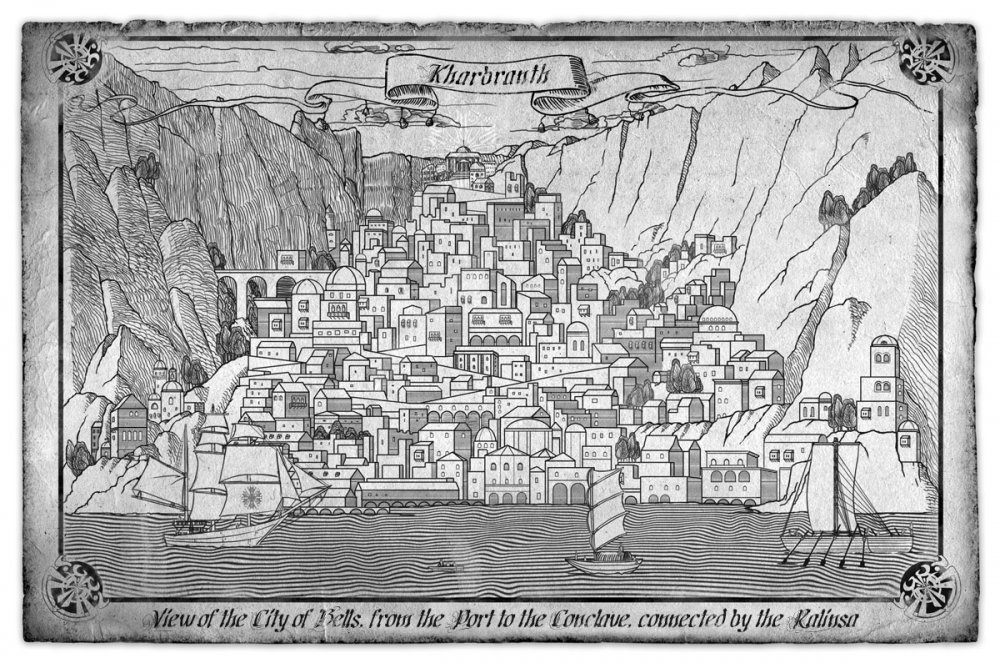
Here's the photo in question (Look at the corners) This has come up before, There's theories, but no one knows why it's there (Plus, if you look carefully, there's actually another glyph visible at the topmost central part of the city, it's only half visible, looks kinda like a sunset. That symbol is also present in the Roshar world map, this time in full: look at the left seal, it looks like they are both the same glyph.)
.thumb.jpg.1d99f1a60868631ddb149b8b6494921b.jpg)
-
Elsecallers vs. Dustbringers
Honorless replied to Truthwatcher at the Rim's topic in Stormlight Archive
Well, they are both very similar so confusion is understandable. An easy trick would be to see how the two Orders' Oaths can also be seen as the opposites of one another. Dustbringers are about restricting oneself, while the Elsecallers are about reaching one's full potential. Elsecallers are concerned with developing themselves, Dustbringers are concerned with controlling oneself. -
Reactions other than upvotes are actually coming? That's nice. Hopefully Follow is replaced by Friend Request, it's just so much better in so many ways.
-
Sadly the last of my reccs but hey it's a whole list of reccs!
-
Oh my, I forgot this one:
We ship Kaiju now!
https://ckret2.tumblr.com/post/185945394672/rodorah-rodanghidorah-and-ghidorah-centric-fic
-
-
-
Oo, thanks! I keep forgetting because of Roshar that we haven't seen that much of the writing system of Scadrial. Heh, you'll like this:
-
Oh my god, oh my god, oh my god, this was an absolute blast
https://archiveofourown.org/works/1599293
Basically, Captain America watches Captain America films but not the Marvel ones, the in-universe ones, which exist because well, he's a national hero. Filled with period posters and theses (which is apparently the plural of thesis) on the subject of the American hero and his perception (including shipping him with Bucky)
-
Welcome aboard!
-
Welcome to you as well, @GeorgeLiam!
-
Welcome to the Shard! Which Sanderson books have you read? Which ones are your favourites among them? And who are your favourite characters so far?
-
taravangian development: is it a good or bad thing?
Honorless replied to king of nowhere's topic in Stormlight Archive
"For the greater good" has become a rather scary line in literature but also a cliché stance for characters to take and be proved wrong about, when real life isn't so clear-cut. I'd be rather unsatisfied if Taravangian is simplified into simply becoming the next villain, bigger and badder. I want more of morally grey Taravangian. When I got to that chapter, I honestly wanted the Shard of Odium to be without Vessel. I've said this before multiple times and I'll say it again, I would love to see this series be a war against hatred itself rather than another "we have to forget past issues to unite in the face of the greater threat" because just ugh. Less pow-wow, more problem solving please. -
-
Okay, so three things this topic keeps circling back to that I haven't properly addressed yet: the practical challenges of trying to write LGBT characters, the statistical probability of encountering a gay person and the politics that gets involved if you're LGBT 1) I think the root of the characterization problem with writing LGBT people comes from: A) the fact that most writers draw inspiration more from what they've read than from reality, the fact that there already are so few LGBT characters in literature to begin with makes the situation something of a catch 22. This also creates another problem where a gay couple is portrayed basically as a heterosexual couple: where the sex of the partners is homosexual but their roles are the traditional heterosexual one: one's the man, the other one's the woman. Anyone who's ever read any slash fanfiction can confirm. B ) Socio-political problems. The "trying to represent these groups is terrifying" thing is real. It would be nice for all involved if it wasn't but it is. Sorry we're a wee bit touchy but when you have to fight simply because you exist while at the same time having to be nice most of the time because like it or not, how nice you act towards someone often has a very large influence on that someone's perception of gay people, it's exhausting. I think we have a right to be angry. Speaking of "these groups", we should talk about intersectionalities, which I'll do in (3) to explain a few complicated things that aren't usually spoken of directly, hopefully it'll give you some perspective. I'll try not to make it too salty and you, I hope, will try to be nice about it. (Oh, and yes, Brandon does not have the experience of a gay man, but last I checked he did not have the experience of being a woman or a crab woman either.) 2) Statistics, addressing the most frequent points: A) Most cultures do not accept gay people, so the statistics of how many of us there are is going to be skewed. (And congratulations on discovering the meaning of the word "minority") B ) Historical records are rather infamous for gay erasure. *cue historians saying "they were just friends" memes. C) LGBT population cannot be compared with minority ethnic groups in terms of possible exposure, the latter are mostly localized, LGBT people live all across the globe, much to the consternation of both sides, but most unfortunately for some of us have to live in places like the Middle East or central Africa or Russia... which is a nice segway into: 3) Intersectionality, for those not into the social sciences, intersectionality can be described as the interconnected nature of social categorizations (race, religion, class, gender, sexuality) creating overlapping, interdependent and compounding systems of discrimination / disadvantage. The description is of course sanitized, lacking context of the horrifying experience of wading through this chull dung for the unfortunate many. (I won't get into it much, but there's plenty of YouTubers who're less shy about discussing these issues and are relatively easy to find due to how famous they are, if this is something you would like to look into further.) When this word is used, the accompanying discussion usually focuses on the "overlap/interdependent" part, what I want to give you some context for is the "compounding" part. Religion, for instance, can be quite, quite hostile to gay people, the complications that arise from trying to address such a difficult issue is what I mean by compounding intersectionality, because irrespective of your stance on religion or homosexuality, any statement made addressing both in relation to one another becomes political. Your reactions can go, broadly, in three directions here: offense if your religious beliefs go against the acceptance of LGBT people, or "eep please don't rock the boat" if you're politically moderate and possibly even when you're stuck in a situation of compounded intersectionality because it makes it easier to navigate life, or "things cannot be changed for the better if you don't admit that something's wrong in the first place" if you're the campaigning type, etc. Unfortunately most politics take the first two options, and unfortunately for some of us, we're acceptable casualty for the sake of the ongoing social contract of niceness, which usually halts such discussions in any mixed setting. You have the option of ignoring these uncomfortable, inconvenient politics, for people like me, that's just our (sucky) existence.
-
Welcome
-
The Terris Village in Elendel?
-
Nightwatcher Boon/Bane (Game)
Honorless replied to killersquirrel59's topic in Forum Games & Random Stuff
I wish for a library filled with books of all knowledge -
Welcome to the madhouse!
-
Brandon sees himself as writing in translation, so Rosharan dozen is actually tenset, so Scadrian percent is probably... wait, I was thinking of Scadrial using hexadecimal but do they even have zero? So do they count till 15 or 16?
-
Welcome, welcome
-
Hugo award finalist short story
https://uncannymagazine.com/article/sun-moon-dust/
Farmer inherits a sword containing the spirits of ancient warriors. Farmer does not become an adventurer. Short, sweet, beautiful and very gay
(I swear I'll collect all these beautiful recs and put them on the thread soon!)
-
I got stuck on YouTube, on a very long video about centipedes, in full screen, because I wasn't willing to touch the screen
Anyway, Merry Christmas / late Happy Hanukkah / winter solstice / Yule / Saturnalia / whatever y'all
-
Welcome to the Shard! Hope you meet with success!
-
Hello all! Newbie to the 17th shard here
Honorless replied to Kaladin Is a Hero's topic in Introduce Yourself!
10/10 for the username

.jpg.6e7691c489b35a40a42a15337e9aafe0.jpg)

.thumb.jpeg.a8be2832b394fc629ce8ac97570c5c1b.jpeg)