Channelknight Fadran
-
Posts
21457 -
Joined
-
Last visited
-
Days Won
95
Content Type
Profiles
News
Forums
Blogs
Gallery
Events
Everything posted by Channelknight Fadran
-
-
Jedi Insurgence - a Star Wars RP
Channelknight Fadran replied to Channelknight Fadran's topic in Roleplaying
And he did - crouched, dashing, emerging from the shadow. Red gleamed, he slashed outwards in a deadly triad; deflecting the strikes, then stabbing at Nayla. It missed, of course. Krarik swept away, sliding back into the gaze of the sun to view all his foes at once. The grin had yet to leave his face, but a bead of sweat had finally worked its way onto his brow. His breathing was... perhaps not heavy, but certainly not light. "Very good!" He said, allowing his opponents a moment to breathe. "Step of Shadow: the ability to move between places where the light of the stars do not touch. However, my adaptation of this power isn't limited just to that... would anyone hazard to guess?" -
@ΨιτιsτηεΒέsτ @Enter a username @Frustration @The Known Novel
-
Jedi Insurgence - a Star Wars RP
Channelknight Fadran replied to Channelknight Fadran's topic in Roleplaying
Five... four... Thinkthinkthinkthinkthink. Nayla's breathing shot to a rapid, painful series of sharp pants: he could be anywhere, he could appear anywhere, he could appear anytime. He was going to try to kill her he was going to try to kill her... Three... Master Aria... said to trust her senses. They didn't tell her anything. Trust her instincts... she twisted around to get the glare of the sun out of her eyes, but now all she could see were the long morning shadows; a clearer picture of the last place she'd ever stand in. Two... A whimper escaped her mouth. Nayla escaped to Form I, completely unsure of what was to come next. One... @ΨιτιsτηεΒέsτ @Ancient Elantrian @Ravenclawjedi42 @Scars of Hathsin -
Jedi Insurgence - a Star Wars RP
Channelknight Fadran replied to Channelknight Fadran's topic in Roleplaying
-
-
GUYS HAVE YOU SEEN INTERSTELLAR GO WATCH INTERSTELLAR RIGHT NOW IT'S THE BEST THING I'VE SEEN IT'S SO GOOD WHAT THE HELL WHY DID NO ONE TELL ME THIS
-
Fadracula’s Inktober - 2023
Channelknight Fadran replied to Channelknight Fadran's topic in Creator's Corner
Don’t rep this one it’s really bad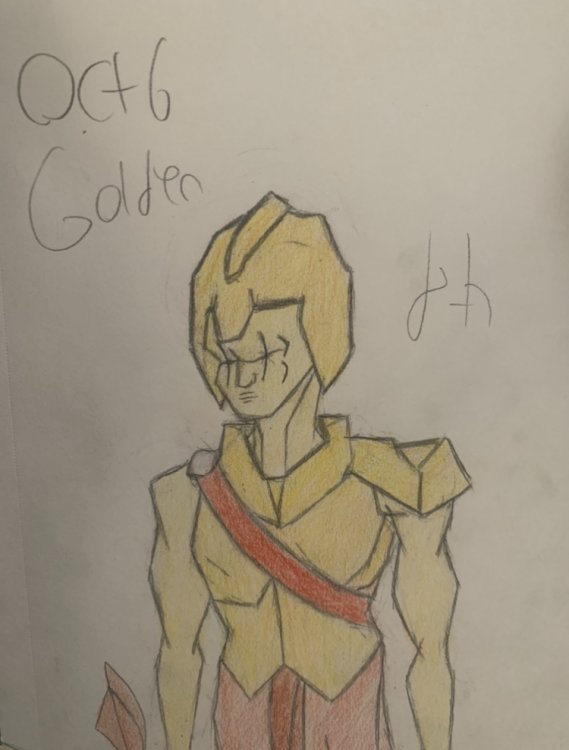
-
RightingWrite by Fadran - Fantasy
Channelknight Fadran replied to Channelknight Fadran's topic in Creator's Corner
there is not the more you think about it, the better it gets -
RightingWrite by Fadran - Fantasy
Channelknight Fadran replied to Channelknight Fadran's topic in Creator's Corner
I... don't like that approach but if we can agree that LotR is incredible then I suppose I can forgive you this once -
RightingWrite by Fadran - Fantasy
Channelknight Fadran replied to Channelknight Fadran's topic in Creator's Corner
Remember how I brought up how your Affinity determines how efficient you are at other Affinity Types? There's actually a mathematical thingamajig here. Let's say you're a natural Enhancer; that means with 100% Aura input, you'd get 100% Enhancer output. With Transmutation and Emission, you'd need 120% Aura input to get 100% Nen output; with Conjuration and Manipulation, it becomes 140%. The numbers themselves don't come up all that often because Nen very rarely becomes a case of Aura Attrition, but it's an important factor to consider. Specialization, however, has a 0% output if you're not a Specialist. Doesn't matter where you are on the ring: you can't Specialize. However, if you're a natural Specialist, then you can spec into Conjuration & Manipulation at a 120/100 rate, and so on and so forth. Also you can't have a pentagon because it would break some numbers. Currently a Conjurer has a 160/100 for Emission, but if you removed Specialist then it'd become 140/100 alongside Enhancement. Also also because Nen is based on your Willpower, there's a slight chance you can change Affinities down the line; this process is rare, relatively undocumented, and generally unheard of. However, there are cases of Nen Users (especially Conjurers and Manipulators) becoming Specialists by this process; sometimes you'll see charts that place Specialization at a 1% Output for Conjurers and Manipulators because of this. Saitama Thing: yeah, I see what you mean. I think it's up to preference on this one, but most of Saitama's best moments are when he's not even trying - like when he One-Punched the monsters for exploding his roof, or during the Cosmic Garou fight where he won (I kid you not) with a fart. The story often sets up the gag of "Oh no... this... this is a problem..." before punchlining you with the fact that Saitama's not even paying attention and is only worried because he suddenly realized the sale he wanted to go to was going to end soon. And honestly, I think I might have to concede to Brandon here because the difference between Limitations and Weaknesses is really important. To refer back to Nen, pretty much 75% of what makes the system so awesome is that you have to create your own Conditions for your powers to work. I think where he's wrong is more with "what your magic can't do is more interesting that what it can," because I think a better way to define an equation like Limitations > Power would be something like "What your magic can do is less interesting than how it can do it." But even then I'm not entirely convinced that that's what I'm thinking. My brain works in vibes, not words; it takes hours upon days to really figure out what I'm thinking about. Howl's Moving Castle: I love the movie AND I WANT TO READ THE BOOK BUT I CAN'T FIND IT WHERE THE HECK DID IT GO HELP will get back to you on that front once this issue has been remedied also the movie in subbed Japanese is 8000 times more magical I cannot recommend it enough anyway: HUNTER x HUNTER IS THE BEST ONE Me too Concur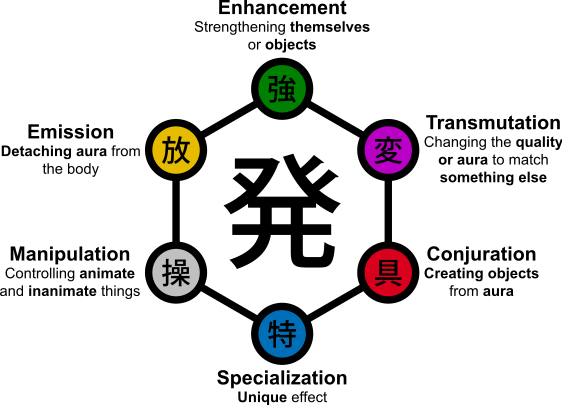
-
-
RightingWrite by Fadran - Fantasy
Channelknight Fadran replied to Channelknight Fadran's topic in Creator's Corner
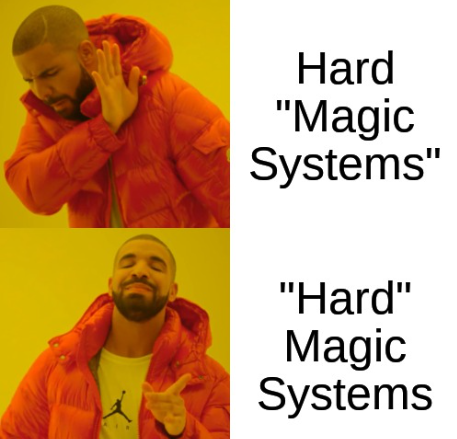
Did you know that most people have no idea what they're talking about when it comes to "Hard" or "Soft" Magic Systems? You might think that's a bit conceited for me to say, to which I reply, "Hah! You've activated my trap card: Writer's Rant! The opponent is compelled to listen through the end of whatever the Writer has to say, regardless of how much Hunter x Hunter content is thrown in." Yes. Once you have achieved Nen Enlightenment, there is no turning back. Anyway, allow me to explain myself. If you're like me, then you were rather confused whenever people used Bending as an example of a Hard Magic System; I mean, it's up there with Allomancy? And Alchemy? And... probably several other systems that start with A? It seems a little weird putting "do a karate move and summon fire" up there with Equivalent Exchange, and for the longest time I always assumed these losers had no idea what they were talking about. Just because there are four distinct elements, doesn't mean the system is Hard - and in fact, to an extent, I still stand by that. However A Hard Magic System does not mean a Rigid Magic System. Too many people assume that Hard Magic Systems have to have this incredibly intricate set of fundamental rules and limitations, with each application being its own clear separate category and league. I know for a fact that I used to do this a lot; one of my absolute earliest magic systems was just a laundry list of basic fantasy stuff packed into a wheel of symbols. A good example of a Rigid Magic System would be Allomancy, which (obviously) has clear conditions and actions by use of Omf Nomf love me some tasty pewter; and let me be clear that Allomancy is great. Sanderson's best magic system, even if it's not my favorite. However, if you try to use it as an example of a Hard Magic System, then you're going to seriously mislead yourself. "Rigid" means you have a clear and concise set of rules - these systems are pretty great if you know what you're doing, but a lot of people will just tack on random limitations to check the boxes. "Hard," on the other hand, simply means that how the Magic works is established. With Bending, you know that 1) Bending can only be performed by Benders, 2) each Bender can only Bend one type of element, 3) how well you Bend that element depends on a combination of training, enlightenment, and emotion, 4) the Avatar can Bend all four for some reason. It's established to the viewers that Bending Prowess = Talent x (Training + Understanding). That rule is never broken (except for when someone enters the Avatar state, which has its own set of rules), meaning the Magic System is Hard. We can expect the developments in fights and training arcs based on these rules, and even learn to recognize Benders prematurely by how they think and act. Despite the fact that Bending itself doesn't require a massive checklist of conditions to fulfil, it still counts as Hard; so as long as we can expect what will happen with its use. So what's a Soft Magic System, then? I used to think it just mean "Magic Without Rules," but in reality it's more like "Magic Without an Established Consistent Canon." Let's go the LotR route here, because Eru forbid I talk about anything without bringing up Tolkien. In The Hobbit, the most we learn about Gandalf's magic is in a single line after the dwarves escape the goblins, where he says something to the effect of "I had to store up my magic for many minutes in order to cast that spell of darkness," implying it works something like ki; but then again, he was clearly capable of calling upon vast amounts of it on a dime in order to face off against a flippin Balrog. So which is it? We have no idea. Do the Staffs do anything, like Saruman implied? How is it that Gandalf can have a level of prescience and yet remain the dark about so many things? If Sauron poured all his life force into the Ring, how is it that he got a positive return on the power whilst wearing it? What the hell is the difference between Darkness and Light, and why is it that it can randomly counter the other without any noticeable difference in overall power? How in the world did Elrond program a literal river to explode if the Nazgul Proximity Alarms went off?? But we love it anyway, because the LotR Magic follows a different type of consistency: Tonal. Specifically for this case, a sense of Mystery, Wonder, and Mythicism. We don't know how the Magic works, but if Tolkien says "Gandalf's magic cannot work here; the Darkness is too strong," we just go with it, because it makes sense anyways. It's the same reason why we can look at ancient myths and legends about dragons and gods and demons; Medusa's face is ugly enough to turn any man into stone, so shouldn't that work through a mirror too? The Nemean Lion's hide can deflect any blade, but it's never explained why. Why the heck did Loki give birth to so many eldritch horrors? The stories are about describing legends and heroes, not any of this "complexity" crap. Lord of the Rings, Legend of Zelda, Star Wars... an argument could be made for whatever the heck Rowling was doing, but I'd like to keep that can of worms closed tight and buried deep beneath the bridge of Kazad-Dum. The ones I'm electing to acknowledge are less of stories about complex characters and realism and crap, and more about telling a Legend, a Myth, or an Epic. In fact, I urge you all to start going through stories with Soft Magic and Worldbuilding, and to enjoy them as Myths instead of Stories; the idea of Eowyn slaying the Witch-King of Angmar, or Anakin Skywalker turning to the Dark Side hit way harder if you do. ...where was I? I think I was supposed to be talking about Hard Magic Systems. Blast it, Tolkien, you've gone and got me digressing again. Which means I should probably wrap things up by way of the Best Magic System of All Time: Nen. That's right. Nen. Three letters. It means "Sense," "Mind Force," or (perhaps) "Willpower" in Japanese, because Yoshihiro Togashi knew exactly what he was going for with this. For those of you not in the know, I first urge you to go watch and/or read Hunter x Hunter; it is The Best, and I Love It. For everyone else... okay, you know exactly why this system is the best. But for the gray area in between, I will explain. Nen is a magical art form, based off a person's Life Force (usually referred to as Aura). This energy is directly tied to a person's willpower, as demonstrated through training and study; and like all forms of energy, it can be converted. After you discover your Aura and learn to control it (through a series of techniques, like Ten and Ren and Gyo; basically just being able to manipulate how your Aura flows), you can begin to apply it into various abilities. Basic applications include just coating your fists in the stuff to punch someone really hard, or surrounding your vital areas to defend against even the toughest of weapons; but eventually, you will ahve to discover your Nen Affinity - and, subsequently, develop a Hatsu. There are six Nen Affinities: Enhancer, Transmuter, Manipulator, Conjurer, Emitter, and Specialist. Each of these demonstrate a major application of Aura - Enhancement allows you to imbue yourself, others, or things in Aura to make them stronger; Transmutation allows you to change the properties of your own Aura for fancy new effects; Manipulation is what it says on the tin, letting your control stuff; Conjuration, obviously, lets you Conjure objects (usually with far more potent properties than what a regular equivalent of the object might be); Emission is the process of detaching Aura from your body, often as a means of providing others with energy or just to shoot them with laser beams; and Specialization is the catch-all for the weirdos that don't really fit anywhere else. At birth*, you are pretty much just randomly-assigned one of these Affinities. However, your natural Affinity does not lock you into using only that type of Nen; instead, it just means you're most efficient with that form. There's a handy chart for this that I'm going avoid adding because either you've seen it never or you've seen it a kvghillion times, but basically the six Affinities are placed around a hexagonal ring, each one at a point; the farther your natural Affinity is from another application, the less efficient you'll be at using it (with the exception of Specialist, because it doesn't make sense by definition). So you think "well that's pretty neat; it'd be like if everyone was the Avatar, but mostly focused on one or two Elements instead of mastery in all four," but it gets EVEN COOLER THAN THAT. Because when creating a Hatsu (did I say what that was? It's your personalized Nen Ability.), there's another incredibly epic system with the simplest rules ever but also the best rules ever: Nen Conditions. Are you a natural Transmuter but really want to Conjure a Nen Sword? Is your Aura a bit on the weak side for something like that? Well look no further, my friend, because you can imbue your Hatsu with a fancy-schmancy Condition to make up the disparity! Something simple like speaking the sword's name aloud could be enough to significantly decrease the Aura Cost of using this ability, whereas something like "Can only be used once per day" or "Will drain the user's health if they don't stab someone with it within fifteen seconds" will not only make up the difference, but could even provide additional power to the Ability, like allowing it supernatural sharpness or speed! If you're confused, that's fine. That's the point. And we haven't even started going through stuff like combining Affinities, Nen Curses, Nen Exorcism, all of Greed Island... because this system can accomodate anything and everything; to the point that you could probably explain any Magic System ever created as an application of Nen. Stormlight, Bending, The Force, JoJo's Bizarre Adventure, Jujutsu Kaisen, whatever the hell was going on Wizard of Oz... ...have I contributed anything beneficial here? Has this whole thing just been me ranting without explaining how to actually apply magic systems to storytelling? Maybe this should've been an SU. TOO LATE Let's salvage this with some bullet points: A Hard Magic System has a level of Internal Consistency established to the audience as opposed to a Rigid Magic System, which is a branch of Hardies that has a strict set of rules. A Soft Magic System follows a Tonal, Narrative, or otherwise Story-Related Consistency, instead of a Functional one. In general, if you want to do one of these, go for No Thoughts; Head Empty; Vibes Only. Ever seen Howl's Moving Castle? There's your prime example. Watch and/or read Hunter x Hunter. It is incredible. It is worth your time. If you don't like it, watch NewWorldReview on youtube; he will change your mind. If that doesn't work, you're probably best sticking to boring old Realistic Fiction or something like that that was a joke, write what you want, I'm not trying to gatekeep fantasy but like... I'm not wrong I can help you brainstorm, develop, and rework Magic Systems! Turns out I poured a lot of my autism points into deciphering tonal consistencies and The Vibe Machine, so I spot weird issues pretty naturally. Also feel free to tell me off if I ruin something because I tend to do that. How Magic Systems work in Fadranbrain is very tightly-established, so I can occasionally be... insistent. Also I forgot to bring this up but like... I don't like Sanderson's "Laws" of Magic? First of all, calling them "Laws" without citations or peer-reviewed redrafts or clear scientific data means they're either fraudulous or straight-up wrong; but also they should really be regarded as more of guidelines than actual rules. "The author's ability to resolve conflicts in a satisfying way with magic is directly proportional to how the reader understands said magic." DUNNO. I will advocate for Gandalf vs the Balrog as a more satisfying scene than a lot of his much more significantly-explained sequences, but the idea itself isn't actually that far off. Maybe I'm more annoyed by how this "law" is perceived than what it actually says, but I take issue with the idea that you have to explain your magic for it to be satisfying, because it implies that the author basically has to explain the rules in order to do anything with it. A lot of my favorite Magic System moments are ones where what's happening is explained in the moment, or if they're foreshadowing something to be explained later on; for some great examples of this, I recommend Jujutsu Kaisen (And also HxH, ofc, but that goes without saying). "Weaknesses are more interesting than powers." DISAGREE. Limitations provide more tension than boundless powers, but they are not more "interesting." There's a reason why characters like Gojo Satoru and Saitama are so compelling, and it certainly isn't because they have some secret super-kryptonite that renders them completely powerless. I love massively overpowered paragon characters. I think a better way to word this would be "Defining your powers makes them cooler," because there are tons of magic systems with little to no real weaknesses (Nen, Ki... probably JoJo's, but I'm still watching through that so idk), but rather a clear and intuitive system by which they operate; it's how the characters manipulate this system to their needs that makes them so interesting. "Expand what you have before you add something new." THIS ONE IS GOOD. Honestly it's kind of just the last point. All these rules could probably be one rule, probably. The Fadran Theory of Magic: How you establish your Magic System determines how it can be used.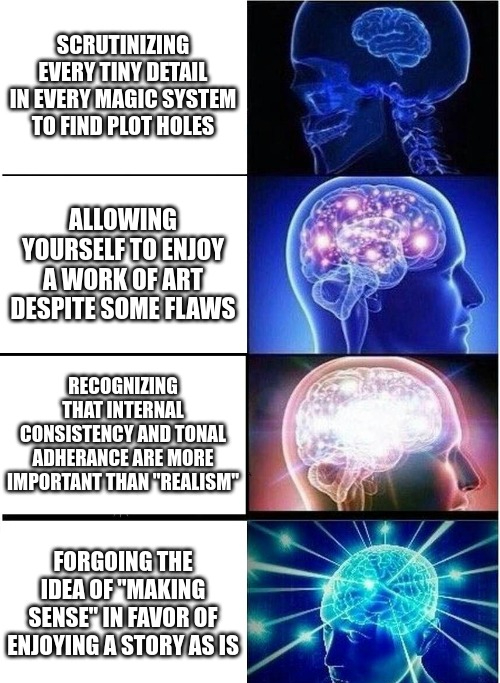
-
https://www.reddit.com/r/jedicouncilofelrond/
-
made a discord writing group server because I felt like it
join if you want
-
Fadracula’s Inktober - 2023
Channelknight Fadran replied to Channelknight Fadran's topic in Creator's Corner
I didn’t want to finish this so I left it looking sketchy. It be Diseri, a little tired, looking at (get this) a map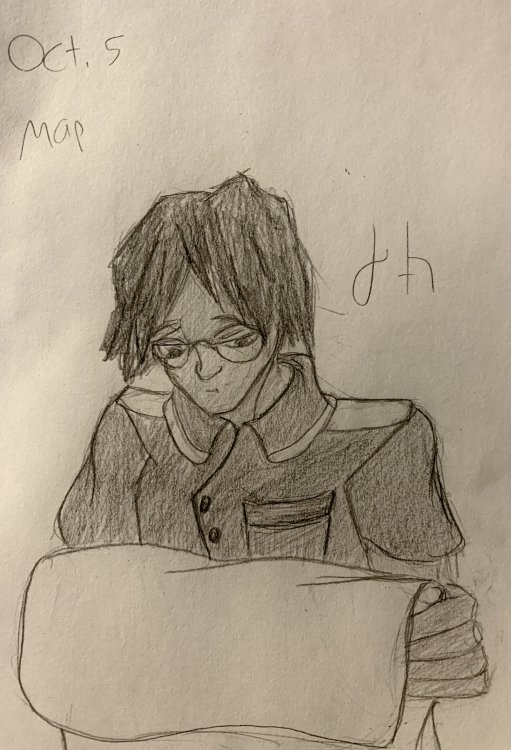
-
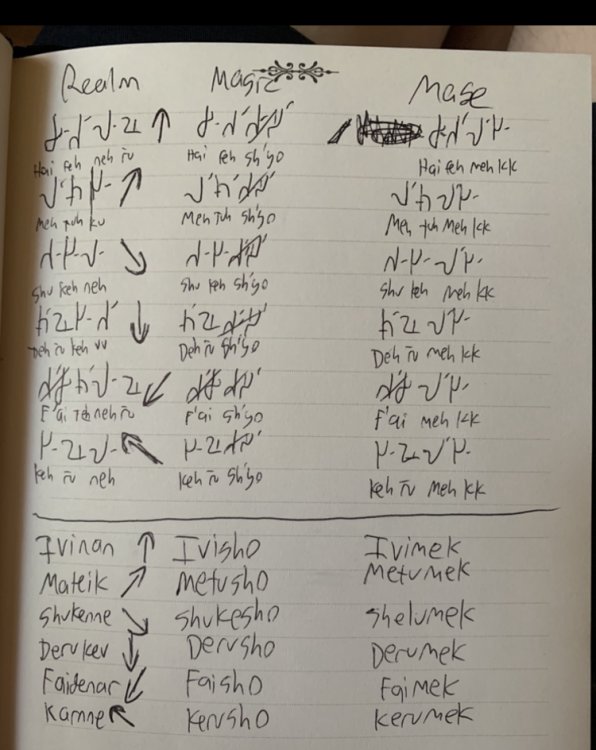
Names update:
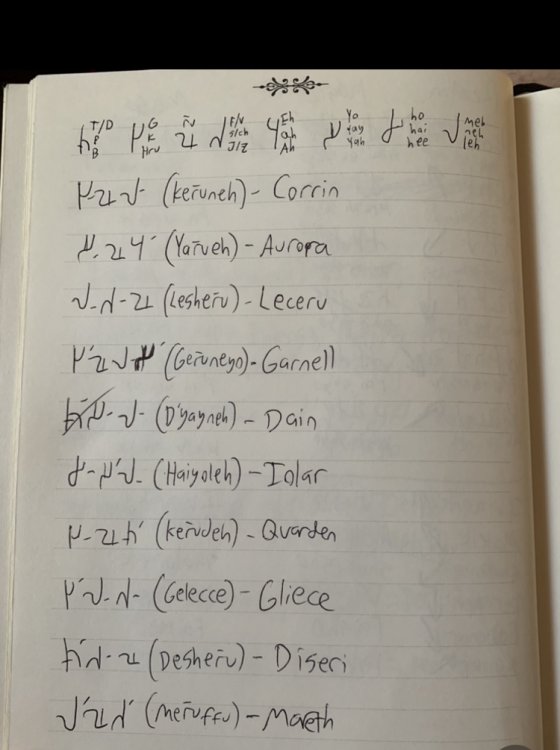
- Show previous comments 6 more
-
-
 Quote
QuoteI am subtly inquiring as to why one would assume a fantasy language should adhere to modern lingual charts instead of in-world dialect evolution
I am subtly inquiring as to why one would not use the scientifically recognized symbols for every sound in spoken language when making a pronunciation guide.
-
-
Jedi Insurgence - a Star Wars RP
Channelknight Fadran replied to Channelknight Fadran's topic in Roleplaying
Ten... nine... ahh, not quite! Mist is uncertain, you see.... six... -
Fadracula’s Inktober - 2023
Channelknight Fadran replied to Channelknight Fadran's topic in Creator's Corner
DODGE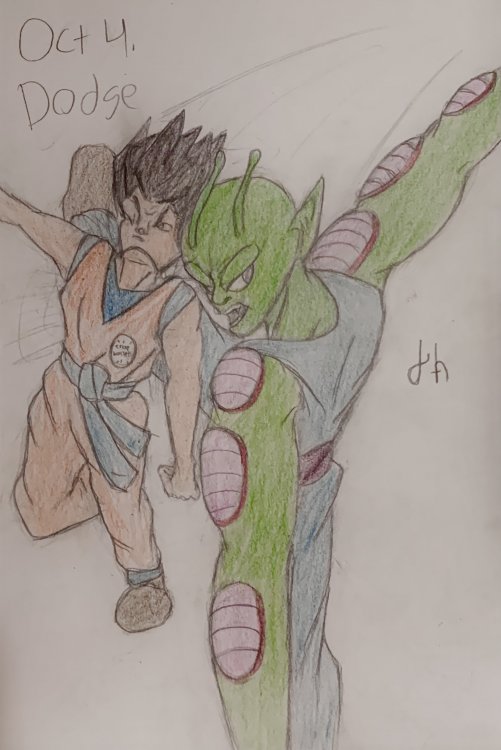
-
Jedi Insurgence - a Star Wars RP
Channelknight Fadran replied to Channelknight Fadran's topic in Roleplaying
-
The Iconar Collective
Channelknight Fadran replied to Channelknight Fadran's topic in Creator's Corner
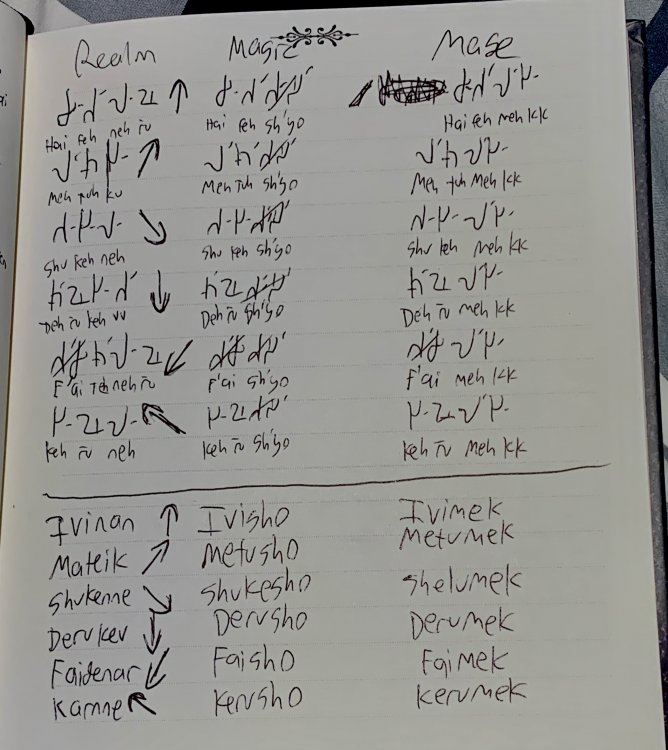
-
Jedi Insurgence - a Star Wars RP
Channelknight Fadran replied to Channelknight Fadran's topic in Roleplaying
Their ferocity... their coordination... their sudden burst of power. Krarik was ecstatic - alight with glee - as he battled in a twirling maelstrom of counterattacks. He had seen so much potential in them, and yet they exceeded those expectations; with enough time and training, they would likely become powerful enough to rival the Dark Council. Oh, that would be a battle to behold. The little girl, with power untapped; the jawa child, and his strange Technique; that non-Jedi... such a strange aura. The togrutan apprentice wielded Enchancement with incredible dexterity, and the one he recognized as Master Rajib... well, he was a force to be reckoned with for sure. There was another, waiting for a chance to strike - a curious soul, as Krarik had felt it during their challenge a few days ago. He was leaning further towards the Darkness than perhaps anyone else... and yet it seemed to have tainted him the least. And Aria Feisyyd, apprentice to Rikani Holnogar. It was a secret he'd kept (for it held little weight to him) that it had been by his hand that the Assassin called Sahn Jedar - his own sister - had been killed. Mourning was not a familiar rite within his clan, or indeed the tendency to dwell on their fallen; but Krarik had known her better than anyone, and more than anything he knew her strength. A monster like herself, slain by a Jedi Master far from the age of his prime... well, one could only hope that the one apprenticed to him would become just as remarkable. She was. Feisyyd had been wielding her full power from the start, and it showed. Krarik was repeatedly forced to fall into his own modified Trueform, already exerting himself dozens - perhaps hundreds - of times harder than he had been required to at his arrival. And yes, she had been at the disadvantage then - but this powerful spike of skill from the Jedi was no product of mere preparation. More than anything else, she had connected to these young pupils with a bond so powerful, it just about spat in the face of any Attunement or basic Principle. For a moment he wondered if there was another Technique she was hiding - something capable of passing power and knowledge to others with ease - but soon it became clear that this could not be the case. No, the way these children fought was steeped in experience and finesse. All the learning had been natural. To think such a force for knowledge even existed in the galaxy. Perhaps, in that case, he would have to fight a little more seriously today. Krarik snapped back into the smoke, mist blowing about in every direction as swipes and twists went wild. You have twelve seconds to discern how my Step of Shadow and Mist operates. Succeed, and you'll counter my next attack with ease - fail, and I kill the youngest one. -
So apparently the Speaker of the House was voted out of their position?
So apparently you can do that??
- Show previous comments 2 more
-
-

-
Actually @NerdyAarakocra that rule used to be the norm. It was only relatively recently that it was taken out. Though there was a deal made to reinstate it.
-
Ahsoka update:
(spoilers?)
SpoilerHOOOOOOOOOLY SMOKES THAT WAS REALLLLLY GOOD