alder24
-
Posts
6207 -
Joined
-
Last visited
-
Days Won
34
Content Type
Profiles
News
Forums
Blogs
Gallery
Events
Everything posted by alder24
-
Yes, that's what I think now. And that would explain very well why Kandra were unable to replicate Wax results.
-
Personally I don't think Hoid wants to be Adonalsium Remade, nor that collection Invested Arts will help him wih that. He already rejected the offer to Ascend during the Shattering, and he likely regrets being part of it now (https://wob.coppermind.net/events/171/#e8225) . As Kelsier proved, having access to Invested Art of a Shard doesn't provide enough Connection to that Shard to Ascend - Kelsier was an Allomancer (which comes from Preservation and is fueled by him), and yet without the Ire Orb, he wouldn't be able to Ascend to Preservation, and while being a Shard, be barely held it in control. Hoid having just all Invested Arts won't give him necessary Connections to hold all of them comfortable, he would liekly need to do far more to be able to hold them all. Use the " button at the top of your post writing panel, 6th from the left side. If you want to quote someone else's post, use "Quote" at the bottom of their post, and if that's multiple posts, you can add all of them by pressing the + button at the bottom of their post, and the "Quote x posts" at the bottom right side of the screen. Rayse is the Vessel of Odium. Rysn is a trader from Tayhlen city. Hoid and Rayse rivery might predate the Shattering, as he mention in the First Letter that he disliked him as a person: Edit: He likely does want to remade Adonalsium, but I doubt he want to be its Vessel, if there can be a Vessel for Adonalsium
-

Elentrians, Dakor Monks, and Hemalurgy
alder24 replied to Kendelian's topic in Elantris and Emperor's Soul
Yes, it works everywhere. They don't have the necessary Connection to the city of Elantris and the land where Elantris was built, so they can't be taken by Shaod. Magic in Elantris book is limited by the region. -
Sazed told Kelsier that Kandra found Atium dust in Wax's laboratory, so it did create Atium as well as Lerasium. However looking at this quote makes me think that Sazed is also lying here, but in a different way: But they found Lerasium dust in Wax's lab, which he didn't mention to Kel at all. It gives me the impression that Kel didn't know Wayne saved Elendel by ingesting Lerasium. It also makes me think that only Lerasium was created in Wax's experiment, and that was the dust Kandra found, Atium was fully annihilated instead. But in all other following tests made by Kandra, they weren't able to replicate that, and instead of Lerasium, they gained Atium and no Lerasium. This makes me now think that by splitting Harmonium with Trellium, you can only get one god metal, not both of them, and what metal you get depends on the intent you had. So it clearly looks like Sazed lied to Kelsier (at least by omission) about Wax's experiment, while telling the truth about Kandra tests. Now I believe that Wax created only Lerasium, and no Atium, and when Kandra tried to replicate it, they got only Atium, and no Lerasium. Sazed then lied to Kelsier, telling him that Wax created Atium, while telling the truth that during Kandra experiments Lerasium was annihilated.
-
That doesn't seem to be the case in books. Yes, it won't be 1:1 increase, but Bleeder was able to react to Wayne's bubble and their movement in that bubble perfectly fine, and Marasi in BoM, tapping speeds over Mach 1 (when she noted that snow was "hanging motionless in the air"), was still perfectly fine with her reaction, and could grab multiple vials from multiple man, without any trouble. She later reduced tapped speed, and had no difference in her speed of reacting compared to her physical speed. Yes, "she tapped everything" whatever it means, but base on the amount of speed left in the Bands for Wax, which was noted to be very little, and amount of mental speed, which amount wasn't told to us, but was enough for Wax to be able to thought about every possible option he had in between two words spoken by his uncle, it's fair to assume, Marasi didn't tap zinc at all, or at very least in small amounts. This proves that the mental help Steelrunnes get is quite significant, and can keep up even with Mach 1 speeds (tapped 40x?), and does change the perspective of time for a Steelrunner.
-
Best power set to fight a knight radiance
alder24 replied to bmcclure7's topic in Cosmere Discussion
Leeching would work, but you can't leech through a Shardplate, so you need to get rid of it first. And it isn't instantaneous, it takes time to fully leech someone as invested as Radiant. You can feed Nightblood with any type of investiture, including attributes stored in metalminds, If you're tapping speed, Nightblood will feed on that speed leaving you mostly with nothing. Feruchemy is a low invested art, there isn't much investiture being moved around compared to Stormlight or Breaths, so you would need a lot of attributes to wield Nightblood. Like a lot more. And please, try to avoid double posting, you can use the "edit" option at the bottom of your post, to add something new or change it. -
Becoming a Vessel of a Shard or Shards is different than combining different types of investiture. For a Vessel, you need to have strong Connections to a Shard, or multiple Shards. Sazed had that Connection. He was a Feruchemist (invested art that came from both Ruin and Preservation), and as such he worked on Preserving knowledge of ancient and current times. He was even Preserving the knowledge about Steel Ministry and TRL's religion, as for him it was worth Preserving. However, despite the fact that as a Keeper he should avoid any conflict with the Ministry, he was actively involved in the rebellion to abolish TLR, which is an Ruinous action. Then, during the events of WoA, he became a warrior, he fought, killed and brought Ruin to Koloss army, which connected him strongly with Ruin. All his actions during Era 1 Connected him strongly with both Shards, and gave him understanding of their nature. He knew Ruin is necessary, as equally as Preservation. And, because of the knowledge preserved in Terris religion, he knew both of these powers can work in Harmony, they did create Scadrial and humanity after all. This was enough for Sazed to Ascend. All of that is different from combining two types of Investiture, like Stormlight and Voidlight. Both of these are strongly Connected to existing Shards, they are part of Shard's power, and they are resonating with Shard's Rhythms. That's why they need to sing, starting from Shard's Rhythms, so they can slowly lead investiture into new Rhythms, and disconnect it just a bit from a Shard that they belong to.
-
Yes
-
Rhythms, Tones, and Investiture Programming
alder24 replied to Trusk'our's topic in Cosmere Discussion
Uff, I think this should work, but like with creating anti-tones, you would first need to remove the tone and connection of the investiture that it already has. Like remove Honor tone from Stormlight, and then imprint on it Feruchemical gold tone (which likely is a combination of Ruin and Preservation's tones with slight difference from Pure tone). Could a Bloodmaker use that "F-gold tuned Stormlight" for healing? Yes, I guess? There is no identity problem, tones are matching, the only problem that there might be is that it was Stormlight, but not any longer. I think that might be a good idea on how to fuel invested art with different investiture. -
This topic circulates every month, so: Windrunners: Windspren (we know) Elsecallers: Logicspren (we know) Skybreakers: Starspren Bondsmith: Gloryspren (very heavily hinted in OB) Edgedancers: Lifespren Lightweavers: Creationspren (WoB confirmed) Dustbringers: Flamespren Willshapers: Captivityspren (or Musicspren) Truthwatchers: Concentrationspren Stonewards: Painspren And to finish, I stand my ground once more #HungersprenForLift!
-
I'm reading The Stormlight Archive for the first time
alder24 replied to Amira's topic in Stormlight Archive
That's very worthy!
-
He likely isn't the era 1 level Mistborn, like Kelsier. He's likely weaker than that. He was likely unknowingly burning iron, tin, pewter and copper throughout the events of TLM. And because he ingested Lerasium in form of the dust, the dose he got had to be much smaller than what Elend get (he ingested a whole bead of Lerasium), which was much bigger than what Wayne get, ch 71: I think Wayne would be closer to Kelsier level Mistborn, and Wax would be even weaker than that.
-
Calculating the size and distance of Lumar's moons
alder24 replied to alder24's topic in Tress of the Emerald Sea
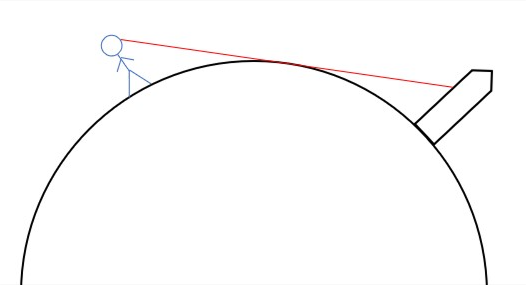
Ok, ok, I knew about these estimates before, but ignored them to make math easier, but I'm up to the challenge. So based on what you've written, still assuming sea of spores is spherical for simplicity etc: For an average sailing speed of 125 nm/day, arch L = 2083,5 km, and the radius of the planet is R = 3557,36 km. For an average sailing speed of 100 nm/day, arch L = 1666,8 km, and the radius of the planet is R = 2845,89 km. For an average sailing speed of a ship from the 14th-16th century, around 4 knots, which is 7.4 km/h, daily 177,6 km/day, arch L = 1598,4 km, and the radius of the planet is R = 2729,1 km. It keeps getting smaller. Now, Tress rowed for 1 hour and the ship disappeared behind the horizon. Assuming viewer height of 1 m (she is sitting) and the ship's height of 20 m, taking into account refraction, and a faster than average rowing speed of 13 km/h (average is around 5.6–7.4 km/h, for 7 km/h planet's radius would have to be ~700 km to make that ship disappear, that's a no-no, Tress knows how to row fast), Lumar have to be ~2400 km in radius, for the ship to fully drop beyond the horizon. That is almost the size of Mercury, which has a radius of 2439,7 km. That's small and Mercury doesn't have an atmosphere but it's possible for Mercury to have it - Saturn's moon Titan is ~5x less dense than Mercury and holds mostly a nitrogen atmosphere with surface pressure of around 60% higher than Earth's, so Mercury could easily hold Earth's atmosphere. That's at least checking out. Now doing the same calculation as before, I will assume Lumar is a Mercury-like planet, the same radius, density etc, arch L = 1428,9 km, which gives Crow's Song average sailing speed of around 158,77 km/day (85,77 nm - why do people have to keep using so many different, weird units for every, single thing???), very close to an average sailing speed of 4 knots (precisely 3.57 knots), and that gives us a hidden height of 335,16 km, which, using angular size of 60 degrees to determinate the true diameter of the moon, means that Lumar's moons has around 171,67 km in diameter, and are 163,49 km away from Lumar's surface. And perspective works almost similar to Earth's radius size, as close to the edge of the sea of spores, its moon would only be around 7 degrees in angular size, and that's the same value for Earth's calculations. Lumar's moons would still have to drastically visually change in angular size to make up for that very close distance to the planet. And because of that, Lumar's moons can be theoretically almost as big as 330 km, which would take 60 degrees of the sky around 300 km away from it, but right at the Lunagree, the moon would cover literally the entire sky, and that's way too big, and way too dark. For "some" fragment of the sky to be something else than a moon, it would have to be at most ~250 km in diameter, which would left like 3 degrees of normal sky visible from Lunagree. As you can see, there isn't much room to change moons diameter to make them look sensible. But there is a bigger (or rather smaller) elephant in the room. You see, that diameter is so small, that it means Lumar's moons can't be gravitationally spherical. The smallest spherical body in a Solar System is Mimas (I think), the moon of Saturn, with a diameter of almost 400 km. And 400 km is a lower limit for icy bodies to become spherical, for rocky it's around 600 km. So those moons are now too small to be round (which is still the smallest of all problems). Roche limit for those moons - for density of Earth's moon - 3612,91 km, for density of Mimas - 5156,8 km, for density of Jupiter's moon Amalthea of 0,857 g/cm3 (which has similar diameter of 170 km but isn't spherical) - 5687,91 km, or have almost the same density of 36086 g/cm3 to make it work with new numbers. So yeah. This is still a bigger problem. But Mercury-sized Lumar with moons with a diameter of 170 km is as impossible as Earth-sized Lumar with moons having 450 km in diameter. Moons are already impossible, so them being spherical changes nothing. Lumar is a truly magical world. Oh, I'm still having fun Knowing moons are impossible wasn't enough for me, I wanted numbers to see how much are they impossible! Now I have so many of them, and I'm satisfied. -
No, but ReLuur have Blessing made out of pewter, which steals Physical Feruchemical powers, but likely dosn't have them, so it looks like known metals can steal more things that the Hemalurgic table tells us.
-
Could an Inquisitor Be Controlled Like a Kandra or Koloss?
alder24 replied to Longshot97's question in Cosmere Q&A
Hard to say, probably depends on Marsh's mental stability. But he has copper (and duralumin) anyway, so it would help him a lot to counter it, or just be immune to it. But in theory, this should be possible. -
All of them. Likely all what Feruchemist can store (maybe without stuff like fortune or connection etc). Mental speed, physical speed, mass, health maybe etc. Hard to say but there is more than what 4 Blessings give. Possibly, hard to say. We don't know much about Lerasium, and even less about it being a spike. So it's really hard to say what would happen. Hemalurgic table says "Lerasium steals all attributes", all not any, so it means it will steal every attribute that the victim has, whatever it might be.
-
Nightblood is made out of steel, which was invested, and he is a Shardblade.
-
Lerasium spike steals all attributes at once, so yes, making Blessing out of it would give Kandra not only attributes of all other Blessings combined, but all additional attributes that the victim had as well. Kandra can burn Lerasium and gain Allomantic powers, but would Lerasium spike, charged with hemalurgic attributes, act the same way like regular Lerasium, or more similar to burning metalminds? Different WoBs on this but it looks like you could partially burn it as a normal Lerasium. I think it would likely be similar to Miles burning partially filled metalminds, he can burn it as long as there is an attribute there and compound it, but after he burns the entire attribute away, he is left with regular gold. With Lerasium spike it would be the opposite, as long as the spike isn't fully charged with hemalurgic charge, you can burn some part of it like regular metal, but after that runs out, you will be burning metal with hemalurgic charge, which will have different effects.
-
I just stumble across this quote from TLM, ch 15, which give me the idea: And I think this might be the key to splitting Harmonium. Wax didn't just have the Intent to create Lerasium, he did the experiment without any desire to use both metals. He didn't want to use either Atium or Lerasium if he succeeded. He had already held the power of Fullborn and didn't want to have it back. Like he said, creation of Atium and Lerasium wouldn't change anything about him - he was Preserving himself. And I think this specific intent, to create god metals without any desire to use them or change yourself, is the key to getting Lerasium. After TLM events, Kandra did the experiment specifically to create Atium for Marsh, and probably to use Lerasium in some other ways, therefore the intent wasn't met. There are a lot of theories about this, but I still feel there must be something with the intent that prevented Kandra from creating Lerasium.
-
Yes He can heal that and even get his powers back (https://wob.coppermind.net/events/406/#e14304) Yes, you can soulcast into aluminum, but you can't soulcast aluminum into something else. That would do nothing. Those are just metalminds, not his metalminds even, they won't effect him in any other way than dealing physical wounds that can be healed. And this won't do anything to his powers. You can use the "edit" option at the bottom of your post to edit your post instead of double posting
-
Nightblood's sheath is aluminum. Silver blocking connection doesn't explain Threnody. There, silver is used to stop Shades, hurt them and stop the effects of Shades encounter with your body. And because withering is described as a kind of cancerous Forging, taking over your soul, silver stopping it seems to "kill off" investiture, which causes this effect. Aluminum seems to stop connections as well as shield from other forms of Investiture - like in OB in Kholinar room with aluminum walls prevents spanreeds from connecting to each other.
-
The amount of time that passed after death likely has no effect on Lifeless. But how much they were invested when they died is affecting Lifeless after creation. Arsteel was invested, he was given Breaths by Vasher right before he was killed. This had an effect on him as a Lifeless, making him more self-aware than other Lifeless. But making Cognitive Shadows is something more. As far as we know, you can't make a Cognitive Shadow when making Lifeless.
-
There is a connection between these events, we don't know much more Lifeless would act like a living body in contact with a Shardblade No idea tbf, likely not, as their soul still wasn't consumed, if it was, they wouldn't be able to use that hand, so the soul is still there, so it will likely react like a regular living flesh. We don't know. In Awakening, turning to gray color is a physical change, but that also is changing the soul of that object Yes It will resist a cut of an Shardblade Potentially, that's what Nightblood and Vivenna's blade are. This means 1000 Breaths are needed for this, at least (we don't know how many Breaths were used for Vivenna's blade).
-
I think it won't be a problem. Natlhians with Breaths are capable of protecting themselves from any nasty Doug who would try to enslave their population. However Breaths are just a profit waiting to be made, so Nalthians themself will capitalize on this, create a Cosmere wide market to sell Breaths and technology working on Breaths. They will be buying Breath from the poor, and selling them to the rich, which is already happening in Warbreaker. But the scale of this will greatly increase in the future. Why not? That’s easy profit. Only Nalthians possess investiture so easily transportable from a planet in the entire Cosmere. They only need to cash on it, and control the whole market.
-
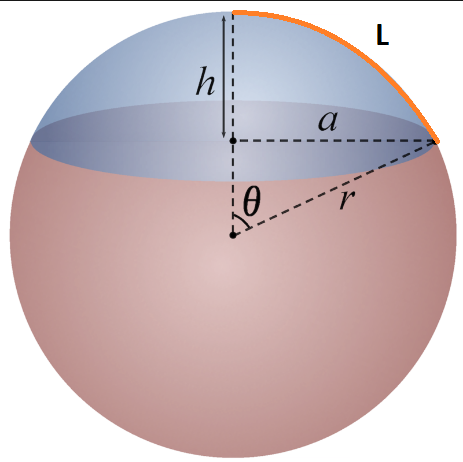
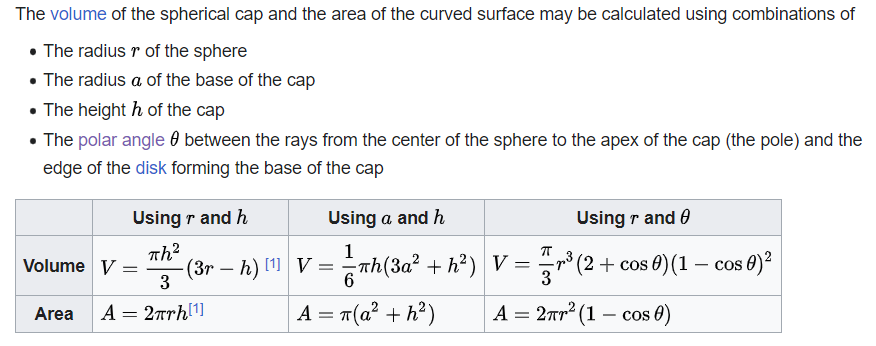
Since I've read the preview chapters of TotES, I was wondering how big and how far away Lumar's moons have to be to create the world Brandon envisioned. So here I am, finally after reading the book, I can do the math myself and answer that burning question. The book gave us 2 very important pieces of information that makes this math possible. So let's dive into this. I won't focus on the exact orbit of moons as this was already greatly showed in this topic: For me, it is important that only one moon is visible from each sea of spores and that when crossing between two seas, both moons are visible for a short time, before one of them will set behind a horizon. So moons can't be in a geostationary orbit, they have to be in orbit around the entire sphere of the planet. So no matter where you are on the surface of the planet, you can see at least one moon. The second piece of information, mentioned multiple times in the book, is that moons take 1/3 of the sky. That's a lot. And here we can start doing our math. Bear in mind, I'm not that good in math, so there are mistakes here (few of them I'm aware about), but I think this will give us nice approximations of the size and distance of Lumar's moons. For now, to have a good comparison, let's assume that each Lumar moon is the size of the Earth Moon. For the Moon to take 1/3 of the sky, he would need to be much closer than it is. And we can calculate how far he needs to be, based on the angular size. Right now, the Moon has an angular size of around 0.5 degree. On Lumar, it would need to have 60 degrees (that's 1/3 of the 180 degrees). And the formula for angular size is: Angular size in degrees = (size * 57.29) / distance. We have the size of the moon (diameter = 3,474.8 km), we have angular size (60 degrees), we can reposition the equation to search for the distance. distance = (size * 57.29) / Angular size in degrees = 3317,85 km. That's how far away Lumar's moon the size of Earth's Moon would need to be to cover 1/3 of the sky. That's almost 1:1 proportion between size and distance. But Lumar's moons can't be the size of Earth's Moon. Because only one of them is visible for each sea of spores. The crossing between two seas is very short, and as soon as you cross into a different sea, the moon of the previous sea disappears behind the horizon. Which means we need to look into how much is hidden behind the curve of the Lumar's surface, as this hidden amount would be equal to the distance between Lumar and moon plus the size of a moon (when standing on the edge of a sea of spores). So for simplicity we can assume that moons are like a tower or a mountain stretching from the surface of the planet, obscured by the curvature. Because there are 12 moons and 12 seas covering the entire planet, 1 sea covers 1/12 of the planet's surface. Assuming that Lumar has the same size as Earth: Earth's surface = 510100000 km^2 Surface of one sea of spores = 510100000 / 12 = 42508333,33 km^2 So assuming that each sea is circular (which has its own problems, as you can't divide surface of a sphere into circles without them overlapping, so here each sea would have to be bigger than 1/12, and each sea has a pentagonal shape, but let's ignore it for simplicity), each sea of spores would be a surface of a spherical cup. When standing on the edge of this circular sea of spores, the moon of that sea would be fully just under the horizon of the planet. Here I'm looking for the length of the arch L, so I can use it as a distance between observer and observable object in curve calculator (which, as I see now, gives me another problem, because the distance between observer and observable object behind a curve of the planet is a straight, shortest line between them, not an arch along the surface of the planet, but I don't know how to get that line without having other values like height of observable object etc, so yeah, I did ignore that as well). Using the equations presented above for a spherical cup, I have the Area of that cup (1/12 of Earth's surface), the radius of the sphere (Earth's radius R = 6371 km), and pi = 3,1415 so from this I can calculate all values a, h, and angle θ, and from that I can get length of the arch L, L=R*θ. Doing the math, I got: a = 3521,81 km, h = 1061,91 km, angle θ = 0,585706545, and L = 3731,54 km. And now having L, I can give it into a curve calculator, which would calculate the hidden height of an object visible behind the horizon (assuming observer height of 10 m, standing on the deck of a ship) - https://www.metabunk.org/curve/ This gave me the value of the hidden height taking into account refraction of 878.62 km. This is the sum of the diameter of Lumar's moon and its distance from the surface of the planet. And here we can go back to the angular size: Angular size in degrees = (diameter * 57.29) / distance. Now assuming we're standing right under a moon, we know that the distance from the surface of Lumar to the other side of that moon is 878.62 km, and this is equal to diameter + distance. We need to only have diameter in the equation of angular size, so distance = 878.62 km - diameter, therefore: Angular size in degrees = (diameter * 57.29) / (878.62 km - diameter). And the angular size is 60 degrees, so changing the equation to have diameter on one side we get: 60 / 54.29 = diameter / (878.62 km - diameter) 1.05 = diameter / (878.62 km - diameter) diameter = 1,05 * 878.62 km / 2,05 Diameter of the moon, right below it, is equal to 450,02 km. And the distance between the surface of the planet and a moon is equal to 428,6 km. That's small, and very close to the surface. And here perspective would cause a lot of problems, as the further away you are from that moon, the smaller it is in the sky. And when you are 1000 km away from that moon, its angular size is already only around 30 degrees, as that's twice as far, 2000 km - 15 degrees, closer to the edge of the sea of spores 3000 km, and has only 10 degrees of angular size. Nobody in the book ever mentioned a moon shrinking or growing in size in the sky, and this had to be done. Moons can't be further away from the surface of Lumar than 878.62 km, as they would be visible from multiple spore’s seas at once. They can't be on Lumar's geostationary orbit (same as Earth's, around 36,000 km), as again, they would be visible from multiple seas at once, almost from one pole to the other. But only one moon is visible on a one sea, and it hides below the horizon as soon as you leave that sea. This means Lumar's moons have to be very close to the planet, and thus very susceptible to perspective. It's weird that Tress never was amazed by the Emerald moon shrinking, or the Crimson moon growing in size in the sky, as this should be happening, nor did Hoid mention it. Even right below the Crimson lunagree, nobody mentioned that the Crimson moon is huge, like nowhere else on the Crimson sea. And these are very drastic changes, hard to miss. We've been told only that moons take 1/3 of the sky, and that's it. Knowing now that the angular size of the moons changes with the distance, we can assume that moons can be bigger than 450,02 km, by decreasing the distance between them and Lumar's surface, but they can't be bigger than 878.62 km (as they would be touching the planet's surface). But this is basically a slide now, the bigger the moons, the closer they get to the planet's surface, the less changeable they're by perspective from a far away, but if you get too close to it, it will cover most of the sky instead, not just 1/3. So there is no good solution to it. Ignoring this blazing problem, I will now calculate the Roche limit for the Lumar - moon system. Roche limit is the distance from a celestial body within which a second celestial body, held together only by its own force of gravity, will disintegrate because the first body's tidal forces exceed the second body's self-gravitation. For the rigid, solid satellites: Assuming that Lumar's moons have a density of similarly sized moons in our Solar System (Mimas ~400 km, 1,15 g/cm^3), then Roche limit is 15367,61 km. Assuming that Lumar's moons have a density of Earth's moon (3,344 g/cm^3), the Roche limit for Lumar's moon is the same as the Moon, so ~9482 km. Now let's go crazy, assuming that Lumar's moons are made out of pure Osmium, the densest element on the periodic table (22,59 g/cm^3), and it's equally dense across its volume, the Roche limit would be equal to 5016,50 km. Which is still far too far to prevent Lumar's moons from disintegrating. How dense would Lumar's moons have to be, for their surface, closest to Lumar, to be on the Roche limit (making spores fall on the planet), but the rest of the moon to be on a "stable" orbit? So changing the equation and finding the density of the satellite, gave me the value of 36222,46 g/cm3 - which is comparable to a white dwarf star's density (between 10^4 and 10^7 g/cm^3)! That's just crazy!!! A moon with the diameter of 450,02 km and this density, would have a mass of 1,73 * 10^24 kg, which is "only" 3.45 times less than Earth's mass. Therefore all of Lumar's moon would be 3.5 times more massive than Lumar's planet itself. Also, they would be extremely bright and hot. And I don't even want to know what would happen with the orbits of Lumar's system if that was the case. So that's definitely not possible. But that's the only way in which Lumar's moons won't be disintegrated by Lumar's gravity, be that close to its surface, and also make spore fall on the surface of the Lumar "naturally". That's enough math for me. That was a fun Sunday, all of this to prove that Lumar's moons are impossibly close to Lumar's surface, far beyond their Roche limit, on orbits that can't exist in real life. Like we didn't know that already. But still, having some numbers for it is so much more fun (I'm a very weird person). Of course, keep in mind that spore seas aren't spherical, the distance between observer and a moon isn't the same as the distance between observer and the base of a lunagree, going along the surface planet, like I assumed in these calculations, but I think that these calculations provide a close enough approximation of the size and distance of Lumar's moons, to make it "useful". All of my calculations are done in a very chaotic Excel, in which I already got lost, but I'm almost certain there are no basic calculation errors there but feel free to check it out (I hope so, tomorrow I won't recognise that spreadsheet). And so here it is, the answer to the question that has been keeping me from sleeping at night for the whole year. How unrealistic is the Lumar planetary system? The answer is - very unrealistic. Thank you for reading this far, if you enjoyed it, you're as crazy as I'm.