



Lewis Nethur
-
Posts
1141 -
Joined
-
Last visited
Content Type
Profiles
News
Forums
Blogs
Gallery
Events
Everything posted by Lewis Nethur
-

If you were a twinborn, what would you like to be?
Lewis Nethur replied to Lord Bookwyrm's topic in Mistborn
I think you deserve more credit for this than you received; compounding gold heals anything that, on a deep and spiritual level, a person perceives as damage. A gold-compounder with a rigorous understanding of the science of aging ought to be able to prevent cell damage due to aging, which could allow them to live an incredibly long time relative to a normal human. However, they still wouldn't be immortal, and their quality of life would still gradually decline due to the ravages of time. This is because there are aspects of aging that, while not technically damaging in and of themselves, are still bad for you when aggregated. Through no fault of DNA damage due to cell-division a gold-compounder would still eventually experience blindness, deafness, memory-loss (technically uncontrolled memory-overwriting; their brain would just eventually be "full"), dementia (as well as emotional disorders as new memories and neurological connections randomly replace old ones), stiffening of arteries (could be slowed with a good diet, but my understanding is that it couldn't be stopped completely), and last but certainly not least, elongation (drooping) of extremities (which is theorized to simply be caused by gravity) eventually resulting in loss of mobility. So Miles might have been able to live a few hundred years, but somewhere between approximately 150 and 300, he probably wouldn't have wanted to anymore. (maybe longer, I'm not a doctor) -
I failed to mention this before, but I believe Sanderson has thus far declined to clarify how Ruin altered people's copperminds. Your proposed method, that Ruin could alter the information while it's being stored into or tapped out of the coppermind is one possibility; and a rather good one at that. Another is that Ruin may have only been able to alter the copperminds of people with hemalurgic spikes; in the pre-Lord Ruler days, I believe keepers were among the people who used hemalurgic earrings to intentionally commune with Ruin as part of their religion. Another possibility is that, since both Ruin and Preservation can directly fuel feruchemy with their Investiture, I'll look for the WoB later, but this has been explicitly stated, he might just be able to screw with copperminds with absolute impunity. Even when Ruin knew precisely what was written on a metal plate, as well as the font size and precise placement of every letter, he couldn't alter it; Sazed made a rubbing of the plate in the basement of the Inquisitor's temple, yet I believe it's stated that the plate remained inaccessible to Ruin's manipulations. I think there's more to this limitation than just an inability to see the writing. You made a good point about the obligators working in a metal box to blind Ruin. If you got a metal PC case you might be able to protect your personal data from Harmony no matter what medium you stored it on. Shielding an entire planet-wide network from Harmony might be possible; granted, he could always use Kandra to manipulate networks the old-fashioned way: by introducing holes in network security or hacking.
-
I think it's a fairly arbitrary distinction to claim that objects smaller than sticks/leaves don't have souls...but I'll agree to disagree. I can't "see" protons, but I know they are there, presumably the same would hold true for the spiritual aspect of a proton in the Cosmere.
-
Everyone here is dancing around the exact same mathematical concept as near as I can tell: Fractals. The structure of the veins in a leaf are extremely similar to the structure of the branches on a tree, which are extremely similar to the structure of a forest. A microscopic image of a rock is similar to an image of a rock is similar to an image of a mountain. In my mind, the spiritual aspects (souls) of "things" in the Cosmere follow this principle of infinitely repeated geometry. Every quark has a soul, which combine to make atom-sized souls, which combine to make molecule-sized souls, ect. All of the souls always exist, but most of them are too small to be noticed most of the time. A person is made of billions of cells working together which are individually alive. If any one cell dies, there is no detectable change. This is also how cities, countries, and planets work. A planet has a soul that is composed of the souls of its inhabitants, including the rocks, gases, Investiture, and people, that compose it. Edit: Google or YouTube "Mandelbrot set" for a visual representation of fractals far more elegant than words could ever describe.
-
1. Lerasium appears to permanently increase your Connection to Preservation (Harmony); there are realmatic consequences to this that, in some cases (possibly Hoid's), could be very negative. It's speculated that using Lerasium to gain access to 1 or several individual powers would increase your Connection less than getting all of them. Plus, you could theoretically make yourself a hyper-powered multi-power misting, which could be better in some cases than a super-powered mistborn; this depends heacily on what lerasium's alloying ratios are though, which are unknown. If the steel-lerasium alloy is 99% steel, then you could use 1g of lerasium to make 100 1g steel-granting beads. 2. What @Oversleep said. 3. See 2.
-
I'm not sure I agree with the savant assumption. Wayne is almost certainly not a bendalloy savant considering how expensive it is and how fast it burns, and Vin is able to do things like hover close to the ground, which requires extreme burn-rate control, but she lacks the "perks" of other possible steel savants, such as pushing on points of an object other than their center of mass (Kelsier) and seeing multiple steel-lines for different parts of a object (Wax). Also, I do we have a confirmation on how fast nicrosil or duralumin burn relative to other metals?
-
@Calderis is exactly right; the official canon conversion is precisely: 1 year on Roshar = 1.1 Earth (Scadrial/Yolen) years. Since Rosharan days are 20 hours long, the math only works out neatly if you assume that Rosharan hours (seconds) are slightly shorter than Earth hours (seconds). Technically, this hasn't been individually confirmed (as far as I know); it may be that Peter, or Greater Roshar in general, just don't care about significant figures past 2 digits. However, for the time being, it stands as an exact conversion that hasn't been hedged or revised over the last few years.
-
We've seen that metals can, with practice, be burned at a wide range of rates. Wax and Zane make great use of this phenomenon with steel, Breeze and Allriane show off their subtle prowess with soothing/rioting, and Wayne speeds up time by anywhere from a factor of 10 (see: first scene with Steris), to around a factor of 10,000 (see: scene where Wax's butler tries to kill him with dynamite and wiki the propagation speed of explosions...) So my question is: has it been confirmed that duralumin and nicrosil can also be burned gently as well as flared? Could a nicroburst, for example, put their metal on a "slow" burn and increase their target's burn rate by, say, a factor of 2-3 rather than burning their target's metals ridiculously fast? Or conversely, could they flare nicrosil for an even more intense effect? I'm imagining a talented nicroburst turning a crasher like Wax into a ungodly artillery weapon, or sneaking up on coinshots and causing them to accidentally blast themselves to supersonic speeds.
-
Presumably, anything not literally inscribed in metal can be altered by Ruin's power; for example, he can change the contents of copper minds, despite their being made of metal. Pretty sure he also changes a message Leras' Cognitive Shadow tried to draw in some dust to communicate with Elend at one point, though I can't recall off-hand which book. Since Scadrial's technology is slated to grow and advance with a heavy focus on the metallic arts, I would assume that their advanced fourth-era computers will utilize copper feruchemy, as the information storage density of a coppermind apperas to be at least equal to (and potentially wildly greater than) what the best real-life technology can achieve. In which case, Harmony could totally manipulate and censor their internet... EDIT: Plus, the bandwidth of copper feruchemy is fantastically greater than any currently available or theoretical technology that I'm aware of.
-
I believe there's a WoB explaining that Kelsier's maltium flare may have worked...differently...than a normal malatium flare would be expected to. I think the justification was that, since he was dying and therefore actively transitioning between the realms, he was briefly able to use the metal to "greater" effect than normal. If you burned duralumin and malatium you could probably achieve a similar result, but that's still speculative.
-
I found this somewhere but I can't recall where offhand, probably the annotations...Zane was psychotic before receiving his spike, which implies that Ruin was able to speak to and influence him, possibly from a very young age; he actually spiked himself deliberately, although the person he killed for his spike and the exact time/circumstances of the spiking have not been revealed or canonized. My recent revelation: Sanderson was something of a Robert Jordan and WoT fan. Jordan had an interesting approach to narrating scenes by characters who were actively experiencing psychotic episodes, in that, he usually just wrote the scenes as if what the characters weren't insane or overtly acting strangely at all. On several occasions, a scene would play out once from the POV of a mentally unstable character and would seem pretty ordinary and rational (minus some voices in that characters head that they usually responded to in a relatively calm manner), and then later the scene would be played out from the POV of an onlooker, who would note that the original narrator had been actively talking to the voices in their heads, screaming, laughing, crying, or staring off into space for several minutes at a time. I now believe that Kurkistan's explanation that Zane literally said the words out loud (even though he thinks he didn't, which is why they're italicized) is probably the best theory to explain this. People respond to Zane during his POV's in a way that clearly expresses that they regard him as absolutely bonkers, which, judging just from what Zane thinks he says and does during those scenes, is actually a little strange; he acts crazy and sounds threatening, but I don't think he does nearly enough to have earned the crystal clear reputation as a madman that he seems to possess. I'd guess that most, if not all, of his conversations with Ruin happen out loud. It's a style Sanderson was very familiar with, not widely utilized by many authors, and allows a very irrational (and difficult to write) character to be followed in a rational and interesting manner. I just wish we could've had a couple lines of Straff's POV of the scene showing Zane literally mumbling to himself so this could have been confirmed in-book.
-
Since this thread died off a few weeks ago it has been pointed out to me that Nightblood's sheath is widely speculated to be made of aluminum, not steel like the rest of him was probably forged out of. This sort of throws a wrench in my earlier analysis. Considering that an aluminum sheath could be flattened and shaped much more finely than a wooden one without losing structural stability and aluminum is about 1/3 the density of steel, it might actually weigh less than someone would expect, maybe as little as 1-1.5 pounds, rather than the 3.3 I proposed earlier. Further, it's been confirmed that Nightblood is much more highly Invested than can be accounted for simply from the 1,000 Breaths originally used in his creation. Basically, I think the door is much more open as to whether or not his Investiture has significant weight than I originally argued in this thread. For any new readers, I apologize if my flip-flop is confusing; I'll avoid going into politics.
-
That's wild, I definitely hadn't seen that before. What's funny is that more and more I've been coming around to the mistwraith-hijacking idea as I feel like it has a better chance of explaining where Kels feruchemy comes from. (Mistwraiths were created from full-feruchemists using the power at the Well; logically, I would think Ruin's power, and therefore possibly hemalurgy, could theoretically change one back.) Still feels slightly too convoluted to me though. Granted, my "Marsh's spike" theory isn't earning any simple-elegance awards.
-
Sanderson originally indicated (in 2008-ish I believe) that it wouldn't do anything unless the spike came from the person trying to burn it, which, while technically possible, would require bizarre circumstances and produce very odd results. He changed his mind a few years later and said that burning a spike would "splice" the hemalurgic charge to the user's spiritweb, which would probably result in some far-reaching consequences and might be excruciatingly painful and life-altering. The unspoken indication is that the portion of the spiritweb stored in the spike might not be added to your spiritweb, but may instead overwrite the corresponding section of your spiritweb, which could result in the loss of some/all of your allomantic/feruchemic abilities in exchange for whatever abilities are in the spike. Or it might send you into shock and heart failure from agony...it's sort of open-ended. Nowadays, I believe he just RAFO's this question, and promises that an answer will become clearer once things like "mechanical allomancy/feruchemy" have been explored and the underlying realmatics of the metallic arts have been better fleshed out. Honestly, I believe he is still trying to decide how this should work realmatically. It's a pretty complicated interaction and, given the nature and rarity of hemalurgic spikes so far in the series, it's not implausible that no one has ever tried it, or, if they have, it's not implausible that no one has ever documented it. He still has like 7 books planned for the Mistborn series, as well as some musings on spin-offs and cross-overs in the distant future, so he's trying to be super careful not to unbalance the relative power of the magic systems and make one overpowered. It's like trying to balance the power of character builds in an RPG, minus the ability to retroactively roll things back with patches and updates.
-
Well...Pai seems to have deliberately set out to initiate an uprising against the queen and ardentia; She quickly developed a rigorous understanding of the queen's temperament and published her analysis of how it violated all of the holy attributes. She had to know she was going to be executed. First, I find it very difficult to believe that any Herald would stick around for 4,500 years, then deliberately get themselves killed over one crumby ruler who basically is only responsible for the governance of a single city (The majority of the day to day operations and decisions appear to be handled by the highprinces and/or their regional governors). Buuut...Her primary outrage at the queen appears to stem from wastefulness and ignorance. This could represent a corruption of the attributes of "Learned" and "Giving" in the sense that, rather than promote the cultivation of those traits in others, she sought to punish and tear down those who did not exhibit them to her satisfaction. Nalan was the herald of Justice. This doesn't mean he was a judge or sought to root out criminals. In the context of a Herald come to Roshar to unite humanity against an invading army of demons, it most likely means he sought to cultivate law and order and instill a sense of justice in the people of Roshar, which is actually quite different. One interpretation of this quote from Words of Radiance is that the Revv toparchy was experiencing "disturbances," possibly in the form of revolts and/or riots, in response to their leaders prosecuting civil dissensions. Civil dissent is, in my understanding, usually related to expressions of disagreement or non-conformity with the rhetoric and legislation put forward by the ruling body. Basically, the rulers of Revv seem to have been imprisoning, punishing, or executing protesters or petitioners who disagreed with their method of governance. This is a flagrant violation of all but the most draconian interpretations of fairness, the social contract, and the rule of law. Nalan was then so impressed by the Skybreakers (somehow) resolving the conflict, that he accepted them as his followers. Alternatively, it could be interpreted as meaning that Revv descended into lawlessness and, in response to this, Nalan accepted the skybreakers as his followers and used them to reestablish order in the province. Either way, his mission wasn't executing the law, but establishing it. Speculation: He used to be all about establishing and promoting the rule of law on the macro-scale, now he hunts criminals personally and executes death sentences. He operates within the law, so he's still exhibiting the attribute of "justice" in that sense, however, he no longer shows any regard for how just the law is. I'd speculate the Paliah used to be about promoting charity, philanthropy, civil service, and education, and, in some twisted way, she still does. This might take the form of wanting to punish those who don't exemplify those attributes, spending lots of time helping maintain the Palaneum, or even teaching on the side. All of those would fulfill her attributes in some way while totally ignoring her original responsibility of promoting those attributes on a macro-scale.
-
Are there certain spren for certain bonds?
Lewis Nethur replied to Rebecca's question in Cosmere Q&A
There's something of an implication is that it isn't common, and/or has never and probably will never happen, but lesser spren could bond a person, but the result may or may not give access to surges, and would not result in a "Radiant" as we know them. This answer was given in 2014. Sanderson was asked almost this exact same question in 2010 and answered very differently, meaning, at least in his original outline for the series, no lesser spren was ever going to bond a person, otherwise he probably would've given a RAFO, or been a lot more dodgy; I've never known him to outright lie or give an explicit answer if he wasn't fairly certain. -
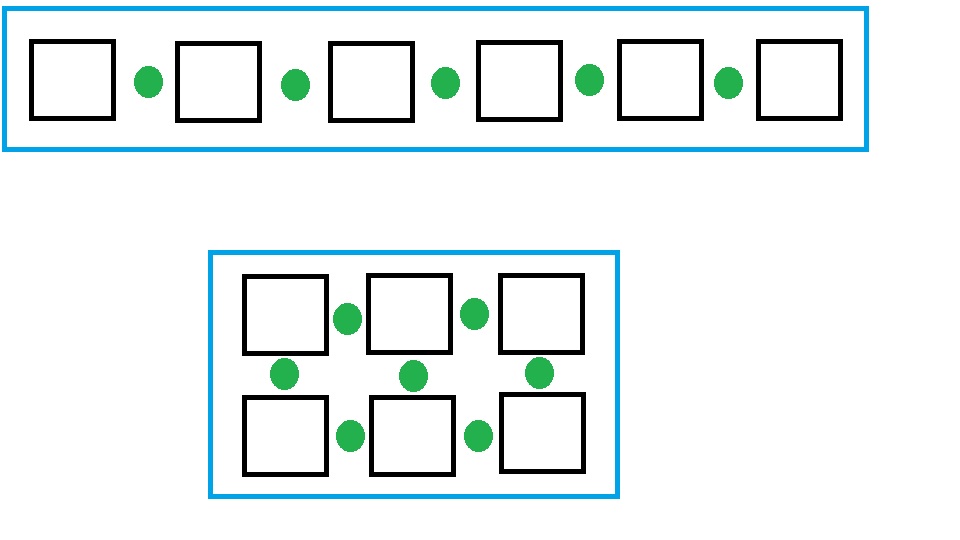
Sanderson's descriptions of feruchemy indicate that Investiture is stored in the crystal structure of the metal, with different types of feruchemic charge fitting into different crystal structures (IE: different metals). It's also stated that breaking a small piece off of a metalmind will result in a small metalmind with a portion of the original metalmind's Investiture, meaning that feruchemic charge stored in a metalmind flows and spreads out to fill the entire space available to it, much like any type of charge. The maximum density of a charge distribution is, in part, dependent on the shape of its vessel. The extreme example is 1-dimensional, 2-dimensional, and 3-dimensional atomic structures, which, for a specific number of atoms, give very different amounts of space in which charges can be inserted and "stored." Consider the following: Given 6 atoms of metal, a 1D arrangement gives space for 5 charges, and a 2D arrangement gives space for 7. Potential storage density can be roughly gauged by relating a shape's surface area to its volume; spheres give the greatest potential density, and a thin/spiky objects give the least. The effect is significant in electric charge because electrons repel eachother. Since feruchemic charges also spread out from each other to fill their entire available space, rather than clump together or fill the space randomly, I assume that they too repel each other to some extent. The repulsive force between same-type feruchemic charges may be extremely high, or negligibly small; there's just no way of knowing at this point, though I suspect that, for the sake of simplicity, it's probably very small. This means that shape should only have a relatively small influence on a metalminds potential storage capacity. But all other considerations and speculation as to the physics of feruchemic charge aside, shape really should have some effect on storage capacity just from the basic nature of how the charge gets stored and the fundamental geometry of the situation. (Bear in mind, this is a highly simplified description of charge; the specifics are much more complicated, but also outside the scope of the original question)
-
That she's insane like the other Heralds. I'm not sure if that makes this more, or less, likely...
-
Why do Returned need investiture to stay alive?
Lewis Nethur replied to Extesian's topic in Cosmere Discussion
I like the idea of the 1 breath per week requirement being derived from the magic system but...presumably, Endowment could just...not give people a divine breath if she (he?) didn't want to... I think it's more likely a matter of pragmatism. If every Returned got to live indefinitely at no cost, they'd have no motivation to fulfill the purpose for which they Returned in the first place and would just pocket Endowments Investiture and walk away... Lightsong expresses remorse at having to vampire away the Breath of children at one point IIRC; I always assumed this was a huge motivating factor for him in trying to find his "purpose." -
Most Overrated Character
Lewis Nethur replied to Toaster Retribution's topic in General Brandon Discussion
@thegatorgirl00 , that was an inspiring breakdown of the topic. I'm afraid that, following your analysis, I don't have much of value to add to this thread anymore. Please accept one heartfelt upvote. -
Most Overrated Character
Lewis Nethur replied to Toaster Retribution's topic in General Brandon Discussion
Er...Yeah okay...Maybe he is the most overrated... -
Most Overrated Character
Lewis Nethur replied to Toaster Retribution's topic in General Brandon Discussion
And frankly, I gotta say, I liked Stick. He gets hyped because he was so absolutely ridiculous, but it was neat to see once and for all that, yes, all objects in the Cosmere do in fact have a soul. Until Stick, it was all just talk and conjecture... -
Most Overrated Character
Lewis Nethur replied to Toaster Retribution's topic in General Brandon Discussion
Honestly...and I hope I don't get hate-mail for this...I gotta say Hrathen. I just didn't get him and didn't enjoy reading about him. I hear him hyped fairly regularly as one of Sandersons best characters, and it just goes over my head... -
I don't want to derail this thread any further, but to clarify, the weird seasons thing is confirmed to be due to Roshar not having a tilted axis. Roshar doesn't have seasons in the traditional sense, so they call any time period of relatively uniform weather a "season," but year round, there's less variation than on Earthlike planets.
-
Er...i believe that's the approximate average. Closer to the weeping the time increases to 6-12 days, but most of the year I believe it's usually 2-6 and only relatively rarely are there longer breaks. Edit: it's been a while since my last reread, if this sounds bonkers definitely fact check me.

