



Returned
-
Posts
1019 -
Joined
-
Last visited
Content Type
Profiles
News
Forums
Blogs
Gallery
Events
Everything posted by Returned
-
Well, sure, but at the same time Compounding allows the power to manifest in very useful ways, and also is recursive via mundane material. It's the difference between Wayne's healing and Miles' ability to set off a stick of dynamite in his hand and not care. Renarin might be able to do something similarly amazing, but only if he's already got the Stormlight in him. If you can compound you've got a direct pipeline to Preservation that will provide you with all the power you can figure out how to use (in ways that Feruchemy can facilitate). Provided, of course, that you've got a bunch of the right metals around. That's what makes it so impressive, not that a compounder can get X units of Investiture per gram of metal.
-
Regarding Awakening and its potential, there might even be degrees of power beyond the 10th Heightening. Given that understanding of what is granted by the 10th is already known (or at least strongly suspected) to be incomplete I don't think we can rule it out. I do think that there are some practical limitations to how many Breaths are going to be out there in the Cosmere and how well people understand how to use them, though. Greater power comes from greater consolidation, and the consolidation needed for the higher levels of power requires a ton of people to be born and then become drabs. Breaths have a high potential for loss in a way that other systems don't. And while you can interconvert other forms of Investiture in a variety of ways it doesn't seem like there is a way to "cheat" extra Breaths into the system (they're Splinters, so you just have to wait for Endowment to dole them out). Those will seriously limit how much knowledge can be developed about using them in ways that don't apply to, say, Aons or Feruchemy. That's not to say that Awakening isn't or can't be the most powerful system, but rather that we may never know the upper reaches of what it can do short of a Shard just describing them to us.
-
Definitely, though we don't know the exact mechanism he uses to access Fortune (it seems unlikely to be chromium), and there are likely some specifics that are peculiar to him. We've got a pretty solid WoB on it: Another WoB states that Hoid didn't take the second bead of Lerasium at the Well of Ascension because he know that if he did, bad things would happen (which also sounds like a Fortune-derived bit of knowledge to me). And, interestingly, Hoid does apparently have some knowledge of the future and that knowledge is related to the same mechanism that draws him to where he needs to be. He's aware that instant noodles will exist and is looking forward to them. So either his interaction with Fortune is different from others', or we have an incomplete understanding of how Fortune operates, or he has somehow deduced information about the future by utilizing Fortune (in whole or in part). I, personally, think the third is the most likely by far, but I don't think there is enough information out there yet to confidently reach a conclusion (and would be a topic for a different thread ).
-
For characters known to date I'd guess it's MeLaan, who can look like anyone, and is the only other member of the core group so far. It could also be Ranette, though I don't recall her being described with glasses outside of doing precise work on guns. But it's also a very reasonable guess to think that it's someone we don't know yet who will be important in book 4. The eyes don't look so different to me from the others, but that's the kind of detail I'm usually not great at picking up on. That the composition of that sticker is so different from the other full-body ones is odd.
-
Keeping a coin in your mouth is shown multiple times to be good enough to hide it from Allomantic senses and influence of someone like Vin, so you're probably safe there. Metals that pierce the skin but still have visible portions are also harder to influence Allomantically, so I think you'll (probably) be OK smiling too. But if you run into a really powerful Allomancer, like the Lord Ruler, they'll be able to affect your braces even so, so I'll second the vote for aluminum braces. P.S. I like your username!
-
I'll echo what others have mentioned, that "strongest" is an imprecise term and hard to evaluate among Cosmere magics. On Sel, or with the geographic limitation of AonDor overcome, the Aons allow an Elantrian to do pretty much anything they can imagine, as long as they can figure out the right permutation of symbols. That's a pretty big qualification, though-- that sort of flexibility isn't going to be available to very many people, if any. But in the spirit of the post I'm going to add in a vote for Feruchemy. It has some significant drawbacks and limitations of its own, but it works anywhere and allows a Feruchemist to transcend their own limitations. Like, you could labor over the right sequence and details of a string of Aons, or you could store data in copper and mental speed in zinc and then bring them to bear specifically on that problem when you find it convenient. Further, some attributes that a Feruchemist can store allow them to manipulate some of the key underlying properties of the Cosmere. Fortune, especially, can give you a powerful edge in any scenario without any other type of preparation. There are also implications and possibilities of being able to store Investiture in nicrosil which we don't yet understand; it may grant some ability to access other magic systems without the same constraints Hemalurgy requires. And obviously a Feruchemist who has access to compounding would be able to enhance the benefits of their power to a ridiculous degree while also avoiding most of the downsides, though that's not properly a feature of Feruchemy alone. It's not 100% clear how, exactly, the Sel-specific Connection works (there are serious implications to Dominion and Devotion being trapped, without Vessels, in the cognitive realm, which isn't necessarily permanent), but I don't think that this method would be effective. The only Connection we've seen stored Feruchemically reaches out to Connect you to where you happen to be with marginal touches of where you're from, so Connection to Sel/Elantris may not be something you can store and access in the way you describe. A very skilled Connection Feruchemist may be able to do more. But at the same time we've got WoBs (I think, I don't recall the specifics offhand) detailing that certain groups are experimenting with overcoming the geographic limitations of Elantrian magic and implying that there are ways to get around it, at least in part. Connection is one of the most important elements of the Cosmere, particularly for magic. Use of any Cosmere magic system relies on Connection to a Shard (possible, practical exceptions, partial or total, are Endowment and Autonomy, given the nature of their Shards). For example, if you're an Allomancer and someone cuts off your Connection to Preservation, then no more Allomancy for you. And if someone shoehorns in that same Connection to Preservation, then maybe you're instantly an Allomancer. If your bond to a spren is severed, then no more Surgebinding or ability to use Stormlight at all. Plus lots of other, more mundane Connections (like the example given by @offer of Windrunners being stuck to the ground) offer a lot of flexibility for the creative Bondsmith.
-
One of my favorite things about the Cosmere is that the magic systems are thought-out enough for realistic implications of the magic itself to come up, and Brandon is attentive enough to point them out when they happen. Things like Wax gaining velocity when Pushing through the air and then decreasing his weight. My favorite of these sorts of details is shown during Vin's first pewter drag, when Kelsier is very serious about making her drink a ridiculous amount of water. The magic of Allomantic pewter does most of the work of keeping her body going during extreme stress as she sprints for hours and hours on end, but when that stops the lack of water in her could easily kill her and so she has to prepare for that. I like it because it makes it plain that the magic is just a tool. An impressive, powerful one, but not a solves-all-problems-because-it's-magic sort of thing. That got me wondering: what are others' favorite realistic details/implications and extensions of Cosmere magics?
-
Not into the future at all. That's what atium grants, not chromium. The mechanisms between those are related, from what we know of them right now (both rely on drawing information from the spiritual realm). Cosmere Fortune is more about putting you in the right place at the right time for a good result, and you yourself don't necessarily know why you're there or what the good result will be. Like, if you were in a casino, it might draw you to the roulette table when someone is about to win and, in their exuberance, give money to everyone nearby. It wouldn't tell you what the actual result (the number and color) of the roulette spin would be. So compounded Fortune probably would work in that mode: drawing you to the best places at the best times for the best things to happen to you, and then not running out of the Fortune you need to keep doing that. Sort of like gold compounding keeps your body intact even if you set off a stick of dynamite in your hand. There is a maximum degree of healthiness you can have, and enough Feruchemical storage will keep you there through pretty much anything, but you can't be healthier than that. The compounding just makes it possible to always be at that maximum level without worrying about running out of the stored health you need to keep doing that. As for what the "maximum level of luck" might be, or what it might look like, I don't think we have any idea. I think that the best part of compounding Fortune is that you don't have to deal with much of the dangers of storing your Fortune. A period of serious ill luck could be fatal, or otherwise irreversibly bad.
-
Would a sphere in a chasm charge during a highstorm?
Returned replied to Immortal Platypus's topic in Stormlight Archive
Almost certainly. Even at the bottom of a chasm the spheres are still outdoors, and so it's not so different from the spheres placed into lanterns on leeward sides of structures (which is the normal way the spheres are infused). There are some examples of spheres glowing on the chasm floors, but we don't know if those were dun or not before falling there. We have one clear example I can think of offhand which suggests this specific scenario from Words of Radiance, the gemheart taken from the chasmfiend Kaladin and Shallan fight before being caught in the highstorm: Of course, it's possible that a gemheart can be infused even while inside of a creature, but I don't recall any examples of a gemheart being harvested which mentions the brightness an infused gem of that size gives off. If gemhearts are dun upon harvest, then this one must have been infused during that storm. -
Good point! I have a habit of mentally editing Hoid out of things, since he seems to play by different rules from most characters and we won't have the full explanation about him until the end of all the Cosmere books. But Hoid is definitely a stronger example than Wayne.
-
It's also worth making the distinction between luck in the sense of "random events work out for me" (like in Wheel of Time) and the Cosmere variant "I'll go to places and do things that put me in a good spot later on, in ways I can't predict". I think that the strongest example of this in any of the books is Wayne from Mistborn. He's positively brimming with "right place, right time" situations, especially for things like accent details. And his constant swapping of objects is often random-seeming but ends up being crucially important.
-
I suppose I do, since the philosophy fragments we get are pretty clear against the dramatic fantasy backdrop (or the points where things are unclear are expressed well). But that same drama is also tricky, I think, since the high-fantasy setting and events can make for contexts that don't apply well to actual, everyday life. Like, A or B might be a tough call in some real-life scenario an ordinary person might face on a given day, but in an epic fantasy series like Stormlight Archive B might necessarily lead to a genocide because of some magical connection, which is a dimension of moral reasoning that won't be at all realistic (and therefore relevant) to that same ordinary person. If the magic or the arbitrarily written conflict (or similar) are major factors in the ethical calculus then that situation becomes harder to import into my life. I like a lot of the aphorisms and such but they're also purpose-built to suit the story and can be a bit glib for reality. I do reflect often on the struggles the characters face, where they have moral issues they have to decide but aren't sure how to resolve. Uncertainty, and the ways that the characters approach it, is definitely something I find relatable and useful in life. That's true even when it's unpleasant to think through or I'm unable to reach a strong conclusion (either in the in-book context, or by extrapolation to real life).
-
 I like all of the elements, but I especially like the coloring in Adolin's hair. That's always a detail I've had trouble visualizing well, and I think that it looks fantastic here!
 -
I was thinking last night about the significance of broken oaths and damaged bonds on Roshar, and how Adolin has helped with some of those on the back end. His relationship with Maya is the most obvious example, but I also think that his relationship with Gallant is similar. Dalinar's modes of action no longer have much use for a courageous Ryshadium and so Gallant ended up kind of abandoned in a paddock at Urithiru. Adolin recognized this and came to spend time with him, which I imagine was good for Gallant, and ultimately Gallant even allowed Adolin to ride him (something Ryshadium essentially never allow for anyone but their chosen rider). I think that this was underplayed in Rhythm of War. I don't think that Gallant was damaged in the same way as Maya, nor to the same degree. But we now have two examples of Adolin helping rare, strong-bonding beings not through the formal commitments those beings normally make but instead by dedicating himself, his time, energy, and compassion to them. And in turn he's getting things from them that, we've been told, simply don't happen-- a deadeye who can think, act, and speak, as well as a Ryshadium's respect and service (or at least assistance). In Cosmere terms these things really make me think of Devotion, though I know we don't have a lot of information on how she behaved before she was Splintered. Adolin is a devoted person: to his family, his friends, his duties, his swordsmanship, and probably other things as well. I don't think that Adolin is going to take up the Shard of Devotion, if only because that's already getting too common in the books and typically fails to resolve much. I doubt that very many long-running, inter-book plotlines are going to converge on that same outcome. And I don't want to get ahead of myself with specific predictions on matters about which we still lack basically all detail. But given that Devotion's Splintering (along with Dominion's) was reportedly an unusual type, and wound up with Devotion being crammed into the cognitive realm and its Vessel killed, I see some parallels. Radiant spren becoming deadeyes was (theoretically, once) irreparable, and yet Adolin has upended that through a method totally different than anything Honor might have promoted. Maybe something else broadly thought to be impossible, even for Shards, is in the works. The Splintering of Shards is going to be addressed at some point in future books, and what Adolin has been accomplishing has already started to rock Roshar. I think that his actions' significance will continue to be impressive, surprising, and important, and that his characterological alignment with Devotion, conceptually, is ultimately going to matter for that too. Does anyone here have any other thoughts, evidence, critiques, or anything else for discussion around the topic?
-
It would look great if you could get a couple of LED lights around the inside of the collar and the cuffs (or anywhere else that enhances the effect), to glow the right color. Extra points if you can hook them up to something that would modulate the light a little bit, to make the glow effect more organic and less steady.
-
It is true that Lerasium is a physical manifestation of Preservation, and that consuming it changes a person's spirit web. But I don't think that that is the same as giving that person the properties of a Shard, nor the consequences of a Shard Investing itself into a planet/system. Lerasium is a godmetal, which is a manifestation of a Shard in the physical realm. Eating Lerasium and then burning it consumes the Lerasium (it's no longer around afterwards) and leaves behind the changed spirit web of the person that burned it, which is what makes them an Allomancer. It can also have other effects which we don't know the specifics of yet, and that information may be useful for the question you're asking. But regardless, Lerasium is Preservation (in a sense), while an Allomancer is someone who is Connected to Preservation, and those are not the same. What is different about spren is that they're Splinters: not just manifestations but literal pieces of Honor and/or Cultivation, which is why (as far as we know for now) they are bound to the Rosharan system like the Shards of which they are pieces. They aren't an artifact that changes a person and leaves those changes behind after they're gone, like Lerasium-- the spren need to continue to exist for the bond to keep existing, and some degree of physical nearness seems important for that as well. So a Radiant can't easily leave the spren behind (not if they want to keep their powers), and the spren can't leave because they are tiny pieces of a great power that really can't leave. It's important to note that this limitation can be overcome. Brandon has said as much, some written material demonstrates it, and the closest thing to spren in the Cosmere (seon) are also Splinters of their Shard, but we've recently seen one leave its native system to end up on Roshar. If it can be done for seon it can probably be done for spren too, so it's definitely not a hard limitation even if we don't know how to get around it yet. A significant piece that we don't have great evidence of so far is whether or not an Allomancer can travel off of Scadrial easily (or if a bead of Lerasium can, for that matter). As far as I recall right now (I can check more later) Hoid is the only Allomancer we've seen worldhop, so it's equally consistent with what we know to think that either of the following may be true: they can leave easily, because Allomantic ability (or maybe any Metallic Art) is just different from spren bonds in that way; or it's not easy for an Allomancer to take their powers off Scadrial but Hoid happens to know the method to do it. (Edited to add: @Isilel points out below that Demoux, who is known to be a Misting, is on Roshar as well. Demoux's example suggests that Metalborn aren't bound to the Scadrian system in the same way that an Invested Shard is.)
-
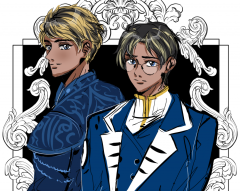 This is great! That's exactly how I picture Renarin.
 -
One of the most important elements is that there are ways to get around that limitation (per WoB), but they aren't generally known in the Cosmere. So Mraize doesn't know how Shallan might get off of Roshar right now, but his organization is actively looking for ways to do just that so they can traffic Stormlight around the Cosmere. It's not unreasonable that someone as knowledgeable as Hoid would know a few techniques to give him more freedom to move around, though we don't know that that's the case for him. Heightenings from Breaths are the most common example of easier-to-move magic because Endowment's powers are thought to be more about giving things away. People from Nalthis seem to be able to leave their system just by moving away (through the cognitive realm, but still). The Metallic Arts may be similar. Beyond that, the powers aren't all equally confining. Broadly speaking it seems that Investiture tied to specific Shards is what's hard to move around. The major limitation is of Shards themselves. If they Invest enough of themselves into a system they give rise to magical abilities, but then they are too Invested to just leave. Knight Radiant bonds are a special case, I think, because they depend on connecting with a spren. The spren themselves are pieces of Shards, and the Shards which comprise them are Invested sufficiently into Roshar that they can't leave. Therefore the spren can't leave either, and neither can a being bonded to those spren.
-
Wow, I've been way off for a while, thank you. How embarrassing! I blame the ever-increasing capitalization of terms in the Cosmere. I guess I'll have to move Preservation up to my top three then!
-
It's all very tricky, since future sight in one place interferes with future sight in others, and the details, outcomes, and mechanisms are so vague. I think that we're not going to get a very clear view of future sight until much closer to the end of all of the main Cosmere stories. It's too large and undercurrent to a lot of current storylines to be otherwise, though if we actually see Fortune in a story things may change. My best guess on it is that Shards can sort of cheat by seeing possible futures without needing to know the details that would allow a normal person to predict those futures, and their vast powers allow them to do a variable job in filling in the gaps (depending on the Shard and Vessel, as Sazed states). But that situation makes specific knowledge of one potential outcome they want a lot less valuable than it might seem, especially on the level of a Shard compared with, say, a human. The real, leverageable value would come from getting a sense of those ancillary details and being able to get a sense of what conditions need to be in place in a future where the desired outcome occurs. Seeing a possible future in which you hold a winning lottery ticket isn't very valuable since we already know it's possible to win the lottery. Knowing what day that ticket won is also not very valuable since that doesn't help you pick the right numbers. Even if you also see the winning numbers in that possible future, that isn't very useful if you can't rely on those numbers to actually win that lottery draw on that day-- any combination of valid lottery numbers could win in any given drawing. That's the sort of thing that people tend to think future sight grants, but which it really seems not to grant in the Cosmere. A good example is Renarin's vision near the end of Oathbringer: his vision is really specific about what will happen, but is wrong. That is, by definition, a poor prediction of the future. But if you see most (or all) possible futures, and know that on a certain day in the bulk of those futures in which you buy a lottery ticket you win, that would help you act in ways that further your goals (assuming your goal is to win the lottery, at least). You can take your shot when it's most likely to work out for you, and maybe in the way it's most likely to work out. That's how the most successful future-viewers in the Cosmere seem to have approached it: "knowledge" of "the future" that puts you in the right place at the right time for things to work out in your favor, rather than getting an accurate and precise prediction that you can specifically count on. Again, I like the example of Renarin near the end of Oathbringer: his vision brought him to a decisive place at a decisive moment and allowed things to work out in ways that he preferred, even though the actual content of the vision was wrong. But don't take any of my musings too seriously. Like I said, Shards have minds, abilities, and goals that are almost certainly beyond anything we mere humans would be able to understand, and future sight has all sorts of bizarre implications that we can't test out (especially since we don't know all the rules Sanderson has for it). I think that my opinions are pretty good extrapolations of what little we've definitively seen so far, but I'm certainly no Shard-whisperer nor future-seer.
-
Sure. But I also think that a Vessel's "craftiness" covers a lot of ground. It might describe great planning which accounts for errors, including in future sight. It might also indicate an awareness of how unreliable future sight can be. And as for Intent, Shards themselves don't seem to have goals in the same sense that Vessels do. They are what they are and promote what they promote, whether or not it's "good" for the Shard or in line with what its Vessel wants. Odium is a great example: it wants and promotes conflict in others, even when that conflict is against Odium itself. It's not clear that Odium (the Shard) could forestall or resist a conflict that it knew would lead to its own destruction any more than Preservation could kill one person to protect everything else. Also (and this is only tangentially related), I think that Brandon is being a bit coy when he talks about Shards seeing the future. If you're rolling a die, and I look into the future and see that you'll roll a 6, and then you do roll a 6 because (absent intervention) that's what will happen, then I saw the future. If I look into the future and see that you'll roll a 6, no intervention takes place, and then you don't roll a 6, then I think it's hard to suggest that I saw the future at all. The descriptions we've had of Shardic future sight suggest to me that it's more like the latter case than the former, though there is so much we don't know about it that it's hard to feel confident in any conclusion. Knowing that something could happen, or might happen, or is likely to happen are all very different from knowing what will happen. Certainly knowledge of the future is unstable in the Cosmere. I agree that it isn't a desperation move for every Shard. Odium (as Rayse) was pretty into it on a seemingly regular basis, for all the good it did him. But I'd argue that Preservation's use of future sight was a desperation move. Having weakened himself relative to Ruin in creating humans on Scadrial, and sacrificing his mind to imprison Ruin, he became locked into a conflict he couldn't actively win. Hence his extremely long-term plans, the mists following his Intent, the sign of 16, and so on. And those examples underscore my point (and are most of my basis for it, lol): Preservation didn't have a lot of choices, and so bet on future sight and won. Odium (as Rayse) had all sorts of options, seemed very into future sight, and lost badly. Taravangian gambled on knowledge of the future and won (seemingly, and for now), but not in any way that he foresaw. And all of the splintered Shards' access to the future didn't save them.
-
That seems like a fair definition to me. Maybe it's simple planning, but to outwit a Shard, you have - at least - to partially see the future. Like Taravangian. I'm not persuaded on this example. It seems like memory and planning (Sja-anat herself was unmade), plus a wish for the future (she hopes for an outcome). Shards can be outwitted without seeing the future, though it's certainly difficult. Vin and Kelsier both trick Ruin through misdirection and deceptive comments. Though Ruin is probably among the worst at seeing the future among the Shards, so that may have been a factor. It's so hard to get into the mind of a being as alien as a Shard. We probably literally cannot fathom their thought processes and motivations. We've got a WoB that Ruin was very poor at seeing the future, maybe the worst of the Shards we've seen. so it might have just been bad future sight that caused those problems. But he was also arrogant, like assuming that all humans were fundamentally his servants and would advance his goals no matter what they did. I don't know if he really intended to deceive Vin (and failed), or if he wanted to pressure and manipulate her (which wouldn't depend on her being tricked), or if he was operating with future sight in mind and perceived that it wouldn't matter to his aims if Vin knew it wasn't really Reen. I think that Ruin didn't bother to rely on future sight much, both because he was poor at it and because he preferred other methods. My overarching impression is that relying on future sight is at best a desperation move for Shards, and an absolutely terrible thing to depend on generally for their day-to-day goals. Some of that may be due to Fortune's existence and nature, but I mostly think that the constant unreliability of "knowing" what will happen in a non-deterministic future makes it a very weak tool for anything that would bother a Shard. Especially when compared to all of the other capabilities a Shard has. It simply doesn't seem to protect them from failure or promote success very well.
-
I may be leaning too hard on the "like a Shard" piece, which seems significant to me. But even a totally mundane person can "see" the future if they know enough present details and have decent deductive skills. That's how Taravangian did it, and he foresaw pretty effectively. And Shards, while explicitly able to see the future, can't actually see what will come to pass very well-- see every Shard whose plans have failed for examples. Atium is very reliable, though not allowing knowledge very far into the future. But Death Rattles seem like the most accurate predictions and are also described by the one example we've had who was aware enough to describe the event as "what he saw" (paraphrased). Nothing yet has suggested that the things the dying see when near Moelach can fail to occur. I'm not sure all of the examples you listed can see the future in the manner of a Shard. Do the Stormfather, Nightwatcher, Sja-anat, and the Fjordell king actually do that? Have we seen a Sliver do it? I may just be forgetting. Additionally, do you count it if an entity sees the future through the direct intervention of a Shard? It would seem to me that anyone would have access to that, in the same sense that anyone can fly if they sit in an airplane. Am I misunderstanding? For example, do you count Renarin as seeing like a Shard when his powers come directly from a Shard?
-
Let's discuss (one tiny thing from) szeth flashback
Returned replied to KaladinWorldsinger's topic in Stormlight Archive
It could be anything, really. Hoid comments on the oddity that Rosharans still use the term "hound" with axehounds, despite not having anything like the original thing "hound" referred to. Lots of odd etymology. -
Fortune, Cultivation, and Autonomy are my top three. With an honorable mention for Preservation. Fortune because future sight seems fundamentally tied into her powers in some way. Cultivation because it aligns well with her portfolio of causing things to grow and develop. Autonomy because her focus on independent, unilateral action allows her to push events towards the future(s) she wants. And Preservation just because his long-term, Rube Goldberg-esque plans actually came off just as he intended.
