Lightspine
-
Posts
311 -
Joined
-
Last visited
-
Days Won
2
Content Type
Profiles
News
Forums
Blogs
Gallery
Events
Everything posted by Lightspine
-
This is a detail that made me hate Moash even more: While Kaladin was swearing the his 4th Ideal, he hears a voice that isn't identified by the narrator: Since this person refers to Kaladin as "lad", it's clearly meant to be Teft. The easiest conclusion to make is that this is a Spiritual echo, much like Tien or Evi. However, after I read the final Eshonai flashback I had a bit of hope. What if it was Teft's cognitive shadow? This scene did take place within minutes of Teft's death, so it seems possible. Teft was Radiant, so he died with enough investure... except he didn't. Because Moash killed Phendorana first. Teft did not die Radiant. I'm not saying that Phendorana's death wasn't already tragic. But Teft's death had overshadowed it until I realized this. Teft should have been there to see Kaladin swear his Ideal. He deserved it. Perhaps he would have also been granted a final mercy by the Stormfather, and been allowed to fly with the storm. One last time. But Storming Moash couldn't even let him have that.
-
Restares and the Sons of Honor
Lightspine replied to Toaster Retribution's topic in Stormlight Archive
My assumption from what we heard of his discussion with Gavilar in the prologue, and what he tells Shallan later, is that he and Gavilar were working on a way to transport him offworld—he mentions wanting to escape Roshar, and merely being able to go to Braize is definitely not enough. I know that's not the same goal that the Sons of Honor have as a whole, and there also has to be some reason why Kalak continued advising them even after Gavilar died. (also, this is something I just remembered but Kalak must have advised Amaram to kill Kaladin's squad and take the shards... I feel like we might see the consequences of this) -
theory Lights, Intents and physics
Lightspine replied to KandraAllomancer's topic in Cosmere Discussion
I noticed when Navani mentioned that the Lights seemed to be between those two states—I think it means they might be supercritical fluids. For those who don't know, past a certain pressure liquids will form a supercritical fluid instead of a gas when temperature is increased. This fluid has density comparable to that of a liquid but it completely fills its container, just as a gas would. The easiest one to create is supercritical CO2, you should be able to find videos of that all over. This would mean that the Light fills the gem instead of just settling as a pool on the bottom, even if the gem is only partially infused, which I think is consistent with observations from the books. However, I didn't immediately make the connection that perhaps investure from all shards would take the form of "Light" when it is in the state of a supercritical fluid. Such a state requires high pressure, so it would only appear when it is contained in a small space (exactly like a gemstone)! -
I agree with the first half of what you said completely. However, it is shown in Szeth's duel with Kaladin at the end of WoR that he can heal from Shardblade injuries. It appears to have been a misconception of his since it is more difficult than for a Radiant. So, I think the spiritual/cognitive explanation is by far the best. In addition, eyes have a very large symbolic or thematic role on Roshar. When someone dies by a Shardblade, their eyes burn out. Dead spren have their eyes scratched out. Radiants and Voidbringers (Singers with forms of power, to be specific) undergo changes in eye color. Not to mention the whole lighteyes/darkeyes division which probably stems from the Radiants. Moash losing his eyes is a parallel of either someone who has been killed by a shardblade (since the quote is "his vision had been burned away" it matches pretty well) or deadeyed spren. Even though the description of vision "burned away" matches shardblade deaths better, I find the deadeye connection to be more meaningful here. It's as if part of Moash's soul has been ripped away. Is it possible that, when the Towerlight severed his Connection with Odium, this worked a little like the breaking of a Nahel bond? Did it damage Moash's spiritweb in the same manner as the breaking of oaths damaged spren?
-
Woah, that's a really cool connection, especially since some of the Unmade's names have Canaanite origins. That's a possibility! Another idea I now have is that El used to be an important Dawnsinger who served Honor, and that was when he held the Elithanathile "He Who Transforms" title. Somehow, this name was preserved as that of an important figure and eventually got mixed up with Honor themselves.
-
I don't think it was sand since it clinked: Because of the clinking, I think it was probably something metallic or glass. Straight-up money (coins, spheres) doesn't really seem sufficient, obviously. I also don't know if Raboniel's voice being devoid of the rhythms is relevant to some property of the payment or is just a result of her emotions. I have a wild guess: atium? We now know that Thaidakar is probably Kelsier, so something Scadrian would make sense. In addition, atium is impossible to obtain by any methods we currently know of, yet there are stories and myths about finding it in Mistborn Era 2 that a lot of people take as foreshadowing that it'll appear again. The difficulty in obtaining it makes this seem less likely but we also know the payment couldn't be something easy to find either. I don't know what use the Fused would have for atium though. They can't burn it. Perhaps it has some really interesting properties in fabrials? There's also lerasium, which is just equally impossible to obtain and also probably more useful since it'll turn anybody Mistborn.
-
I think Voice of Lights is the most likely. However, I also have a crackpot theory, which makes slightly less sense but I think should be considered. The first thing I thought of when I read "El" was Elithanathile, "He who Transforms," the title of the Almighty. Now, I know this is wild but "He who Transforms" has the proper format to be a Fused title. In addition, if El is the same Brand of Fused as Raboniel, then he has the surge of Transformation so it could fit his abilities. There's a few hurdles to this though, the largest of which is that we're told El's title was given to a "human." Would they call Tanavast a human?? I'm not sure. The Honorspren don't even consider Kalak to be human anymore, so from that perspective I doubt Tanavast would be considered human. But the Fused may have different standards for "human" than the spren do. I also have no idea what this implies about Vorinism if it is true.
-
I don't think you're being rude or overly pedantic! I made a mistake and you rightfully pointed it out. I've been trying to use they/them pronouns when referring to the Sibling but it appears that I slip to thinking of them as "him" sometimes. I've noticed that I often need to consciously remind myself to use they/them pronouns for people in real life as well. It might be because I didn't really meet any non-binary people earlier in my life. This is something that I need to work on. Thank you for calling me out on this! I will keep trying to improve!
-
Equipment and choice of champions[discussion]
Lightspine replied to Oltux72's topic in Cosmere Discussion
This feels a little weird. I think it's an unspoken term that the Champion must agree to represent Odum or Dalinar. Otherwise, Rayse would have never had to try and turn Dalinar in the first place. -
You're correct about the timeline, since the Oathbringer epigraphs (from the gem archive) include: (I'm taking these from Coppermind btw) along with their planning to capture BAM: Since the gem archive has no mention of what proceeds after capturing BAM, I think you're correct in concluding that the Sibling began withdrawal before the event, and that BAM's imprisonment was not the sole factor in this. The Sibling mentions his loss of Towerlight was specifically on the same day as BAM's capture, so it seems to have been the final straw. Interestingly, the gem archive also talks about Melishi, who seems to be the Sibling's bondsmith and how was definitely directly involved in creating that defensive shield. I seem to remember somewhere in RoW they mention the Sibling cut off his bond with Melishi right before the Recreance? I forgot where that quote was though (please help if you remember!).
-
I think there's one other thing you left out; BAM's capture also seems to coincide with the Sibling losing their ability to create Towerlight and falling asleep: I'm not sure how that is connected with the rest, but I do have an idea about BAM that covers both the deadeyes and the Singers. Sja-anat calls the Bondsmith spren her "cousins." We also know that that the Sibling would have become one of the Unmade had Raboniel succeeded. This makes it almost definitive that the Unmade were once ancient spren and a part of Roshar's ecosystem. Of equal or similar level to the Stormfather himself to the operations of the planet. I think Ba-Ado-Mishram's role was—and continued to be after her Unmaking (for lack of a better word)—some sort of spiritual healing. It's the common thread that the Parshmen and the Deadeyes share. Part of their spiritweb was ripped out, and never healed. As for the Sibling, when Navani is bonding them at the end of the book, this happens: There's two interpretations of this. The first I find boring and downright weird; that when the Sibling "lost the rhythm of [their] light" upon BAM's capture they actually only lost Honor's Rhythm, but remembered Cultivation's. Navani just needed to provide Honor's. The second interpretation is that the Sibling lost the emulsifier. I like this idea better. It's more cohesive than BAM, a spren of Odium, somehow being necessary to provide Honor's Rhythm to the Sibling. So, combining these separate ideas together, I think BAM was needed for healing of the spiritweb on Roshar, and also related to the "emulsification" or the bridging of Humans and Spren (and Singers too I guess?). Looking at this from the angle of Connection, I think I have the answer; BAM Connected the (native?) inhabitants of Roshar with something that they all shared. Part of my first quote from the Sibling was: Whatever it was that they shared, it was something that allowed them to heal their spiritwebs. This also explains how BAM Connected with all of the Singers in the fist place—by strengthening the Connection she already had. Connections are also somewhat transitive—if two spiritwebs are Connected to the same thing, that provides some Connection between the two spiritwebs (evidence: Dalinar Connects with an Azish person, whose Connection with their language allows Dalinar to speak that language). This means that by Connecting humans and spren to the same source, this may have provided some sort of emulsifier.
-
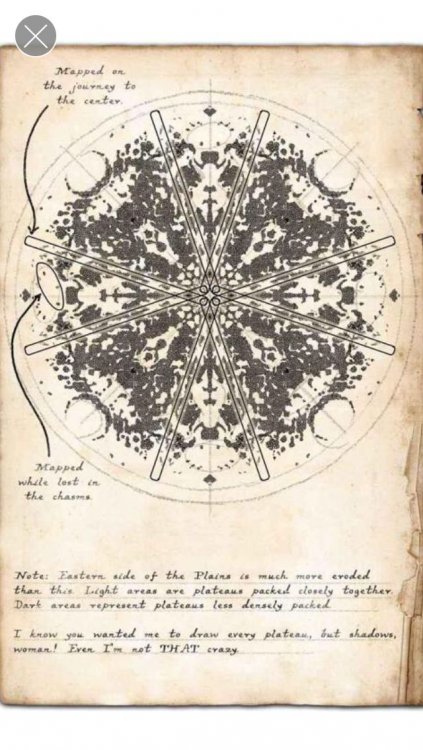
(Apologies if this theory has already been put forward and I never found it) Rhythm of War answered a LOT of questions. But there's still one that's been hanging over the series (for me, at least) since the beginning. The first major setting of the story: The Shattered Plains. They're a big mystery in the first two books. So are the chasmfiends, whose lifecycle is still unexplained. During Oathbringer and Rhythm of War, I began to forget about this. As the story has moved beyond them, and we found ourselves there less and less, I started to forget how very weird they were. When I read Venli's final chapter in Rhythm of War, it clicked. They've always described the Eastern edges of the Plains as dangerous. Wild. Teaming with Chasmfiends and other predators. To quote Rlain: Myths on Roshar, and Tanavast himself, refer to Dawnshards. Plural. The only one we know of was kept secret in Aimia, and used to be guarded by enormous beasts. If there are others on Roshar, we should be looking for similar places, right? Chasmfiends have some similarities to the Laceryn. Chiri-chiri is described as "trumping" much like one of the chasmfiends. Besides the wings, they are described with a similar anatomy. They've always been described as somewhat intelligent, and now we know that they can form bonds with people (or the Listeners, at least). This may not be evidence of the sapience that Chiri-chiri has, but it's something. Among other oddities, Adolin says that the chasmfiend chrysalis looks most similar to that of an aquatic greatshell from Shallan's drawings. There's a decent chance the Laceryn were at least partially aquatic. What pulled me the most towards this theory, however, was the shape of the plains. Take a look at that map: it has four-fold symmetry! FOUR FOLD. I think the comparison to the mural writes itself here. Now, I'm not saying that the entire Shattered Plains is holding on to the Dawnshard like that mural was. I think the Dawnshard is somewhere along the eastern edge of the Plains. The shape of the plains comes from how it was shattered—by a Dawnshard. I'm pretty sure the theory that a Dawnshard was used to shatter the Plains isn't a new one, and it's probably had plenty of variations. Personally, I've always believed that the Plains were shattered by a massive example of the same power the Dawnsingers used to create their cities. (Kabsal's sand-on-a-plate being the reason). That is in no way contradictory with the idea that a Dawnshard was involved. Dawnshards are Commands, and they can't do anything on their own. It's pretty widespread belief on this thread that the reason Rysn isn't allowed to bond a spren is that any form of Investure would become an outlet for wielding the Dawnshard. We know from Venli's experience with the stones that her people, the Dawnsingers, used to shape rock, often in tune with Rhythms. If one of them—or a group of them, singing together, since Nikli says something about single minds being incapable—held a Dawnshard, what could they do? What scale of things would the Command to their will? If they can shatter Adonalsium, if they can shatter worlds, and if they do so with four-fold symmetry, then they could have totally shattered these Plains. So... here's hoping Venli finds a Dawnshard in Book 5?
-
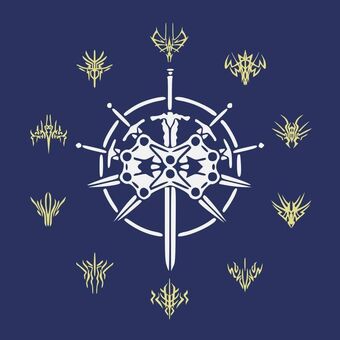
Perhaps, but I'm not sure what the implications of the glyphs are. Like, there's glyphs behind Kaladin when he swears his third Oath and on Ishar's Honorblade, so it seems like there might be something fundamental to them like the Aons are on Sel? My best guess would be that they have to do with vibrations—sand on a plate. If you use the pure tones of each of the three gods, maybe you wind up with something that looks like their glyphs? But in that case, would the glyph change? I think it would be a little whack if all of a sudden Navani had to rediscover the tone for voidlight. She'd probably be able to do it though, and it would be a good way to tip off to the Radiants that something about Odium has changed. On the other hand, the tone could be fundamental to the shard and thus not change at all. So if the glyphs are tied to the tones, then they wouldn't change either. I think this is fine because the phonetics of the glyphs might not need to be important. Like, the shape of the glyph is fundamental but people might have been the ones who took that and turned it into their words/language. So the old glyph phonetically says "Rasan's light" because that's how they constructed their language, not because Rayse being the Vessel physically impacted the glyphs shape. That's my best guess, anyway. Also, the most important thing I took away from these diagrams is HOLY CHULL IS KORAVELLIUM AVAST THE NAME OF CULTIVATION. ALSO IS CULTIVATION A DRAGON?? Edit: So I noticed that the Roshar glyph looks a LOT like the symbol of the Knights Radiant: This is pretty unsurprising, I guess. But wait! the blue lines that @ScavellTane drew on their post also correspond to the double eye at the center! So why on Roshar are the dots creating the double eye made from the glyphs of Cultivation and Odium? Seven of the dots are from Cultivation's glyph, 3 from Odium's. Odium's three are the Bondsmiths, Lightweavers, and Edgedancers. It defies all sense. Even if some of the orders are somehow tied to Odium, the Bondsmiths being one is inexplicable. And the Edgedancers are just so... Cultivationy. What's going on??????
-
Somebody else might have thought of this first, but I'm not going hunting for other posts since I haven't finished the book yet. I am really confident that the box has a Seon inside of it.
-
This is true! However, spren would have a much harder time leaving their home planets than creatures do, due to Connection. We know that spren on Roshar can't easily worldhop. The same would likely be true for spren on other systems. Therefore, even though it isn't definitive, I think it's highly likely that Mandras are native. As for the gigantic hordelings, I don't really know. There's a chance that they do have Mandra and we just didn't see them. It's also possible that they survive by spending most of their time underwater, where buoyancy can counteract the strain of gravity. In addition, their body plan is significantly better than that of a Chasmfiend for distributing mass, since they're described as long with many legs (I was imagining a giant centipede). Each leg has to support less weight. (On the topic of buoyancy, I think that Santhids need Mandras to help them float rather than keep themselves from being crushed by gravity)
-
I think that there's either another Larkin there, or Chiri-chiri took advantage of the acoustics of those skulls. Rysn says that she swore the skulls were moved to point towards them when she heard the roar, and there's also the imagery of Chiri-chiri standing perched atop one of them, which reminds me of the "standing on the shoulders of giants" phrase. Here's the exact passage: I think it's possible, given the positioning, that Chiri-chiri was behind one of those skulls at the start of the passage. Is it possible that she used the skull kind of like a bullhorn? You can definitely magnify sounds with certain shapes. I don't think it's a huge stretch that there might be some sort of anatomical structure within the skulls that they use to produce really loud sounds. (Chasmfiends might have something similar with the calls seeming like four different ones overlapping). Basically, I think Chiri-chiri might have used the skull as some kind of macabre megaphone. Or you're right and it's a really big Laceryn down there. That would explain why the ceiling shook, since I'm not sure you could get that with just a bit of amplification.
-
I agree with @Ashbringer, those were single hordelings. And that fact made me terrified about the combat potential of the Sleepless. Luckily for the Lopen and Huio, though, hordelings like those probably don't come cheap. They have to be bred and would probably take many years to grow to full size. Producing an army would be difficult, so it would be hard for them to have a large-scale impact on the war. However, their presence still means that each individual Sleepless is easily one of the most deadly adversaries we've seen—more intimidating than multiple Radiants. In addition, Nikli is the youngest Sleepless and he's had enough time to raise at least seven hordelings of that size. Some of the older swarms have had the opportunity to accrue many times more, especially since the process should be at least somewhat exponential. The time it takes you to produce the first two hordelings should be equal to the time needed to produce the next two, then the next four, then eight... etc (assuming that each breeding event produces two more). Given enough time, the limit on the number of individuals in a swarm would be a larger factor than how long it takes to create these giant ones.
-
Hence why I said former. Maybe you haven't seen Brandon's annotation for Dawnshard? (It's on Reddit!) I'm just saying that the Siah Aimians are people who, like Hoid, once held a Dawnshard but no longer do. I'm not implying that these Dawnshards were destroyed or their numbers otherwise being reduced. This WoB also mentions "several" people becoming Dawnshards besides Hoid. I completely agree with them being partially Cognitive because of they have backwards shadows. I'm just not so sure about the "half spren" part of that. Like, how would that... happen? There are other ways to be closer to the Cogntive realm—Shallan, Jasnah, and (probably) Venli can use their powers to draw just as close. (Jasnah also had backwards shadows in the WoB prologue) (Also, WoB about backwards shadows here) As for the changing appearance, I honestly have no idea. Some spren in the physical realm can change their appearance freely, like Syl, but others are more limited. I don't think Pattern can really change shape besides hovering and becoming a ball. Ivory can only change in size, Wyndle seems to change by growing and moving his vines around, and Timbre has never changed their appearance at all.
-
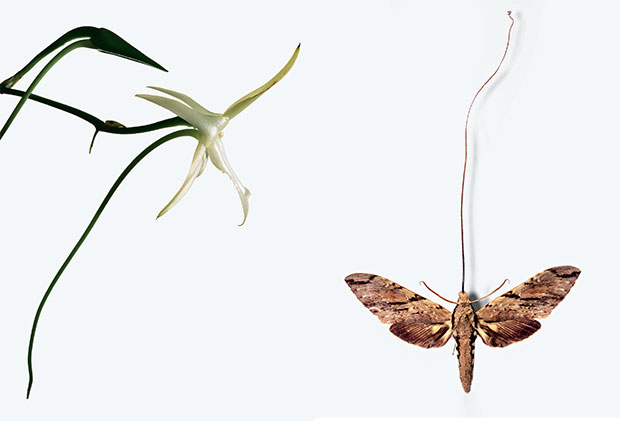
So this is a tidbit that I haven't seen discussed yet. We've known they exist on other planets, but this is confirmation that they're not Roshar natives: At the same time, we learned something new about their biology; the really big centipede-like hordlings that Lopen fights have violet blood. In addition, hordlings are often distinguishable from cremlings by an external violet coloring. The first time we ever saw one was that purple "cremling" that Kaladin noticed while he was enslaved. Here's the quotes: Who else has violet carapace? Chiri-chiri: Now, I can't prove definitely that violet carapace corresponds with violet blood, but I have another reason to believe that larkin blood is violet: chasmfiend blood is also violet. Given the descriptions of Chiri-chiri "trumping" I don't think it's a stretch to say that they might be related. Why am I hung up over the violet blood? Because of what it might imply about which life is native to Roshar. The Listeners have orange blood, and they are the only known native Rosharans. Are all the creatures with violet blood invasive? Are they from the same planet as the Sleepless? However, I have reasons to believe that creatures with violet blood are native. First of all comes anatomy. Creatures from off-world would not have gemhearts with which they can bond spren. The very fact that they're large crustaceans who require Roshar's higher oxygen level, lighter gravity, and spren bonds to survive seems to indicate that they are native to the planet. In addition, violet blood is found in axehounds, who don't really have any ties to the Larkin or Sleepless as far as I can tell: The largest reason I think these creatures are native, however, is coevolution. Spren bonds on Roshar are a form of mutualistic symbiosis—when organisms of different species interact closely for mutual benefit. The most well-known example of this in our world is pollinating insects. Many of these insects are fairly indiscriminate. European honeybees happily pollinate flowers found in North America, even though those species did not evolve together. The same seems to be true for most of the Mandra on Roshar, who bond with all sorts of creatures from skyeels to chasmfiends to santhids. Some of these creatures did not necessarily need to evolve alongside the Mandra in order to interact with them now. Theoretically, you could drop a brand-new massive creature into Roshar, and if it had a gemheart, these Mandra might be able to bond it. However, symbiosis can be much, much more specific. There's a lot of bacteria that are specific to the digestive tracts of different animals species, but there's also examples of specific pollinators. Perhaps the coolest is the Darwin's moth: Look at that tongue! This moth is the result of coevolution, and it can only pollinate a specific flower in the Galapagos. Likewise, the flower can only be pollinated by this moth. Such a specific interaction is a clear indicator that these two species evolved together. In fact, Darwin first predicted the existence of this moth when he examined the flower which it pollinates. The first specimen of the moth wasn't found until years after his death. Now let's look at the Larkin. They can't just bond with any Mandras, but with a subspecies found only in Akinah. Chiri-chiri hasn't reached a size yet where the greater potency of the Akinah Mandra should be necessary for her survival. Normal Mandra can hold up chasmfiends, for goodness sake. Instead, by some biological or magical mechanism, I think Chiri-chiri is incapable of bonding other Mandra. Part of the definition of coevolution is that it must be reciprocal. Both species must be evolving in response to the other. Why would Mandras exist on Roshar which meet the exact needs of the Larkin/Laceryn? How could the Larkin/Laceryn ever exist before these Mandra did, or vice versa? The answer is that they didn't. This was, undoubtedly, coevolution taking place. It is a clear sign that these species are native to Roshar. Either they've lived on Roshar for thousands of generations, or they were created by Adonalsium in this state (in which case they would also be native). Therefore, I think that the purple-ness of the hordelings is from interbreeding with native Rosharan life. Nikli mentions that their hordelings can breed with the Larkin. And we also know that Adonalsium made species like Humans and Parshendi biologically compatible. Interbreeding like this would likely be the quickest way for the Sleepless to have blended in to Roshar when they first arrived. The weird purple hordelings probably look different from cremlings because they're part-Larkin. I don't have much of a theory here, I guess. TL;DR: I got hung up over the color of some blood and carapace, but in the end I'm concluding that the Sleepless are the only invasive species and they've blended in by breeding hordelings with native Rosharan life. EDIT: Well, somehow I wrote this whole thing without realizing there was an extremely pertinent WoB: I think this generally supports my interpretation, although it doesn't specifically address the origins of the Larkin. Also this WoB, which is mostly tangential to my theory but is still cool:
-
Stormlight Thermodynamics and Circuits
Lightspine replied to Lightspine's topic in Cosmere Discussion
That's exactly what I meant! Sorry if I wasn't very clear, you definitely put it more succinctly. Definitely something I want to know as well. I don't think we have much information in this department as of now. -
No real evidence here besides immortality, but i wanted to suggest the idea. I was wondering how Siah Aimians fit in with the puzzle when I realized they might have the same immortality as Hoid. Also, some of their abilities are reminiscent of the Returned (changing appearance) and Rysn seems to have Heightening. So there’s a tenuous link there. Thoughts?
-
theory Radiant Order Cousin Spren
Lightspine replied to Truthwatcher Artifabrian's topic in Cosmere Discussion
I think we should definitely be using the herald illustrations! I'm surprised that I didn't see a thread about that after the new images were posted. All the illustrations can be found at the bottom of this page: https://coppermind.net/wiki/Herald Some of the images from Oathbringer clearly show cousin spren we already know. Jezrien has windspren around him, and Ishar has gloryspren. Vedel seems to have lifespren around her, which would indicate them being the cousin spren of Edgedancers. However, we can't see any creationspren around Shalash. As for the new drawings, Paliah clearly has logicspren around her so that would support the comments that they are associatied with truthwatchers. Nale has this blue light around him which might be a spren, but might just be stormlight. If they're spren, they could be awespren or bindspren (the ones Kaladin sees when he makes his Full Lashing). Bindspren fits the description better and also makes sense because binding & law but it's also super weird because it seems associated with Adhesion, a surge which the Skybreakers don't have. Kalak clearly has some spren in a V pattern at the bottom of his painting. They look like white petals—shamespren? That doesn't really make sense. I don't think I identified it correctly. Chanarach is also surrounded by red petals... which also could be shamespren. But that makes even less sense to me. I agree that exhaustionspren are the best candidate for Taln's picture. -
Stormlight Thermodynamics and Circuits
Lightspine replied to Lightspine's topic in Cosmere Discussion
You make a really good point here! I think that for my circuit analogy, your theory here would mean that Connection is analogous to the wires. I'm on board with that! As for stormlight being consumed or not though, I agree with you in part. I think that investure should almost always be conserved, just like mass is in our universe. However, conservation of matter is really just an illusion that results from the difficulty of converting mass into other forms of energy. While it is true for most processes, there are some few (namely nuclear reactions) which can decrease the amount of mass. The same could be true for stormlight—although normally conserved, some special processes might convert it from magical investure into more mundane energy, like that required to heal a body. Also, I just made an edit to my post! I realized that I might have overlooked a really simple explanation for why larger gemstones can withdraw stormlight from smaller ones. Tl;DR is that I treat it like gas in containers of different sizes, meaning it will diffuse along a pressure gradient. -
Wow, I was not expecting that to be brought up while I was writing an expansion of my theory in that thread. Here's the new one, if you're interested: I'm really not sure what the metal could be. It could still be some sort of aluminum alloy, although that would make it weird that it can contain stormlight. Conductors don't contain an electric field, but they do contain current—which is what equates to stormlight in my analogy.
-
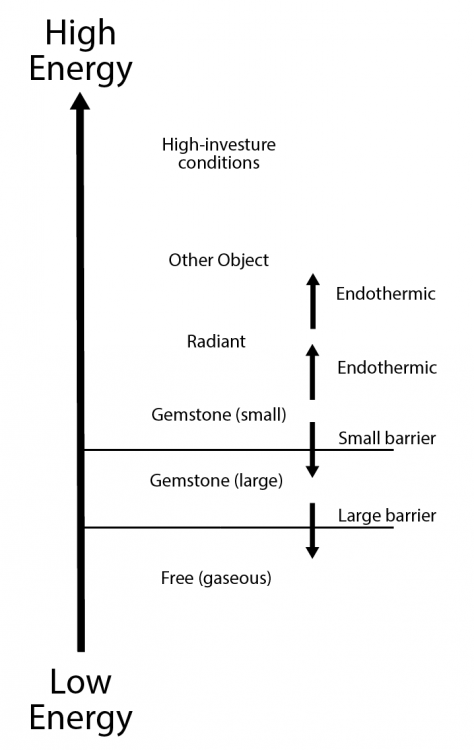
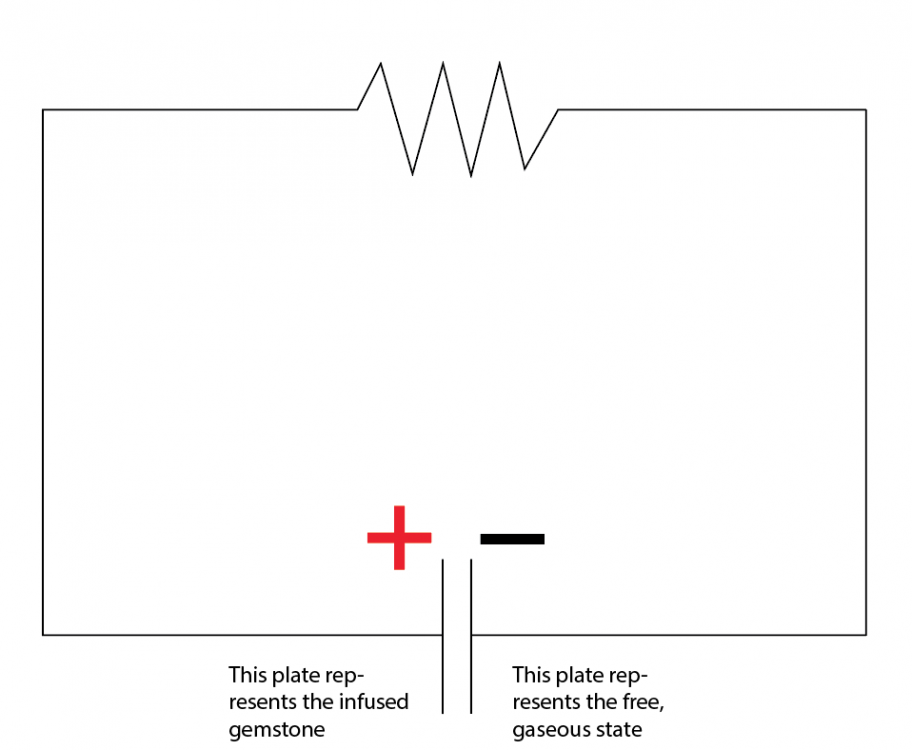
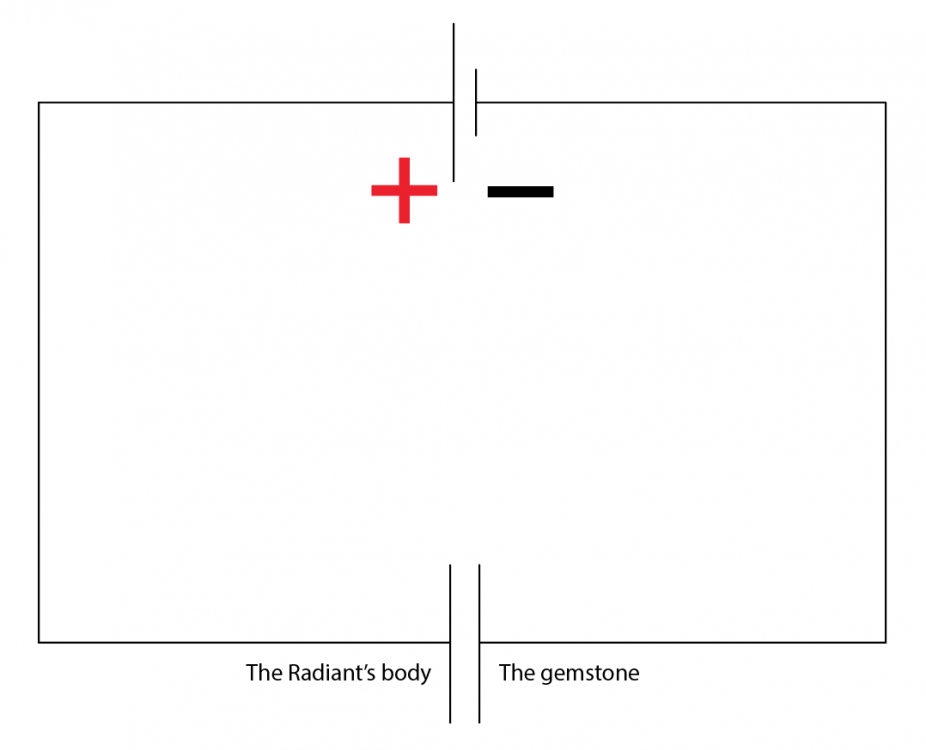
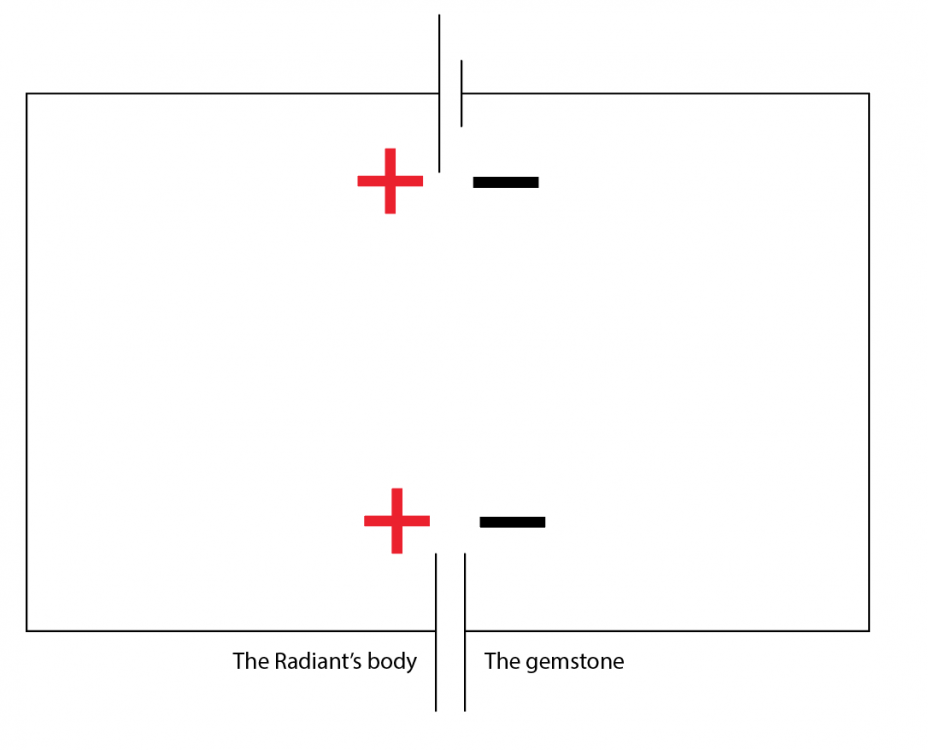
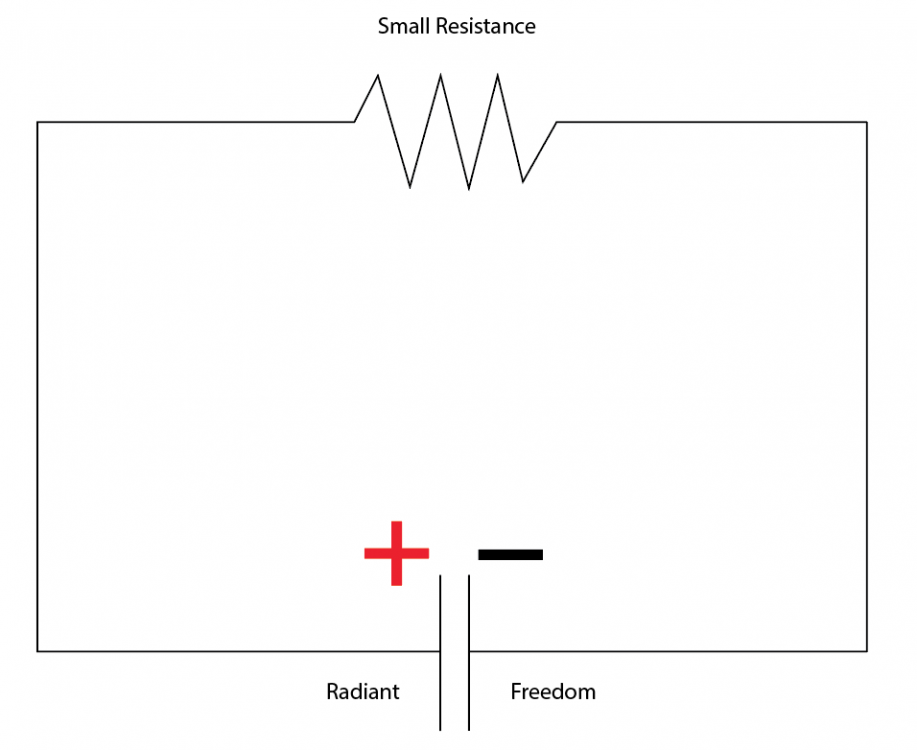
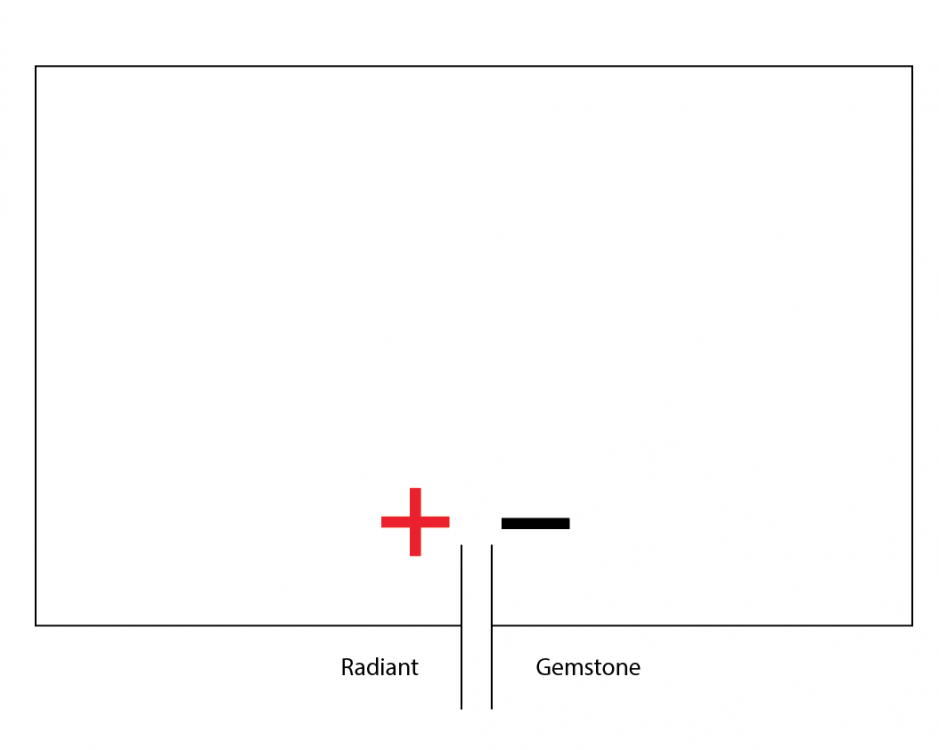
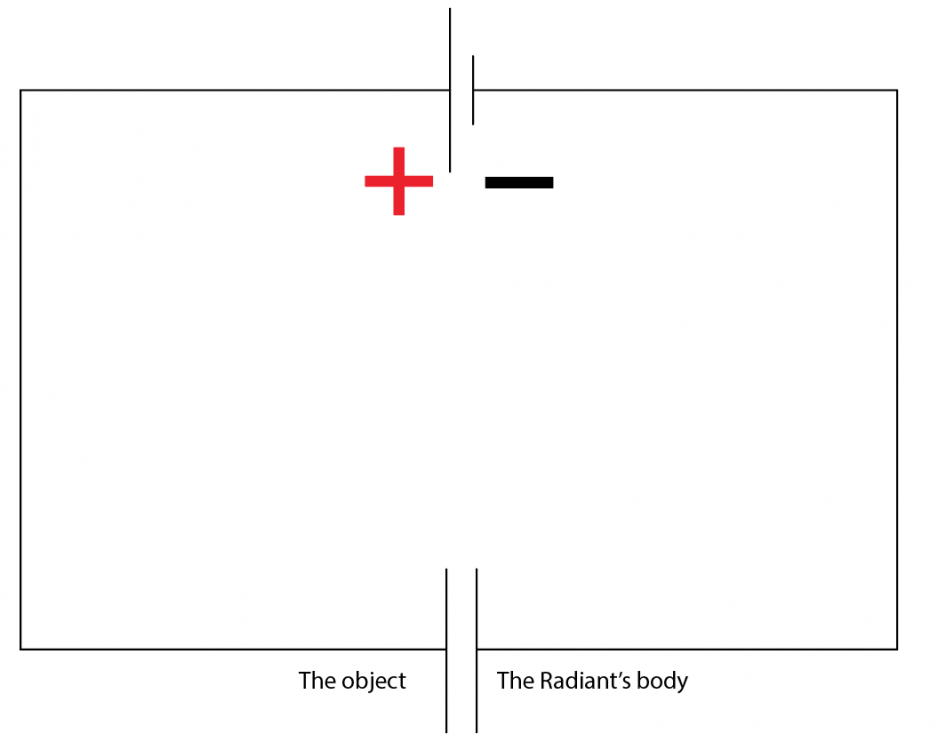
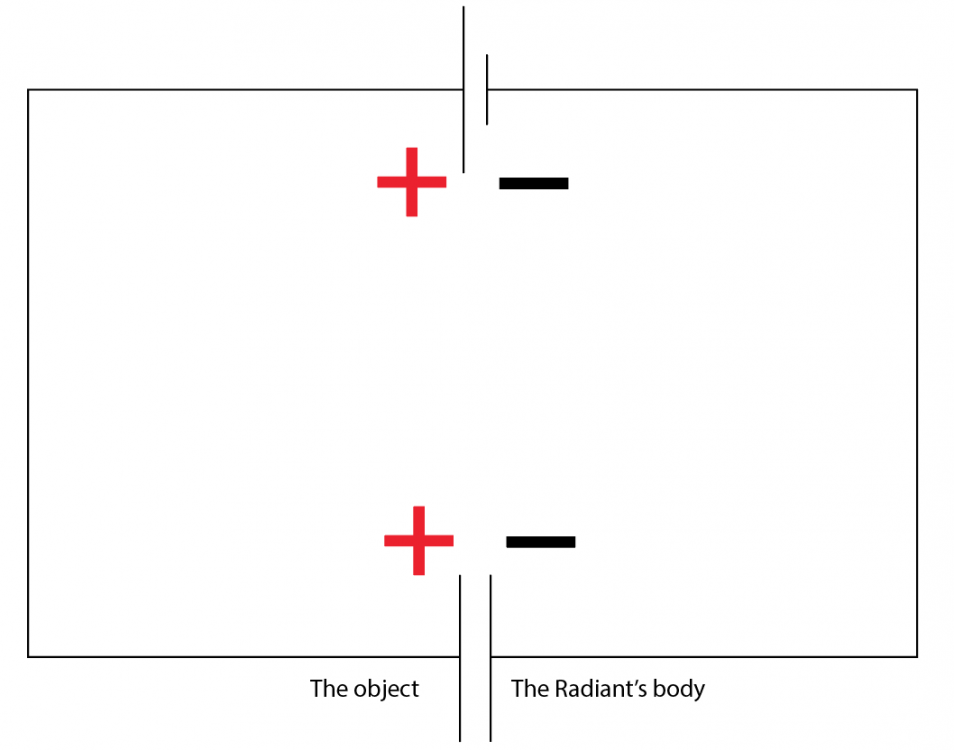
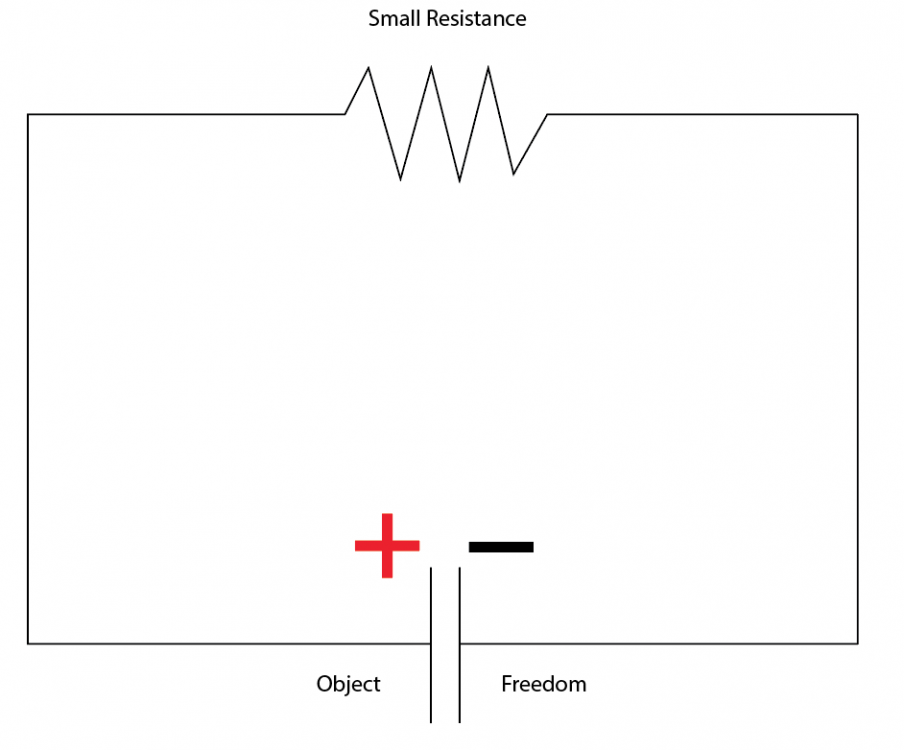
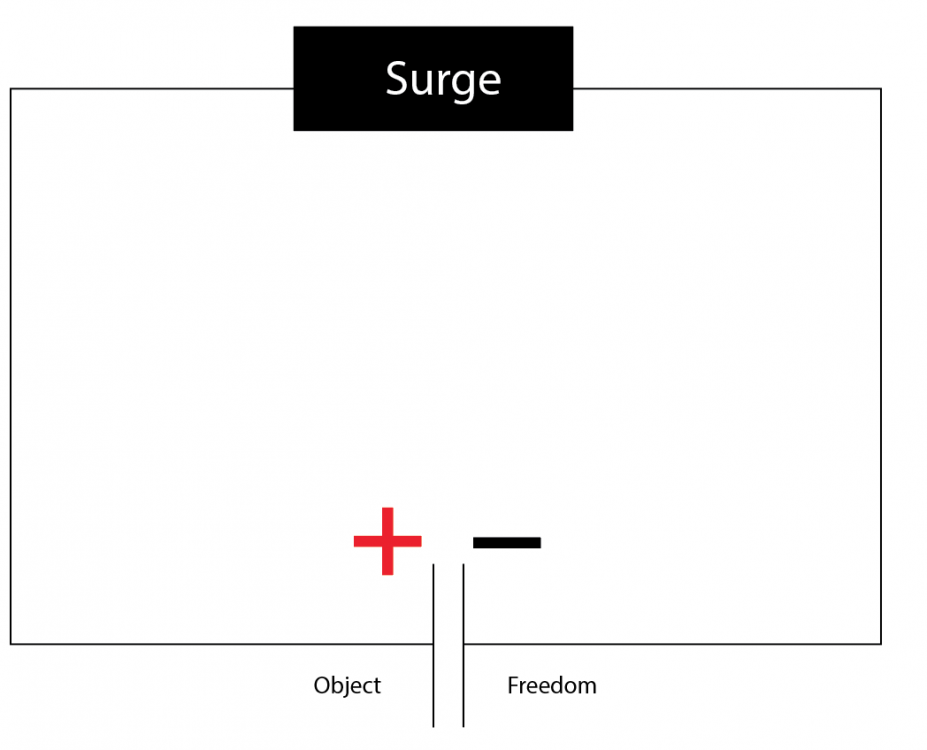
This post is the consequence of the most recent chapter epigraph about how the metal "conducts" stormlight, but it took a bit of a left turn and I actually barely theorize about what that metal might be. It is also sort of an extension of a comment I posted almost three months ago. If you're interested, here it is: (Although I will be reiterating most of the information there, so it is not necessary for you to read first) In this comment, I provided a theory about how and why stormlight moves in terms of changes in potential energy. To be clear here, the potential energy I refer to is not the energy of the investure that makes up the stormlight, but rather the potential energy of the stormlight's position in the environment. For example, if you put an infused sphere at the top of Urithiru, it would have a lot more potential energy than the same sphere at ground level. This potential energy is due to the sphere's ability to drop, not because of the amount of stormlight it contains. Without any barriers, any system will tend towards having the lowest potential energy. Balls will roll downhill. Stormlight will move from positions of higher potential energy to positions of lower energy. In addition to differences in potential energy, we need to talk about "activation energy" here, which is a concept from chemical kinetics. Basically, activation energy acts as a barrier to a process. Rather than determining whether a process will happen*, it determines how quickly it will happen. (*Note: if you make the barrier high enough, you can stop something from happening by making it ridiculously slow). This barrier is the reason why the processes I describe will not happen instantaneously. So, here's my energy diagram for stormlight: Here are my justifications for the features of this diagram: All stormlight eventually returns to a free, gaseous state not held in any object. However, that does not guarantee that it is the lowest energy state. If it behaves like water in the water cycle, then it could "evaporate" despite the fact that this process increases energy. I have no true evidence that stormlight is lower in energy at a free state than when it is in a gemstone, but this is the simplest placement. You could place it between "Gemstone (Small)" and "Radiant" without really changing this thoery, although small adjustments would have to be made. Large gemstones leak stormlight slowly, so there is a large barrier which slows down this process. Small gemstones leak more quickly, so the barrier for this process is smaller. Stormlight will automatically transfer from a smaller gemstone to nearby larger gemstones during the process of trapping a spren. This process is spontaneous, so the potential energy of stormlight in a large gemstone is lower than that in a high gemstone. EDIT: I don't know why I didn't think of this sooner. Perhaps the best explanation for why larger gemstones are lower energy has to do with the "concentration" of stormlight. It's very possible that the energy density of stormlight in a fully charged small gemstone and large gemstone are equal. The same quantity of stormlight in a smaller gemstone, however, occupies less volume. Thus, when given the opportunity it will "diffuse" to a larger empty gemstone where it takes up more volume. Basically, the potential energy of stormlight in a gemstone increases as the concentration does. This is more in line with the description of stormlight as moving along a pressure gradient, since this is how pressure works in gasses. If you have gas in a small container and you allow it to move to a larger one, it will diffuse between the two. The only difference is that it would leave some gas in the small container. Don't know if that happens for stormlight. Features of gemstones such as their cut determine the size of the barriers, but not the energy of stormlight within the gemstone. Stormlight is at a higher energy when held by a Radiant than when held by a gemstone. I know this because when Kaladin swears the third oath, stormlight entering him from nearby gems causes the air to grow cold and form frost. This means the process consumed energy. Objects other than Radiants and gemstones are even higher in energy. We know this because when Szeth or Kaladin infuse an object with a lot of stormlight, the object grows cold and forms frost. Again, this is a consequence of energy being consumed. (That is what the arrows saying "endothermic" in my diagram mean). A really common demonstration in chemistry classes is to perform an endothermic reaction in a beaker above a block of wood, with some water in between. The water will freeze, binding the beaker to the wood. High-investure conditions refers to states such as Honor's perpendicularity, from which stormlight will burst out and fill gemstones. So far, this is identical to the theory in my much earlier comment, except with the additional evidence of the frost-formation, which I didn't think of three months ago. Now, you can probably see how the conductive metal does its thing according to this theory—it reduces the energy barrier between a Radiant and a gemstone, therefore facilitating this transfer quickly. This is the point where I decided to focus too much on the word "conducting" and went off the rails by drawing circuits. (Disclaimer: I am a chemistry student, so I'm pretty well versed with thermodynamics but am less confident with circuits. Please help me out if you actually know circuits super well) So, how do circuits relate to thermodynamics? Well, the driving force behind the current in any circuit is a difference in potential energy of electrons at the beginning of a circuit versus the end of a circuit. In this analogy, I well be relating the movement of stormlight to the current. (And yes, I'm using positive current. Despite the fact electrons flow the other way. Maybe that's dumb, go ahead and flip all the signs if you wish). Stored stormlight will be represented as stored charge—a capacitor! Here is where things get a bit tricky though. A capacitor, in the simplest case, consists of two parallel sheets of metal which each store opposing electric charge. The capacitor will fill with charge when it is connected to a battery, and without a battery it will act as a source of charge and produce a current in a closed circuit. Now, in order for this to work with stormlight I had to make some... adjustments. The object holding the stormlight cannot really be represented by the capacitor itself, but rather by one of the sheets of the capacitor. The other sheet of the capacitor represents the object that the stormlight is flowing to or from. As I switch between different processes, I will be switching these sheets out. Which is not really a thing that happens in circuits. It felt weird. (I think there might be an easier way to do this that has to do with something called "ground" but uhhh as I said I'm not too well versed at this so any electrical engineers please help). (Also, for those unfamiliar with circuit notation: a capacitor is two parallel lines of equal length. A battery is two parallel lines of unequal length. Resistors will be zig-zags). Let's apply this to the simplest case: stormlight being held in a gemstone. The infused gemstone acts like a positively charged plate in a capacitor. Freedom represents the negatively charged plate. Stormlight, represented as current, which flows from the positive plate to the negative plate, escapes the gemstone. The barrier to this process is represented by a resistor, which slows the transfer down. In this case, the resistance is very high and the transfer takes a long time (days). Next, we can look at the process of a Radiant drawing in stormlight from a gemstone. This is an endothermic process (it increases energy) so energy must be supplied to facilitate it. In this case, the Radiant has the power to act as a battery: On the left is the initial state. On the right is the final state. This is also the first example of the weirdness that was a consequence of using capacitor plates to represent objects. Why is the gemstone, which begins infused, initially uncharged? Well, if I had given it a positive charge, the battery (Radiant) wouldn't have been needed to drive the flow of current. In order to represent the fact that the gemstone is lower in energy than the Radiant, despite containing stormlight, I had to make the plate begin as uncharged. Afterwards, the Radiant will look like this: Basically, the same as with an infused gemstone. The only difference here is that the resistance is much lower, allowing current to flow faster (the stormlight leaks faster). When a Radiant gets stabbed by one of those special conductive Fused spears, the resistance essentially disappears: Thus, current (stormlight) flows very quickly from the positive plate (Radiant) to the negative plate (gemstone). When a Windrunner like Kaladin infuses an object with stormlight, the process looks very similar to when the Radiant draws stormlight from a gemstone. The Windrunner acts as a battery and transfers stormlight from lower energy to higher energy. (Okay these are the last ones I promise) What happens after the object is infused? There are two subtly different possibilities that involve circuits, and one which doesn't: The first possibility is that, as the stormlight leaves the object, some of the potential energy that it is releasing is converted into the effect of the surge. At first, this option seems to be the most appealing because it is how stuff gets powered in real-life electrical circuits. (like lightbulbs) (by the way, this process also involves some resistance so it doesn't happen all at once) However, there's a bit of an issue here. If the surge is produced by stormlight leaving the object, the an object like a gemstone, which has a much higher "resistance" and thus slower stormlight loss, should exhibit the surge less strongly. Since this is not the case, I believe the second possibility is more accurate: that there is a small amount of resistance which leads to the object losing stormlight quickly, and that the effect of the surge is maintained as long as there is stormlight left in the object. The third explanation kind of defies circuits and it is that stormlight is actually consumed to produce the surge. Since current is never consumed when an electrical circuit, I couldn't figure out a way to represent that. This is also the reason why I haven't represented stormlight healing or surges such as Soulcasting or Progression, which appear to consume stormlight. The same conundrum applies to fabrials: do they consume the stormlight, or do they consume potential energy as the stormlight escapes them? Anyway, thank you to anybody who actually read this whole thing. Wow. You're almost as crazy as I am for writing this. For those who didn't, I totally understand. Although I can't quite come up with a good TL;DR. I might include that later. (Edit: wow a lot of the formatting here is wonky. There's extra blank lines and weird indents all over the place)