



skaa
-
Posts
1675 -
Joined
-
Last visited
-
Days Won
5
Content Type
Profiles
News
Forums
Blogs
Gallery
Events
Everything posted by skaa
-
Ah well, there goes my theory that harmonium existed before Sazed's Ascension.
-
I voted male, but given that (unlike sex) gender is a social construct, I don't feel the need to strictly align myself with Western-derived male gender norms (e.g. acting dominant and fearless, speaking in a deep voice, rarely smiling, liking sports, etc.) other than the stuff I had actually grown used to/fond of like wearing "male clothing", and keeping my facial hair. I'm also heterosexual, but most people I meet in real life assume differently because I don't always "act straight", as if the way I talk or the way I deal with people indicates which sex I'm attracted to. *is slightly bitter*
-
Um, that's what I meant, Oudeis. Canon says the illumination was fungal in nature, so Brandon will have to change the "mini-Seons reproducing and sticking to the walls" part of the origin story. Perhaps he'll just change it so that there were no mini-Seons at all, and that the first successful experiment on "contained Aons" already produced full-fledged Seons as we know them. We don't know for sure how he'll change the Seon origin story. All we know is that he'll have to change it because of the fungus explanation. Edit: Actually, he might not need to change the mini-Seon thing, after all. I read the part where he replaced the deleted scene with the fungus talk, and the replacement didn't explain one thing: As you can see (check the lines in blue), the fungi only explained the slime. It did not explain why the walls glowed. Also, it appears that the fungal explanation was only Raoden's theory, not something verified. So it could still be the mini-Seons thing. The only problem (see the line in red) is that according to Raoden, the Elantrian scholars themselves didn't know why the walls glowed. If so, then there are three possibilities I could think of: The Elantrian who performed the mini-Seon experiments kept it secret, so his fellow Elantrians never knew about it and the truth behind the glowing walls was never recorded. The walls glowed (whether or not via mini-Seon light) even before the first Elantrians came, so it wasn't caused by Elantrians, whatever its cause may be. Raoden was wrong. The Elantrians knew why the walls glowed. Raoden just hasn't read the right book yet.
-
Just in case you're interested, there's a deleted scene from Elantris showing that Seons were created by Elantrians using AonDor. That scene is no longer canon (and parts of it are contradicted by the book), but Brandon indicated there in his commentary that he intends to explain the origin of Seons in the Elantris sequel. I don't know the chances of him changing the "made by Elantrians" part, but even if he doesn't, a major detail of the Elantrian experiments would have to change (i.e. the mini-Seons and their role in illuminating the city walls).
-
I think most of the Rioting applications you proposed could work, except for that one part about Rioters turning themselves spiritually Selish. The problem there is that Emotional Allomancers cannot use their powers on themselves. Anyway, your theory raises the question of whether something like Lightweaving, which can apparently also change someone's personality, can be used in the same manner. The same goes for Forgery. Can Shai go to Arelon and Forge some guy there into someone who can be chosen by the Shaod? Of course, Shai would have to make sure the Forgery lasts long enough for the Shaod to choose him. Another question is what would happen once the personality manipulation stops. This leads to more general quesions regarding the Shaod and the Nahel bond: What happens to an Elantrian who suddenly loses his devotion? Would an honorspren bonded to an artificially honor-enhanced person die the moment this artificial enhancement fades? I guess that wouldn't be a problem if the affected person had started to adopt the artificial personality as his own, a sort of metanoia.
-
I have not. If I were to seriously attempt building my own conlang, it would be only after taking a formal linguistics course, because I would not want to do something like this in a half-baked manner. One idea that interests me is the possibility of constructing a language that has elements from both Bahasa Melayu (Indonesia and Malaysia) and Tagalog (Philippines), which are the two most widely-used Austronesian languages in the world. Lesser-known Austronesian languages, or perhaps a reconstructed Proto-Austronesian, would then supply roots for technical/scientific terms in the same way that Latin is used in the West. Of course. Today, people born under Mithuna will have their third eye opened to the true nature of Jyotisha, which is but an illusion. They are advised not to eat poison for dinner. Their lucky number for today is the tauth power of tau.
-
Syl talks about it in WoR: Or do you mean a WoB that the Stormlight-feeding only happens when summoned? That would be strange, given that the Honorblade gave Szeth the ability to use Stormlight even when it wasn't summoned.
-
Have you tried learning a non-Latin alphabet? If so, does the phonetic transcription of the word "Curiosity" using that alphabet produce similar synesthetic colors? How about the actual translation of that word into a language that uses that alphabet? Thanks for asking a question in my AMA thread two weeks ago, by the way.
-
Hasn't it been implied in the book that Awakeners used a lot of Breaths to Awaken Lifeless before the one-Breath Lifeless Command was discovered? Does that mean the very first Lifeless had some sort of personality? I suppose people would prefer their undead soldiers not having any personality whatsoever, so that's another advantage of the single-Breath Lifeless Command (aside from the obvious economic reason).
-
It's in the illustration at the end of Chapter 13 entitled "LINES OF VIGOR PART ONE: BASIC USAGE".
-
Ah, that WoB puts a damper on things a bit. Oh well. I wonder what we're missing here. Either there is something that partly counteracts a curvature-related weakening of larger circles (thereby lessening the expected weakening), or the thing that weakens larger circles has nothing to do with curvature per se. The city-sized circle at Nebrask is apparently not large enough to be rendered useless by this structural weakening, so I'm not going to give up on my equation just yet. I'm just going to assume that the w term in the equation is not really a coefficient, but is rather a variable that shrinks very slowly as the circumference of the circle increases. Perhaps it has something to do with the Earth's own curvature affecting very large circles? Yes, Joel even explicitly say that Lines of Forbiddance have no bind points. Also, the curvature rule of ellipses would dictate that the body of the line segment should have no strength at all. My idea which I failed to clarify in the OP is that the endpoints (what should have been the bind points) have been "pulled" into the 3rd dimension by its degenerate nature, and no longer act as regular bind points but are instead the generators of the Forbiddance force field in 3D space. I've compared them to black holes, obviously an imperfect comparison because chalkings attacking the endpoints don't get sucked into 3D space, but it does make me think that a sort of "Hawking radiation" might be giving the body of the line its inexplicable strength. I do in fact have an explanation or two for the straight line part of Revocations, but I didn't include it in my post because it seemed out of scope at the time. I was going to put it in a separate thread, but since you asked I might as well discuss it here now. In the book, if you look at the illustration of Joel/Melody's Line of Revocation as it smashed through an enemy chalkling, you'll notice that it moved teeth-end first (i.e. the side where the jagged line transitions into the straight line), with the straight line trailing behind it. This makes sense aesthetically because you'd expect the "teeth" to be the one hitting the enemy, but it also serves as a clue as to how the Line was drawn: It was obviously drawn with the teeth end outwards (facing away from the user's own circle). Recall that ordinary Lines of Vigor are drawn starting outward moving in. Lines of Revocation could not be drawn the same way, because the side facing outwards is the transition point between the jagged line and the straight line. By necessity, it would be drawn from inwards out. This gives us two options. The first option is that the straight line is drawn first, from inwards moving out, then returning with the jagged part moving in. This option is problematic because of this scene in the book: As you can see, Joel thought Harding was drawing a Line of Vigor. If Harding had drawn a straight line first, then surely that would've been mentioned, and that would look more like someone drawing a Line of Forbiddance, not a Line of Vigor. So we're left with the second option: the jagged waves were drawn first, from inwards moving out, in the opposite direction that Vigor waves would be drawn. This gives me a couple of ideas about the straight line: One is that it's a "trigger" for the Line of Revocation to commence. Vigors on the other hand are triggered just by lifting the chalk, so this could be another difference brought about by degeneracy. Another possibility, which I think is more amusing than likely, is that Revocations are triggered automatically as soon as a certain number of triangular waveforms are drawn, even if the user hasn't lifted his chalk yet; this might leave a line of chalk in its wake such as it shoots off, completing the Revocation "look" that we're familiar with, but it would be purely accidental.
-
Thanks! And welcome to the forums! Hmmm... I should probably post a shorter theory next time. I think writing all that gave me RSI.
-
Homo sapiens sapiens have been roaming the Earth since at least around 195,000 years ago. The earliest evidence of writing we've discovered so far is less than 8,000 years old, around 70,000 years after the species almost went extinct due to the effects of the Toba eruption. In the ~125,000 years between the dawn of anatomically modern humans up to the near-extinction event, there wasn't a single reasonably advanced civilization that left any trace for us to discover. What is your favorite theory as to why civilization did not arise during that time? (You could make up your own theory, if you want.)
-
Fundamental in terms of reality. Which world is more real, the atoms making up a chair or the Chair Ideal of which the particular chair is but a shadow? I'm not really looking for a specific answer. I just wanted to ask you something that I thought you'd enjoy answering, since you said you liked philosophy.
-
What is more fundamental, the natural world, or the world of Platonic Ideals?
-
Fixed. Tacos or burritos?
-
Here's a "360 degree" YouTube video. Basically you either watch it in Chrome or in your phone's YouTube app and you'll be able look in any direction within the video. If you're using a phone, you can change the view just by moving your phone around. Enjoy.
-
My first ever Rithmatic theory: http://www.17thshard.com/forum/topic/32899-theory-circles-lines-and-degenerate-rithmatics/?p=286058
-
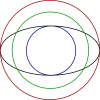
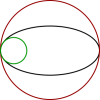
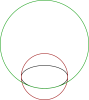
To celebrate Tau Day, I've decided to write my first ever Rithmatic theory. This one, appropriately enough, will involve circles, circular functions, and τ. There will also be ellipses, but we'll be talking about their relationship to circles. (A slight pause to explain what τ is.) Before I continue, if you haven't seen it already, you guys really need to read KalynaAnne's awesome series on Rithmatics first. She has a guide on how to construct different Lines of Warding, including a couple that were not mentioned in the book: the five-point and the eight-point circles, both of which have been confirmed by Brandon. She even has theories about Lines of Vigor that have also been confirmed, which is pretty cool. KalynaAnne also speculated about elliptic Lines of Warding, including the mysterious Blad Defense (I think her version of that looks very promising). But while most of her work had been quite brilliant, ellipses is where she had one tiny problem. Since elliptical Lines of Warding are stronger where the curvature is greater and weaker where the curvature is less, she initially theorized that smaller circles (which have greater curvature) must be stronger than larger circles. But this theory had one obvious flaw: If larger circles are weaker, then the Great Circle of Nebrask would be pathetically weak, and that's not very likely. Confronted with this, she gave a list of possible alternatives. The only one in her list that actually solves the problem of the Great Circle is this: She proposed that each Line of Warding has a total amount of "charge" directly proportional to its circumference (i.e. the bigger the Line of Warding, the more charge it has). This "charge", which determines the strength of the Line at a given point, is distributed along the points of the line based on curvature, so points on the line with more curvature attract more of the "charge" and become stronger. Since circles have constant curvature, the charge is evenly distributed all throughout. This solution works perfectly well, but I'd like to analyze this problem using a different approach, create a solution that is essentially compatible with KalynaAnne's proposal, and then discuss its implications. Here is what the book says about the strength of an elliptic Line of Warding: The question an observant reader might ask is "Which circle?" This is because, as KalynaAnne correctly pointed out in her discussion on curvature, the curvature of a circle depends on its radius. This means it varies depending on the circle's size, so there isn't a single curvature for all circles that can be compared to that of a point on an ellipse. So, which circle? The simplest interpretation is that each Line of Warding has its own reference circle. This reference circle would of course have a constant curvature (hence a constant strength at each point), and by comparing the curvature of a point on an ellipse to the curvature of that circle, we can determine the Warding strength at that point through this ratio: σP = (κP / κC) * w Where σP is the strength at point P of a particular Line of Warding, κP is the curvature at point P, and κC is the curvature of the reference circle. As you can see, points of greater curvature with respect to the reference circle would be stronger than the reference circle, and points of less curvature are weaker. Finally, w is the coefficient of Warding, which has a constant value for the unit of "Warding strength" being used. We don't know any Warding strength units, so we'll just set w to 1 and ignore it. Note that this equation should also apply to perfectly circular Lines of Warding because circles are also ellipses. In this case, it would make sense to assume that a circular Line of Warding is its own reference circle, meaning κP=κC, so σP=1 for all circles. This solves the Great Circle problem. (Edit: I've been reminded by ccstat of this recent WoB showing that there is in fact some sort of weakening involved when creating large circles, but not as fast as the curvature would indicate. So in fact σP is not 1 for all circles. I formulated a possible explanation, but please read the rest of this post first.) Either way, we still need to define what this reference circle is for non-circular ellipses. I could think of three natural candidates: The inscribed circle of the ellipse ("incircle"), a circle whose radius is equal to the ellipse's semi-minor axis The circumscribed circle of the ellipse ("circumcircle"), a circle whose radius is equal to the ellipse's semi-major axis The circle whose circumference is equal to that of the ellipse (let's call this the perimeter circle or the "pericircle" of the ellipse) (Conveniently, when the ellipse in question is actually a circle, then all four circles are equal to each other. This jives with our assumption that the reference circle of a circular Line of Warding is itself.) Here's a badly drawn diagram of an ellipse and its incircle, circumcircle, and pericircle: In one of her diagrams, KalynaAnne called the incircle of an ellipse the reference circle of that ellipse. Later I'll explain why I don't think the incircle's curvature is the best candidate for the basis of Warding strength. The "pericircle" is an appealing choice because it shares something quite fundamental with the ellipse: the circumference. It also jives with KalynaAnne's "charge" theory which uses the circumference as a basis of total strength charge. However, the equation for getting the circumference of a non-circular ellipse (which involves a factorial, a double factorial, and the sum of an infinite series) is so complex that I doubt Brandon would bother with it. (Although there is a nifty rough approximation of the elliptic circumference involving tau: τ * sqrt((a2 + b2) / 2)) I'm going with the circumcircle as the reference circle, mainly because it is the largest of the three (for non-circular ellipses), and therefore has the lowest curvature. If the front and back of an elliptical Line of Warding really are "much stronger" than a circular Warding, then the κC ought to be pretty low compared to the ellipse's greatest κP. Using the circumcircle of the ellipse as the reference circle creates stronger elliptic Lines of Warding than using the incircle or the pericircle. I am open to counterarguments, though. Feel free to defend either the incircle or the pericircle. Even as I type this, I am growing more fond of the pericircle. Perhaps it's because I invented the term; there is no widely used name for the circle whose circumference is equal to that of an ellipse, so I had to make a name up as I developed this theory. Alas, I need a stronger argument in favor of the pericircle before I actually switch. (Edit: I now believe that the reference circle is the one whose area is equal to that of the ellipse, as I explain later on in the thread.) (More talk about curvature and its relation to circles.) Now for the fun part. Let us play with extreme values for the numerator κP (or the denominator rO, if you prefer the equation I gave in the spoilered note on osculating circles) and see the results σP. If κP is negative, then you're looking at a non-convex part in your Line of Warding (either that, or you managed to draw a hyperbola, which stretches to infinity, so... no). Well-drawn circles or ellipses are convex all throughout. If κP is zero, you've got a line segment (another solution is two parallel lines stretching infinitely in both directions, but that's impossible). P is somewhere on the line segment other than the endpoints, and σP is also zero. A line segment is a degenerate ellipse whose foci are on its endpoints, meaning it's so squashed that the foci have moved as far apart as they possibly can. If κP is ∞, then you are on an endpoint of a line segment. If you used the incircle as the reference circle, you get a weird strength value: σP=∞/∞. Otherwise, you only get the slightly less weird σP=∞. What does it mean that a Line of Warding that looks like a line segment has infinite strength at its bind points while having no strength at all anywhere else along the line? In real life, things get really weird when they start involving infinities; for example, a portion of spacetime with infinite curvature becomes a black hole. I believe something similar happens in the 2D universe of Rithmatic lines when Rithmatic Lines involve infinities in their construction: the very fabric of the "chalk space" is affected, and the effects leak towards "people space". You already know where I'm going with this. I think a Line of Forbiddance is actually a Line of Warding whose infinite curvature at its endpoints has transformed it into something that warps "chalk space", and this is what causes the electromagnetic-like force field that affects both the world of chalk and the world of people. A Line of Forbiddance is a degenerate Line of Warding. Can this theory of degenerate Rithmatics be generalized to other Rithmatic lines? I believe it can. Let us look at two more pairs of Lines: the Line of Vigor and the Line of Revocation. Vigors are basically sinusoidal waves of varying frequency and amplitude. They are used to either move or destroy other Lines. Sine waves are generated through the following function of time: f(t) = A * sin(τft + p) Where A is the amplitude, f is the frequency, and p is the phase of oscillation. The "sin" is, of course, the circular function sine. In Rithmatics, the amplitude is defined by how large your Vigors are. Frequency is probably defined by how many individual waves are drawn. The phase is probably just zero. You could add different sine waves together to form different-looking periodic waveforms, some of which can look quite weird. Such waves are difficult to draw (remember, you need at least two repetitions of a waveform for the Line of Vigor to work) and would be impractical when used as Lines of Vigor. But what if we add an infinite number of different sine waves? Well, that could be interesting. Consider the following summation of an infinite series: f(t) = 2A * (Σ(-1n * sin(nτtf) / n) from n=1 to n=∞) / τ When graphed, that function looks like a sawtooth wave, which looks exactly like Lines of Revocation. The Line of Revocation is just a degenerate Line of Vigor, which is how it can affect things beyond the chalk universe. (More talk on Lines of Revocation in the second part of this post.) Alas, the remaining Lines aren't circle-related. Let's just discuss them briefly. Lines of Making are able to actually harm people once given the Glyph of Rending as an instruction. This Glyph must be a degenerate form of other Glyphs, which seem to all involve straight lines. This makes me think the Glyph of Rending is just a dot. The Line of Silencing, which is four spiral loops combined, is already degenerate because it can affect the outside world. I just don't know what it is a degenerate form of. It kinda looks like this, though. I think I need to read up on fractals.
-
The Good News Thread: I'm So Excited! And I Just Can't Hide It!
skaa replied to traceria's topic in General Discussion
Hey guys! Today (June 28 here in the Philippines) is Tau Day! As a tauist, allow me to evangelizepromote the Way of the Tau. Please read the Tau Manifesto to learn all sorts of cool facts about the circle constant. Or watch the video Pi is (still) Wrong by mathemusician Vi Hart. Or read our very own Chaos's post in praise of tau. Today I'll be eating pies in pairs, because the central dogma of tauism is that there are two pis in tau. You guys should do the same! *omnomnomnom* -
Aimians have deep blue nails while Herdazians have "crystalline, slate-colored" nails. Granted, the color of slate isn't normally captivating, but we are talking about a Herdazian supermodel here, after all, so a top-notch Herdazian manicure must be involved. EDIT: Why the heck am I talking about manicures?! *runs away from thread*
-
Sorry, can't resist.
-
What are your thoughts on sous-vide cooking?
-
Do Herdazian supermodels polish their crystalline fingernails? If so, would that make it harder to use sparkflickers? Also, do you wear lots of crystal jewelry, or do you feel that your fingers are fabulous enough to be sufficient adornment? Oh, and welcome to the forums!
-
Thinking of my very first Rithmatic theory


