Shatter
-
Posts
967 -
Joined
-
Last visited
-
Days Won
7
Content Type
Profiles
News
Forums
Blogs
Gallery
Events
Everything posted by Shatter
-
nahhhh. space is your fave part? Inconceivable! lol I'm a big nerd about space. oo I should mention @Through The Living Glass
-
I hate waiting.
I've applied to OSAP, and I'm waiting for them to process my application.
I'm worried, but I shouldn't be. I hate this.
I'm sure the government will give me money for college.
I'm just uneasy that they might not.
-
Hey y'all. No idea if there was a space discussion. I decided to make one :3 I'll hand out a few questions to kickstart the discussion. How did you first get into astronomy or space science, and what’s your favourite topic in space science right now, and why? For me personally, I had a placemat which had the solar system on it. One thing led to another, and I'm a very big space nerd now. My fave topic rn is star formation and the formation of solar systems.
-
*hugs* you good?
-
 Ryn finished the book and set the datapad aside. He stared out through the viewport at the endless blue-white swirl of hyperspace. This was his life now. Hiding from the Empire and its Inquisitors. Living from job to job, planet to planet, always moving before anyone could look too closely. He had heard the rumours. Force-sensitive people disappearing. Maybe that IG droid back there had been part of the Empire's hunt for the Jedi. The woman, Aerith, was definitely on the run. She might be force sensitive, might not. He couldn't tell. He rubbed a hand across his face and exhaled slowly. He was halfway to Takodana now. Maybe Maz would know something. She usually knew something. Rising from the pilot’s chair, he stretched slightly, eyes still fixed on hyperspace beyond the transparisteel. Meditation. That was probably wiser than thinking. He crossed the small freighter and stopped beside a concealed panel. With a faint pull through the Force, the compartment clicked open. His lightsaber rested inside. Ryn picked it up carefully, thumb brushing over worn metal and old scratches. For a moment, he simply looked at it. Then he put it back. Some things were better left untouched. He closed the compartment and walked to the cramped sleeping quarters, sitting cross-legged on the edge of the bed before finally letting himself drift into meditation. Some thoughts were dangerous places to wander. The Jedi Order was one of them.
 -
Voss glanced toward the rising smoke, jumped up, and merged into the crowd. Crowds were already starting to shift and panic around the streets, giving him exactly the cover he needed. He watched the IG droid and Aerith fight. She was impressive. Hmmm. He shook his head and moved quickly through the confusion toward Docking Bay Aurek-12. His freighter was there, and he wanted to get off this karking planet. He was picking up a few metric tons of equipment and parts for Maz's castle on Takodana. He reached the pad, nodded to the dock official hovering nearby, and got into his ship. He flicked some switches and called in: “Grey Wake requesting outbound clearance.” “Outbound clearance granted,” traffic control droned over comms. “Safe travels.” A few minutes later, as he was punching in the coordinates and plotting the jump for Takodana, he noticed a VCX-100 blast into orbit. He glanced at his sensors and noted a Lancer pursuing it. “Must be that girl Aerith, huh,” he said to his ship spukama named Dawn. He finished his calculations and made the jump to Takodana. Better she gets caught than him. He wished he didn't have to think like that. It hurt him. He wanted to help so badly, but he could be found out at any time. He shook his head and stood up. This jump would be about 5 hours. Then, with nothing else pressing, he pulled up the book he’d been reading on his datapad. It was about a planet where certain people could consume metal and gain abilities to manipulate strength, speed, influence minds and emotions, even the way bodies and objects moved through space. It was weirdly like the Force. He wondered if the author took inspiration from the Jedi. Who knows.
-
J.O.E.L. (from Helldivers 2)
-
Ha. Nice reference. Totally forgotten the place it's from but I remember the Nalworks
-
That happens to be how DNS works, yes. VPNs are cool and useful. I do recommend their usage
-
(from a discord server I'm in)
-
Executing the hackers (Steam Support be like)
-
no. you're two. Conure and I are one word you are CoderDragon. two words
-
Ryn sat down and stretched his arms. “Hey. Name's Voss. Who're you? What's your business on this kriffing dump of a planet?”
-
“Huh. I was hauling cargo from Corellia. That's where I'm based, mostly. Mind if I sit here?”
-
Everyone's asleep. Shhhh. You'll wake them up
-
Being found
-
We Are Survivors (Post- Order 66 RP) - Signups
Shatter replied to Through the Living Hope's topic in Roleplaying
*sadge* -
“The name's Voss. I said that already.” He narrowed his eyes but then relaxed. “What's your business here, Aerith? Like, not just selling rugs. What are you doing?”
-
The Torah repeatedly stresses that offerings must be brought only “there” (meaning the central Sanctuary). After the Mishkan (the Tabernacle) settled and later the Beis HaMikdash (the Temple) was built, that became the exclusive site. Once that shift happened, other altars were prohibited. Streams of Judaism or Jewish Movements are better words than 'sect'. The Jewish sects have mostly been wiped out. Pharisees, Sadducees, Essenes, Zealots, Sicarii, etc., were Jewish sects.
-
Hoid
-
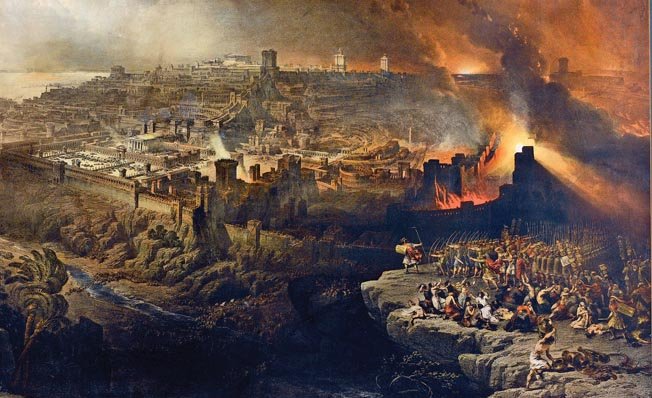
I can answer much of this with an image. In all seriousness, we don't sacrifice korbanos (קרבנות) anymore because we lost the place where we would do it. The Torah forbids sacrificing animals anywhere else, so we had to figure out a replacement. The rabbis of the time decided to formalize prayer to replace the sacrifices, and they created the basis of prayer that Jews have today. More was added as the centuries passed due to stuff happening (the rise of the Christians, the rise of pogroms, etc.) Also, the different 'flavours' of Judaism (there isn't a good term) do have different ideas. Orthodox Judaism is the most traditional approach. It holds that Torah and Halacha (Jewish Law) are binding laws from God, and they do not change based on modern trends. In practice, that means keeping Shabbos (the sabbath) strictly, kosher laws in full detail, daily prayer, and traditional gender roles in many communities. They're currently figuring out the LGBTQ community and how they fit in with Jewish Law. Conservative Judaism values halacha and tradition, but believes Jewish law can develop over time in response to real-world changes. It's more flexible than Orthodox Judaism in that they are more lenient with the laws of Shabbos, they sometimes have mixed seating in synagogue, and will sometimes have female rabbis. They're pretty accepting of the LGBTQ community. Reform Judaism is the most flexible. It sees Jewish law as important but not binding in the same way. The focus is more on ethics, personal meaning, and individual choice. Kosher and Shabbos observance are usually not kept, and services are shorter and often in English and adapted to modern culture. They are highly accepting of the LGBTQ community. Basically: Orthodox = “Jewish Law is binding and central.” Conservative = “Jewish Law matters, but can evolve.” Reform = “The Torah matters, but personal choice is key.” There has always been an orthodox backbone as the jews have moved across the world. As best I can track the main backbone: We went from Judea to Galilee to Babylon to Persia and the wider Islamic world (including North Africa and the Middle East) to Spain and France to Germany and Eastern Europe and to the Ottoman Empire and Sephardic centres to modern Israel and the United States and Canada and a bunch more communities. Keep in mind that it split and part of Jewry became what are known as Sephardis (Mediterranean and Spanish), part became Ashkenazis (Eastern European), and part became Mizrachi (Middle Eastern). Orthodox Judaism dates back to the times before the Second Temple. I've actually thought about seeing if I could track my Rabbi's teachers all the way back (i probably could) Any more questions? I'll answer them tomorrow. I have to sleep now.