


Ripheus23
-
Posts
1318 -
Joined
-
Last visited
-
Days Won
2
Content Type
Profiles
News
Forums
Blogs
Gallery
Events
Everything posted by Ripheus23
-
OK, so one way the argument goes is: given how simple the function 2^aleph-zero is, it's not likely that its output is particularly exotic. That is, the options seem constricted to aleph-1, aleph-aleph-zero, and maybe aleph-2 or aleph-aleph-1. Beyond that, it would be peculiar to go from 2 to the power of aleph-zero, to wherever we had gone.
Now, I also seem to have a disproof of the Generalized Continuum Hypothesis available. Namely, and stipulating that under the circumstances (the countable infinity of the list of aleph-numbers from aleph-zero to aleph-n), it is possible to replace aleph-zero with {n + 1}, so that we read the GCH as
2^[aleph-n] = aleph-[n + 1] = aleph-aleph-zero.
This doesn't imply that any n gives us aleph-aleph-zero, but only n relative to {n + 1}.
Anyway, aleph-aleph-zero is the successor of all the aleph-numbers on the first list. So it should be given from 2 to the power of aleph-[n + 1] if the GCH is true. However, this amounts to saying that 2 to the power of aleph-aleph-zero is aleph-aleph-zero. But now the GCH says that 2 to the power of aleph-aleph-zero should be 2 to the power of aleph-aleph-1. So the GCH leads, here, to a contradiction, it seems, unless we assume that aleph-aleph-zero is supposed to be equivalent in cardinality to aleph-aleph-1, counter to the principle of Cantor's paradise in general.
Now, there could be a map from 2^aleph-zero, to aleph-1, without the GCH being true, in which case 2^aleph-1 might be something like aleph-aleph-zero, for example. But it seems dubious that the question of the CH in particular should be resolved just by means of "which" axiom scheme one uses. Indeed, the principle of ascent is in equilibrium if 2^aleph-zero = aleph-aleph-zero, &c., I think, so...
- Show previous comments 1 more
-
https://en.wikipedia.org/wiki/Kurepa_tree
Has the craziest sentences I've heard in a while:
QuoteMore precisely, the existence of Kurepa trees follows from the diamond plus principle, which holds in the constructible universe. On the other hand, Silver (1971) showed that if a strongly inaccessible cardinal is Lévy collapsed to ω2 then, in the resulting model, there are no Kurepa trees. The existence of an inaccessible cardinal is in fact equiconsistent with the failure of the Kurepa hypothesis, because if the Kurepa hypothesis is false then the cardinal ω2 is inaccessible in the constructible universe.
A Kurepa tree with fewer than 2ℵ1 branches is known as a Jech–Kunen tree.
-
OMG zippers are real [set-theoretically, that is]! From "Non-wellfounded Set Theory," on the SEP:
QuoteThere is a natural operation of “zipping” two streams. Also called “merging”, it is defined by
(3) zip(s, t) = 〈 head(s), zip(t, tail(s)) 〉 So to zip two streams s and t one starts with the head of s, and then begins the same process of zipping all over again, but this time with t first and the tail of s second. For example, if x†, y†, and z†are the solutions to the system in equation (2) above, then we might wish to consider, for example,zip(x†, y†). In unraveled form, this is
(0,1,1,2,2,0,0,1,1,2,2,0,…).
-
Hmm this is interesting:
QuoteThis theory is a proposal of ours, which elaborates on a suggestion of Rudy Rucker. We (and many others) have observed that of all the orders of infinity in Cantor’s paradise, only two actually occur in classical mathematical practice outside set theory: these are ℵ0 and c, the infinity of the natural numbers and the infinity of the continuum. Pocket set theory is a theory motivated by the idea that these are the only infinities (Vopenka’s alternative set theory also has this property, by the way).
~from "Alternative Axiomatic Set Theories," SEP
-
Not necessarily a fantasy-applicable case, but most anything [fictionwise at least?] by Umberto Eco. I only know the translations but they're awesome. Fantasywise and SIMILAR to Eco: Mark Z. Danielewski. Indeed, technically, MZD might be all by himself the best example of what you're looking for. Stephen R. Donaldson writes very well, but sometimes "too" well, maybe. Also try the Ciardi translation of Dante, especially the Paradiso.
-
This is how my argument proceeds so far:
Suppose that 2 to the power of aleph-aleph-zero, equals [aleph-zero]-aleph-zero. Then evaluate 2 to the power of [aleph-zero]-aleph-zero. Now, if 2 to the power of aleph-zero equals aleph-aleph-zero, then from R to the power of aleph-n we can construct all the alephs after aleph-zero and through aleph-aleph-aleph-aleph-aleph-aleph-...-aleph-n. But this exhausts all the points in the infinite-dimensional array of symbols for these numbers, at this stage. [One of the deeper ideas is that we can symbolize all the aleph numbers for {R to the power of aleph-n} using a single object, an infinite-dimensional super-square, if you will [infinite stacks of squares, in an ascending order per stack, at an infinite number of angles perpendicular to the origin].] Accordingly, 2 to the power of [aleph-zero]-aleph-zero does not map back to any point reached from the first series of aleph-n.
However, therefore 2^[aleph-zero]-aleph-zero, would equal something else if 2^aleph-aleph-zero did not equal [aleph-zero]-aleph-zero. And 2^aleph-aleph-zero would not equal that if 2^aleph-zero, did not equal aleph-aleph-zero. Ergo, 2^aleph-zero does not equal aleph-1 but aleph-aleph-zero, therefore the Continuum Hypothesis is false.
Now, my objection to my own reasoning so far is that it seems to "beg the question," if you will. Or, to put it more kindly, the picture in the previous post is the Supercontinuum Hypothesis, which itself must be solved independently to prove my point. Anyway, if the SH is true, though, we have the following interesting series:
- 2^2^2^2^2... = aleph-zero
- 2^aleph-zero = aleph-aleph-zero
- 2^aleph-aleph-zero = [aleph-zero]-aleph-zero
- 2^[aleph-zero]-aleph-zero = ???
-
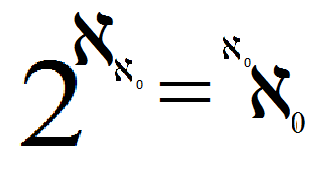
This is a consequence of my theory about the Continuum Hypothesis, I think. In fact, I think it allows a proof that 2 to the power of aleph-zero = aleph-aleph-zero, like a proof-from-assumption-by-contradiction or something. There's more but the idea is that aleph-zero with an infinite number of aleph-glyphs, is equivalent to the first aleph-number on the first list succeeding all the lists of aleph-numbers from aleph-zero to aleph-aleph-aleph-aleph-...-aleph-n. And that is supposed to be equivalent to 2 to the power of aleph-aleph-zero.
But so what happens when we take 2 to the power of [aleph-zero]-aleph-zero? Well, that shoots us all the way past all the lists considered just as lists geometrically distinguished. I mean 2 to each successive n number of aleph-glyphs, gives another dimension of an infinite-dimensional procession of aleph-numbers. So once we transit outside of those, we would map to infinite copies of the infinite-dimensional processions, and then infinite differences of copies of these processions, and so on and on. So 2 to the power of [aleph-zero]-aleph-one, as the first infinity succeeding the sum of the primordial geometrical interval [so to speak], opens the door to the index of sound and the chromatic index, maybe...
-
"... Apollyon sought to present the Law of Noncontradiction as a law of destruction, the destruction of the impossible and purely unreal. By this means, the Destroyer would try to define the act of creation from annihilation first, and have Itself as the Creator in return. For It would present Itself as the force of negation from pure logic, and present this logic as ultimately destructive. And then Apollyon would collapse Its power around all possible sin, and unleash the visio summum malum at last..."
-
My argument that the Continuum Hypothesis is false
First, I would have to present a "reconstruction" of Cantor's original intuition on this matter. Notably, since Cantor would not have been using ZFC, after all, it is for that reason alone independent on Godelian qualifications of things like ZFC. Moreover, thereof, Godel himself thought that the Continuum Hypothesis was decidable, regardless of whether other mathematical propositions are not.
Now, my supposition is that since Cantor's "discovery" of the higher infinite turned on the Diagonal Argument [as an intuitive display of the principle of successive infinities], his intuition about the continuum depended on the appearance of this argument notationwise. In other words, Cantor felt that the continuum was the immediate successor infinity, aleph-1, for aleph-zero, since there was an appearance of the rational numbers being immediately succeeded by the irrational ones. After all, it's just this one variation, repeating vs. nonrepeating decimal notation, that seems to fix the boundary, intuitively, between the countable infinity and the continuum.
Regardless of whether Cantor himself felt/intuited the CH to be true, on such a ground, I personally have believed for a long time that the CH is true for precisely this reason. In fact, and given that I didn't know that many mathematicians think the CH is false, I had spent a decent deal of time trying to come up with a supermathematical argument on behalf of the CH's truth, namely something to do with the physical logic of empirical mathematical notation as used to represent successive infinities and so on.
However, my idea now is that the CH is false, but the way it is makes sense of the possible original intuition that it is true. Viz., the continuum is the immediately succeeding infinite number not by original indexical succession, but by the glyphic index for the aleph-sequence per se nota. In other words, aleph-aleph-zero is the continuum, and the way this infinity "sums over" the entire first-level aleph-n series is a representative of how the infinity of the nonrepeating decimal numbers condenses around the natural numbers so immensely.
Now, if the solution to the CH is, "There are countably infinitely many cardinal numbers 'between' aleph-zero and the continuum," it becomes quite the task, to look for any of those. Given how little I know in particular about such a topic, I'll just toss out the option: what of infinitesimals? Is there a rigorous interpretation of them ZFCwise, for instance, where they might fit into the cardinal hierarchy, as less than the continuum but greater than the countable infinity?
-
As Vin and Elend passed into the Beyond, they heard the soul of Ruin--Ati---screaming at them. "You fools! I was the only thing preventing you from suffering an even WORSE catastrophe! You will rue the day that Ruin ended..." ... [After Odium uses Ruin's contribution to Nightblood to free himself.] Kaladalinadolinar raised Cultivation's Drop for the last time, merging it with Odium's Drop, and Honor's. Rayse felt himself being sealed inside all three crystals. Waves of strange power emanated from him. One shot off towards the reddened stars. "You fools!" Odium screamed, disappearing into the Beyond. "I was the only thing stopping..." But his words vanished with him. ... [After Autonomy eats Cultivation.] Loudness Idaho sent the army of Shades against the Last Avatar. Raoden the XVIIth donned his Elantrian armor, which transformed him into a living building Spiritually tethered to the great city. Together, they broke through the spell Bavadin had cast on the Avatar's mind. The lost, innocent girl's soul slipped out of the poisoned silence inside Autonomy and her Shard. The Shades touched the Avatar's shell. Howling, Bavadin withered into nothingness. As she dissolved, she screamed, "You fools! Without me, you cannot stop the return of..." But her rage gurgled into oblivion. ... [After Hoid the Dark splits off Hoid.] Only the blazing mystery of the Final Gem sustained them as the Shard of Apocalypse inflamed the might of Hoid the Dark. Hoid the Light shuddered, trying to hold back the ultimate doomsday of the worlds. Lift the XVIIth laughed. "Guess I'll have to do it," she said strangely. Then she jumped into the heart of light's darkness. Suddenly, Hoid the Dark began transforming into long, writhing strands, of pressed rice and wheat. Lift the XVIIth consumed the strands, using their implicit Stormlight to shatter the Shard of Apocalypse. As his evil collapsed like a nova, Hoid the Dark screamed. "You fools! Now, Adonalsium will..." THE END?
-
... but it appears that the word "Aharietiam" is derived as [from]: [~Wikipedia article on "Gog and Magog"]
-
"Dictionary" and "dictionarian" seem possibly apropos, though as you've arrived at a stronger pairing...
-
I know prophecies seem malleable enough that people could say "interesting" things in light of them, all the time, but now some "interesting" (to me) ideas about this stuff came to my mind, so...
... firstly, the Book of Daniel is traditionally (and hereof by me) understood as describing the Antichrist as worshiping an unprecedented god, one variously translated as of "forces" or "strongholds." It occurred to me that the development of the American state, in light of the development of nuclear weapons, represents an example of a process that fits the global-domination scenario predicated of the Antichrist's rise. I.e. because nuclear weaponry (and the "national security state" resulting therefrom) weakens the consent conditions required for government to be legitimate, it is possible, just by possessing a large enough nuclear arsenal, for a country to be a de facto ruler of other, even technically perhaps all, nations.
So, the idea would be that the American government, as the Beast from the Sea, worshiped a god of power, unknown to antiquity (since it was unknown until of late, that uranium contained such power as it does), and with the power of this god of power, came to dominate humankind unjustly. And the "ethical theorists" of the US state made an image of this power (the use of nuclear weapons on actual cities), and made for others to worship the image (to believe in the "ethical theory" that justified the use of these weapons on actual cities).
I know that this correspondence is inexact and I tend more to go with the idea that the Beast from the Sea symbolizes patriarchy/rape-culture/et. al. (as a sexuality-derived context of sin, juxtaposed with the harlot-city), but it would be a peculiar fulfillment of prophecy, I suppose...
... secondly, though, then, I did some research and https://www.haaretz.com/archaeology/.premium.MAGAZINE-jewish-god-yahweh-originated-in-canaanite-vulcan-says-new-theory-1.5992072 points to a prehistory of YHWH as a god of metal. Uranium is, after all, a metal, so I wonder if there is a way to map the first idea onto this, sort of. Namely, the end-times deception is so subtle as to involve a semantic reference to the actual one true God YHWH, but under a connotative description that is polytheistic? This would, indeed, be profane (to turn the image of monotheism into a polytheistic one, as such). OTOH this would not match on to the description of the Antichrist's worship as directed to an unprecedented deity (except in the sense that, aside from the prehistorical context, no one worships YHWH as if He were a pagan deity [as it were]).
-
For most of my relevant life, I have believed the Continuum Hypothesis on the ground that since Cantor proved the distinction between aleph-zero and aleph-zero+n, by referring to the distinction between the cardinality of the repeating vs. the nonrepeating infinite decimal numbers (in the diagonal argument, explicitly/implicitly/w/e), this indicated that our semiotic intuition of the continuum was the immediate alternate for the prior system-set, in which event it would "seem" as if aleph-C = aleph-one.
However, what if the answer is instead that aleph-C = aleph-aleph-zero? I.e. an aleph with a littler aleph with a zero, subscriptwise. This would be intuitive in the sense of being a "successor" set, of aleph-zero, immediately as it were. And indeed, if you compare the difference between "summing up" the first list of aleph-numbers, and the identification of aleph-aleph-zero (as the first of the second list), it seems (to me) that this is an image of the procedure of the continuum itself, i.e. the infinity of infinities on the first list sums to the continuum under aleph-aleph-zero.
This also would mean, though, that 2 to the power of aleph-zero, does not = aleph-1, but equals aleph-aleph-zero, which seems to indicate that 3 to the power of aleph-zero, would be aleph-aleph-aleph-zero, a number Cantor is reported to have believed to exist. {... and so on and on...}
-
Silence Montane is obviously stronger than the Lord Ruler, even if the Lord Ruler had Nightblood and ate the Yelig-nar crystal at the same time. PROOF: Silence is the only main character in a Cosmere story, whose name is in the title. Well OK the same goes for SotD but that's not really a name. Actually, the city of Elantris is obviously alive and is biding its time before it comes the New Adonalsium
-
Not necessarily in the event the Ripheus story was publishable even possibly, but "just in case"...
SpoilerOne aspect of the endgame scenario that miffed me, even though I came up with it, was the image of Ripheus channeling the sum of the Final Power, into Apollyon, in order to cause Apollyon to resurrect Itself from its eternal undeath. Now in poetic space, this fits, since Apollyon is described as looking like a city [with skyscrapers and a skyline thereof] but which "was" alive "in the beginning," but due to Its nature it is undergoing a single act of total self-demolition, slowed down to fit the metric of whatever actual finite or infinite history there turns out to be. [This plays into the finessed doctrine of eschatonic time, to be discussed below.] So, what do you do if you're facing the ultimate Dungeons & Dragons lich-demon/demon-god? You cast "Resurrect" on it, since Life Energy conflicts with Death Energy, so...
The technical/theoretical explanation was later that the infinite self-negation of Apollyon's cascade of power, in the end, would map-compute to an act of positive [mathematical] reality "in the limit," so Ripheus, by giving all of the Final Power whatsoever, to his adversary, arrives at the surprise solution to the endgame question: metaphysically rendering Apollyon's act of negation to infinity, will map-compute it to the "Resurrection" of the undead city.
However, this still didn't actually sit well with me, which is weird, because when I figured out why [just this morning], it turned out that it wasn't so much that the description of the event was somehow absurd or deficient, but that I had not taken adequately into account the very fact that for Apollyon, as the Form of Destruction, to transdestroy the Form of Evil by converting it into the Form of Nothingness, thereafter negating the nothingness back into existence, which existence It [the Destroyer] would go on to shatter again, before Resurrecting it unto an immortal massacre... well...
What it took for me to "get it" (to understand how the supersolution would actually have to work), was realizing that the Form of Evil is the Form of Destruction, in the real world. That is, although in the world of Ripheus, "the Form of Evil" is shorthand for "the Form of the Final Offenses," Apollyon is therefore, in the real world, and otherwise even in the Riphean one, the actual Form of Evil simpliciter, because He is the Form of both the Final Offenses and Destruction in Itself.
But moreover, even otherwise in the Riphean setting, Apollyon was supposed to, in essence, fuse with the Form of Evil, in the end, by virtue of using the Form's power, in part, to commit the ultimate sin of all transcreation (besides the end of the world forever and ever, that is, I guess...). But so if this were true, then if it makes sense [which it otherwise does] for Apollyon to be able to Resurrect the Form of Evil unto eternity, then it makes sense for Apollyon to be able to Resurrect Itself, in the end, and by this means defeat Itself at the last.
-
[Eschatonic time:
Suppose you have an infinite sum of possible history. Then suppose there is a counterpart episode, in a counterpart time, that is finite in semantic duration. That is, it is really, in a way, just one event, or incident, or act, or whatever. Now, how can you map the finite spiritual reality to the infinite physical one? The first solution, even the form of all of them as far as I know, is to suppose that time is so uniformly slowed down that it will take forever, as it goes, to get from the beginning of the event to its end. It is a pure Zeno dynamic, one might say.
But, there are other "mathematical"/"geometrical"(?) solutions possible, I believe, maybe. Like, maybe there are interpolated halves, each of one seeming to "go on forever," the other lasting only a time, such that, over the vast reaches of time, progress is divided over this weird divergence, at least in the sense that, up until the final interval, one might have some sense of "where" one is, in eschatonic time.
For the supposition would be that there was an eschatological value to the divergence at hand: namely, perhaps some intervals, finite- or infinite-seeming, would concentrate the overall representation of the theme of the individual spiritual event. I.e., some physical events would express a special correspondence to the form of the reason for the entire spiritual continuum. It would be within these events, perhaps, that the conflict with the avatars of the final offenses, and with Apollyon, would be decided in certain terrible or dread-fallen ways...]
-
-
I like one of the Shards we haven't seen yet, but I don't know which one
-
So I think that the Beast, the False Prophet, and the Dragon are also the lust of the flesh, the lust of the eyes, and the pride of life. That is, they are three kinds of sin, viz. the final offenses. The early Christian theorists did, if faintly here, recognize the existence of this problem...
-
-
I might be able to tie Immanuel Kant's description of three layers of radical evil, to the final offenses. Now technically it would seem as if all three are parts of transcendental delusion itself (known under the heading of axiomatic perversity, which is specifically the corruption of moral evidence [evidence for moral propositions] though it easily follows from general intellectual error, that one would misjudge particular matters of ethical intellection). Moreover, the entanglement theorem is a description for an illusion, more or less: because, again, the final offenses are not an actual "Unholy Trinity" but a profane image of the Divine Trinity.
So, even supposing romantic injustice and recursive disgrace are interpolated with TD/AP, it would not be immediately necessary to deduce, here, that the corruption of our predispositions to animality and humanity are equivalent to RI and RD. Rather, we might say that axiomatic perversity is the corrupted propensity of personality intellectually, whereas the violation of animality is equivalent to corruption of empirical knowledge and the violation of humanity (rationality, really) is equivalent to corruption of transcendental (theoretical) knowledge, with AP the corruption of practical, not theoretical, reason, thus.
Nevertheless, if the three layers of radical evil could be assigned counterpartitions with the final offenses, I would indeed suggest that (A) violate* animality = romantic injustice, (B) violate rationality = transcendental delusion, and (C) violate personality = recursive disgrace. This would even fit to Kant's interpretation of violated rationality as the actual entrypoint (so to say) for radical evil, since TD is that which pollutes the maxims of the will (ultimately).
*[The word is used here as an adjective, as in the contrary "inviolate."]
-
Also, the three temptations in the desert should correspond: the stone-bread problem to transcendental delusion (trusting "empirical" words alone over the a priori Word of God, so to say?), the kingdoms-of-the-world to recursive disgrace (via retributive tyranny), and suicide-attempt-to-prove-God's-love to romantic injustice.
-
-
There's more to it, but one setting I outlined recently involved food-based magic. The initial image was wizards with belts holding cans of soup or sandwiches instead of wands or what. Then the idea escalated quickly and I made up demons called "hunger elementals" which are only tangible/perceptible as complicated 3-dimensional sensations of hunger pangs, and these demons were emulating a demon-god who was a demon-god because it was emulating the real God (in the wrong way). And the demon-god had infused its power into an ore (called "the Ore") that was a common ingredient (seasoning) in food, because for some reason it caused magical bioluminescence or something (and the world was an Underdark-like landscape, with cosmic twists involving black hole galaxies). So, over time, as people ingested more and more of the Ore, the evil god was becoming more and more physically manifest. This was to reverse an event called "the Immutation of the Form of God," in which the evil god was made immutable, hence unchanging and inactive: a sort of super-can to seal an evil in. But if come unto physicality again, the Form-demon would no longer be immutable in general but could change (and would be defeated by a being known as the Saoshyant [hats-off to the Z-man!] when the Saoshyant's free will was absorbed into the demon-Form's and used to choose God's goodness as the divine attribute to be emulated...).
-
We all thought the Lord Ruler was bad, too
-
[A tropey-sounding story, haha!]
Long ago, when the Morning-god, Ramn Surdur, tried to destroy the world, He was bound into the Shadow of Heaven by the power of the Firelights. For thousands of years, in the City Under Heaven alone, these lights burned to uphold the Shadow. But a crisis of war arose that threatened our protection with extinction, whereafter the Firelights ignited themselves anew elsewhere, to strengthen their purpose to the last. So it was that the City Under Heaven lost splendor and influence, until this very day...
[Deviant element: the doctrine of the antagonist, here, revolves around a quasi-stigmatic image of the Atonement. I.e. there is a supreme evil, the actual nature of, or precursor to, the Morning-god, but this was not originally some primordial malice as such, but instead the theory was that the Atonement wrought by the ancient Savior required the Savior to suffer the bridge-analogies of the final offenses themselves, to wit rape, torture, and murder, at the hands of at least one individual person. So, the deviant element is that to save the world by suffering in its place, the ancient Savior had to be tortured and murdered, but also raped, and the one who raped the Savior was transformed by this action into Ramn Surdur or its predecessor/source/lord... How to integrate the Christian theme here with the prologion-theme of the Shadow-binding, IDK yet. I don't even have any actual characters haha!]
-
[Why/how are the bridge-analogies keyed to the final offenses? If my theory is right, like so:
Rape-murder :: romantic injustice
Torture-murder: recursive disgrace
Rape-torture: transcendental delusion
Therefore the most evil mystical action-types correspond to the most evil physical ones, in pairs. This is not necessary to prove that rape, torture, and murder are wrong; but it might be needed to prove that these are wrong in a way that theft is not, for instance (much capitalist propaganda regarding the merits of 'property' notwithstanding).]
[Why, though: rape is clearly unjust in relation to romantic affairs; and Apollyon makes use of rape to fuel the process of universal desolation in murder, so... But recursive disgrace, as the superficial concept of Hell/eternal damnation, rests more on torture as such than rape at all [we don't think that Apollyon, or God the Father, molests those in Hell, do we?], and transcendental delusion, as requiring the dissolution of the mind, is reflected in the living trauma of rape/torture survival.]
-
OK, new formula:
The divine nature exists in at least two forms in this reality, relative to the concept of creation simpliciter versus creation as destruction-of-destruction. The Morning-god is the creator as the second, and the bridge-analogies of the final offenses are destruction-like forms (inclusive of pure murder as such).
It's possible there might be a third divine form, creation-of-destruction/destruction-of-creation (reducible to each other via moral logic), but IDK what its name/title would be (the Day-god, maybe, haha!). And this might be the being who assaulted the ancient savior (who I no longer have as raped: rather, that might be the problem, that the Shadow of the Morning-god's seal is keyed only to two of the bridge-analogies, which allows the Day-god to issue forth more of its dark work in the time of the story).
-
-
"... outwitting the wicked,
One sin of theirs
And one grace of mine
At a time..."
-
You must remember that the final offenses are not united as the Trinity is. Their "unity" in the entanglement theorem is enough of an illusion to tempt us to the profane belief, here. However, it is true that due to their entanglement, romantic injustice and recursive disgrace can be intercomputed: the four forms of amendment "go with" the square of metafinity, so that for the problem
- Find the appropriate degree of punishment for the sin of romantic injustice.
... the solution goes for: [absolute finite: A; relative finite: B; relative infinite: C; absolute infinite: D] so that the priority of redemption over retribution gives us A = punishment, B/C = forgiveness/apologies, and D = redemption (atonement, salvation even). But if even the worst punishable sin (note: recursive disgrace is proto-talionic at least, but it does not seem as if transcendental delusion is the kind of thing that can be externally "avenged") merits absolute finite retribution at most, does it follow not that no sin ought to be punished so gravely as is required in the system of damnation?
[Of course, to tempt the victims [subjects] of this injustice, with the motive of vengeance, seemingly justified, is of the will of transcendental evil, here. For the rage of those violated in the first place is translated into the power of damnation itself, is it not?]
-
Hmm...
- []()[]()()()()[][]()()[][][][][][][][][][]()[][][]()()()()[]...
- [][]()()[][][]()()()[][]()[][]()[][]()()()[]()()()[][]()[]()...
- &c. ...
Don't these potentially map to nonrepeating decimals, except represented in the equivalent of binary? That also suggests a gloss on binary, I suspect: instead of 0/1::true/false, we have 0/1::possible/actual. I think that's probably even more fitting since false does not = 0, but -1 (I know in propositional space by itself, the absence of truth+ is equivalent to the presence of truth-, and true/false is a propositional opposition, but...).
At any rate, this would imply that the cardinality of the set of sigma-actuations is equivalent (as such) to the cardinality of the continuum. Allowing that every sigma-actuation represents a possible world, this would imply the abstract existence of at least aleph-C worlds. [This would be a far more massive multiverse than the string-theoretic one by itself, then... Not sure about Everett's or Tegmark's, though. Tegmark's seems to contain universes whose component cardinalities (if that description makes sense!) are whichever aleph-X there could be, in which event these self-transfinite universes would have to contain infinite stacks of systems of multiverses or what, individually. So who knows!] Now I'm in the camp that believes aleph-C = aleph-1, and so that 2 to the power of aleph-0 = aleph-1. [I think those beliefs go together...] So I don't have to suppose that the cardinality of the known universe's mathematical equations (the level of infinity from which the numbers for the equations are drawn) is greater than aleph-1, at least not as such. Indeed, it appears that irrational numbers occur in physics equations so it would appear that the universe is thus condensed at least from the ether of the continuum, so to speak. [Btw, this means both (A) finite/mortal/w/e beings can grasp infinity but also that (B) this turns out to be a potential let-down as there are still infinite numbers of infinities that we can't (yet/easily) grasp, and so on.]
-
I actually like the idea of a Shard of Intervention as such. Other Shards happen to intervene "at the last moment" but the Shard in itself would deliberately only be able to appear "in the nick of time." Maybe this would even be the survival-Shard, trying to escape before someone tries to use their [Intervention's] power to try to fight Rayse or what.
