



Hoiditthroughthegrapevine
-
Posts
1542 -
Joined
-
Last visited
-
Days Won
21
Content Type
Profiles
News
Forums
Blogs
Gallery
Events
Everything posted by Hoiditthroughthegrapevine
-
 Ok, Coco is first up. If you want the painting to have both your dogs, post a picture with both of them. It's useful to have them both in the same picture to establish scale. If you just want a portrait of Coco, then I would probably base it off the first pic, but instructions are things like paint her at the beach, on the surface of mars, etc. If you don't have any specific requests it would just be a painting of her with a nice painterly background. She's adorable by the way, I love the rose coronet and tongue lick action in the first pic.
 -
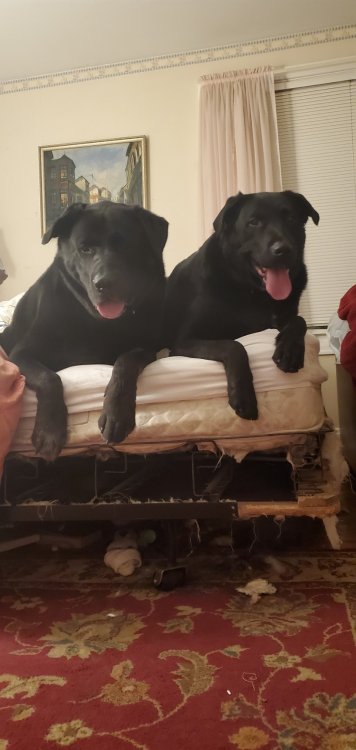
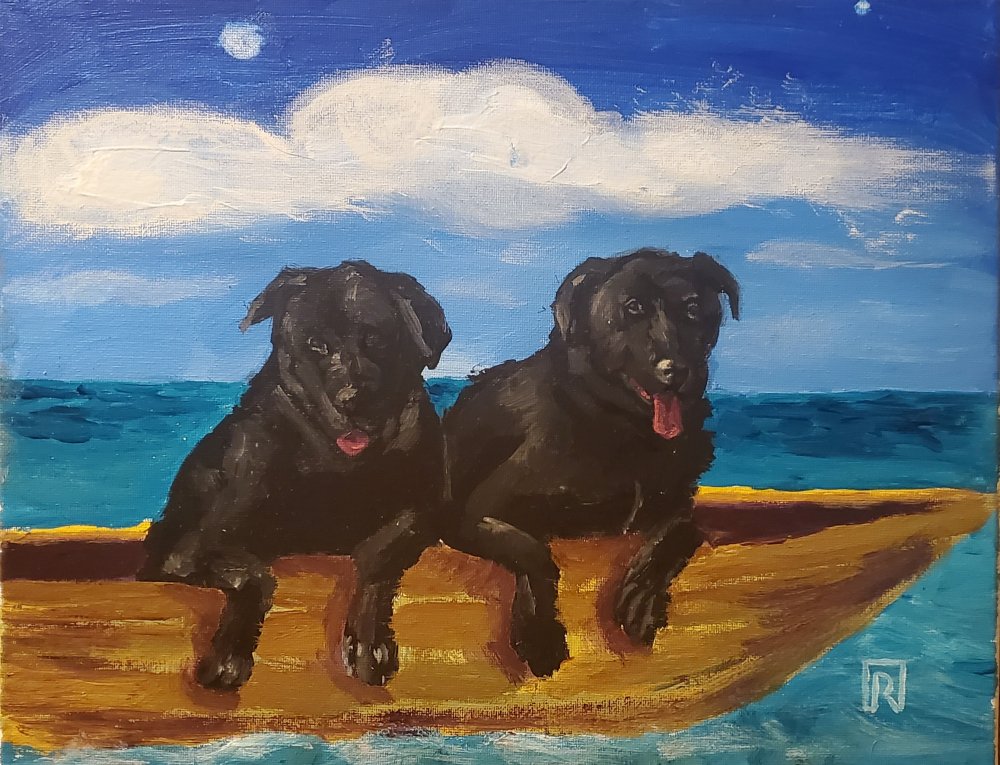
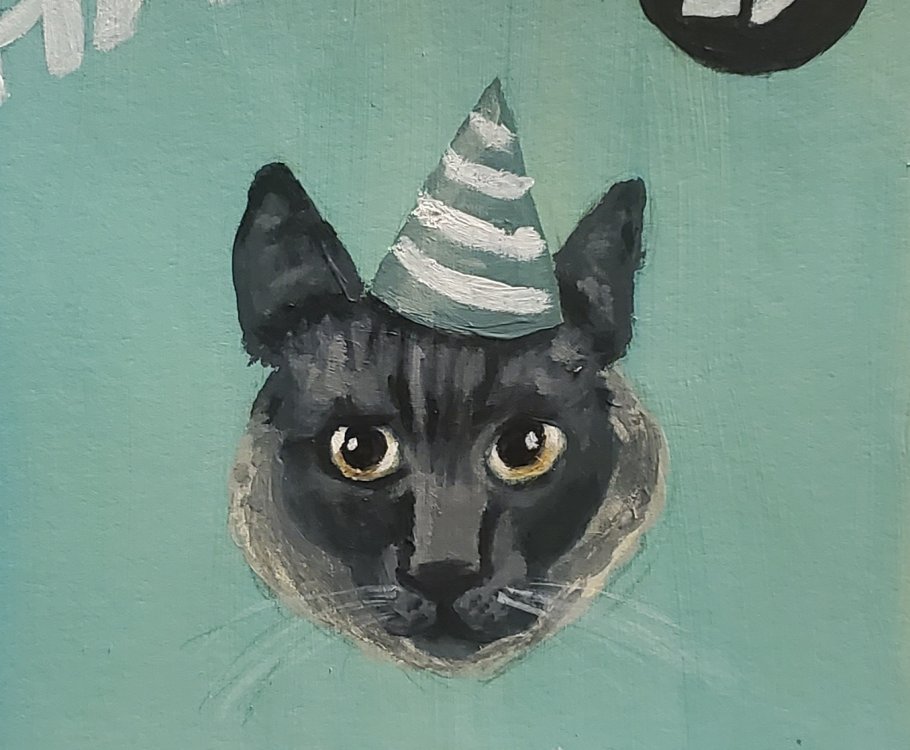
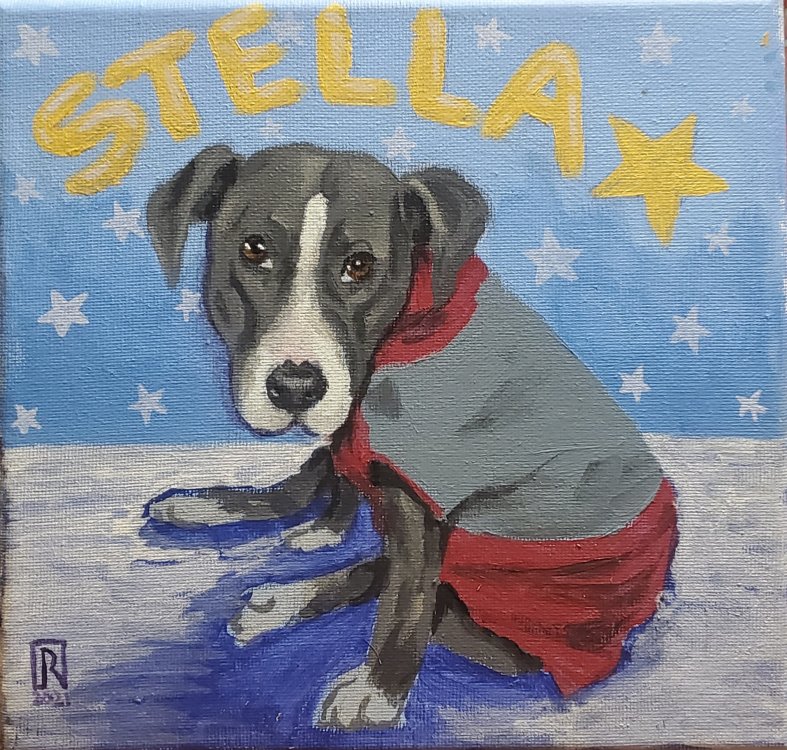
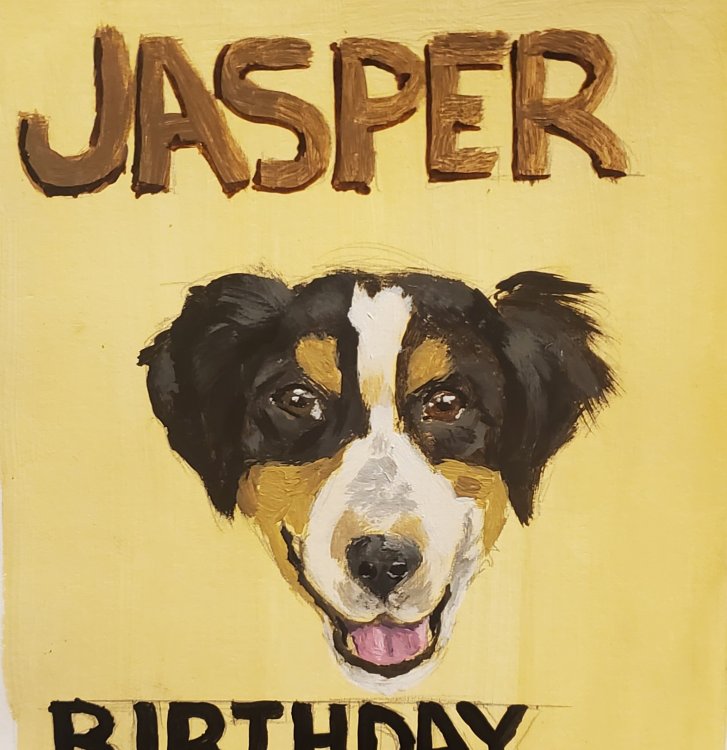
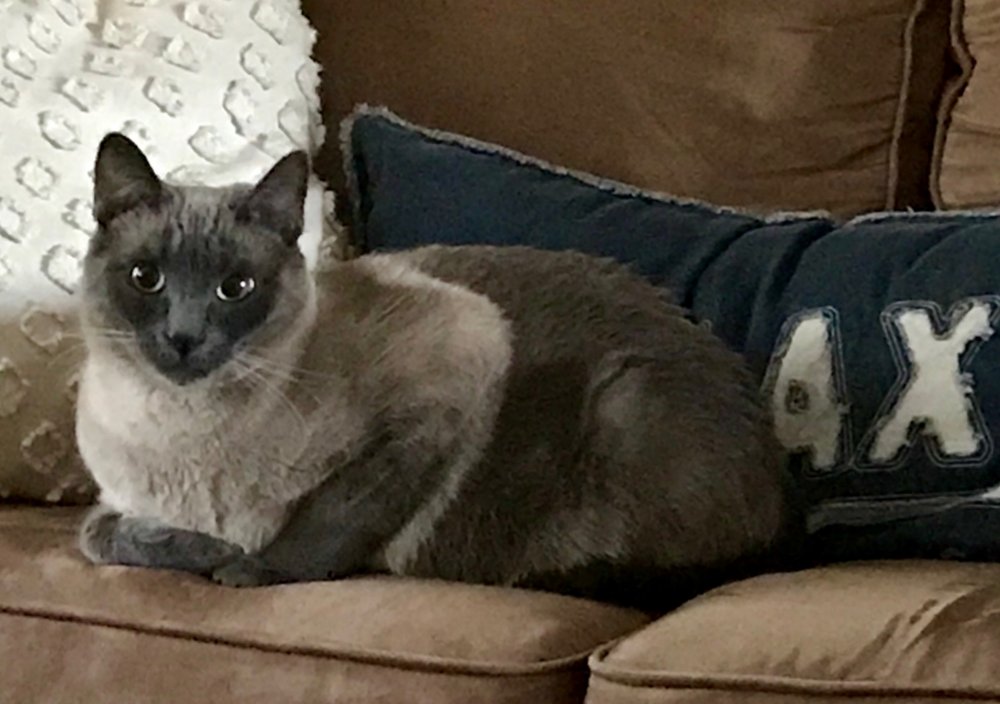
Hello wonderful sharders! I've been getting more into painting lately and have been painting pictures of my dogs and pictures of my friends' and family's dogs and cats too, and realized that there's nothing quite as nice as doing a good portrait of a dog or a cat. I've seen some of your furry family members on the Spread some cheer! Share your pet photos thread (and they are adorable). So here's the deal, you post the two best pictures of your pet (dog/cat/bird/snake/ferret/rat/goat/pig/etc) and I'll paint a portrait based on your instructions. These will take at least 2 weeks to do, so how long it will be until your pet portrait is done will depend on the length of the queue. When your portrait is done I'll post it here and also take a high resolution scan of the painting (or a high resolution photo of it depending on which looks better) and if you want a copy of the high resolution image just PM me and I'll send you a Dropbox link. And the final image is yours to do whatever you want with it, make stickers, make a coffee cup, make a poster, you know, whatever you want to do with it. Here are a couple samples of the reference pictures and the paintings. Here's a picture of my two baby boys, Chewy and Sargeant: And here's the painting: Here's a family members dog: And here's the painting (it was for a birthday card): And here's a family member's cat: and here's the painting (also for a birthday card): And here's a friend's dog: And here's the painting: The more your request deviates from the pose of the reference picture, the less I can vouch for it looking spot on, but hey if you want your dog to be in the cockpit of an F14 tomcat wearing a flight helmet that says "Maverick" on it, then that’s what I'll paint.


-
What Are You Listening To Now?
Hoiditthroughthegrapevine replied to Chaos's topic in Entertainment Discussion
One of the finest songs you've never heard...until right now. -
What Are You Listening To Now?
Hoiditthroughthegrapevine replied to Chaos's topic in Entertainment Discussion
A little Jerry Lee Lewis: -
Will do! If you come to Eugene Oregon drop me a line and we can get some of the best craft beer the Pacific Northwest has to offer. We're the home of Ninkasi, Oakshire, and HopValley brewing. This one is particularly delicious: Cheers and Zum Whol!

-
Nightwatcher Boon/Bane (Game)
Hoiditthroughthegrapevine replied to killersquirrel59's topic in Forum Games & Random Stuff
Everytime you open your mouth you burp, and everytime you speak in your burpy, belchy manner you also blow a bubble for every word you say. The Nihhtwatcher is all about balance, so though you made no wish you still get a boon. You can dispense an infinite amount of soda pop from your fingertips, whatever flavor you think of including just plain seltzer. I wish I had the capsules that Bulma uses in DragonBall, specifically the instant house one and the motorcycle one. -
Nightwatcher Boon/Bane (Game)
Hoiditthroughthegrapevine replied to killersquirrel59's topic in Forum Games & Random Stuff
Granted! The Nightwatcher, knowing how important facepalming is to you decides to not only give you back the ability, but also to give you magically enhanced facepalms. When you perform a facepalm, a concussive blast of psychic energy is released and radiates out in a sphere of diminishing effect with its power equal to the inverse square of the distance traveled. This psychic emanation only affects the entity that performed the action that caused you to facepalm. In its weakest state, this psychic energy causes the target to experience mild malaise, akin to the feeling that you get when you've lost a shoe and have been walking around the house for half an hour fruitlessly looking for it. In its strongest state it causes the target's mind to blank, and drool to drip from their slackened and agape mouths. In this state they are receptive to the command, almost like a deeply buried hypnotic suggestion, to "never do that again". Your bane is that you get rainbow colored acne. I wish that I could use the mage cantrip magehand in real life. -
Sorry for the over the top response, it had actually been a long time since I had read Faust, and yes, after having looked at it again, I do agree with you that Faust part 2 is terrible and really just exists for the people that don't want anyone to breathe while they are enjoying the Opera (more power to them). It is best avoided unless you are writing your masters thesis on boring reiteration (qualifier that if you enjoy Faust Part 2, keep enjoying it, this is after all just my opinion). Also, to your secondary point about Thomas Mann, I can't emphatically agree with you more on that. I was quite surprised to find out what Death in Venice was actually about (shocking really), and I have never wanted to like a book more, and been more thoroughly disappointed than when I read Mann's Dr. Faustus. Sold his soul to the devil to...what? To Dance, and Kevin Bacon isn't even in it? I wholeheartedly agree with the majority of your points and I apologize for the somewhat dickishness of my previous response, I really don't like the backhanded compliment, I know now that was not your intent, and you know what? My response was way out of line. Sorry again, but it is slightly hard to be called out when you are in fact talking out of the end that is best used for sitting on, but good form after all because you were completely right to do it. One point to pricking the bubble of vainglorious pretension, but also lets score one point to keeping discourse alive with the goal of eliminating bs and saying things as they are. Pip pip and cheerio, as they say. Pip pip and cheerio, as they say.
-
Ok. How could I stay mad at you 17th shard?
You've given me so much, and what did I do in return? Toss you aside like a spent handkerchief, turn my back on you instead of giving you a technicolor dreamcoat.Shameful. Just shameful.
Well, 17th shard, here is your dreamcoat, but now it's been augmented with a full panoply of sensors. Your every movement will be tracked, cataloged and analyzed. Our predictive algorithms will be working hard behind the scenes, and before you even know you want it 17th shard, a nice frosty glass of lemonade will be at hand, because you know what? You deserve it.
Anywho, I am back, probably won't be posting a ton, but you know, all good things don't have to end.
You know what, @Orlion Blight, I actually agree that Fause part 2 is garbage, I was caught in a rare instance of talking out of my posterior, which I try to avoid, due to the fact that that kind of talk has the whiff of Shhhh, we don't say that word. Mia culpa to follow.
How are y'all doing?
-
It's been a good run, but I think I'm going to be unplugging, throwing in the proverbial towel, bidding adieu, and logging off from the Shard for the last time.
The shard was really the only bit of Social Media that I have engaged in, and it was a fun run, but I think that I am just too old and crotchety for this Social Media thing.
It was fun giving/getting boons/banes on the Nightwatcher thread, it was fun speculating after the release of Oathbringer, it was fun over at the Cosmere the Musical thread, it was fun doing the Cosmere Character Roasts, and it was great for the most part being part of the nicest and smartest online forum on the interwebs. But all good things must end, right?
You all are great, really you are, but I am incredibly uninterested in the Cosmere© now, after Rhythm of War came out, and I fear that I'm not as big of Sanderfan as I used to be, due to the shift in emphasis from creation to marketing that has seemed to have taken place. I wish all you lovely people nothing but the best, and will now have time to read more and draw more, so don't cry for me, as they say.
Adieu, Adieu, parting is such sweet sorrow.
-
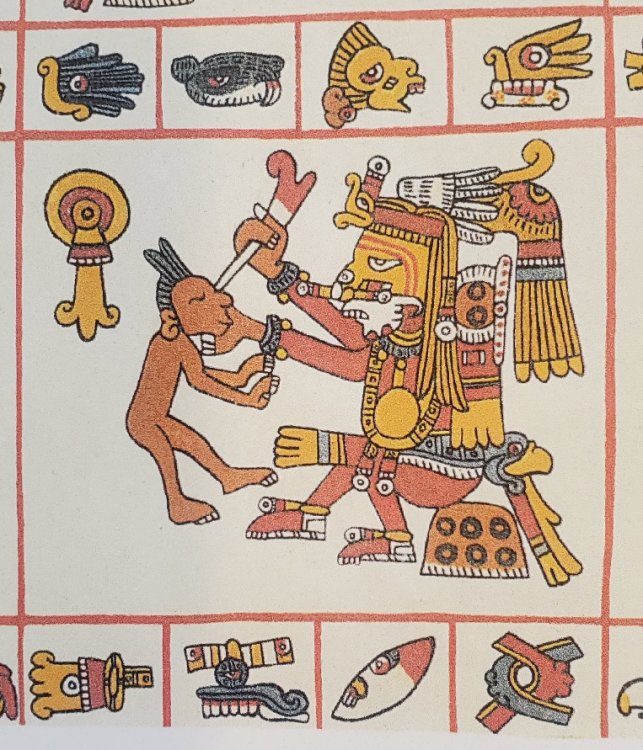
I was just reading my Dover edition of the Codex Borgia, and I saw this picture of the Aztec God of backhanded compliments. Bravo good sir, bravo.
-
I wouldn't say he's pessimistic, or that his view of humanity is overly dark, it's rather, like Marx (especially in his historical essays), he sees clearly the larger movements at play, and in clear, BS free prose, he attempts to earnestly grapple with the complexities of reality. He was a poet at heart, a journalist to make good, and an author compelled like Cassandra to have his warnings of perceived future calamity fall mainly on deaf ears. In all seriousness, he is the closest thing to a hero that I have, and everyone who reads his work is a little wiser and a little better person for it. Frankenstein is pretty good, Dracula is very good, but if you want a really gripping yarn, Bram Stoker's The Jewel of the Seven Stars is tops! The link is to the project gutenberg page, so you can read it for free. It's one of the best Egyptian themed horror stories ever (well at least that I've read, and I guess that's a pretty small list).
-
Nightwatcher Boon/Bane (Game)
Hoiditthroughthegrapevine replied to killersquirrel59's topic in Forum Games & Random Stuff
Granted! You are turned into a sentient gaseous being of distributed consciousness able to ride the solar thermals between planetary systems at 92% the speed of light. Though you are roughly the same volume as our Terran moon, you're undulating shifting form most often resembles a mixture of a cumulus cloud and a naked mole rat. This, the day you were granted the capacity to save the world, you're pink, filmy yet opaque form appeared over the eastern seaboard, and as your essence mixed with the essence of our atmosphere, all the people on the East Coast of the United States and Canada, saw the morning sun blotted out by the form of a horizon filling naked mole rat's mouth, with lips pursed as if drawing in liquid from a straw. As quickly as this World saving event begin, it apparently ended with the quickly diminishing view of your colossal form sailing on a solar thermal jet from a particularly large coronal mass ejection. Only later in the week, when the unbelievable news had been reported, confirmed, and reconfirmed from atmosphere monitoring stations around the world, did the human race realize that this strange, titanic naked mole rat looking visitor had saved our planet by feeding on the excess CO2 in our atmosphere, returning our atmosphere to pre industrial revolution levels. Your bane is that your nose itches, even though you don't really have a nose anymore. And moving your gaseous appendages to the spot where conceivably a nose might be does nothing whatsoever. I wish for a dozen delicious and perfectly formed crumpets, with perfect holes to hold some large melted pats of Kerrygold butter. -
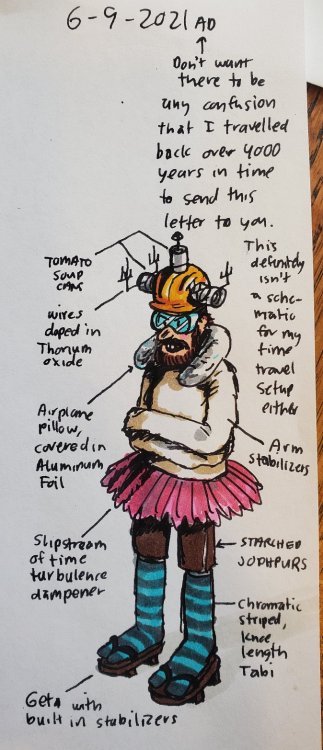
Nope, self portrait in time travel gear. I thought it was funny.
-
I was writing a letter to my brother, and I was using my fountain pen. Since it had an old timey feel to it, I added the date at the top, like I was writing a letter during the Civil War or something. And to be specific, I labeled the date AD, and well you can see the rest. I think it's rather diverting.
-
What Are You Listening To Now?
Hoiditthroughthegrapevine replied to Chaos's topic in Entertainment Discussion
-
Just looking through the rest of your post, you've gotten a lot under your belt in 5 months. Erickson's writing is not for everyone for sure, the perpetual mention of potsherds is a good indicator that with his archeological background, he's going to be taking the long view of events, always contextualized. The way some of the events (which admittedly seem off topic) eventually wrap back around into the main timeline narrative, truly is brilliant. The first time through, I too was a little bit put off by the events transpiring on a remote and disconnected continent, but after the denouement and a subsequent Reread its pretty amazing how he subtly wove the threads. On the first time through, Bug and Tehol's dynamic was worth the journey. Have to say first off that Toll of the Hounds is my favorite Malazan book and probably my 7th favorite book of all times (I took an informal polling of my functional dendrites, and I believe that sensation was general consensus). I really like the Kruppe narrative segues, the intersecting tradegies of Cutter/Crocus, Murrilio, and Harllo, and the convergence at the end of the book is one of the best endings of all times. I also almost threw in the towel at Dust of Dreams, but I am so glad I stuck it out for The Crippled God. Seriously MBotF has one of the most satisfying endings of all time, I'd like to hear what you think of it when you finish it. I totally agree, Ralph Lister is one of best audio book narrators of all times, and with the exception of his Karsa Orlong (who sounds like a looney tunes simpleton) he got every voice just about perfect. If you like Lister, he narrates James Clavelle's Shogun, which coming in at 50+ hours and being a thoroughly enjoyable, historically accurate though highly romanticized story, is a good use of an audible credit (I got it thanks to a recommendation by @Ammanas). I agree for the most part with all of this, but I do think Michael Page's Karsa is perfect. I hope that he does the narration for The God Is Not Willing because his Karsa is SO good! I agree that his Beak is outstanding, and he does a great job with Bottle too. I think Jonathan Banks does a good job with the ICE books, the problem is with the source material not so much the narration. Based on the ICE books that you like, I think there is a good chance you'll like Blood and Bone, it's pretty atmospheric and it has some really good suspense too. I don't think I know anyone that likes Assail though, a pretty big turd of a book, but definitely something to read for readings sake I guess. Yeah, excited to see what Erickson does in a post Crippled God world. I read an interview with Erickson where he said Karsa might not even be in the first 2 books of the Witness trilogy, kind of ironic with his megalomaniacal catchphrase being the official name of the trilogy. Erickson does like his irony though.
-
First off, welcome to the Shard, always great to hear from anime fans! I coud never really get into One Piece, but my daughter really wants to watch it so I guess I will too, heard lots of good things about Black Clover, and haven't heard of Radiant before. What's Radiant like, why is it one of your top 3 anime series?
-
name my self.
Hoiditthroughthegrapevine replied to Thaidakar the Ghostblood's topic in General Discussion
How about famous people's names, spelled backwards. Rolyat Tfiws (sounds like a Norwegian fisherman) Drab Ttip (hears a good drab ttip, watch Seven Years in Tibet) Mas Ttoille (Mas ter of mustaches) Harpo Yerfniw Divad Hcnyl And my personal favorite: Nodnarb Nosrednas (Sounds like he could have been hanging out with in Old Testament times with Shadrach, Meshach, and Abednego) -
Nightwatcher Boon/Bane (Game)
Hoiditthroughthegrapevine replied to killersquirrel59's topic in Forum Games & Random Stuff
Since it's been awhile, I'll wish for @rosharian_cat. They wish for World peace, somehow involving cats. Granted! The peace train that Cat Stevens sung about in the 70's, is in fact a real thing. It's an intergalactic space train staffed by hyper intelligent kittens who are all dressed in super adorable conductor caps, button down vests, and pen striped trousers. The earth is visited by this train, and humanity, upon seeing the cute antics of the train kitties, is forever changed. Seared forever from the collective pysche are the instinct for cruelty, the drive for revenge, and the fanning of passions from the sparks of petty jealousies. Instead, people the world over are rendered docile and content, and spend their lives making the world a heaven on earth for cats, kittens and their fellow man. Your bane is that you have two peg legs, but they are spring mounted pogo sticks, so once you get the hang of using them you excel at basketball. I wish I could make a moment stretch into a near eternity. -
I think I'm with you on this one, I'm going to wait until the book is out too. I read the Prologue and a little bit of chapter 1, but it's been long enough since an Erickson Malazan release that I can wait to enjoy it in full. Lucky! I'd love to hear what you think of it after you finish it. I'm super excited for The God Is Not Willing, pretty awesome that it's post Crippled God!
-
name my self.
Hoiditthroughthegrapevine replied to Thaidakar the Ghostblood's topic in General Discussion
Non-instant pudding, lumpy and mildly burnt. The Andes mint under your pillow at the hotel you're staying at during the apocalypse (savor that one, it's probably your last). The smell of the carribean colada little tree air freshener, hanging from your rear view mirror as you drive off a crumbling cliff into the sunset painted ocean. A small votive candle, lit in memoriam of a joke that died painfully. The piece of popcorn kernel dislodged from the tooth of an 85 year old man that was first stuck in his teeth while he was watching live coverage of the Cuban missile crisis. A broken xylophone. -
Hahahaha, yes, yes it was.
-
It's always fun to rank things, so here goes: Top Five Fantasy writers: 5) Jonathan Bellairs (admittedly they are kids books, but the Johnny Dixon books are especially good. The Curse of the Blue Figurine, The Mummy, the Will, and the Crypt, The Eyes of the Killer Robot, The Spell of the Sorcerer's Skull, and The Chessmen of Doom are all delightful books.) 4) Robert E. Howard (especially his Conan stories) 3) Robert Jordan (though I do wish that the WOT was shorter by 3 or 4 volumes, with some editing out of the needless repetition that is an inadequate substitution for real characterization) 2) Tad Williams (especially his Osten Ard books, no one describes setting as lyrically or as well as Tad) 1) Steven Erickson (he does like his diatribes, but for the most part he's a keen observer and long form griping has never been written better or been dressed in better fantastical symbolism. Populating his book with villains that are incarnations of the worst attributes of humanity is nothing short of brilliant. Truly the Jonathan Swift of High Fantasy. It's always satisfying when these villains get their come-uppances.) Top 5 Science Fiction writers: 5) Roger Zelazny (especially the first 5 books of the Chronicles of Amber, Jack of Shadows and Lord of Light is one of the best Sci-fi books ever written.) 4)Robert A. Heinlein (especially his short stories and novellas, the short story They and novella The Strange Profession of Jonathan Hoag are some of the best short form fiction around) 3) Jules Verne (sure it's laughable now to think that you could get humans to the moon using a giant cannon, but most of his work holds up remarkably well as plausible speculative fiction over 150 years after he wrote it, like Journey to the Center of the Earth, 20,000 Leagues under the sea and especially Dr. Jekyll and Mr. Hyde) 2) HG Wells (though his novels do have some skimmable parts, his prose is compact, his imagination vast, and his short stories are some of the best. His two volume Outline of History is fantastic as well, and it's commonly available at thrift stores.) 1) Horse lover Fats, aka Philip K Dick (if you've ever had a desire to peel back the veil of mundane reality and see the schizophrenic steel and wire machinery that keeps the happy suburban simulacrum of normal life humming, then strap yourself in and go through The Martian Times slip with Phil as your guide, and thrill to the gubbish delight of time traveling precogs used for lucrative building speculation. Or maybe you too can experience the enlightenment of subconscious thought manipulation through orthogonal time achieved by the blast right between your eyes of an intergalactic pink space laser, or perhaps you just want to fend off the unraveling of reality with a can of aerosol propelled Ubik. I highly recommend, with my highest commendation, The Exegesis of Philip K. Dick. It's a vast and strange and strangely vast world my friends.) Top 10 Authors (a bunch of obscure ones here, I kid) 10) Friedrich Nietzche (The Birth of Tragedy/The Geanology of Morals, Beyond Good and Evil, Ecce Homo, and Thus Spoke Zarathustra are the fun books in philosophy to read. His language is ultra romantic and so very good, his criticisms are always stinging, and his ideas are always interesting. Though his conclusions are often misguided, the journey up the mountain with him is always fun). 9) Goethe (Faust parts 1 and 2) 8) Samuel Taylor Coleridge (He's my favorite poet and The Rhyme of the Ancient Mariner and Khubla Khan are my two favorite poems) 7) Gustave Flaubert (Salammbo is one of the 5 best books I've read. His three tales book, with the three long short stories (or short novellas if you prefer) A Simple Heart, St. Julian the Hospitaler, and Herodias, is one of my 10 favorite books of all times) 6) Herman Hesse (Steppenwolf has its moments, but for my money his best books are Siddhartha and Demian) 5) Haruki Murakami (this is definitely for the more mature readers, some very adult themes are dealt with, but the writing is superb, and there's just a tastefully modest dash of magical realism in his work. I highly recommend Hard Boiled Wonderland/End of the World, The Wind-up Bird Chronicle, and Kafka by the Shore) 4) Philip K. Dick (the only author that makes two lists. His short stories are some of the very best, but most of his novels are exceptional as well. Do yourself a favor and read Flow My Tears the Policeman Said, Through a Scanner Darkly, Ubik, Martian Timeslip, the Valis trilogy, and Do Androids Dream of Electric Sheep. You won't regret it, and if you crack under the psychic strain of realizing everything is gubbish, you'll still have lots to think about in your padded cell. I kid, it's really good stuff.) 3) Plutarch (everyone should read his Lives of the Noble Grecians and Roman's. Since this is available for free on Project Gutenberg there's no reason not to. The 4 volume set translated by Aubrey Stewart and George Long is much clearer in it's exposition, but the single file Collection is the AC Clough edited version of the John Dryden translation, which if you can adjust to reading it's rather elliptical cadence, you will be rewarded with some profoundly beautiful passages.) 2) Dostoevsky (Everyone is entitled to their opinion, but it's an undeniable fact that The Brothers Karamazov is the best book ever written. If you want to read a lesser known book by Fyodor, The Possessed is also amazingly good.) 1) George Orwell (Everyone knows 1984 and Animal Farm, but Orwell's lesser know books are just as good. Down and Out in Paris and London, Burmese Days and especially Keep the Aspidistra Flying are just as good. There's a four volume set of his collected essays and letters that is without a doubt the best thing I've ever read.)
-
Queue the music, we have a winner. Your turn @The Unknown Order.


