



name_here
-
Posts
938 -
Joined
-
Last visited
-
Days Won
2
Content Type
Profiles
News
Forums
Blogs
Gallery
Events
Everything posted by name_here
-
No, it appears that the plains are the source of Parshendi equipment with images of the Heralds, which thus implies they were inhabited after the Oathpact. Admittedly, the people who made that equipment aren't necessarily the original inhabitants.
-
Taln is going to have a very difficult time persuading people of his identity. His arrival was strange enough that I expect people will listen to him, but believing him is another matter entirely. Probably his best bet would be to get whoever is locally in charge to kick it up the chain to Dalinar, but he likely has no reason to believe Dalinar would be more likely to listen to him than someone who is actually present. I expect he's going to spend most of WoR in a cell, ceaselessly badgering the guards. Sure, he could break out, but where would he go? I foresee him getting out in one of two ways: either he makes enough of a bother of himself that someone mentions it to Dalinar, who promptly has him brought to the Shattered Plains, or the Desolation begins and someone puts two and two together and proceeds to release him, apologize profusely, and beg for his help.
-
I'm pretty sure that if everyone who studied the Calamity became Epics, regular people would study it like mad. Also, if a whole research team turned Epic at once, it's reasonably likely they'd decide to team up. Sure, Epics don't precisely get along, but they understand the concept of strength in numbers. Most likely the ones who were in charge and the ones who got nifty combat powers would have themselves a dominance fight, and then everyone who survived that would fall in with the winners. Actually, come to think of it, it's possible that has happened and we've just never heard of it. Still, people would probably notice if everyone who studied it gained powers, and given the general lot in life of non-Epics a lot of people would jump on anything that seemed to make them more likely to manifest. The most likely scenario is that efforts to research the Calamity simply failed; NASA pointed all the telescopes they had at it and came up empty, or at least discovered nothing useful. The most interesting information about it would be how it generates Epics, but if that's tied to exotic radiation then society may have broken down before anyone was able to study it. Particle physics research is extremely time-consuming even after constructing a suitable installation, and the Calamity is inconveniently located in space instead of inside the LHC. If they needed to build a new particle detector from scratch, it's quite likely that even without Epics interfering they still wouldn't be done a decade later, even if they correctly guessed how to detect the output from the start. Given the actual conditions, if it took two years to design and operate an experiment that would reveal more data about the Calamity, the team probably wouldn't have access to the computing power to analyze it once it was completed. And, of course, Epic powers appear to violate current understandings of physics, so there's no reason to believe that Calamity radiation conforms to the Standard Model, in which case no one would know where to even begin looking. Overall, given the timeframe, I wouldn't expect any research on the Calamity to have returned useful results before total societal collapse. The most likely avenue for finding out more about it is probably research done by a post-Calamity power block; my money would be on the Knighthawk Foundry but it could really be anyone. Non-Epics have many obvious motivations for trying, but so do Epics. They might be worried their powers will vanish as suddenly as they appeared, and look for a way to prevent that. They might study it to gain the ability to create new Epics. This is a bit of a double-edged sword, since anyone they raise up might become a threat, but if they could control the type then an Epic with Prime Invincibility could give all their soldiers something like Curveball's power, or Enforcement could have their powers be innate instead of gifted. That way their army is much more powerful but no more able to attempt a coup. Studying the Calamity could lead to the ability to mess with Epic powers directly instead of fiddling with weaknesses. Even more double-edged than the above, but the main threats to High Epics are their peers. Plus, if they create a device that can shut down their powers, they can then try to create a countermeasure. If it's possible, someone will figure it out eventually, so just ignoring the possibility is dangerous too. Similar to the above, they could hope to enhance their own powers or alter their weaknesses. It's a bit of a long shot, but potentially they could learn how to shut down the Calamity, retain their powers, and reign forever as an immortal god-emperor without any worries about new Epics rising to challenge them. Of course, all of this research is a bit of a gamble; unless a reigning High Epic is an expert particle physicist and engineer at least one other person would know the secret. Dead men tell no tales, but they don't turn theory into superweapons either. But the rewards if the loyalty of the research team can be guaranteed are rather high, so it's kind of a weird variant Prisoner's Dilemma. Even though the High Epics collectively don't want anyone to discover the technology, they really don't want other people to have it while they don't. Also, Epics with mind control powers need not fear their direct subordinates, so they'll happily research like mad.
-
The glow completely failed when people started killing each other with them. I think it's really that simple.
-
I've theorized that the Oathpact somehow prevented Odium and Honor from simply having it out, and when the Heralds and then the Radiants resigned it collapsed and Odium killed Honor. Also, it seems to me that the Blades but not Plate have been altered in some manner, given how much Syl dislikes Dalinar's Blade. The Plate apparently still works; Dalinar's Plate glows when he's doing really impressive things. The Blade does not. So it appears that Plate is simply not being used by Radiants and most of its special abilities are inert, while something is actually wrong with the Blades.
-
I've thought about this before, but I don't think it's likely. The Shards are all unrestrained extremes; they aren't individually complete and healthy personalities. Even the ones on humanity's side are fundamentally inhuman and just happen to align with what people want; Preservation was mentally incapable of killing Ruin. People have the attributes of the Shards in some sort of balance; the "good" ones are the ones where the preferred balance point is closer to them. But put the Shards together and they'd keep each other in check. Given how the Shards work, it wouldn't be voices in the holder's head but a series of competing emotions and thought patterns like normal humans have.
-
You do make a good argument for the Shattering happening on Roshar. However, I don't agree that it produced the Shattered Plains for timing reasons. There is reason to believe that the plains were once one of the ten Silver Kingdoms, and thus were inhabited at some point after the founding of the Knights Radiant, long post-shattering. Also, some of the Parshendi equipment, presumably salvaged from the plains, has imagery of the Heralds. So there was apparently an urban civilization in the plains while Honor and Odium were around. It is not entirely impossible that people settled on the Shattered Plains after they were shattered, but it seems like building cities on the terrain would be a rather difficult proposition, even without the weathering from the Highstorms.
-
Note that the electromagnetic in the name is not an arbitrary choice. EM waves both produce and are produced by the movement of electrons in atoms. Also, this effect is quantized: each wave can be divided into discreet units containing a certain amount of energy. The energy in each unit is dependent exclusively on the wavelength/frequency and not the total energy of the wave. An electron in a material struck by a packet containing a certain minimum energy will become excited and potentially produce an electrical current, but will not react to any number of packets below the energy threshold. So basically, EM radiation powers can also be used to produce electrical currents, but only sometimes. I think for most materials the minimum energy is somewhere in the visible or ultraviolet portions of the spectrum, but I'm not entirely sure. That said, it's a known material property and somewhere on the internet you should be able to find a giant table containing the values for every material you've heard of and many you haven't. There's also the dielectric effect, which we use in microwave ovens, where polar materials such as water will align to a fluctuating electromagnetic field produced by certain forms of radiation. This burns things. Things like people. I'm not sure what the rules for that are; I wasn't paying much attention in that part of my Electricity and Magnetism course.
-
I tend to believe that as many Shards as possible were created and used at once. The Desolations do not appear to have gone particularly well for humanity, so regardless of personal preference it seems rather unlikely they destroyed perfectly functional and powerful weaponry. I've previously noted that when Dalinar loses his gauntlet, he thinks that the Parshendi could potentially regenerate the suit from it, but it is most likely his armorers will regenerate the gauntlet first and the lost one will crumble. I think that each Shard is powered by something special and there's only a finite supply of them. Maybe the Spren they're hunting in the vision? That would certainly be worth going after and the Voidbringers would want to stop them. They do seem to be highly personalized, but it's possible that each time a set is handed down a new suit or weapon is forged and the animating force gets transferred. Another theory that's been floated is that they could be resized and adjusted on demand by the Radiants. Actually, the Plate is probably resizable even in the current era; no one seems to have trouble with badly-fitting armor even though they have to take whatever set they can get their hands on.
-
I do not believe that is how English noun number functions. "He" is singular and cannot apply to multiple people except with collective identity shenanigans that no character has shown any evidence of so far. I guess you could have a reverse Royal We situation where the leader of a group signifies the group and so you refer to the group in the singular as opposed to the leader in the plural, but the Alethi don't seem to do that. "The tower, the crown, and the spear" is a bit difficult to parse, since Dalinar uses the combined tower-and-crown symbol. Apparently the crown is the sigil of House Kholin and the tower is Dalinar's personal symbol, so Elhokar would be referred to as the sword. It could be a sign it refers to Kaladin becoming a Radiant, since under Dalinar he could potentially use a tower, crown, and spear symbol for his personal sigil.
-
The column visions are obviously not the future anymore; in the visions the agreement did not include the Aiel in any manner. I expect they're a non-recursive prediction; they show what would have happened if Aviendha had not seen them. The visions may not have been guaranteed if she hadn't seen them, but do not appear to include themselves; Avi's children make no mention of any column visions. The thing with the visions is that they're basically self-defeating. They simply include too much information. Most of the other sources of future knowledge are inescapable but also incredibly vague, saying what will happen but not how or when or why. The visions actually trace a clear line of cause-and-effect, and also include information about events under the viewer's direct control. That said, some information can still be gained from them; presumably everything not altered by seeing the visions would remain true. Unfortunately, seeing the visions directly altered global politics, so the cascade effects are significant. Even worse, they altered the meeting, shifting the timing of events of the entire Last Battle and thus likely altering who specifically lived and died, so we can't even say the same people will necessarily be born next generation. However, there's another set of "visions" you're overlooking: Rand and the Dark One both created two worlds each where they won, and Rand won in the manner his first alternate was based on. Now, these were specifically created by characters and 75% of them were blatantly false, but if Rand's worlds did not logically follow from his plans then the Dark One would have called him out on it. So it appears likely there will be a golden age of sorts for a good while, where the only large-scale violence is in Shara. At a guess, Tuon and Mat eventually put down the Seanchan civil war using the overwhelming strategic advantage of gateways and male channelers (either from the Domination Band replicas or because the damane system is disbanded and the Towers back them), or failing that the various factions eventually stop going for the throne and settle into some form of peace. The Sharans lost their old figureheads before the Last Battle, and then the channelers running the shadow government deployed under Demandred and were almost entirely exterminated, so things presumably went to pieces.
-
Well, it's definitely been kicked back a good bit. The war was sparked off by the Aiel being a warrior culture at peace with a grudge against a group that they barely had a ceasefire with. The Seanchan continued to hold the Dragon's Peace for another generation until the Aiel duped the other nations into joining. While they might just have wanted to avoid expanding the war, it shifted decisively in their favor once they started seizing channelers from the other nations, so it appears they were sincere in holding the peace. With a proper treaty and a job, the Aiel will be much more reluctant to go to war, and their enforcement role means the Seanchan have more reason to listen to their demands, so the release of the Wise Ones might be successfully negotiated. Also, with an enforcement mechanism in place, the Dragon's Peace might develop into a UN-style system and help mediate the dispute. If the flashpoint is removed, the war would probably be delayed at least two generations. That said, nothing lasts forever, and there's no reason to believe that the Seanchan will be weaker. Inevitably, someone is going to start something, and the Raven Empire is going to finish it.
-
There is no reason it would be impossible. There's some anime-style stuff for western video games, such as Halo and Dead Space, as well as for some movies and TV shows. I don't know about western books specifically. The hard part would be finding an animation studio willing to make it; the problem with us fantasy/SF fans is that all too many of us are enamored of streaming and DVDs and make for poor ratings. Though by the same token, Hulu and Netflix are getting into making their own shows these days.
-
Come to think of it, it's possible that in the column vision, Tuon died during the Last Battle. Min did foresee the assassination attempt when visiting her command tent; if the negotiations had been shorter and thrown the timing of events off even slightly she might have missed it. It is fairly unlikely that the attempt would have succeeded without the warning, but not impossible.
-
No one has successfully Awakened an already Awakened object unless you count fixing up completely totalled Lifeless, and I think that Lifeless need to be reawakened after the original Awakening has completely failed; if the Awakening is still functional then the Lifeless just needs to be patched up. That is absolutely not to say it is impossible; there are many things that Awakening can theoretically do which very few people know how to do, a number of things lots of people know which the Five Scholars are confirmed to have discovered how to do, and likely many more things no one knows about yet. I have absolutely no idea what the effects would be.
-
People can go for a surprisingly long time without figuring things out. A lot of basic military tactics and organizational philosophies have known dates of invention and first use. The channelers in general start innovating a lot once they're facing serious military threats. The Seanchan have been using channelers in war for a long time, but their structure significantly complicates coming up with new weaves and they are better at direct combat than most of the other groups; they seem to be the only female channelers with a weave that causes things to simply explode. And a lot of the tactics you're suggesting are not so easy as you might think. Many types of weave fail rapidly when tied off. Making razor wire with Air is not necessarily easier than making a wall just because the area is smaller.
-
We actually had a discussion about multiple copperclouds before. I'm pretty sure they don't stack; there are two occasions where Vin detected a group of Allomancers containing two people who could burn copper. The first time she pierced a coppercloud was against Shan's kill team, which contained two Mistborn. And at the start of Well Of Ascension, she detects a team containing a Smoker and a Mistborn, although she doesn't keep it up during the fight itself. The Soothing stations could go either way; on the one hand the Skaa were completely unaware of their existence, so Skaa Seekers must not have picked up on the station Seekers. On the other hand, the vast majority of Allomancers are not Seekers, so they wouldn't be able to realize that there was an active Seeker in the area when they blew their cover. If the Seekers can't operate from within the cloud, that would go a long way to explaining how any Skaa Allomancer used their powers outside of a coppercloud without being immediately arrested, since the Seekers wouldn't be able to provide 24/7 surveillance without giving away the secret. Even if they caught any Skaa Seeker who detected them, the general noble population would find out, and they're pretty bad at keeping matters secret from Skaa.
-
I was thinking more in the animation style of A Certain Magical Index. Fullmetal Alchemist is pretty good and quite serious, but its style of animation involves a lot of silly animation gags.
-
I think you're somewhat misunderstanding my point. Vin successfully pierces Copperclouds projected by other people from inside those Copperclouds. However, I am reasonably certain she never burns copper and bronze at the same time; if she could burn copper without interfering with her seeking, there would be very little reason to ever not do that. There are two possible explanations: either her coppercloud is strong enough she cannot pierce it with her hemalurgically enhanced bronze, which is somewhat unlikely because her bronze without the spike should have just as much of a boost as her copper compared to an average Mistborn and one spike makes a Seeker able to pierce standard copperclouds, but possible depending on how piercing clouds scales. This could be confirmed or denied by seeing if she could pierce Elend's, since he is stronger on average, but a text search found no mentions of Elend and copper eitherway. Alternately, it's flatly impossible to personally use both at once. As for seeking from inside clouds being impossible as a general rule, maybe it's impossible to detect allomancy if the direct line from the seeker's position to the other allomancer passes through a strong enough coppercloud.
-
Except Vin detects the metals Kelsier is burning within a Coppercloud while sitting right next to him.
-
I think it's reasonably likely that, Digzone or not, Prof was the Epic who attacked the school. I assume he spent at least a while acting like a typical Epic, then at some point realized the powers were affecting his mind, stopped using them directly, and created the Reckoners. Come to think of it, we could attempt to confirm or deny this theory by looking into the relative timing of events. If the Reckoners predate the Diggers going nuts, he probably isn't Digzone, while if they're more recent it's reasonably plausible he is. However, I don't think we know anything about when the Reckoners were founded except that it was probably post-Capitulation Act. That was after the Annexation, but probably not more than a year later.
-
I liked it a lot, personally. Retroactive erasure was pretty cool and carried an excellent explanation for why people didn't use it all that much while still allowing characters to sensibly employ it some of the time. It also allowed Forsaken resurrections while simultaneously letting them end up definitively dead. I would also argue its mere existence made channeling battles much more interesting; the presence of an unblockable attack helped with the distinctive high-mobility flavor of channeler fights. It is the "easy way out", but was only rarely used in that manner. That said, one thing did bug me relating to it. It was out of place; it was uniquely unstoppable and manipulated time. I didn't mind it being an exception to the rules, what was weird was when it stopped being an exception. The one I have a particular grievance towards was the World Of Dreams fight with Perrin in the White Tower. He casually deflects it and remarks it's just another weave, but it isn't. During the big fight in Dream Caemlyn, it broke the rules in the World Of Dreams too; when representations of physical objects were destroyed they oscillated between being destroyed and reverting to match reality. Also, the Flame Of Tar'Valon weave was introduced a bit too suddenly for my tastes, although I guess the existence of the seals did imply damage to the pattern could be reversed.
-
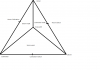
Adonalsium is not a Shard, he's what the Shards come from and is no longer a distinct entity. Now, we do have WoB that Odium is not "native to Roshar", but depending on interpretation that may or may not mean he arrived after the others. There's also a death quote that indicates there used to be three Shards on Roshar, but this count may or may not include Odium. Also, Brandon has said that the magic system count depends on what you consider a magic system, with 30 as the high end. So I think ten surges and three shards are where that count is coming from. Now, the surges are named very broadly, so it's entirely possible a Pressure/Gravity Voidbinder would look completely different from a Windrunner; flinging singularities, making people explode, and sucking the air out of a room would all fall under manipulating pressure and gravity but could not be readily accomplished with Windrunner lashings. And it's possible we've already seen all the Windrunner lashings; basic is gravity, full is pressure, and reverse is both since it's less effective on objects touching the ground, which does not fit with how gravity behaves but can be explained by having pressure involved as well. I guess for the wider implications of how Shards interact to produce magic systems, you'd count each Surge as one system. Three are from individual Shards, leaving seven. Three of those are likely from pairings, leaving four, one of which is probably from all three. That leaves us three more. We can get those from the paired systems, either by mixing them in the same manner and discarding the triple combination or by pairing them with the triple. I'm thinking it looks like this:
-
Well, the Way Of Kings would frown on falsifying a divine sign, yes. However, the divine right of kings/nobility has always been kind of circular reasoning, and the Ardents are explicitly the religious subordinates of the Brightlords, so there isn't even a separate organization to add legitimacy. Brightlords are in charge because the Almighty wants them to be in charge, and you know the Almighty wants them to be because they are in charge. Thus, it is entirely reasonable within Vorin theology for Gavilar to believe that his accomplishments occur by divine grace and are a sign that he should rule. This is especially true if he were receiving visions in which the Almighty commanded him to unite people.
-
I think it's just that burning both metals at once causes them to interfere. Vin doesn't burn copper much in the later books, even though she can punch through clouds with her bronze, and does so from very close to Kelsier when he's burning copper. Now, Vin is generically a bit better at everything than other contemporary Mistborn (Vin herself has an inferiority complex and never notices, but other Allomancers remark on it; notably Kelsier remarks that she pushed him much harder than her mass would ordinarily allow in the practice bout), so it's narrowly possible her cloud is enough stronger to block her boosted bronze. However, her base bronze is also stronger than normal.
