Pagerunner
-
Posts
2193 -
Joined
-
Last visited
-
Days Won
9
Content Type
Profiles
News
Forums
Blogs
Gallery
Events
Everything posted by Pagerunner
-

The Conundrum of Conjoiners: an Analysis of Navani's Airship
Pagerunner replied to Pagerunner's topic in Cosmere Discussion
I'm not sure what you're trying to say. Yes, words can have different meanings. But there is a a natural meaning to the word "soar" that I think everyone would agree encompasses any mechanism that keeps an airship aloft. Sure, it's possible that there's a specific, technical definition of "soar" that would specifically mean movement in both a vertical and a horizontal axis simultaneously - but in order for the word "soar" to be used against my model (or any model), there needs to be some indication from the text of that definition being the operative one. "Alternate" is sort of the opposite case. There is a natural definition and use of the word, which does not fit with the model of two concurrently active lattices. (Specifically, with the vertical one always being on when it's in flight. There's nothing to alternate with.) Is it possible to redefine the word "alternate" to somehow encompass this? I mean, technically yes, anything is possible with the malleability of language. But, again, there would need to be some sort of indication in the text of that redefinition, this time to include the scenario you're describing; which there is not. (Everything I have seen draws from the "isolate plane of motion" phrase, which is not conclusive in and of itself, and I have presented an alternate interpretation of that phrase.) The natural sense is, however, consistent with my model. Yes, even if both lattices are active at the same time while you're at rest (which is what I said in my original post), the fact that they overlap during the alternation doesn't mean it's not alternation. When theories and the text are in contradiction, you should not deconstruct the meaning of the text so that the theory can fit into an expanded definition. Instead of twisting the text to fit theories, you need to twist theories to fit the text. When I first read the chapter, my initial impression was a partial disjoining, the same as the majority of people in this thread. But, as I studied the words of the passage more carefully and rigorously, I saw that it didn't actually fit with the descriptions. But I'm not using the theory as a foundation to change the interpretation of the descriptions, because that would be a backwards way to theorize. What is this supposed to mean? What about Navani's previous platform experiments hints towards fabrials only acting in a single direction? You need to be specific in your references if you're going to use it as the foundation for your explanation. I'm having a hard time tracking your arguments here, but I'll take a crack at addressing what you've raised. First, yes, disjoining is an unusual phenomenon caused by aluminum. That's explicitly laid out in the paragraph on aluminum: "The real advancement had come as they’d learned to use aluminum to isolate motion along a plane, and even change the vectors of force. The end result was chulls that could pull for a while, then be turned around—the gemstones temporarily disjoined—to march back the other direction, as all the while the airship continued in a straight line." The end result of aluminum is temporarily disjoining gemstones. Second, I was not saying that there were only two states. I was saying that posters in this thread were using the same word, "disjoined," to apply to both the normal operation of a spanreed and to the phenomenon caused by aluminum. I didn't mention the third state, "on," specifically, but that was because nobody was using incorrect terminology to describe it, not because I don't believe it to exist. Third, you're talking about how spanreeds work, but where are you getting information? You're saying that spanreeds won't join if they're not properly aligned. How do you know that they won't still join, but that the writing will be illegible because the pen's movements won't interact with its environment the same way on both ends? None of the passages I've looked at go that in-depth into the specific functioning of spanreeds. Fourth, the start-stop method of movement is not inconsistent with the text. You say the phrase "in a straight line" contradicts it, but you need to look at the entire passage; it says "while" the ship moves in a straight line. And what's the "while," the time period over which the ship moves in a straight line? "The end result was chulls that could pull for a while, then be turned around—the gemstones temporarily disjoined—to march back the other direction, as all the while the airship continued in a straight line." The chulls are not moving in a straight line; they're going back and forth. But the ship is not changing orientation. Sure, it's moving forward and stopping, but you can continue in a straight line with an irregular speed. And besides, even if you did disjoin the fabrials while the chulls and airship were still in motion (which I do believe is possible), and if you assume that you can keep the vertical lattice active at all times (which I don't believe is possible, but will entertain for the purpose of this example), you would still have to wait for both to be at rest before starting up again. The speeds of the two halves of the fabrial would not be aligned, which (like I said above) we don't know exactly what effect it would have. It might not rejoin at all, in which case you have to let the ship coast to a stop. Or it might rejoin, but the different speeds would mean you'd essentially have a car crash every time you had to turn the chulls around, which would be very bad for the structural integrity of the airship and the fabrial. Since, at this level of technology, there's no feasible way to match speeds of chulls and airship, the only way you know they're at the same speed would be when they're not moving. [Four and a half, if your ship is too good at coasting, it's actually going to be more efficient to stop completely. Distance traveled is the integral of your velocity; so what does your velocity look like when you're coasting? It's a line with a decreasing slope; the area under the curve is a right triangle the height being v0 (your initial velocity), the base being t1 (the time it takes you to cost to a stop). The amount of distance "lost" during your maneuver would be subtracting the area under that curve from the area under the curve of steady movement over that time period; a horizontal line at v0 for t1. Since it's a right triangle, the amount of distance lost is the same as the amount of distance traveled, so you waste v0 * t1 / 2. However, if you come to a complete stop, you're distance travelled is 0 (since you're not moving) times t2, so the amount of distance lost is v0 * t2. When will it be more efficient to keep coasting? When v0 * t1 / 2 < v0 * t2. Which simplifies to when t1 < 2t. So, if your ship coasts to a stop in more than twice the time it takes to turn around, you're actually less efficient. Granted, we don't have any specific numbers to apply to this, but it's to give a general sense that coasting isn't necessarily more efficient than hitting the brakes.] Sixth, I don't see what the problem is with the ship being pushed by the wind when the chulls are being turned. If it's anchored to the vertical lattice, that is against a cliff face, so it does have some resistance to turning that will keep the ship from spinning freely. But even if it does turn some, there won't be a problem rejoining, since the entire purpose of disjoining the horizontal lattice is so that you can turn the chulls independently from the ship and rejoin them at the end with both sides having different orientations. If the ship turned a little bit during that process, you just turn it back using whatever process you normally would use to turn it. (Which I assume would be just having the chulls rotate their lattice, but they might have other tricks involving their fans, for all I know.) No, we cannot conclude that at all. You haven't provided any evidence. Chulls aren't fast, but at the bare minimum they're apparently faster than a horse-drawn carriage over a long distance (per the numbers I showed up above), and no amount of disagreement over the mechanics of aluminum interaction can make the ship move faster than the chulls can pull it. So the relevant questions here are "how much faster are chulls than a horse-drawn carriage" and "how much time is spent turning the chulls around with respect to how long they pull and how long it takes the ship to coast." We don't have specifics to put any actual numbers on any of those, so I don't see how you can conclude this is inconsistent with my interpretation. The comparison I made wasn't chulls to horses - it was chulls to a horse-drawn carriage, where long-term endurance is going to be the big factor. We're given a more useful reference in the text - faster than "double speed" of a marching army, which will be about 4 miles an hour (the "forced march"). Now, the numbers aren't quite matching up for me here; you're not going to be able to march an army around the clock, so say we get down to 12 hours a day, which means a force march will average 2 miles an hour over its duration. A team of chulls, even if they move slower than humans, could pull around the clock, so even if they only pulled at 3 miles an hour, they'd be able to sustain that over the entire duration and result in being faster than a marching army. And now I realize another one of my assumptions. I've taken the "5 knots" and assumed it means, exactly, the 5 knots as defined on Earth. But none of the other units of measure match up; Rosharan feet aren't Earth feet, Rosharan weeks aren't earth weeks, so on and so forth. So the 5 Rosharan knots, which seems unreasonable, might correspond to 2.6 Earth knots (which is 3 Earth miles per Earth hour). In terms of a pulley system on the horizontal lattice. There is a pulley system required for the vertical lattice, and we're told about it. If there was a pulley on the horizontal lattice, it would have been mentioned as well. -
The Conundrum of Conjoiners: an Analysis of Navani's Airship
Pagerunner replied to Pagerunner's topic in Cosmere Discussion
One lattice needs to be active. Both are capable of supporting the weight of the airship; the horizontal lattice is sitting on the ground. -
The Conundrum of Conjoiners: an Analysis of Navani's Airship
Pagerunner replied to Pagerunner's topic in Cosmere Discussion
Man, you've all been busy. Let me try and catch up. I won't bother quoting and tagging people, since I'm sure you're all still reading this thread anyways. Partial Inhibition First, there are a lot of suggestions that the aluminum lets both sets of fabrial lattices be active at the same time. Under this model, the Shattered Plains set has been unhooked from vertical motion, and the Urithiru set has been unhooked from horizontal motion, and that unmooring is accomplished through aluminum interactions. This is, in fact, inconsistent with the text. We're told, expressly, that the ship flies through alternating uses of the horizontal and vertical lattices. They are not both active at the same time. It seems the largest source for this idea is the phrase "isolate motion along a plane," which has been elevated to the single most important phrase in the entire passage. But I see it being interpreted in a vacuum. "What could 'isolate motion along a plane' mean? Ah, it must be that a conjoiner only responds along one axis." But the phrase is actually part of some classic technobabble: "they’d learned to use aluminum to isolate motion along a plane, and even change the vectors of force." How are you supposed to know what that means? By looking at the very next sentence, which is what I think is the most important phrase in the passage. "The end result was chulls that could pull for a while, then be turned around." That's the only place that aluminum is brought up, that it lets them pull this trick with the chulls. The mechanisms for vertical and horizontal motion had already been established prior, with no mention of aluminum. So, when we interpret the technobabble phrase (isolate motion along a plane and change the vectors of force), what does it mean when viewed through the lens of the practical application in the sentence that follows it? You can turn the chulls without turning the ship (isolating the chull's motion across the plane of the planet's surface) and have the force exerted by the chulls act in the opposite cardinal direction (changing the vectors of force). The technobabble phrase is describing the disjoining and rejoining phenomenon, not some partial inhibition of combined motion. Now, this isn't to say that partial inhibition is impossible. It would certainly be a very useful advancement. But we can achieve a complete explanation of how this particular airship functions, and we can do it without utilizing this phenomenon, so I don't think it's been accomplished yet by Navani and her team. Potential Dissimilarities to Spanreeds There have been some suggestions that the larger conjoiner/reverser fabrials maybe can't be turned off, and that's why they need aluminum. But this isn't the first time they've been used; they're the exact same fabrials Navani used for her archery towers that they brought with them onto the Shattered Plains during WoR. If they couldn't be turned off, you wouldn't be able to bring both halves with you; when you a platform east onto the Shattered Plains, the counterweight would have to go west. I've seen some references to Azure's aluminum room in Oathbringer and how spanreeds didn't work. This looks to be the exact same phenomenon as what I'm saying is used for disjointing, so I'm not quite sure why it appears to be brought up as a counterpoint. Side note, I'm seeing some terminology used inconsistently within the thread. (I probably contributed without realizing it, but I'm not gonna reread my OP right now with an eye towards it. Have you seen how long that thing is?) Disjoining is what Navani says they can do with aluminum, and that lets you misalign your force vectors. Just regular turning off a spanreed isn't disjoining; I guess that would be deactivating? I'll keep an eye out next time I'm rummaging through the relevant passages to see if we have something more specific. But let's make sure that we all mean the same thing when we say "disjoin." Curvature of the Planet Conjoiners and reversers do, obviously, work when moved notable distance across Roshar, where they're going to at different angles with respect to the planet. We can hand-wave it away as some Spiritual alignment with the planet; but I think we can do some more substantial hand-waving. I think a conjoiner fabrial moving tangentially through a gravitational field can have its "dice" (or baby bowl, or gyroscope, or what-have-you) independently affected. It's going to be a property of how this exact fabrials interacts with gravitational fields. So, at the end of the day, Roshar's gravity is what will align the dice in each fabrial down so that the perspectives of both spanreeds make sense. This is similar to what I've suggested with iron Feruchemy, where you can get infinite energy by putting two Feruchemists on opposite ends of a Ferris Wheel and having them alternately store. (Alternating, you guys. One's on, then the other's on.) Where does this infinite energy come from? I suggest that iron metalminds lose/gain Investiture when they move vertically through a gravitational field; that loss of Investiture is what's powering the "perpetual motion," so you won't wind up with as much Investiture stored in your metalmind. When gravity starts to screw with your math, you just need to find some way to make gravity work for your purposes. This would have the added benefit of letting Rosharan spaceships, once they're out of a gravity well, potentially use Lashings to create artificial gravity fields and change the direction their fabrial is acting in. EDIT: I forgot to mention that this can also solve the mysterious inefficiencies. The interaction with the planet's gravitational field is where the inefficiencies come from; your conjoined motion is dragging on the planet itself. That's gonna give us the equal and opposite of our inefficiency terms, so all's right with the universe. It also gives an easy out for space travel with no gravitational fields. Useless Reversers I don't think there's any problem, inherently, with conjoiners being able to accomplish basically all that reversers are able to do. Looking at Mistborn again, you've got steelpushing and ironpulling, and man is steelpushing a whole lot better in basically every sense. But ironpulling has specialized edge cases where it's useful, both on its own and in concert with steelpushing. It's not worthless just because it's worse. And there are subtle differences in a reoriented conjoiner, vs a reverser. Like I showed in my original post, a conjoiner will only act in the opposite direction for 2 axes; you can't get all 3 inverted. This is actually going to be what kills the suggestion of a conjoiner/reverser double lattice pulled by chulls. When you flip to the reversers, the weight of the ship is going to push the chulls into the air. (A reoriented conjoiner could work, as long as you know that the ship will turn the opposite way when you're going in reverse. But, from the text, we're told the mechanism they use, and it's done through a single horizontal lattice and turning the chulls. Maybe they'll get there one day.) My gut says this is also going to have some substantial implications on lattices themselves, and that reoriented conjoiner lattices used as a reversal lattice would be more likely to add super strains and stresses to the internal framework of the airship. (Because 2 of the axes are acting opposite, and 1 is acting with.) The Specific Motion of the Airship Yes, this thing would be an ungainly beast, moving in fits and starts like a Driver's Ed student in a stick shift. That's going to be the case no matter how you slice up the aluminum applications; the motion of the chulls and the ship are tied together, so when you stop the chulls to turn them around, you stop the ship. We're not applying pure force to the ship; we're tying the ship's motions to the motions of another object. It's not an RC car with an engine; it's that plastic popper pusher thing. (My secondary goal of this thread is to fill everybody's Amazon suggestions with the most bizarre items.) The speed they went is 5 knots, which is just under 6 miles per hour. That's not very fast. This is actually faster than a horse-drawn carriage, which according to the Internet can pull about 4 miles an hour maybe. So these chulls are pulling at a good clip, and they must not be wasting a lot of time turning the ship around. -
The Conundrum of Conjoiners: an Analysis of Navani's Airship
Pagerunner replied to Pagerunner's topic in Cosmere Discussion
Basically two of these bad boy baby bowls: https://babyfeedme.com/products/unspillable-bowl The outer ring is the fabrial itself, and the interior bowls are the alignment references. The two interior bowls are conjoined rotationally at all times. When you activate either of the fabrials, you'll permanently align the ring to its bowl; basically drive a nail through all the layers, so when you spin the ring, you also spin the bowl. And when both are activated, you align the interior bowls positionally as well. The only way to get the interior bowls aligned in opposite directions would be to use aluminum to temporarily disjoin them rotationally. The conjoining reference field must always be active, even when both fabrials are off, or else you'd be able to just spin the chulls around while it's off and call it a day. But we know that nothing is positionally locked in place until everything is on, since you need to turn both spanreeds on to start typing. So that's why we need this inelegant invisible entwined gyroscope stuff, to basically tie a conjoined pair to a cardinal direction even when one or both halves is off. -
The Conundrum of Conjoiners: an Analysis of Navani's Airship
Pagerunner replied to Pagerunner's topic in Cosmere Discussion
Then there would be even less of a need for aluminum, because if there were two sets of fabrials, you could definitely just turn one off and move the fabrials independent of one another. But the text does specify that there are only two lattices, which are alternated between: one for vertical, one for horizontal. What you suggested would be three lattices: two for horizontal (which are switched between), and one for vertical. It's the classic steelpush physics problem. Brandon is coming up with end results based on what is intuitive to him, but that doesn't mean it's self-consistent when analyzed. At least, not without some work on the analyst's part. Which, in this case, seems to be a minor restriction retroactively applied to spanreeds. -
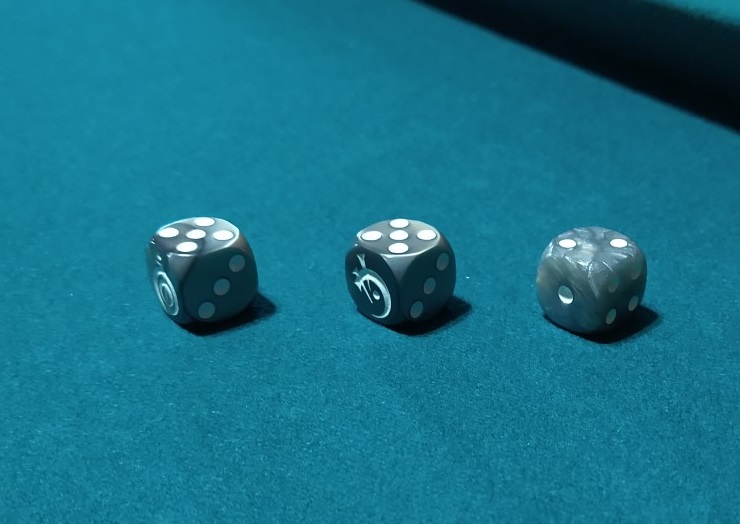
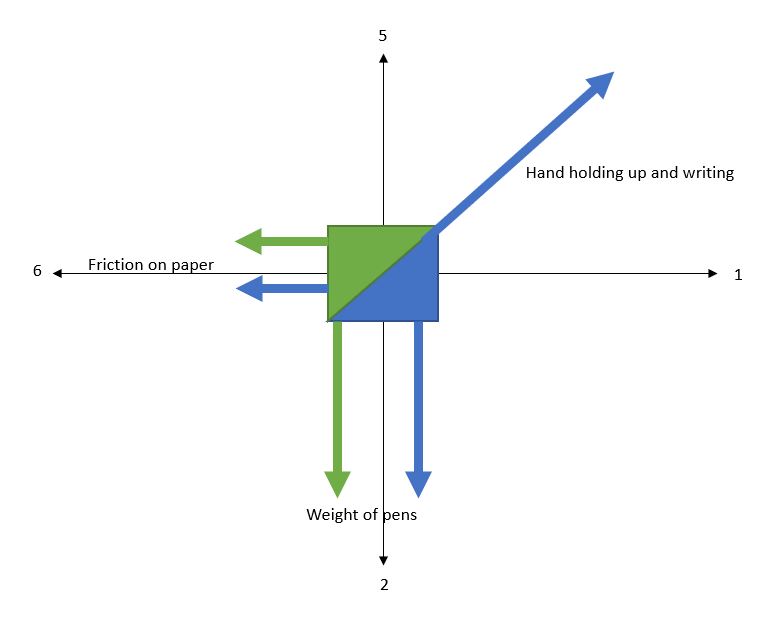
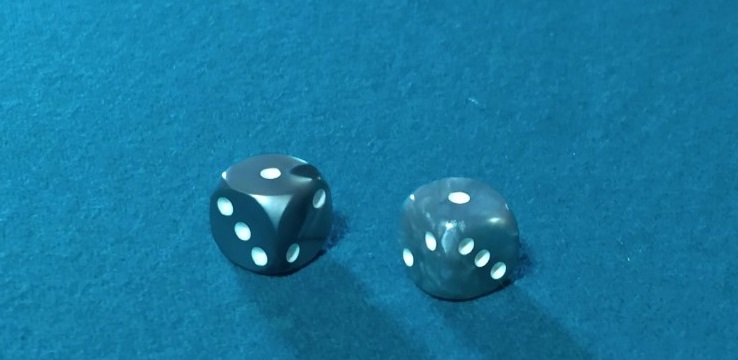
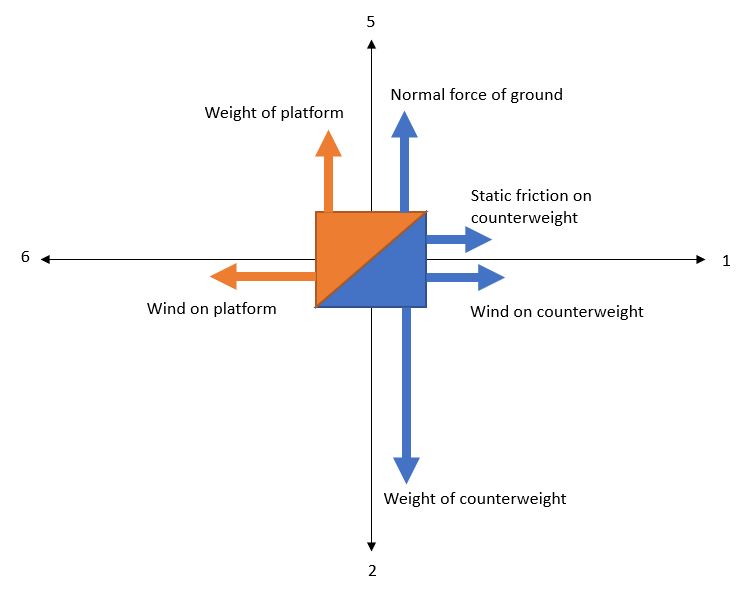
So, we've got some fancy new fabrial applications from RoW chapter 3. This doesn't make sense. But, of course, I can't just come out and tell you why it doesn't make sense. We'll have to build up our theory of conjoiner mechanics so that we can properly evaluate this and show you where I'm getting confused. Conjoiner Basics The way I understand conjoiner fabrials, when you draw a free-body diagram, you treat both halves of the conjoiner as the same object. There's no "force" between the two objects; any forces that act on one act on the entire set. There's an additional "magical friction" term that will act against the direction of movement, whose magnitude is determined by the distance between these fabrials. (This force does not have an equal and opposite, which means we're going to break energy conservation, but we're doing it the opposite way often enough that I think we'll be fine.) I'm going to ignore that for the time being in all of my drawings below, because I can and I feel like it and it won't matter for the sake of this analysis. The opposite of a conjoiner fabrial, a reverser fabrial (which I'm probably going to call a disjoiner on accident, although reverser fabrial is the term used in the Ars Arcana), is going to still apply everything to the same force balance; but when you draw the balance, you're going to have to invert everything across the origin for one of the two halves. For the sake of visualization, let me share a quick example that you can recreate at home yourself using simple six-sided dice. I'm going to use the original Allomancy Dice from Crafty Games, since some of the dice are actually laid out backwards. (Which still perturbs me, but at least I can put it to use here.) For those who aren't familiar with this product, it's a set of regular 6-sided dice, but the 6 face on each dice has been replaced with a different piece of iconography from the Mistborn series. I'm going to use three dice to represent two kinds of fabrials; left and center are a conjoiner pair, center and right are a reverser pair. Lets look at our conjoiner. The two dice will be basically stuck together through invisible wires and always move the same direction. If the left dice moves in the direction of 3, the center dice will move towards its 3. If you rotate left 5-to-3, the center dice will also rotate 5-to-3. Any forces being applied to create those movements and any forces that act in opposition to those movements will be mathematically evaluated together on the same free body diagram. (The sum of all forces equals mass times acceleration; that's how we mathematically relate forces to movement.) Like, for instance, if these dice represent an active spanreed, let's draw the diagram using blue forces being the one writing, and green forces being the one receiving. We'll look at the force balance the moment the pen starts to move towards the right (or towards the 1, for this example). Seems fairly straightforward, right? It's just like holding two pens at the same time. (Cue the Bart Simpson super chalk holder.) For a reverser fabrial, look above at the center dice and the right dice. You'll see that each of the six faces is oriented oppositely. (For those who are not familiar, the opposite faces on a six-sided dice should always add to 7. 1&6, 2&5, and 3&4 are all on opposite sides of each other.) If you try to do this with two identical dice, it will never work. (Go ahead, try it. I dare you.) You need to have dice that are mirror images of one another (opposite handedness or chirality, if you prefer those terms). Line up the 1, 2, and 3 as shown below to check if your dice are mirror images of each other or not. And here's where the mathematical trick comes in; your force balance is drawn using the face numbers as reference. Depending on which dice you start with for drawing your force balance, half of your lines will look super weird; gravity going up and stuff like that. But that's okay, just focus on the face numbers and trust the math. If I take my two dice above (from the first dice image) and say that they're one of Navani's early fabrial towers caught in a highstorm, with blue being the counterweight and orange being the archery platform: When we calculate the sum of the forces and determine our final direction of acceleration, it will be in terms of a face. And, looking up at the two dice (way far above; you can scroll up, it's okay, I'll be here when you get back), you'll see how the direction specified by the force balance makes it so the dice move in opposite directions in real life, in the absolute terms. I drew up the free body diagram in terms of stable operation, where the counterweight is sitting on the ground. But imagine they're in an intermediate position, where both the counterweight and the platform are in midair, so the normal force of the ground and the static friction aren't there. You've got a lot of net force in direction 2; referencing our dice drawing, that sends the center dice down and the right dice up. You've got a little bit more wind on the platform driving it towards its face 6, so the counterweight will actually move against the wind. But everything is going to happen relatively slowly, since forces that act in the same direction in real life (wind pushing, gravity pulling) are being opposed on the free body diagram. In terms of rotation, things get really easy. If I take my center dice above and rotate it 3-to-5, envision which way it will move. Now, look at how the rightmost dice will move. You need to remember that 5 is opposite 2, and 3 is opposite 4. Do you see it? The dice rotate exactly the same direction from an absolute perspective! So reverser fabrials still rotate together; only linear movements will be opposite. Navani's Airships I've got three dice in my example, and that's been intentional the whole time. It will represent the Fourth Bridge; the left-most dice is the chulls, the center dice is the airship itself, and the right-most dice is the cliffside arrangement. The center dice will technically represent two halves from two different fabrial arrays; it's got a lattice of conjoiner fabrials with the chulls, and a lattice of reverser fabrials with the cliffside. But I'll just represent it with a single dice, since it will be two dice who occupy the same space and have their orientations locked together by being built into the same ship. The key is that you can't move when both of these fabrial arrays are active. (I mean, you can, but it would connect the chulls with the cliffs. At best, everything would grind to a halt; at worst, you'll be playing a very sad game of 52-gemstone-pickup.) Here's the sequence of activating and flying: Airship starts on the ground. Cliffside reversal lattice starts at the top of the cliff. Activate the reversal lattic. Pull the cliffside down; the airship will rise up. Activate the chull conjoiner lattice. Release the reversal lattice. The conjoiner lattice is now supporting the weight of the airship. Move the reversal lattice side-to-side. The airship will move with it. When you need to reorient the conjoiner lattice, stop the airship. Activate the reversal lattice to take the weight of the ship. Deactivate the conjoiner lattice. Reorient your conjoiner lattice. Back to step 3. Deactivated Interactions and the Aluminum Puzzle At first, I couldn't figure out how aluminum fit in to all of this. Let's take a look at the behavior of the these fabrials when they are inactive. It's a little tricky, because the actual function of spanreeds isn't described in detail all that much. What I thought was that, when spanreeds are deactivated, the dice are essentially unlocked from one another. You can move/rotate one dice, and the other doesn't move at all. Before you activate them, it's very important to have the dice aligned properly with their surroundings; the spanreed boards are described as having levels on the sides, and it's got a dot you need to start the spanreed at. But let's engage in a thought experiment to understand the ramifications of this model. Let's say Jasnah and Navani are in the middle of a spanreed conversation. Jasnah gets kicked out of her desk (don't ask me how, it's just a thought experiment), so she deactivates her spanreed, goes across the aisle, and sits down at another desk that faces the opposite cardinal direction. She sets up her spanreed board again from scratch and turns it on. Is Navani going to be writing upside down? Or will Jasnah, as a part of setting up her spanreed, orient it properly, regardless of the cardinal direction the board is facing? In my first model (of the dice being unlocked from each other whenever both fabrials aren't on), there would be no problem. The reference frame is based on the spanreed itself, not an absolute sense of the cardinal directions. Essentially, you both turn your dice to an agreed-upon position and set your board and inkwell accordingly. This means you don't have to take the curvature of Roshar into account, and you don't need to align your board in a certain cardinal direction every time. (While levels are mentioned on the sides of the boards, there is no mention of a compass.) If Jasnah's at a desk facing south, and Navani's at a desk facing north, the dice wouldn't be facing quite the same direction in an absolute sense; but when Jasnah pushes her pen in the direction of 3, Navani's moves in the direction of her 3. But that, in and of itself, should be enough to enable the chull trick, which Navani says requires a new advancement in aluminum. What gives? The only solution I could come up with is that cardinal direction must matter in spanreeds, and you need to use aluminum to mess with that orientation. The problem has never been mentioned with spanreeds, but if it didn't exist, there wouldn't be anything for aluminum to solve. So let's make our model more complicated and account for it. We've assumed conjoiner fabrials are dice. But now, let's assume conjoiner fabrials contain dice; they've got a little incorporeal dice in the center of their gemstone. So now you've got interactions between each object and their incorporeal dice, and between the incorporeal dice themselves. When both halves are off: There is limited interaction between the object and the dice. The dice will move side-to-side with the object, but it will not rotate. The two dice can move independently side-to-side, but there is nothing to cause them to rotate. When only one half is on: There is a stronger interaction between the object and the dice. The dice will move side-to-side and rotate with the object. The invisible dice are not locked in side-to-side movement, but they are locked in rotation. (So, if you turn the half of the fabrial that's on or that's off, the dice in the receiving fabrial won't change orientation, so you won't be able to pull the chull trick.) When both halves are on, then you lock in side-to-side movement and rotation. You are fully conjoined. This is needlessly complicated... but it gives us a place for aluminum to show up. Placing one half in an aluminum box will be the only way to allow independent rotation of the dice, so you activate your fabrial, put it in an aluminum box, and rotate it without affecting the fabrial on the other side. The Future of Conjoiners I think this is foreshadowing a science fiction application, the same way Mistborn's getting its seeds laid with ettmetal, time bubbles, and mechanical Feruchemy. I envision the Rosharan space fleet operating from conjoiner/reverser fabrial centers on the planet itself. There is a distance limit to conjoiners, of course; however, according to the Ars Arcanum, that's due to the method of creation, so I fully expect that will be overcome by the time late eras of the Cosmere roll around. In Conclusion I've couched everything in terms of dice that are locked so they move together. The actual math would probably be more elegant, but I (and I suspect all the readers) will not be able to internalize it and understand it as quickly quickly. We'll probably need some true math if we wanted to understand how to incorporate the curvature of Roshar into the situation. But let's at least see how the book plays out, first. We're only in chapter three. In trying to understand this application of fabrial science, my confusion arose from the airship mechanisms being concerned with absolute cardinal directions, while the spanreeds apparently did not. I can only conclude that spanreeds do indeed care about cardinal direction, but that has never been stated, for otherwise I don't see what problem they need aluminum to overcome.
-
I think we have a good enough sense of the broad timeline, if not all the specifics, from the combination of the gemstone archive, the in-universe Words of Radiance, and Dalinar's visions. The notable events are the Abandonment of the Tower, the Recreance Event, and the Death of Honor. The gemstone archives all happened before all three of these events, and their messages reference the withdrawal of the Sibling, the failure of the Urithiru tower, and the plan to destroy the Voidbringers (but not its execution). But that takes us to about Chapter 30 in Words of Radiance, where we learn that Melishi returned to his tent (another reference to the abandonment of the tower, IMO) and changed his plan. Chapter 32 mentions the execution of Kazilah (who I think is the speaker of the "I foresaw it" gemstone, a Radiant with a corrupted spren like Renarin). Chapter 38 has the Recreance proper, which utilizes Melishi's unique powers. And since the events of Chapter 38 are recorded in Honor's visions, it was at some point after this that he died, created the visions, and merged (so to speak) with the Stormfather. In terms of "hurt," I thought we had a Syl passage saying the Stormfather was hurt in the Recreance, but I'm unable to track it down. The forums are full of references to it, but the only passage I see quoted is from Pattern: Which, while I think it would be a bit of a non sequiter if the Stormfather wasn't bonded, the strict wording does allow for an unbonded Stormfather. I'll need to keep digging, see if I can find the passage I'm thinking of, because that really is the cornerstone of my view that Melishi was bonded to the Stormfather, and if that passage doesn't exist then there isn't much to stand on. (Semi-related, I also suspect that part of why Honor's CS merged with the Stormfather was because the Stormfather was dying from the Recreance, and that was specifically how he survived.) But the Sibling being hurt and retreating, I don't think necessarily has anything to do the Recreance. I think the content platespren provide a good contrast - they're not bonded (and in fact their bond has been broken), but they're fine where they are. I think the Sibling and the Urithiru tower were mistreated by all the Radiants. The "you hurt them" line isn't saying that humanity, as represented by Melishi, hurt the Sibling through the Recreance. I think it's saying that the Knights Radiant, as a group, collectively through their actions hurt the Sibling and caused it to retreat. I think the "during the Recreance" phrase should be taken as "time of the Recreance," which encompasses the False Desolation and Abandonment of the Tower. Like how the invasion of Poland in 1939 technically wasn't a part of World War II, because war hadn't been formally declared by any parties. In broad timelines, the Sibling fell asleep during the Recreance time period.
-
Dalinar's got his Spiritual Realm knowledge again - like how he knows about the New Oathpactmembers. Kaladin aligns the Fused to Orders, but they seem to be more aligned to Surges to me. This is Transportation, not Elsecaller. Why is Veil hunting the Sons of Honor? Is this a Ghostblood mission? More suppressed memories. Doing her father's ledgers? Between when she killed her mother and when she killed her father, I'm guessing. I'm going to need to refresh myself on her timelines; is this her regression as a Radiant? How she 'killed' Pattern? Kaladin can't sleep. Cue the Geralt memes. Kalalyn happened and ended offscreen. Just enough of a reminder to the readers of Kaladin's romantic issues for Laral to stroll back into his life. "The Ganlos Riera herself coldn't catch him!" Chana, Vedel, Paliah, Shallash, Betab... doesn't match any of those names. Reya...? "Lirin had wanred that if Kaladin kept visiting, he would bring death to Hearthstone. Today it had come to the singer who had attacked him. Lirin had covered the corpse with a shroud." That's twice now we've gotten that line; once at the end of Lirin's chapter, now here in Chapter 2. Laying it on a little thick, aren't you Brandon? Putting Lirin's name right where you'd expect a "tomorrow, it would be..." contrasting statement. "Navani, naturally, leaned out farther. One would think that during over fifty years of life, she would have found a way to rise above her natural impetuous streak. Instead she’d rather alarmingly found her way to enough power to simply do as she chose." Barely getting into the her first chapter before Willshaper Navani comes out. I'll get to an analysis of fabrial mechanics of airships in a later post. It's not quite adding up for me. I can see two possible mechanisms, but I don't like either of them. First, you could place half in an aluminum container, isolating the connection and allowing free movement of each half. But then how do you stay afloat when you isolate the vertical lattice so you can move horizontal? The second is that aluminum obstructs the movement without breaking the connection, but I don't like that in terms of historical aluminum Realmatic interference (where you can't Push directly on aluminum, but it doesn't impede your movement any more than your regular weight, as evidenced by Wax flying around with an aluminum gun), and it would seem to make the whole ship susceptible to one chump with a piece of aluminum stopping the whole thing. But I'll go into that in more detail later, when I've got some more time to think it over and write it up. “Perhaps, perhaps. But for a moment, imagine a fleet of ordinary ships suffering an attack from one of these up above. It wouldn’t need trained archers. The flying sailors could drop stones and sink a fleet in minutes…” He glanced to her. “My dear, if these things become ubiquitous, it won’t only be navies that are rendered obsolete. I can’t decide if I’m glad to be old enough to wish my world a fond farewell, or if I envy the young lads who get to explore this new world.” Take notes, Scadrial. I think getting airships in these two series are definitely setting the stage for eventual spaceships. I wonder if this will be the long-term Rosharan spaceship tech; you've got a huge base of operations on Roshar that's driving its starfleet around? "Navani slipped her notebook from her pocket as Dalinar raised his hand and pressed it against Kaladin’s chest. There was a faint… warping to the air around them, and for a moment she thought she could see into Shadesmar. Another realm, filled with beads of glass and candle flames floating in place of people’s souls. She thought, for the briefest moment, she heard a tone in the distance. A pure note vibrating through her." Spiritual Realm, I think. This is faintly reminiscient of WoKP's Soul Tones, which were involved in Soulcasting. The hat's been hung on this lampshade pretty heavily, so hopefully this phenomenon gets dug into a little more in this book. Sibling talk. Get some explicit ties to Bondsmith spren and the Urithiru tower. But remember, it began to slumber before the Recreance, before Melishi (the only Bondsmith of his time) did something to Ba-Ado-Mishram's parsh, so I don't think it was bonded; I think it had willingly allowed itself to be contained in the fabrial of the tower. Navani assumes "perhaps something about its relationship with a human," but I think that's as off-base as VenDell's hints about Identity-free Allomancy at the beginning of Bands of Mourning. In the right direction, but not quite accurate.
-
-
I think the progression of the character groups as described in the updates tells us that Kaladin is not the envoy. In April 2019, we got the first glimpse: the main characters would be split 4-3-2. In June 2019, Brandon had written Part 1 (which was apparently before the viewpoint clusters split), and his plans didn't appear to have changed. In August, after Brandon wrote Group 2, he had apparently moved one character from Group 2 to Group 1. (I'm assuming conservation of characters here; it's possible he demoted someone in Group 2 and promoted someone else in Group 1, in which case all this analysis is for naught.) By November, he'd written Group 3 and modified his SA4 outline. No updates on number of characters, though. It's possible Kaladin was in the Group 2 Shadesmar expedition, but when he was writing the sequence Brandon decided to bump him out. He hadn't written Group 1, where Kaladin would go to, so it's not like it threw off any work he'd already done. And, in fact, that would explain the outline work he was still doing in the October/November timeframe, fitting Kaladin in with this group. (The other option I can think of is that Renarin was moved; he and Shallan have the Sja-anat thing tying them together, which I suspect will play a big role in this book [but then again, Shallan's Ghostblood escapades in WoR didn't exactly pay off in OB, either]. Or have him as the envoy but not a POV character.) On an somewhat unrelated note, after taking some time to digest the recent chapters/publisher's summary, go through the WoBs again, and revisit my original predictions, here's my current theory on the three arcs: Group 1: The War. Navani, Venli, Kaladin, Szeth, Lift. (The latter two being the minor characters, with Lift being the one who might only get an interlude) Group 2: Honorspren Expedition. Shallan, Adolin. (Renarin will be with them, but not as a POV character.) Group 3: Politics As Usual. Dalinar, Jasnah. There seem to be four major plotlines hinted at in the latest publisher's summary: Dalinar's politics, Navani's arms race, Kaladin's new role, and Shallan's expedition. How to reconcile those four with the three viewpoint clusters? Obviously, two of them need to be combined. As I showed above, I don't think there's room for Kaladin to be a major viewpoint character in Group 2. And I suspect our three main-est characters (Kaladin, Dalinar, Shallan) will still get to lead their own sequences. Which then means that Navani's plot is going to be combined with somebody else. Her husband Dalinar would a lot of sense, but I think the fabrial arms race makes more sense in the context of the war in the field (like Kaladin telling Lift to bring her the voidrial in the Chapter 7/8 reading), so that's why I'm combining her with Kaladin, who may be moving to more of a support role for this book (as hinted by the Syl interlude) in the war with the singers. While Group 1 will "potentially reveal the secrets of the ancient tower," I don't think it will take place in the tower.
-
The amazon synopsis has been updated, and it's got some bits for the character grouping discussion: Since Shallan is a Part 1 POV, I think that locks her and Adolin down as our Group 2.
-
Oh, wow, that is a big addition. How'd you manage to catch that? Quoted below, for those too lazy to click the link: That has some big clues for the character groupings, which I think I'll take to the character grouping thread.
-
Theory on Fabrials and the War (SDCC Reading)
Pagerunner replied to kuiinteth of isaana's topic in Cosmere Discussion
Selected portions of the reading, for reference: It definitely appears to target the Nahel bond somehow, since there are three different effects (Syl can't manifest as a Blade, Goedeke can't breathe in Stormlight, and Kaladin can't expend Stormlight to Lash), and the only commonality is that they're granted by being a Radiant. I wonder why Kaladin's Lashing was dismissed, but he still kept his Stormlight. As to the Realms part of the theory, I don't believe that Radiant spren exist in the Cognitive Realm while they are bonded. It's something they talk about a lot. Wyndle (WoR): Pattern: (WoR) Syl (OB): In the reading, Syl doesn't say "distant," she says "not quite here." Which is a subtle but important distinction. If the Nahel bond is broken or weakened, yes, Kaladin loses some of his powers, but Syl would also lose her sentience. As she says in her interlude from the newsletter: If the Nahel bond is reverted, she would lose her mind and becomes like a windspren, which is something that happened to her multiple times throughout the books, like when she flies to get Kaladin blacksbane (or whatever it's called, the poisonous leaf) in Way of Kings or when Kaladin starts to regress in his bond in Words of Radiance. But in the reading, she says that she's never experienced anything like this before, which would seem to indicate it's not a weakening of the Nahel bond itself. All that being said, there are points both ways. The fact that Syl can't manifest means it has to target more than just Surgebinding; but it can't go after the Nahel bond wholesale. I would be very interested to see how other forms of Investiture that manipulate Surges without a Nahel bond (such as an Honorblade or a Soulcaster) would behave in this void-fabrial's field. -
None of the accessory viewpoints in Way of Kings (which are Cenn, Gaz, and Teft) get mentioned on the Part pages. It started in Words of Radiance, where the usual large-fantasy-series-POV-creep started to happen. And I did skip a few steps in my math. Going off the visualization, Part 1 contains Group 1 (5 characters) and Group 2 (2 characters), while Group 3 (2 characters) is not present. So what I meant to say was, out of the seven viewpoint characters appearing in Part 1, at least two of them don't have POV chapters.
-
Before we get too carried away, I think it would be good to check the current methodology against a historical example. As we all know, Oathbringer had a similar outline provided for us: It was, of course, the focus of much speculation in its day. When Oathbringer was released, here were the "POV names" in each Part and set of Interludes: If we try to take these characters and work them backwards, things don't quite line up. Here's what I can best determine, working backwards: There are some problems. The secondary main characters are obviously Kaladin and Shallan. But both of them appear in Part Four, where there originally wasn't supposed to be one of them. I've got Kaladin as the pink one because he was largely absent there, with Bridge Four taking that viewpoint. And then for the Tertiary characters, I'm pretty confident about them, but there are some mysteries. Tertiary character 3 is supposed to be absent from Part 5, but my four proposed characters are either Knights Radiant or explicitly included. Tertiary character 1's supposed to have viewpoints in Parts 2 and 4, but no tertiary characters do in the actual book. Venli, the novelette 1 character, doesn't show up on Part Four in the visual outline. So everything doesn't quite work backwards to the outline. Because it's a tool to help structure and plan the book, but the book doesn't need to be completely and entirely beholden to the structure. Things will change around during writing, of course. And for characters like Taravangian and Yanagawn and Palona, everybody can get random chapters without being included in the outline when that particular point of view works best for the book and the overarching story. So, all that to say, yes, Lirin is one of the five Part 1 POV characters, but that doesn't necessarily fit him into one of the nine "viewpoint" characters. We already have at least two of them not getting POVs in this part, and I don't think it's a stretch to say that three of them aren't in and that Lirin is one of these "accessory" POVs, like we got a ton of at the end of OB. And, sure, there has never been an accessory viewpoint in Part 1 of any Stormlight book. And that will be true, right up until it's not.
-
Very quick response on Oathbringer as an Honorblade. That was, indeed, a mistake; it was a Stoneward Blade.
-
Most of this has been seen before, either through a reading or through the newsletter. I was going to link my previous comments, but I can't find them, so I'll just restate some of them, maybe throwing in a few new ones: Is Navani's "impostor syndrome" Unmade influence? "Border dispute" might be important, since we've seen the Sons of Honor collecting lots of secret maps. Intentionally misdrawn maps to hide something big, and the Highlord caught on because something was costing him money. Gavilar's friends; the same Heralds we'd seen before. The way I understand this: Gavilar has been to Braize, and has captured Voidspren in gemstones. He has some apparatus, a "box," that doesn't sever their natural Connection to Braize, but allows them to be removed and brought back to Roshar. The Heralds are interested in this because they want to get off of Roshar, and are looking for a way to free themselves from their Connection to the planet. This big focus on Navani's feelings in this prologue further reinforces to me that she's the third main character of this book. This seems to be setting up a larger character arc, coming to deal with her personal problems of insecurity and people-pleasing. Gavilar seems really evil here. I wonder how much of it is an act? If he's trying to drive her away to protect her? If Navani married Gavilar for power, why would Gavilar marry Navani if he truly thinks so little of her? Not too many comments from Chapter 1. I think we're setting poor Kaladin up to have a bad time. The character heading for Part 1 contains five characters: Kaladin, Shallan, Navani, Venli, and Lirin. I haven't compared those to the character oultline, but we've historically had characters who only get named on one Part because they have a chapter or two. Looking at OB, we've got Jasnah in Part 2 and Navani, Taravangian, and Venli all in part 4. I think Lirin's in the same boat; he gets a chapter to start us off, but I don't think he'll be a feature POV character for the book.
-
Yeah, I haven't seen anything. There's a special announcement coming shortly that may be relevant, and the schedule just didn't quite align:
-
First of all: sounds like Laral is single, again. Secondly, Brandon's answer to the first question in the Q&A is very interesting. He says Oathbringer is an Honorblade. I wonder if he just had a bit of a brain fart, since Oathbringer looks to be a regular old Shardblade. But I'm also wondering if this is a RoW twist he accidentally revealed. I don't think we ever hear Oathbringer scream, do we? Dalinar gets rid of it before bonding the Stormfather (he had Taln's mystery not-Honorblade then), and when he handles it at the end of the book of Oathbringer, he does it with cloth, making sure to not actually touch the Blade. The simplest answer is that Brandon just had a moment of confusion and started expounding on the nature of Honorblades in a question that didn't ask about them. But hopefully someone from Dragonsteel will clarify this for us.
-
First of all: sounds like Laral is single, again. Secondly, Brandon's answer to the first question in the Q&A is very interesting. He says Oathbringer is an Honorblade. I wonder if he just had a bit of a brain fart, since Oathbringer looks to be a regular old Shardblade. But I'm also wondering if this is a RoW twist he accidentally revealed. I don't think we ever hear Oathbringer scream, do we? Dalinar gets rid of it before bonding the Stormfather (he had Taln's mystery not-Honorblade then), and when he handles it at the end of the book of Oathbringer, he does it with cloth, making sure to not actually touch the Blade. The simplest answer is that Brandon just had a moment of confusion and started expounding on the nature of Honorblades in a question that didn't ask about them. But hopefully someone from Dragonsteel will clarify this for us. Edit: Upon further research, Dalinar does hear OB scream when he finds where Adolin had disposed of it, although it screams a little bit differently than other Blades. Since there were explicitly no screams when Dalinar held Jezrien's Honorblade, that means Oathbringer couldn't have been an Honorblade at this point in time. So if there is a twist, it will be something Dalinar does in RoW to change the Blade. Edit2: It has been confirmed to be a mistake; I've linked Brandon's comment below in the thread. Also, ignore the duplicate post below. The board was glitchy, and it's not treating the post below as a reply, so I don't have the option to hide it and trying to edit it looks like editing this OP. So I'm just not gonna touch it so I don't break anything.
-
How so? Since Ash is a the Lightweaver Herald, of course. What possible association would she have with Dustbringers? But in all seriousness, if the theory is correct (and I do think it is), then there's no need for Team Dragonsteel to throw more clues our way. Not every fan is going to follow the Q&A's and know that Ash is lined up for a flashback book; no need to clue in the more casual audience until it's time for the reveal itself. So no, it doesn't surprise me, because otherwise that's be a confirmation of a major Stormlight theory in a stinking cartoon sticker sheet. Save the reveal for when it would mean something.
-
I think everyone's getting a little carried away with analyzing this artwork. This piece of art is not part of Stormlight Four. It's part of the WoK 10th anniversary Kickstarter; they're doing a poster, like this, for each Order. Aside from the Windrunners (which are shown on the Kickstarter campaign page itself), we've gotten peeks at Truthwatchers, Elsecallers, Skybreakers, and Dustbringers, aside from this most recent Bondsmiths preview. And while there are several recognizable characters featured on the posters, there are a lot of unknowns, as well; especially with Skybreakers (which doesn't feature Szeth) and Truthwatchers (which doesn't feature Renarin). But you'll notice that all of these pieces of artwork feature two Radiants, one male and one female. They're putting one of each on every poster (like they did way back in the old Immortal Words poster), which means there must be a female depiction of a Bondsmith for the sake of the poster. And she's an incredibly generic Bondsmith; her sigil is the Bondsmith sigil, her attire is the Bondsmith white-and-gold, her ornamentations are the Bondsmith's gemstone of heliodor. And she's got a Shardblade, which Bondsmiths didn't have. Heck, in the original Elsecaller post from above, Jasnah had the Edgedancer sigil instead of the Elsecaller. So it doesn't look like these posters are being put through the rigorous vetting that book artwork is. (Like, for example, several pieces he's doing to go in the leatherbound, featured on his social media and the Kickstarter campaign.) These posters aren't tied to a specific time in-story; it's not like they're "depictions of the Radiant Orders at the start of Rhythm of War," or something like that. They can contain specific characters, and they can contain archetypal examples of Radiants, and they're out-of-universe, so it's not like Dalinar gets a new Bondsmith friend and then tells her "Let's go pose for a band photo somewhere in Urithiru." Going back to Immortal Words poster I linked above, we're not going to theorize that there was an actual banner with those words hanging somewhere with a Stonward and a Windrunner guarding it. These are all artists' depictions; no more, no less. Whoever the next Bondsmiths will be, I don't think we'll learn anything about them from examining this poster. EDIT: And, of course, right after I post this we get a Kickstarter update from Isaac:
-
New Lightweaver or Just a Misunderstanding
Pagerunner replied to Pathfinder's topic in Stormlight Archive
The WoB in question: Making up a "stage name for himself" sounds like the character is a Lightweaver and is using his powers for performances. -
Social Media Total: 100% (2159/2160) Theoryland Review: 40% (473/1184) Events and Signings Review: 0% (0/397) I'm still here, trucking along. I spent some time away playing video games and reading Star Wars books and writing fanfiction to celebrate my 2000th post, but now I'm back with a vengeance. I'd left quite a bit of backlog on the Livestream transcriptions, but nobody else was really going for those even after 6 months, so now I'll try to stay a little more on top of them. The Theoryland review might looks like it's moving along quickly, but out of those 400-odd events I've reviewed, only three of them had anything to check in Arcanum. There are a lot of casual interviews with Brandon, and they gave each blog post its own page (and since I've reviewed all the blogs already, I'm just skipping over all of those in Theoryland). I am about to get dragged away for about two months; very busy times at work, but I knew they were coming. It'll be clear by September, so I'll be back in full swing on the forums by the time RoW rolls around. We'll see how far I get in Theoryland over this time; I'm not making it a priority, but I'll crank away on events in the background if I'm watching a show, or something.
-
Way of Kings Prime Full Spoiler Discussion
Pagerunner replied to Use the Falchion's topic in Way of Kings Prime
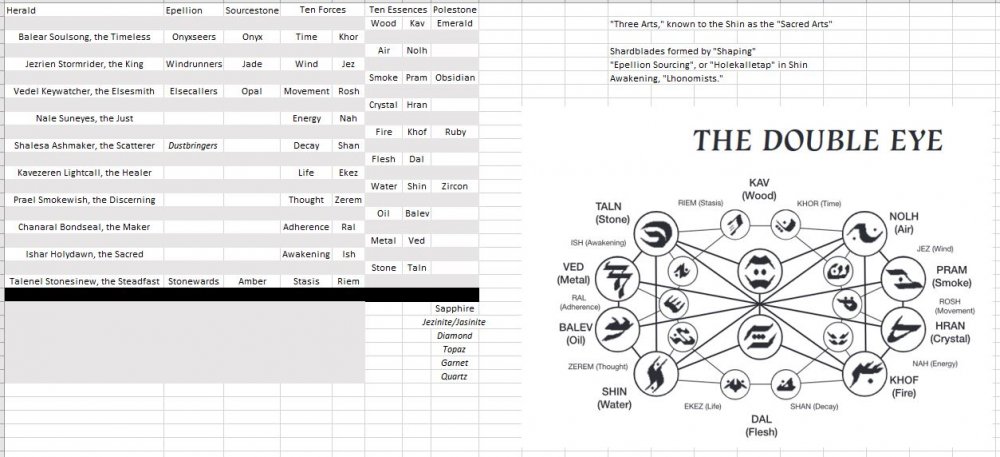
That's a good point about the timelines - and on further reflection and a closer analysis of the text, I'm not sure Jasnah is even a Knight Epellion at all. More on that later. In terms of the witness to not-Gavilar's death, Jezenrosh produced a witness, and later Jasnah said Balenmar had been a witness. I'd remembered the first scene, but forgot the second; it does seem that Ishar was behind the king's death. I wonder if he's destabilizing the nations of the world to 1) make it easier for the Khothen to conquer and 2) keep the Oathpact broken remove the Epellion from the world. I do think the Shin Onyxseers and Ahven's Onyxseers are the same phenomenon as Renarin; the Veden seers were all kids, so none of them predate the 17-year event. And for the Shin... I wonder if they had held to the Oathpact (which didn't bind the Heralds in this version; it bound the Oathpact Kings and their nations, and had the Knights Epellion attributed to it) and kept all the Epellion to themselves, but when they finally broke it in joining with Jarnah and moving against other nations, that somehow opened up the possibility of new Epellion from the other nations. Also, while I can see where you're coming from with Jarnah = Vasher, that's a pretty big leap. Jarnah didn't give up conquest; per Jasnah, he was slain by Dalinar in "single combat," whereafter his army fell apart. That's why Dalinar's called Tyrantbane; seems like a pretty hard thing to fake. Dalinar lied about something regarding Vasher, sure, but I don't see how you get to him being Jarnah. Onto the magic. The Sacred Arts / Three Arts. I've been mulling it over and searching through the text. The first problem I encountered was that there appeared to be more than ten Polestones; I counted fourteen. Until it was pointed out to me that amber wasn't referred to as a Polestone; Taln called it the "Sourcestone" of Stonewarding. So, as I see it, we've got ten Sourcestones for Epellion Sourcing (as Taln calls his Stonewarding on more than one occasion), which I see as aligning with aForce. And we've got ten Polestones, all of which I think are mentioned at one point or another in the text, though we don't get definitively how they align with the Essences and Awakening (performed by Lhonomists). I think the third system is hinted at - "Shaping," which Taln contrasts with Epellion Sourcing (" I presume, then, that Shaping is somehow still available to mankind, even if Epellion Sourcing has for some reason diminished?"), and which is responsible for Shardblades. I don't see it on the Double Eye anywhere, although since it uses opals, I'm assuming that Shardblades are only one of ten possible manifestations of it. (Shardplate is referred to as Awakened, so I don't think it's Shaping.) So, if I take the Windrunners and put them and Jezrien on the Force of Jez/Wind, and then I line up the other Heralds (and associated Epellion) in the order they're presented when Jasnah lists them all off, here's what I get: There are a few things I'm still not sure on, and would like feedback for. There's an Awakener who seems to move without moving; that doesn't really match an Essence to me, it looks like it's savant-ified Movement. I'm also not sure why Awakening has a Force, when it's pretty often made out to be something distinct from Epellion powers. Unless that Awakening, specifically, is what Jasnah's doing? A more powerful version of Lhonomy, accessible only through that Order of Knights Epellion? Oh, and I've also slotted in Dustbringers with the Force of Decay. That aligns them with someone who looks like a proto-Ash (although we know from the text there is only one female Herald, and based on pronoun usage it can only be Kavezeren, Vedel, or Shalesa; so maybe Shalesa is female, maybe not). Which fits in well with the common Ash = Dustbringer theory.