



Lewis Nethur
-
Posts
1141 -
Joined
-
Last visited
Content Type
Profiles
News
Forums
Blogs
Gallery
Events
Everything posted by Lewis Nethur
-
I'd be kind of surprised if Awakening doesn't start getting used on an industrial scale soon. In terms of raw industrial potential, awakening is pretty unmatched by other magic systems; enough Lifeless running on Giant hamster wheels could power the world (although, an Awakened turbine could, in theory, just spin itself...). A Lord Ruler type tyrant with the infrastructure and influence to "tax" people of their Breath, or otherwise compel its citizens to relinquish their Breath could seriously accomplish some crazy feats. Sure, everyone would be more susceptible to sickness and depression, but that's a small price to pay for an undead army of super-soldiers, factory workers, and farmers to go with your limitless supply of electricity.
-

Soulcasters and creating power catalysts
Lewis Nethur replied to Mason Wheeler's topic in Stormlight Archive
Which is why Hoid has probably already stolen a Soulcaster (or maybe one of the two unaccounted for Honorblades) -
Odium is Invested in the Very Stone
Lewis Nethur replied to Child of Hodor's topic in Stormlight Archive
A cool and well put together theory, but this quote alone won you my upvote. It sounds plausible and inline with how other religions have functioned in the Cosmere (grounded in true historical events, but sort of warped, twisted, or romanticized). An excellent insight I've never heard proposed before, well done! -
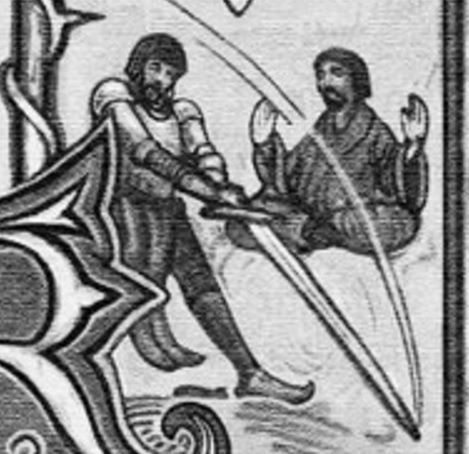
The swords in the pictures don't really look long enough to be shardblades and no one in any of the panels looks like they're wearing shardplate.
-
That's the thing, I'm proposing that they didn't really care about maintaining the Oathpact at all and their goal at this point is solely to avoid going back to being tortured. Consequently, I wouldn't be surprised to see them take up arms against the new Radiants since, if Odium breaks free of Roshar, they might not get tortured even if they do eventually die.
-
The following is a quote by Jezrien in the prelude to WoK: I've heard people speculate from this quote that the Heralds believe there's a way for humanity to overcome Odium, possibly without them. However, it sounds to me like the opposite, ie: the Heralds have decided to end the cycle by...ending the world? Maybe even supporting Odium to some extent. My speculation then is that the Heralds End Game is ultimately: to die in a manner that doesn't send them back to...wherever it is they go between Desolations. The easiest way I can think of for them to achieve that goal would be to destroy humanity, or release Odium back into the cosmere at large. This would make Hoid's mission: to see that humanity survives the Desolation, Odium is killed if possible, and if he isn't, to kill at least one Herald to keep the Oathpact going.
-
Actually... I'd hope their opponent would stop and reflect for a moment about why exactly they think fighting a Radiant is a good idea before it came to that, however, I happen to be a big fan of these types of Vasher-style tricks. It might be fighting dirty, but they're fun every once in a while.
-
That would be my best guess. I'd be kind of surprised if another character started having Dalinar's visions at this point though, so we may never know from in-book references
-
One thing I'd like to add is having a second blade could be an absolute game-changer in a one-on-one fight between two shardbearers if your opponent didn't know you had it. 1. Start summoning second blade 2. Drop first blade on 8th heartbeat 3. Lunge/swing at opponent with empty fist on 9th heartbeat 4. Opponent, thinking you'll be unarmed for several more seconds either goes on the offensive, or only steps back enough to dodge a punch so they can give a counter-swing 5. 6ft of shardblade they didn't see coming plunges into their chest plate
-
Maybe "time-travel" was a bad way of describing it on my part... "Warging" more accurately captures what I was trying to describe (even if it's not a cosmere term) but I'm no longer certain I support that theory after reading through these other posts. The power could be something specific to Honor, or something he accomplished only with Cultivation's help. As to why Odium wouldn't abuse the power, if he even has it or is aware it's possible, Honor doesn't have very good control over it; he pretty much admits he's just firing from the hip in a last ditch effort to affect the war. The "animus" explanation isn't a bad one, it could be that Honor is pulling Dalinar partially into the cognitive realm, where he is literally interacting with the living memory of what happened that was ingrained in the land. This would explain why characters in the vision are able to respond to him dynamically without some kind of time-hopping; interestingly, if this turns out to be correct, it could imply that Dalinar could escape/end a vision if he started acting way too far out of character (attacking people, telling them he's from the future, ect.) Further, it would allow people to experience very nearly the same visions, assuming they played along to some degree. I think a really good question for Brandon would be: "what would have happened if Dalinar had died in his vision while fighting the Midnight Essence?"
-
By the end of WoR it sounded to me like the Cryptics had been monitoring/spying on him rather than scouting him for Radiant-hood. It's been hinted that the Cryptics and Honorspren don't get along very well, which is presumably why they leave Elhokar alone once Kaladin starts hanging around, however, I wouldn't think that they would be driven off unless they were doing something relatively shady. On the other hand...I think there are some scenes where Elhokar discusses the design and aesthetics of his "palace" on the shattered plains, and I seem to recall a reference somewhere about him ordering specific improvements (IE: relief carvings and marble tiling in his hallways). Those could be interpreted as indications of artistic inclination, or an under-utilized talent for interior design.
-
I feel like we can probably rule out the idea that Gavilar saw the same visions as Dalinar. I seem to recall that at some point Dalinar mentions that, in his experience, he can learn more from the visions if he plays along with them and acts, to the best of his abilities, in a manner consistent with the character he's playing in them. In my mind, this casts serious doubt on the visions being scripted, as the people in them react to and interact with Dalinar dynamically, and are weirded out by him when he doesn't respond the way they expect. In this way, Gavilar's visions could be, at most, very similar to Dalinar's, but definitely not identical. Do we know for sure that when Dalinar has a vision he isn't literally possessing someone from the past (IE: his mind is somehow traveling back in time and controlling someone)? That's how the scenes read to me, and if that's the case, it would make sense that each person experiences different visions. Gavilar seems to have been involved in a lot of weird stuff, it wouldn't surprise me if he saw wildly different visions and/or the visions came from another source (IE: Odium or the Old Magic).
-
Okay, here we go again: On average, a person's arm-span is very close to their height. Let's look at Adolin this time, who IIRC is described a handful of times as being relatively tall; I'm going to take this to mean about 6ft, giving him a 6ft (183cm) arm-span. As it happens, a good estimate for a person's ideal draw-length is calculated as arm-span / 2.5 or 73cm in Adolin's case. That would make the arrows about 75cm long. The volume of an arrow fired by a Grandbow is therefore between 850 and 1,500 cc's depending on what exactly you consider 3 fingers thick to be; let's call it 1,000cc's to make things easier. Flipping through the book I saw that the arrows for the Grandbows are described as "black" which doesn't tell us what they're made of...however, we can reasonably assume they're either steel, or some kind of hardwood. We'll examine both possibilities: if they're made of steel, they'll have a mass of about 8 kg, if they're wood they'll have a mass of about 0.7 kg. Lighter arrows tend to fly straighter and faster for longer, and speed is more important than mass in terms of damaging a target, however, shortening, shaving-down, or otherwise reducing the weight of an arrow below a certain point compared to the draw-weight of a bow introduces a number of technical and safety concerns. Modern standards recommend an arrow weigh at least 5 grains (which is a crazy archaic imperial unit for measuring barley...) per 1 lb of draw-weight. 8kg = 123,459 grains, giving a maximum draw-weight of 617,000 lbs, which sounds unreasonably high. 0.7kg = 10,802 grains, giving a maximum draw weight of 54,000 lbs...Unfortunately, this still sounds at least an order of magnitude too high to me, luckily, it's technically just an upper-bound. BUT WAIT! Recall that we estimated that during a vertical jump a shardbearer's legs can each exert about 2,300 lbs of force on the ground, and I believe Sadeas is loosely described as firing the bolts off in relatively quick succession without exerting himself. Giving us a really rough estimate of Grandbow draw-weight of between 1,000 and 2,000 lbs. The scientifically accepted methods for predicting an arrow's velocity don't apply well to arrows that are this massive...however...by assuming a Grandbows provides a velocity similar to that of a normal soldier's recurve bow (about 225 ft/s) I came up with a required draw-weight of 1,200 lbs to 1,500 lbs. I think this is pretty much as good a figure as is obtainable without actually trying to build and test a Grandbow. Conclusions: Grandbow arrows are around 3.8cm thick, 75cm long, and probably made of wood, since metal arrows of this size wouldn't fly very fast or accurately without an impossibly high draw-weight (even for a shardbearer). The Grandbow has a draw-weight of around 1,200 lbs to 1,500 lbs, which is about the weight of a smart car and a little bit more than the weight of a particularly large polar bear (and more than an order of magnitude higher than a normal bow). TLDR; Adolin could easily dead-lift a smart car and probably throw a polar bear pretty far (depending on how he gripped it). EDIT: Sorry that the units are all over the place, that's sort of just how we do it in the States (and after so long I've just gotten used to it)...Not an excuse, just an explanation.
-
The shafts they fire are "three fingers thick." That sounds like between 1-1/2 and 2 inches to me. I don't work with aerodynamics much, but it seems to me that it wouldn't make sense to have an arrow that thick unless it was solid (not hollow) for a number of design and physics reasons (I think this is a fairly rock-solid assumption). I need to do some more research, but I'm confident that the length of the shafts can be estimated from the height of the shardbearers, which will give us a good figure for the weight of the arrow. I believe there are some more-or-less standard formulas for estimating the ideal draw-weight from shaft-weight. Probably won't have time to flesh out the numbers for a day or two, but wanted to throw this out there.
-
I feel like the Honorblades have been unfairly given a bad rep and I think your post accurately captures how a lot of people generally feel about them. From what little we've seen, the Heralds started off as agents of Honor who led an admirable and lengthy campaign against the forces of Odium. Sure, most, or possibly all, of them have gone totally bananas by the time the series starts, but back when they were wielding the Honorblades they were...well, honorable. The Honorblades don't require oaths from their wielders or impose ethical guidelines which definitely gives them a tremendous capacity for being used to commit atrocities, however, this doesn't inherently make them evil. Do I really think Adolin will take up an Honorblade? Probably not. I will say though that, judging from his personality and moral fiber, I think he would have been a good candidate for one. He murdered Sadeas because he felt the Kingdom couldn't handle any more divisiveness in the face of a new Desolation; there's a strong argument that this action is simultaneously honorable and unethical. Where to draw the line in fighting a war has confounded men for ages, deciding when an unethical means can justify an end is a terrible, difficult, and highly abstract choice. Adolin's actions (attacking and killing an unsuspecting man out of sight of witnesses and then covering it up) defy most ethical frameworks held by civilized groups of people. But at the same time, Sadeas was a monster who was almost certainly going to cause needless death and destruction in the relatively near future. I could see a spren sitting on a Radiant's shoulder having a serious problem with killing someone who, according to societal convention, hasn't done anything wrong yet. Where the line between right and wrong gets fuzzy and survival requires swift, brutal, and decisive action is where the Honorblades thrive. I hope at least some of the Honorblades end up in the hands of people who are, at least in some capacity, on the same side as the Radiants; it would strike me as a missed opportunity if they all ended up locked up, deliberately unused, or in the hands of Odium's agents (both witting and unwitting).
-
I absolutely, positively, 100% believe you are correct in this assumption as he would, IMO, be absolutely mad to do so. However, I would speculate that the editors and pre-publishing readers usually (though definitely not all the time) have the presence of mind to check most major scenes for internal consistency, particularly when they make mention of specific numbers. As I continue this work I intend to (if possible...) find a way to flesh out the finer details of that internal consistency. Where potential conflicts exists I hope to identify the most plausible assumptions that can explain them; for example, I expect that at some point the weight/carrying capacity of the species of horse that lives on Roshar might come into question, since there's no technical reason it should be the same as the species we're familiar with. As fans of the series the responsibility falls on us to fill in any logical gaps and explain/analyze how and why things happen. If you need any convincing about what makes a story truly great, enduring, and life-altering, just google "Wookiepedia." TLDR; Emerald101 is right, Sanderson's time is better spent writing books than doing math, Starwars is totally boss, Ima keep working on my calcs and post when I think I have enough to be interesting again. Thanks for all the support! Glad I'm not the only one who has an easier time visualizing things when some numbers are attached (even if they might be a bit rough).
-
Thanks, I'll definitely take a look! The absolute most valuable scenes will be those involving the plate, or objects it's interacting with, being anecdotally pushed just to their limit. If you recall any scenes where plate that hasn't already taken significant damage is struck hard but doesn't visibly crack, or scenes where a person in shardplate hits something as hard as they can without completely destroying it, or struggles to just barely lift or stop something, that would help fantastically. Scenes where the plate is only very slightly damaged by an action and those where numbers are mentioned or hinted at or scenes where direct comparisons are made are definitely valuable too though. Does anyone know if the book ever mention what the draw weight is on those shardbows?
-
As to that...I was trained as a physicist, so I do all my math in metric however, since getting employed as an engineer (in the US), I've been browbeaten into reporting my final answers in imperial...
-
I think I have to disagree that Renarin's future sight will be a significant hurdle in their relationship, Adolin repeatedly demonstrates sincere love and loyalty to his brother, as well as a gradual acceptance for the strange new things around him. Yes, he's a little volatile and slow to embrace the changing world, but he hasn't really ever been completely obstinate with those closest to him (he even eventually starts to embrace Kaladin). It's a little cliche, but what I expect will happen is Adolin will, after an initial hiccup, embrace and love his brother for his new powers then slowly grow resentful and jealous of them, and then one of three things will happen: he'll either apologize and swear loyalty to Renarin, becoming his squire, become Shallan's squire and resume a positive relationship with Renarin (though never quite as good as the one they had before), or, less likely IMO, he'll take up an Honorblade so he can remain relevant to the story.
-
I'm trying to get some actual numbers for the characteristics of shardplate from in-book descriptions. Things like: How much strength does shardplate lend its user, how much impact can shardplate absorb without visible cracking, how much does shardplate weigh, and are there any serious discrepancies between these values for the various suits that have been used onscreen. I'll try to be as brief and non-technical as possible while still conveying what I think I've found so far, criticisms and suggestions welcome! I'll try to clearly identify any assumptions and estimates appropriately. I'm not doing citations right now though. It's been stated that a large horse can safely carry a full-grown man in shardplate so long as they mount the animal "carefully." I take this to mean that the weight of the rider, plate, and saddle is close to the maximum weight the horse can carry around for a more-or-less extended period of time without injury, about 20-30% of its body weight. A horse can weigh up to about 2,000 lbs. 0.3 x 2,000 lbs = 600 lbs of total carrying capacity, which would make the armor weigh at most about 400 lbs, and more likely closer to 250-300 lbs (since horses that large typically aren't suitable for riding). This is also happens to be just heavy enough that most people would have extreme difficulty moving if the suit were to lose power, which also agrees with in-book references. I'm going to assume Dalinar weighs 200 lbs, is 2 m tall, his armor weighs 300 lbs, and a parshendi weighs ~250 lbs Dalinar demonstrates a maximum vertical jump of 8 ft (a tremendous feat even considering the reduced gravity on Roshar). Neglecting air-resistance and assuming gravity on Roshar is 0.7g (I think there's a WoB on this?), this would require an initial vertical velocity of about 5.7 m/s. Assuming he crouched down before the jump, resulting in a lowering of his center of gravity (which I'll assume is exactly at his belly-button for simplicity) by about 6 inches (I'm not a professional athlete, but this number seemed reasonable to me) his average force from both legs would come out to about 25,000 Newtons, or approximately 2,300 lbs of force from each leg. In another scene, Dalinar kicks a parshendi corpse about 20ft. This is far enough that air resistance starts to matter, however we don't have a great way of accounting for it with the information in the scene, so just know that the force calculated here is a lower-bound. Without air resistance, assuming he kicks the body at somewhere between a 30 and 45 degree angle, and his foot contacts the body for about 1 foot of distance (anyone who plays soccer can feel free to jump in with a better number here if you have one) he would need to exert a force of about 1,700 lbs (According to my research, this slightly exceeds the amount of force required to dismember a human body so we'll assume parshendi bodies are a little stronger than human's, and/or he hit the corpse in the center of the torso). What's interesting about this figure is that it suggests that Dalinar could have hit the body much harder, but chose not to (probably instinctively) because doing so would have caused it to explode as his foot passed through it rather than go flying (gross, but neat!). I'm planning to review some more scenes, specifically those between multiple shardbearers and see if I can come up with some more refined and rigorous calculations, but wanted to share what I had so far. If you think this sort of thing is interesting let me know what you think and I'll try to pick up the pace; challenges to my numbers or your own calculations are also welcome! TLDR; A person in plate could easily tear a person's limbs off (and dunk like no one's business)
-
Epigraph on Radiant special effect
Lewis Nethur replied to thegatorgirl00's topic in Stormlight Archive
That would certainly explain why Nale would be so excited about unleashing Nightblood. It struck me as a little absurd that a fanatic for the law would possess a weapon that has previously been known to encourage and prod its owner to kill strangers without concern for their guilt. If Skybreakers have a legitimate way of identifying guilt or evil then Nightblood could effectively transformed from a sadistic killing machine to a well-regulated tool of "justice." -
I noticed two interesting slip-ups by Hoid (one in each epilogue) where he makes references to "coins" as a form of currency, which would probably leave people native to Roshar scratching their heads since, as far as I can determine, they haven't ever minted or used coins: I justify my assumption that coins haven't been minted or used on Roshar in an extremely long time (if ever) from the following two points: The word "coin" doesn't show up anywhere accept when Hoid uses it If coins ever did exist they would probably have become worthless the moment the Ardentia obtained soulcasters If they don't have coins, they probably also don't have a word for coins in their language. In both epilogues the people Hoid is talking to just let his nonsensical comment slide rather than ask what he means, however, it occurred to me that these type of casual mistakes would be a good way for the members of the 17th shard to track him down. (I suppose it's also possible Sanderson or an editor somewhere literally just made a typo and meant to say "spheres" instead of "coins"...but that's less fun...) Has anyone noticed any other slip-ups by worldhoppers that reveal that they aren't native to the planet they're on?
-
FeatherWriter, Your dedication is inspiring and your words compelling. The meta-thinking and justification behind Renarin's actions are both deep and intellectual and the character himself is tailored to appeal to a subset of fans who are often misrepresented when they are represented at all. That said, I think James456 has articulately identified a whole host of legitimate grievances other characters in the Cosmere should, and do, hold against Renarin. The quick-and-dirty of it is that Renarin is a little bit more of a burden than a boon most of the time and other characters, rightly so, have a tendency to not like him. He's got potential, and I fully expect him to shine in the future, but the fact is that he's got some serious catching up to do, and until he does, he's going to have to pay his dues and deal with a little hate, pity, and misunderstanding. Honestly, good show to you both, a fine discussion of points and counterpoints if ever I've seen one.
-
As a minor side note, I would speculate that they almost definitely store the plate with more-or-less fully infused gems and replace them as needed since, one, if the plate isn't being used by its owner its often being used for training purposes, and two, who would dare risk letting their plate run dry if they could help it? (People who own shardplate tend to be crazy rich) I back calculated some numbers for the rates at which a handful of different allomantic metals burn some time ago, I'll see if I can come up with something similar for shardplate, though I'm not sure there's been enough information published yet for the results to be meaningful.
-
The first quote is enough of an argument for me; muscles reacting faster and more dexterously definitely implies that the armor is enhancing the user in ways other than simply augmenting their strength. Sounds to me like it's feeding stormlight into the person wearing the armor. An interesting question for Sanderson would be: Do the gems in shardplate drain faster if someone is wearing it and not moving, versus if the plate was laying around unused.

