Frustration Posted May 13 Posted May 13 @Shatter I take it based on the Hebrew you're Jewish. If so, and you don't mind, could I ask you a question?
Shatter He/Him Posted May 13 Posted May 13 15 minutes ago, Frustration said: @Shatter I take it based on the Hebrew you're Jewish. If so, and you don't mind, could I ask you a question? Go ahed
Frustration Posted May 13 Posted May 13 (edited) 7 minutes ago, Shatter said: Go ahed So, why don't you do animal sacrifices anymore? I know that the various different ideologies(groups, branches? What's the official term?) Of Judaism have different ideas, but it's something I've never been able to find out. For Christians, the belief is that the sacrificial death and ressurrection of Christ ended sacrifice by the shedding of blood. However, as far as I know Judaism doesn't have an equivelent doctrine. Edited May 13 by Frustration
Verdance he/him Posted May 13 Posted May 13 3 minutes ago, Frustration said: So, why don't you do animal sacrifices anymore? I know that the various different ideologies(groups, branches? What's the official term?) Of Judaism have different ideas, but it's something I've never been able to find out. For Christians, the belief is that the sacrificial death and ressurrection of Christ ended sacrifice by the shedding of blood. However, as far as I know Judaism doesn't have an equivelent doctrine. *eyebrows* wait i never thought about that would it be that a lot of orthodox jewish culture was lost during all the different times of captivity or dispersal, and that wasn’t something that was brought back in modern times or are we asking the theological implications of that im curious as well!
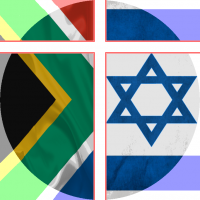
Shatter He/Him Posted May 13 Posted May 13 (edited) 30 minutes ago, Frustration said: So, why don't you do animal sacrifices anymore? I know that the various different ideologies(groups, branches? What's the official term?) Of Judaism have different ideas, but it's something I've never been able to find out. For Christians, the belief is that the sacrificial death and ressurrection of Christ ended sacrifice by the shedding of blood. However, as far as I know Judaism doesn't have an equivelent doctrine. I can answer much of this with an image. In all seriousness, we don't sacrifice korbanos (קרבנות) anymore because we lost the place where we would do it. The Torah forbids sacrificing animals anywhere else, so we had to figure out a replacement. The rabbis of the time decided to formalize prayer to replace the sacrifices, and they created the basis of prayer that Jews have today. More was added as the centuries passed due to stuff happening (the rise of the Christians, the rise of pogroms, etc.) Also, the different 'flavours' of Judaism (there isn't a good term) do have different ideas. Orthodox Judaism is the most traditional approach. It holds that Torah and Halacha (Jewish Law) are binding laws from God, and they do not change based on modern trends. In practice, that means keeping Shabbos (the sabbath) strictly, kosher laws in full detail, daily prayer, and traditional gender roles in many communities. They're currently figuring out the LGBTQ community and how they fit in with Jewish Law. Conservative Judaism values halacha and tradition, but believes Jewish law can develop over time in response to real-world changes. It's more flexible than Orthodox Judaism in that they are more lenient with the laws of Shabbos, they sometimes have mixed seating in synagogue, and will sometimes have female rabbis. They're pretty accepting of the LGBTQ community. Reform Judaism is the most flexible. It sees Jewish law as important but not binding in the same way. The focus is more on ethics, personal meaning, and individual choice. Kosher and Shabbos observance are usually not kept, and services are shorter and often in English and adapted to modern culture. They are highly accepting of the LGBTQ community. Basically: Orthodox = “Jewish Law is binding and central.” Conservative = “Jewish Law matters, but can evolve.” Reform = “The Torah matters, but personal choice is key.” 26 minutes ago, Verdance said: *eyebrows* wait i never thought about that would it be that a lot of orthodox jewish culture was lost during all the different times of captivity or dispersal, and that wasn’t something that was brought back in modern times or are we asking the theological implications of that im curious as well! There has always been an orthodox backbone as the jews have moved across the world. As best I can track the main backbone: We went from Judea to Galilee to Babylon to Persia and the wider Islamic world (including North Africa and the Middle East) to Spain and France to Germany and Eastern Europe and to the Ottoman Empire and Sephardic centres to modern Israel and the United States and Canada and a bunch more communities. Keep in mind that it split and part of Jewry became what are known as Sephardis (Mediterranean and Spanish), part became Ashkenazis (Eastern European), and part became Mizrachi (Middle Eastern). Orthodox Judaism dates back to the times before the Second Temple. I've actually thought about seeing if I could track my Rabbi's teachers all the way back (i probably could) Any more questions? I'll answer them tomorrow. I have to sleep now. Edited May 13 by Shatter 2
Frustration Posted May 13 Posted May 13 (edited) 10 minutes ago, Shatter said: I can answer much of this with an image. In all seriousness, we don't sacrifice korbanos (קרבנות) anymore because we lost the place where we would do it. The Torah forbids sacrificing animals anywhere else, so we had to figure out a replacement. The rabbis of the time decided to formalize prayer to replace the sacrifices, and they created the basis of prayer that Jews have today. More was added as the centuries passed due to stuff happening (the rise of the Christians, the rise of pogroms, etc.) Also, the different 'flavours' of Judaism (there isn't a good term) do have different ideas. Orthodox Judaism is the most traditional approach. It holds that Torah and Halacha (Jewish Law) are binding laws from God, and they do not change based on modern trends. In practice, that means keeping Shabbos (the sabbath) strictly, kosher laws in full detail, daily prayer, and traditional gender roles in many communities. They're currently figuring out the LGBTQ community and how they fit in with Jewish Law. Conservative Judaism values halacha and tradition, but believes Jewish law can develop over time in response to real-world changes. It's more flexible than Orthodox Judaism in that they are more lenient with the laws of Shabbos, they sometimes have mixed seating in synagogue, and will sometimes have female rabbis. They're pretty accepting of the LGBTQ community. Reform Judaism is the most flexible. It sees Jewish law as important but not binding in the same way. The focus is more on ethics, personal meaning, and individual choice. Kosher and Shabbos observance are usually not kept, and services are shorter and often in English and adapted to modern culture. They are highly accepting of the LGBTQ community. Basically: Orthodox = “Jewish Law is binding and central.” Conservative = “Jewish Law matters, but can evolve.” Reform = “The Torah matters, but personal choice is key.” I think "flavors" of Judaism is one of the funniest things I've heard all day. Thanks for the resonpse, but it does raise some additional questions. I thought(and you may correct me) that the restriction from preforming sacrifices outside the Temple in Jerusalem was implemented by King Josiah during his anti-idolatry campaign. Likewise there are several instances of people offering sacrifices in other locations, most notably the Tabernacle, which the early Isrealites took with them as a mobile temple. Are those seen as one time exceptions, or was it permissable and now isn't? Edited May 13 by Frustration 1
Immortal Platypus Posted May 13 Posted May 13 48 minutes ago, Shatter said: Also, the different 'flavours' of Judaism (there isn't a good term) do have different ideas. I feel like sect is the closest word, but it's certainly not perfect
Shatter He/Him Posted May 13 Posted May 13 4 hours ago, Frustration said: I think "flavors" of Judaism is one of the funniest things I've heard all day. Thanks for the resonpse, but it does raise some additional questions. I thought(and you may correct me) that the restriction from preforming sacrifices outside the Temple in Jerusalem was implemented by King Josiah during his anti-idolatry campaign. Likewise there are several instances of people offering sacrifices in other locations, most notably the Tabernacle, which the early Isrealites took with them as a mobile temple. Are those seen as one time exceptions, or was it permissable and now isn't? The Torah repeatedly stresses that offerings must be brought only “there” (meaning the central Sanctuary). After the Mishkan (the Tabernacle) settled and later the Beis HaMikdash (the Temple) was built, that became the exclusive site. Once that shift happened, other altars were prohibited. 4 hours ago, Immortal Platypus said: I feel like sect is the closest word, but it's certainly not perfect Streams of Judaism or Jewish Movements are better words than 'sect'. The Jewish sects have mostly been wiped out. Pharisees, Sadducees, Essenes, Zealots, Sicarii, etc., were Jewish sects.
Keteᛕ He/Him/His Posted May 13 Posted May 13 10 hours ago, Frustration said: So, why don't you do animal sacrifices anymore? I know that the various different ideologies(groups, branches? What's the official term?) Of Judaism have different ideas, but it's something I've never been able to find out. For Christians, the belief is that the sacrificial death and ressurrection of Christ ended sacrifice by the shedding of blood. However, as far as I know Judaism doesn't have an equivelent doctrine. So the reason sacrifice is not common is because a great deal of signs and wonders related to how the sacrifice is done do not exist anymore (I.e. the temple, altar, or signs denoting that sacrifice is required). Yom kippur still is devoted to repentance. 1
Frustration Posted 8 hours ago Posted 8 hours ago (edited) This is kind of off topic, but I think it's the best place to do this. I'm writing a book right now and I came across a problem that I'm working on solving. What I'd like to do is describe my problem here, with my solution in a spoiler box. I'd like to get some responses from people from various religious backgrounds, both their own attempts to solve the problem(if desired), along with their thoughts on my solution. Problem: In the story I'm wanting something that has a decidedly religious feel to it, holy symbols, blessings, and so on. However I don't want to confirm to the reader that there is a deity behind it. I want it to be something that is up to interpretation, but also being respectful of various faiths. My solution(so far): Spoiler The idea came from Catholic saints. All symbols, blessings, and holy objects have to come from one specific person. For lore reasons this person is functionally immortal, as it ties into another thing I'm working on. This individual is treated as a saint, and chosen by God. However as the story goes on I want to show that this person isn't sure if they were chosen or not, and has never heard or spoken to God. They question to themselves if they really were chosen "If I really was a saint, shouldn't I be able to do more?" Any thoughts? Edited 8 hours ago by Frustration
CadCom he/him Posted 5 hours ago Posted 5 hours ago 2 hours ago, Frustration said: Problem: In the story I'm wanting something that has a decidedly religious feel to it, holy symbols, blessings, and so on. However I don't want to confirm to the reader that there is a deity behind it. I want it to be something that is up to interpretation, but also being respectful of various faiths. My solution(so far): Reveal hidden contents The idea came from Catholic saints. All symbols, blessings, and holy objects have to come from one specific person. For lore reasons this person is functionally immortal, as it ties into another thing I'm working on. This individual is treated as a saint, and chosen by God. However as the story goes on I want to show that this person isn't sure if they were chosen or not, and has never heard or spoken to God. They question to themselves if they really were chosen "If I really was a saint, shouldn't I be able to do more?" Any thoughts? So is the idea that the specific culture has a form of quasi-religion, but no one can confirm the existence of the deity? And the Deity doesn't explicitly do anything in the story? Essentially the coincedences that help the hero along could be explained by either Supernatural or natural causes, and that is left to the interpretation of the reader? So From what I'm seeing from your solution, your saint is able to somehow imbue objects with what people believe is power from on high, but the actual saint starts to question if the objects are actually given divine power or if it's some other mechanism bestowing the good fortune. (Like positive mindset or placebo) I think your solution seems like a very real-world way to ground any fantasy, making it seem more realistic. Because A lot of real-world religious figures I believe often actually question their relationship with their chosen deity. I would definitely include some sort of ceremony or liturgy in the book. You wouldn't need to associate the liturgy with a specific deity, but just have specific ceremonies.


Recommended Posts
Create an account or sign in to comment
You need to be a member in order to leave a comment
Create an account
Sign up for a new account in our community. It's easy!
Register a new accountSign in
Already have an account? Sign in here.
Sign In Now