



Oudeis
-
Posts
3537 -
Joined
-
Last visited
-
Days Won
12
Content Type
Profiles
News
Forums
Blogs
Gallery
Events
Everything posted by Oudeis
-
?? You seem to be talking about... something other than compounding. What Wax does, and I don't think we have a word for it yet, is two powers that don't directly interact, but provide him a synergy from overlapping effects. Compounding, as the OP means it, is when allomancy powers feruchemy; exactly like Miles, in your own example. It isn't about his abilities as an augur affecting his bloodmaker abilities, it's about the intersection of his metallic traits giving him functionally infinite reserves of health. The question then is, what does "infinite memory" mean? Your point is entirely valid, it's simly not germane to the current discussion.
-
We know Vin killed a few Mistborn between the books, because that's how she burned through their atium supply. They had seven beads, and she uses up the very last one at the start of Well of Ascension. There's more I could say, but if you're only up to the part where we find out Zane planted his half-brothers in Cett's retinue specifically to frame him for an attack on Elend, then it would spoil things.
-

Why are there Lighteyes and Darkeyes? [Mistborn spoilers]
Oudeis replied to sprint's topic in Stormlight Archive
Hey, if you're going to discuss pre-release chapters, put them behind a spoiler cut. If you do not know how to make a spoiler cut, someone can explain it to you better than I, but here's a basic idea What Is Being Spoiled (In this case, SA3) {spoiler}Thing people might not want to read.{/spoiler} However you use [ instead of {, so basically just don't apply the shift key at all for the code. Hope that makes sense. -
Not really. I knew that quote. Do you think it implies that they do die when the fire is put out? Why would the Tears grow more during wartime?
-
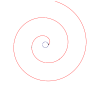
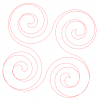
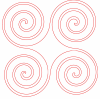
I did some work with the involute of a circle. I don't understand the involute very well, but from what I understand, it's this. You build a spiral as per normal, but instead of rotating out from one single point, it is built from a rotation point along a central circle. This has the interesting effect of making every curve not just equidistant like an arithmetic spiral, but also parallel to each other, which the other spiral is not. It also means that (0,0) is not present. That one is slightly less easy to see than my pics of arithmetic spirals... if someone better at drawing than me wants to improve them, mazel tov. Now. What happens when we take the involute, and join it together the way we did spirals? That... doesn't seem like it at all. Something's wrong. Remember, an involute never touches the origin. So what if we instead join them via the circles they are involutes of? So, what might this mean? We know a very poorly drawn LoW or LoF will still function. And the ones found at the crime scenes seemed lopsided and imperfect, anyway. Maybe an ideal LoS has gaps to represent the missing circles? The way a nine-point circle has nine salient points due to the invisible triangle, maybe four invisible circles mark the gaps between the four branches? Closing that gap means it still works, just imperfectly; that's why you can still whisper or talk a bit before it triggers, and that's why they ran out of power by morning. There's still so much I don't understand. A four-point LoS works if you join the branches at right angles... but why? Why not use 45 degrees and make an 8-point LoS? A spiral continues to infinity. There has to be a reason, something about stopping the angle where you do, that convinced Trent this was the rithmatic expression of a spiral.What am I missing? Is this the kind of question I could ask Ben McSweeney during his AMA? I've only been part of one AMA ever and it was Mr. Sanderson; what I like best about him is, he's atypical. Which means I have no idea the etiquette of a normal AMA. Should I just ask him what his favorite kind of puppy is or something generic like that? Or can I ask him questions about rithmatics?

-
So... that's what you think a Desolation is? Voidspren show up and make things like Thunderclasts? I ask... as I read the sentence, it sounds like I'm being snide, but I am honestly asking you this. That I know of, we don't yet have a definition of a Desolation. Do you believe the Voidspren are responsible for the Midnight Essence? Because in Starfalls, Dalinar fights Midnight Essence, and the Radiant tells him, "A Desolation is coming." Not, it's here... it's coming. The Midnight Essence are one of the Ten Deaths. Are Thunderclasts? We see Midnight Essence when we're told a Desolation has not yet formally begun. We see a Thunderclast after we're told the Desolation is formally finished. If you're defining a 'Desolation' as a time Voidspren flood the world and make the Ten Deaths exist... I contend that definition. There seems to be a degree of correlation, as the Midnight Essence is apparently one sign indicating an upcoming Desolation, but your theory... it just seems like it focuses on the wrong things, to me. I can feel this gaping hole of information we're missing, and it seems to be related only tangentially to the Ten Deaths and the Voidspren. I don't mean to put words in your mouth; do you believe the Voidspren make the Midnight Essence the way they make Thunderclasts? Do you think they're both the Ten Deaths? It seems like you might be saying this, but you haven't expressly said so, so my apologies if I'm extrapolating. This is part of my issue... there is just such an incredible awful lot we don't know about Desolations. We have to spend a lot more time than we have, just working on the foundations, before we can even discuss it. What do you mean when you say this, or that, and what do you think that is, or this... we need to define all of that before any meaningful discussion about the meat of our debate can even happen.
-
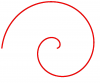
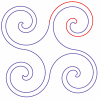
For the same reasons as before, I am not putting the words Line of Silencing in the actual title. How did Trent discover it? Thanks to KalynaAnne, we know a lot about the fundamentals of Lines of Warding, and other lines. Lines of Warding are circles derived from significant points within a triangle. Lines of Vigor appear to be simple sine curves. Lines of Forbiddance appear to be simple line segments. Lines of Making appear to be a fundamentally different kind of line, and I'm going forward on the assumption that as they are a different category, anything we know about them does not pertain to the Line of Silencing. So. How did Trent discover it? It could have been by simply seeing it somewhere; on a cliff in Zona Arida, or at Nebrask, or in some obscure tome. I highly doubt it was by just drawing random things until he became convinced that one of them was rithmatic. Or. He could have discovered it by looking at something geometric, and extending it somehow. I propose this is what he did. I think he noticed the arithmatic spiral, and decided to find a significant form which could be made from it. That's the first turn or so of one arm of a basic arithmetic spiral. I can use it to construct a Line of Silencing... I just can't think of why doing it is obvious. Why someone would do it, and then insist, this must be rithmatic. A trait of the arithmetic spiral is, if you draw a ray from the origin outward, every line segment between times it crosses the spiral will be similar. I also note that the spiral is called arithmetic, which just sounds like the word rithmatic, but I'm unwilling to assume someone would assume this (and be right) based on happenstance of nomenclature; both names derive from the same root, but that means little. Also, technically this is only the positive values of the spiral; for all values you'd need to add the reflection in the y-axis, which would mean it would cross itself every time it crossed the y-axis. Anyway. Take this (or, I believe, any) fragment of a spiral; double it, and rotate the double 180 degrees (or, if you prefer, reflect it through its origin) and you will get a doubled spiral. Starting to look familiar? Take four of these segments (two rotated 90 degrees) and stick them together to get: This might imply that more complicated LoS are possible, if you have more turns in the curve of the basic shape. Maybe that one would dampen sound even further? Lower threshold for the decibel at which it triggers? However, this is all pretty hollow. With a starting point, and the fact that I know where it goes, I can connect the dots... what's missing is, why is this OBVIOUS? How could Trent have started from the spiral and made his way to the LoS? What's so obvious about taking eight copies of a spiral, reflecting half of them, and looping them all together? In addition, I would like to study more about the involution of a circle. Apparently, it's based on a circle, looks like a spiral, and has become fundamental in making gears work more efficiently. This has all the hallmarks of rithmatics; one unseen shape affecting the resulting shape, and it even ties in with gears, like the six, four and nine-toothed gears inside a dollar coin. This seems far more promising. I'm going to do more research and see what I can come up with.

-
In the future, if you do a search within this forum for terms like "elhokar", "radiant", "cryptic", you'd've found that this possibility has been pretty well covered already, and you could have joined one of those conversations instead of starting a new one.
-
You're referencing the quote I posted above. When a Desolation is ending, the Heralds need to leave. If they don't, a new one begins. But what indicates that it's time for them to leave? If they simply leave in the middle of the fighting, surely the Desolation doesn't end then and there. What triggers the beginning of the end, what tells the Heralds, "Leave soon, or a new Desolation will commence."?
-
I honestly have not the foggiest. I have so many questions about Desolations, and no answers. What marks their end? What does it mean? When did it start? How frequently did they used to occur? What's the definition of a Desolation? In the Prelude, the Desolation is, apparently, definitely and completely over. Yet, Kalak is walking past a not-yet-fully-dead Thunderclast. If he's right near one that hasn't kicked the bucket just yet, how does he know for sure there are no more? Are Thunderclasts surviving not something that's necessarily part of the Desolation? How big is it? There must have been at least a few Desolations without Radiants. Did it span the continent? How many humans could ten Heralds possibly protect, how big an army could they possibly have held back, regardless of their powers? Why does Nalan think that spren re-bonding with humans will hasten a Desolation? Why do the Spren, who for so long forsook the Bonds, suddenly decide that it's worth the risk to re-bond? I'm not sure I can explain it... but your idea just doesn't strike a chord with me. I don't have another idea to replace it, but I don't need one. I might not know what the answer is, but I see your theory and I just don't buy it. It's plausible, I'm not going to tell you that it's definitely wrong. But it just doesn't seem like what's actually gonna happen. It might help if it addressed more of the huge gaping Desolation questions. EDIT: Oh, also, didn't mean to imply that your post was especially confusing. I thought I had been paying enough attention, and simply hadn't noticed that I conflated two similar terms you used. It's just one of those things that happens.
-
Hero of Ages, in Fadrex City.
-
I do not believe she does... Kwaan never mentions Ruin by name. She intuits it, on-screen actually, near the start of Hero of Ages.
-
Line of Silencing. But just in case someone sees the title and hasn't read Rithmatist yet, I don't want to spoil what the line does. I'm currently obsessed with the Line of Silencing and I'm going to prove how Trent deduced it. However on one of the covers of the American edition of the book, there's a different, better-done version of it. I can't find a good image of that version of the book, however. (I have the book on my nook, and have that cover, but can't zoom in on that part of the image). If your cover has a red dot, it has the in-book version of the Line. I'm hoping to get a good look at the other one. Any help? ...And, basically, seconds later, I find it on my own. Still small and difficult to make out details, but prolly the best i'm gonna get. Some... very interesting internal structure...
-
Ah. I conflated two things you were saying. You spoke of "building up power" to break his prison, but you also spoke of "building up power" to make this Desolation worse than previous ones. At first read I thought you were saying both of these were the same thing; that the time between Desolations was Odium "re-spawning" all of his forces. I apologize for my misunderstanding. I still happen to disagree with your model, but can provide no WoB to say it's not true.
-
Eh. That seems unlikely, since you're describing what has actually happened, and Tanavast expressly tells us that Odium has lost every Desolation. By your description, he's won them all. Maybe what he wants is other than the eradication of all humans, but it's not humans being beaten back and then splitting into racist kingdoms, because that's what Odium losing looks like.
-
Nope; if the Heralds stick around, a new Desolation begins. If all it would do would be to trigger a simple, easy one that Odium had been building up for a few minutes, presumably that would be better than waiting a few decades for him to build up a ton of forces. Pressure cookers don't work by building up a ton of pressure and then exploding, they work because you let out the pressure a little bit at a time.
-
Keep in mind, humankind winning/surviving the Desolations isn't the default setting Odium agreed to. Tanavast tells Dalinar, make him think he can be beaten again; he will not want to risk that. The Desolations aren't there just to decimate humanity and reduce its technology level; they are a contest, and Odium has lost every one so far. Presumably, the point of a Desolation, from Odium's view, is to destroy the world, or at least all of the people. It's not about getting to torture ten people; Odium truthfully believed this was an opportunity to get the whole thing, to destroy all of Roshar.
-
The Words of Radiance ars arcanum refers to Lightweaving as being an art found on Sel, Yolen and Roshar. Why can't a form of feruchemy exist in two places? After all, Preservation and Ruin made humans modeled after a design they'd seen elsewhere. Maybe they copied feruchemy, too.
-
...You yourself just said that the Final Empire is centered around the magnetic north pole. The word "pole" is a magnetic term. Why would it be a mistake for him to refer to a pole as a pole? The simplest explanation is just that when she said "pole", she was accurately referring to the magnetic north pole.
-
?? No, I don't agree with that at all. I think people have exactly as good an idea how bows work as they do swords, especially people who have likely never handled either in their lives. I also don't agree that bows are harder than swords. Swords can be thrust, swung, used to block, sliced, backhanded... whereas with a bow and arrow, nock arrow to string. Point at target. Pull back, release. Done. I'm not saying they'd be the best archers in history, but they'd surely have the capacity to launch a missle in a direction. Fitch uses chalklings that look like men with shovels to test the first Line of Silencing they find. A shovel is a more complicated piece of equipment than either sword or bow-and-arrow, and they do their job fine. Chalkings do need commands to function... and the command is "attack". The book says that this command is standardized, and it's simple. If it has claws and teeth, it uses claws and teeth. If it has a sword, it uses a sword. If it has a shovel, it "attacks" with a shovel. Maybe there's a rule about contiguity? Maybe if it tried to fire an arrow, as soon as the "arrow" was no longer touching the archer it would simply freeze in place, a mere chalk drawing bereft of Rithmatic power.
-
I'm pretty sure they just crossed the sea. Isn't it expressly said that Homeland and Hell are just two different continents?
-
He was at the Shattering, and life on Scadrial was made by Preservation and Ruin, and allomancy and feruchemy came from their Investment of the planet.
-
First, wow this is amazing. You did a ton of great work and I'm terribly impressed. Second, a few thoughts. The circle at Nebrask might be a bit weaker for being so large... but isn't it mentioned to be much, much thicker? A Chalking might dig through it twice as fast, fifty times as fast, but isn't it hundreds of times (or more) bigger than most LoW? ...I suddenly realized I had, within reach, both a stick of chalk and a ruler. A stick of Crayola chalk is almost exactly 3/8". A hundred times that is 37.5", barely four feet. Four hundred feet is less than half a block in NYC, and 10,000x the width of a normal LoW. Presumably, this is at least part of the secret to the Great Circle's strength. The Eskridge Defense... interesting thoughts all around, I heard that maybe it's a nine-point using only three points, I've heard that it's poorly-linked and this is okay... is it possible it's just a poor representation? Maybe they're trying to represent a six-point circle and are simply doing so poorly. I also agree with the belief that outer LoW are restricted to five other bindpoints because they're simply too tiny for 9 points. What else... there was something I was gonna say about the Great Circle, but I forget what, now. I found this thread because I just sat down with some math and a ruler and realized that six-point circles were derived from triangles and wanted to see if people knew this... you do! Now someone explain to me Lines of Vigor. If they reflect, why when they hit a Line of Forbiddance head-on do they not shoot straight back at the Rithmatist? For that matter, retre-reflectors aside, why not just always put up a slanty line and deflect, instead of "blocking", the LoV? Basically, one of every pair of Duelers will be better at chalklings. It is in that person's best interest that the battle be one of Chalklings, not LoV. Either person can put up a slanty LoV, and make the decision for both duelists to only use Chalklings. So, why does the superior Chalking-ist not just do that, in literally every instance?
-
...We do? I don't recall doing this. Regardless, even if we, the fans, believe something to be true, if it's contradicted by events in the book, I for one will tend to go with the book. Not only does Vin, who uses tin, iron and steel a lot, never make mention of improved steellines with tin, but the fact remains that Marsh specifically mentions he burns tin because it's dark. Light has no effect on ironlines. Even if tin made the blue lines better, somehow, it would still have nothing to do with light. No...? We have Sazed direct observations, too. Marsh walks into the Conventical, apparently not noticing that it's dark. When Sazed asks for a light, Marsh goes in, locates a lamp within moments, and returns. I suppose there's an outside chance he uses something like tin savanthood to smell the oil in the lamp or feel the breeze around the immobile objects so he's not tripping everywhere? But that seems... preposterous. Dark simply doesn't affect Inquisivision.
-
1. No need to double-post. 2. ... Yes. The Hero of Ages confirms this for us in an epigraph.


