


Ripheus23
-
Posts
1318 -
Joined
-
Last visited
-
Days Won
2
Content Type
Profiles
News
Forums
Blogs
Gallery
Events
Everything posted by Ripheus23
-
As luck would have it, the number 4 turns out to be important in the theory of the Julia set: see here. One direction is theoretical and preceding: 4D-space is the defining space of the set. The other direction is practical and succeeding: the number 4 is typically used in a sort of "escape barrier/threshold" parameter for the fractal of the set.
-
Does Brandon Sanderson not understand religious jargon, or what?
Ripheus23 replied to bmcclure7's topic in Cosmere Discussion
There is a rather odd-sounding belief called Christian atheism, IRL, which would possibly fit the bill (both atheistic and heretical). Maybe Jasnah can be described in comparable terms... As for Sanderson's level of knowledge of religious terms, even if I thought he missed the mark in these cases, he hasn't missed the mark in plenty of others, e.g. his use of the word "odium" is spot-on, here. -
I keep getting the impression that we're reading too much into the power of the weapon Taln used: just because he thought it might be enough to kill Cultivation with doesn't mean it was actually remotely that potentially effective. Like how, in the Wheel of Time backstory, the Dragon thought that the cuendillar seals would be permanently effective at sealing away the Dark One, yet they really weren't, maybe. So, by analogy, Taln's/Kalak's weapon might've been something more like a prototype of a cultivationspren Shardblade, or a bit of anti-Lifelight, or whatever, but not necessarily something on the level of a Dawnshard.* *Do we know, incidentally, that Dawnshards can kill Shards if used correctly? We might naively reason, "Oh, but they were powerful enough to Shatter Adonalsium," but we don't know what kind of Physical process the Shattering involved, what kind of weak spots/vulnerabilities Adonalsium particularly had to Dawnshards, etc. I don't know, barring WoBs that I'm not familiar with, that we can naively go off "raw power levels" in our analysis, here. Again, though,
-
ℵ 10,000 Years Ago The whole star system was moving in the wrong direction. Erenen Dmaltiar, holding the Argent Helm, could feel it. And just after... after that shockwave... but from what? And why did he feel such fear? "Guardian Thieros," he said, turning to his protector and second-in-command, a man in ornate armor marked by the sigil of their city and their land, the Sunrealms, "something terrible has happened, and worse may come for us soon. Be ready!" Jarlel Thieros saluted his emperor, the Sovereign of the Sun. "But what is it?" he then asked, looking towards the sky. Would that I knew... "Something... By the Godlight, I cannot understand it yet. But something... something to do with that light." Thieros tangibly shuddered. "The Adamant One is unbreakable! Surely you don't..." He was cut short, though, by another, much more powerful shockwave from beyond the sky. And then Dmaltiar felt that "worse" force clearly. The Dark Sanctuary! The sun of this world, Chthornos, had been driven by the purling of space into the conduit of a time in which it would drag this world, and all the others in the ambit of the Sunrealms, into an abyss so hungry, so devouring, that not even material luminescence might escape it. The Helm began to quietly hum, with a power that beckoned to Dmaltiar's hopes. He reached into the nearly silent magic of the Helm. Adamant One, save us! "Pray!" he shouted at Thieros and the other guardians of the city around them. "Pray! Or our doom is beyond certain!" He then wished and willed himself, the Investiture of his soul, into and through the electrum diadem in his hand, placing it upon his head like penance for an unmerited victory. The Argent Helm burst alight with its own Invested grace and splendor. Connected its might to something beneath the city. And, impossibly, resisted the outer maw of the Dark Sanctuary. Everyone here besides Dmaltiar stumbled or outright fell to the ground as their planet, Hiphanad, staggered like a shattered earthquake while the Sovereign of the Sun held the world fast against the consuming void. Praise be to the Godlight! O thank you, thank you, Adonals... Horror raptured itself through Dmaltiar as he felt, in the esoterically self-transforming Helm, the true origins of the shockwaves that had nearly thrust Hiphanad into infinite darkness. Adonalsium, the Godlight and Adamant One, the very Origin-of-Songs and Aegis-of-Glory, was dead. The aura of Its Investiture were being reshaped, assumed part by part by God's murderers... The Helm itself is changing! It is being attuned... to a being of false honor, and a witless preserver of life and death... The Sovereign of the Sun threw the crown from his head. It clanged on the ground like a bell meant to be rung only for the worst of the dead. And Chthornos resumed its fall towards the Dark Sanctuary. "This power is not enough to save us forever," Dmaltiar said, helping the stunned lieutenant-guardian up, taking up the tenebrous circlet again as well. "It will do for now, to keep us from that," and he gestured at the strangely aflame blot of obsidian in the deep sky, the terror of the night that had been for centuries watched with trepidation by anyone with a good telescope to hand, "but for a while only. A greater way must be found..." Thieros shrugged, wincing as he stared at the far, warped edge of the Dark Sanctuary. "I have no knowledge to aid you in this endeavor," he said, almost weeping. He might as well have dropped the intricate scimitar by which he stood watch for his Sovereign, so crestfallen was he as he lost the purpose of his eyes in contemplating the obsidian hell above. Somehow, our prayers were answered. Adonalsium must have anticipated this hour in some way. Made the Argent Helm for us to Connect to, to forestall our ruin... With as much hope as he believed possible in this moment, Dmaltiar smiled at Thieros. "Do not be overcome by dread," he said, a hand reassuringly on the guardian's right shoulder. "For we are our own light as well, as was gifted unto us in our world's creation. I will uphold us by this crown of mine, and the greater power will be ours one day also." I vow, he thought passionately, inspired by forces he did not comprehend, that those words shall stand true. And somewhere, from far beyond the Dark Sanctuary and the murder of God, Dmaltiar felt a reply like an ancient melody, calming and inflaming at the same time. Those words are not fully accepted. With his Helm shielding the heavens of his world, Dmaltiar, confused, started himself to weep.
-
I think you're on to something major about Realmatics. The Realms themselves aren't fields, but it does seem like the Shards have a field-theoretic interpolant in the Physical Realm, so like how there used to be a completely unified field of inflatons that decoupled into the electronuclear and gravity fields, then the electroweak, strong nuclear, and gravity fields, until reaching its apparent current state of electromagnetic, weak and strong nuclear, and gravitational differentiation, then maybe the Shattering was a matter of Adonalsium's one field dividing into sixteen fields?
-
Something that has been getting to me for a while is (A) the Realmatic fact(oid) that Spiritual information is not spatiotemporally limited, but yet then (B) some sort of graph theory seems to apply to this information, in the form of "spiritwebs" (which always give me the vibe of the Sphere Grid from FFX). Now I've been studying theories of words like "possibly" and "necessarily" called (extended) modal dimensionalism where possible versions of the world are really entire other worlds (or "world-sized" representations) that come with their own space-like grids (wrapped around/embedded onto spheres, even, on some depictions). On some such pictures, actuality is indexical: people in a given world perceive their world as actual, not merely possible, because they are in their world; on other such pictures, actuality is designated, as in specific points in the modal grid count as actual. Might the Physical Realm, then, correspond to a spatial grid, the Cognitive to a temporal grid (think of mathematical intuitionism's view of time as the intuitive form of mathematical information, or how language processing occupies temporal intervals), and the Spiritual to a modal grid? Is this how there are still spacetime-like representations, "spiritwebs," of objects in the Spiritual Realm? (Note that extended modal dimensionalism has "impossible worlds" too, as "real" other (versions/representations of) worlds, but impossibility is not the contrary, but the contradictory, of possibility; so insofar as Shards are primarily Spiritual, their relative opposites, as Investiture, would not be absolute opposites in turn, but we would get that anti-Investiture is just Investiture under the relation of impossibility rather than possibility as such; but modality being so relativized as such, we would not be meaning to say that anti-Investiture itself is impossible, just as for the extended modal dimensionalist, impossible worlds as worlds are not impossible, but are so named on account of containing otherwise "impossible" objects.) Bonus bizarreness: given Cognitive shenanigans, might it be possible(!) for an object's modal profile to change (in the cosmere)? Like if enough people, in a given region, believe in the indexical picture of actuality, then the Spiritual Realm's modal grid is fundamentally altered relative to that region, so that objects there are actualized indexically? Or maybe this is something so extreme it would take cosmere-wide Cognitive changes to effect the appropriate relativization. Maybe Adonalsium maintained a certain modal order and the process of Shattering it transformed the modal order drastically (like going from indexical to transcendental actuality). I would tend to think that the Spiritual Realm has "priority over" the Cognitive, but then again, the stories we experience are told mostly from the Physical POV, so... and Sel, for example, is supposed to be both (A) the most Realmatically aware zone but also (B) the one where magic is most geographically situated/locked).
-
So does all that mean that when two Shards combine, it's not like saying 1 + 1 = 2, but like how 1 + i doesn't get fully "fused" but has to remain "stretched out over" the moment of addition? I wonder then if having the Shards be sixteenfold means that the cosmere is operating with a sixteen-valued logic at this time, and part of the problem with Adonalsium was that it was imposing a one-valued (so not even a two-valued) logic on things? Or maybe sedenions are relevant, too, then, on the Cognitive level (I think there are 16 special units among the sedenions, besides whatever counterpart of the unit sphere of the quaternions there is then; so like adding 1 + e for some sedenion unit e doesn't fully "resolve" but is also stuck "stretched out," I think).
-
But why then wouldn't Sazed/Harmony produce two godmetals? Is Sanderson's theory inconsistent, here, or why would godmetals be more fused than the Shards that produce them? Or why is Warlight unified over Stormlight and Voidlight?
-
So far, we've seen: The "mathematically degenerate" example of simultaneous di-Shardism in the Dor (degenerate because no one took up the Dor (what's its Intent? Love and Leadership combine as what???)). The metastable and deliberate di-Shardism of Sazed Ascending to Harmony. The staggered di-Shardism of Taravangian taking up Odium first, Honor later. Do we have reason to expect that the sequence of pickings-up affects the outcome substantially, then? Or would order be irrelevant? If order is relevant, that suggests that the infinitude of Adonalsium was more orderly than e.g. amorphous infinity, maybe. If order doesn't matter, though... I mean, I guess we've no evidence in any major direction about this yet, but I do wonder if we'll see the hints about combining Splinters into new Shards play out as e.g. a new Shard being made from pieces of Ambition and Virtuosity. Maybe the Grand Apparatus will turn out to be a "Shard factory" that can take Splinters and make new Shards out of them, and it will matter what order the pieces are fed into the factory's mechanics.
-
The implications of there being less than 16 Shards as of now...
Ripheus23 replied to Ripheus23's topic in Cosmere Discussion
Retribution is a newly manifested Intent. So is Harmony. The elemental/godmetal manifestation of the new Shards would not be a mere alloy of the given pairs (this we've been told in WoBs and, I think, the ettmetal/related problematique in MBE2) but more fundamentally distinctive. So we have to differentially categorize: Intents in the Spiritual and Cognitive Realms, which include Intents for Shards that perhaps never would arise (e.g. if Whimsy never merges with Valor and Endowment, or if Adonalsium had been Shattered according to different parameters (which might've not resulted in 16 privileged Intents at all as such (see below))). Intents manifested through actual Shardic metals. Intents no longer manifesting primarily in such a metallic form. &c. See e.g.: Also: -
The implications of there being less than 16 Shards as of now...
Ripheus23 replied to Ripheus23's topic in Cosmere Discussion
I'm differentiating strongly between the Vessels and the Shards for the purposes of this analysis, then. So the Intents of Ruin and Preservation, for example, still exist, and we might say that there were more than 16 Shardic Intents now/on a certain level, while less than 16 on another level, etc. -
The implications of there being less than 16 Shards as of now...
Ripheus23 replied to Ripheus23's topic in Cosmere Discussion
Don't the Shards count as forms of Investiture as such, though? Because here, Investiture "obeys" the conservation principle alongside matter and energy, and according to an extra thermodynamic law. Only the Investiture went from being uniformly keyed to Adonalsium, to being keyed to the separate Vessels, etc., so more like a difference of form? -
Between the fusions of Ruin+Preservation and Honor+Odium, the serious Splintering of others and whatever the Dor really counts as, there are no longer 16 Shards in the cosmere. Let's count the fusions as the definite numerical decrease,* so that we would say, "There are still 14 Shards according to the criterion of separate Intent." IIRC, 14 was an important number in the political history of Scadrial. Were the 14 [???]s of Scadrial a sort of meta-/hyper-prophecy of the day when there would be 14 Shards-by-Intent? Bonus obscurity: what exactly is a "toparchy"? Like the Revv toparchy on Roshar, mentioned in connection (Connection?!) with Nale? I would assume it's a combo for "topos+archy," so government according to (cymatic???) topology? _____________________ *Or if the Dor counts as a fusion-against-Intent, there are 13 Shards now, and 13 is probably Virtuosity's number. Alternatively, with Ambition and Virtuosity majorly Splintered, maybe there are only 11 Shards around? So 11 or 13 or 14 current Shards? Actually, if Devotion and Dominion count as excessively Splintered, are there only 10 sufficiently intact Shards as such? Because 4 are Splintered unto exemption from the list, 2 are eliminated by recount-after-fusions. _____________________ EDIT: and how many people have been Vessels, by now? More than 16, firstly; I mean: Preservation was held by Leras first, but also fully by Vin and then Sazed. So as of then, the number of people-who-were-or-are-Vessels increasing by 2 as such. (I don't remember how fully Kelsier is counted as a holder of Preservation or how Rashek figures in this scheme/what Slivers count as, as such.) Odium has been held by 2 people. Honor has been held by 3 people, even if the second (Dalinar) had it for a very brief amount of time. There's some (quasi-)evidence that Reason might or might not have the same Vessel "right now" (when???) as originally. (I think the evidence is some who's-a-good-little-dragon shenanigans or something.) And how do we count fusion-holders? Sazed immediately became a di-Shard, so an increase in the Vessel-list of just 1, let's suppose. Does Taravangian count sort of twice, for holding Odium for a while before making Retribution and taking that up? I mean, how do we differentiate between lists of "Vessels, generally" and "Vessels of this or that Shard in particular"? So, whatever the number/s of this list/these lists is, we're talking something above 16. Should we expect historical/Spiritual symmetry, then, such that maybe the number of sufficiently intact Shards(-by-Intent/not-too-Splintered) is half the number of eventual-Vessels, or something along those lines anyway? I know free will is strongly involved in all this, but so is divine providence of various sorts (incl. Adonalsium's), so who knows...
-
I was wondering whether Kaladin could transform the Wind Splinter into a Wind Shard, maybe? Like he'd become so Invested in the Wind that he would be like a Vessel for a totally new Shard, born from a Splinter of Adonalsium co-opted by Honor after the Shattering, redeemed from Retribution's influence as part of the SA endgame? (Like the Ancient Daughter is the sister of the Honorchild, almost. Ooooh, imagine Syl becoming the very Vessel of Wind! *C'mon reverse time dilation, we can't survive 20 more years waiting for all this *) Hmm... So my theory about the palindrome/ketek of the whole series says we can use "H" wherever, so maybe the last book could be HW for To Hold the Wind, like Kaladin is the holder of the Shard of Wind, or Syl is the holder, or whatever. ... or, hmm, "Honor" starts with an "H", so not a bad option, using the word "Honor" in a title somewhere. To Honor the Wind, The Honor of the World, Honor's Wrath/Woe, etc.
-
Maybe part of the endgame will be that Kaladin and Co. pull multiple semi-Shards from Honor, establishing semi-Shards of Wind, Stone, and Night (or Night is created by taking a huge chunk out of Odium residue instead, maybe the Midnight Mother is transformed into the Night proper or something).
-
Space-age Roshar: protected by planetary Shardplate?
Ripheus23 replied to Ripheus23's topic in Cosmere Discussion
While we're at it... uranium's a metal. Is there anything in the WoB's about uranium being a possible element of the Intended Metallic Arts? Seems weird that Ruin wouldn't have been interested in something so easily usable as a superpowerful weapon... -
Crackpot twist: Kaladin doesn't extract Honor from Retribution, but Wind, i.e. the Shard thereof, and becomes the Vessel of the Wings of Adonalsium AKA: he creates a new Shard but not by fusion.
-
I mean, in some sense there'd be no wind if there were no event of air moving around, so there's a bit of "the Wind is the spren of a type of event," but what then about specific events also? Are the "lesser" windspren samples of spren of specific moments of wind, compared to Wind-with-a-capital-W being like the spren of a type? (Is that how they're distinctive???) And anyway, then, would there be a Shatteringspren????????????????
-
Arrogance/Hubris? "Self-righteousness"?
-
Think of the difference between philosophical theories of restorative vs. retributive justice. I think that's one of the fundamental bases of Sanderson's word choice in this case, and could be a build-up towards a tri-Shard of Damnation (if Retribution absorbs Dominion (a difficult task, for it would require filtering Dominion's tones and Light out of the plasmatic mass of the Dor) or Ambition, perhaps, if not both!). So it also hearkens back to Stephen R. Donaldson's dichotomy of redemption and punishment as spelled out via the "restoration vs. retribution" dialectic at the end of The Last Dark and reflected throughout the preceding Covenant novels in various ways, some of which we know that Sanderson is familiar with in turn.
-
[PREAMBLE: the background story idea is a singular novel which more or less encompasses immediately the final battle of the intended narrative, rather than being the first in a long series of books building up to the final battle. To flesh out the background, though, I'm availing myself of Sanderson's (and LOST's) flashback technique.] [SECONDARY PREAMBLE: the two central figures are that of a man from a mystical version of the city of Troy, Ripheus, and his once-upon-a-time friend Jason. There are two ultimate beings of evil in this reality, Apollyon and the Insordium, the Forms of Destruction and Desecration respectively, corresponding to the sin of violence and the sin of perversion. Desecration has been manifested on the physical plane for some time and spent much of that time manipulating people, including Jason, into absorbing parts of its essence with the false promise that by doing so, they could "purify" the fragments of evil and thereby redeem their universe. But Jason has learned that he was being lied to and now seeks revenge in the form of a different path to final triumph: he wants the ur-Sword, the Sword of Command, a weapon that will allow him to channel Apollyon's fire for the sake of annihilating the Insordium once and for all.] {Incidentally, Apollyon can't deliberately commit evil for the sake of evil in itself in general, but views Its hostility towards Desecration as justified. Accordingly, Apollyon can't destroy the universe, and that is not the apparent nature of the cosmic threat in play. The Insordium thought, then, that if it distributed itself into the whole universe, it would escape Destruction's malice. In this, it has very much failed.} * * * * * NINE MONTHS AGO There’s a temple here, equal parts decrepit and majestic. “You’re sure the Sword is here?” Jason asks the sorceress who’s accompanying him on his darkening quest—him among a handful of others including Ripheus, who follows them like a weeping, dying shadow. “Perhaps,” the Crimson Princess says. “Perhaps… But I am rather quite certain that this is so.” She looks askance at bent trees with skeletons of pinecones and flowers both somehow growing from them. “So perhaps not, also, but likely not otherwise so.” Plucking a weirdly ruddy cone from the tree nearest to her, handling it like a delicate experiment in treachery, she then chucks it into the undergrowth. “We lose nothing by exploring the place, in any event.” Someone else—“Mr. Turquoise Calliope” being his unexplained callsign—grunts. “Jason, don’t let the worries of your Trojan friend get to you. We know this is the place. The Sword is here.” He stares almost placidly at the Crimson Princess. “For certain.” “Alright,” Jason says, turning to Ripheus briefly. “And he’s not my friend, by the way. He’s supposed to keep me in check, like he deserves a damn medal for being a hell of a nuisance.” Sunset falls on the narrow crevice of the half-valley. With the Princess and Mr. Calliope come others from a troubling faction known by the name of the Ruined Consult: Lord Ghorilh Akkranee, O’lzez the Younger, and an unidentified, cloaked fellow with a personally styled glyph adorning his hood. Claiming to come in the name of some God besides the Increatus, Ripheus thinks, judging their possible mendacity for the hundredth time, almost wishing one of the passion-sworn—or an ur-wraith or an ihelheh—would appear just to give the malignant troop a challenge to deal with. Bones of tree waste crinkle underfoot. A sorrowful raven’s caw greets the edge of the slowly gibbing moon. Ripheus thinks of the thought he just had, waits for the voice of eternal dread. And more truly for Apollyon’s sake, he considers, tempting more of that dread. Silence alone replies to him. And the door to the ancient bastion stands in the company’s view. Almost sadly, the Crimson Princess walks up to the door’s heraldic center. “I cannot open this,” she says obviously, to the erstwhile seemingly oblivious man-in-a-cloak. “So opening it must be your task. Yours and Mr. Calliope’s.” Both men grunt, not at the same time. “Very well,” Turquoise says, fiddling with a pocket and bringing out something that should—but does not—look like a key. The hooded unknown walks at his side up to the left of the closure, and he to the right. At the same time, they touch the door, one with his hand, the other with his unkey. And this is not the way the world… Ripheus starts to think, stopping himself when he realizes not to give in to despair. So instead, “Jason, listen,” is what he says. “Why is the Sword of Command so important to you? Why do you need to take control over Apollyon’s power? I understand that the Insordium’s sin was…” “Shut the hell up,” Jason whispers. “You’re messing with their music. They’re singing something, to open the door. So shut up.” Not the word “friend” in another language, I bet. But Ripheus settles down, shrugs, and watches the scene unfold like a murdered nightmare waking up undead to cobwebs in its eyes, ones woven by the very spider who was having that very nightmare.
-
Space-age Roshar: protected by planetary Shardplate?
Ripheus23 replied to Ripheus23's topic in Cosmere Discussion
They've got that book in the library where I live, I'mma have to check it out -
Granting that we have been informed that Roshar at large doesn't have a singular gemheart to its name, yet I'm having a vision/expectation of Roshar being compassed about by Shardplate, to protect it from anti-planet/continent weapons in the space age. But where would the source of this be? Kaladin unites his windspren with the Wind to make the global barricade? The Sibling unites itself with the spren of the Dawncities to make its own magic-shield system span the stone of the dominant continent? Jasnah unites her type of Shardplate with other types of Shardplate in some massive spren cascade, to the defend the host of Roshar? "Unite them," indeed! *Stops cooking the theory in a cracked pot*
-
I don't have a good title for the project, one option is "The Lay [as in song] of Ripheus" or "Apollyon et Ripheus?" or something, but anyway, it's an experimental novel I was posting section-by-section on Reddit here. "Page one" is as follows: ... which reads: Jason, the Sword in hand, and Ripheus, afire, before the last staircase... The reason for calling this a "reprise" of "Dare to Take the Test" is owing to this Facebook project of mine from a little long while ago.
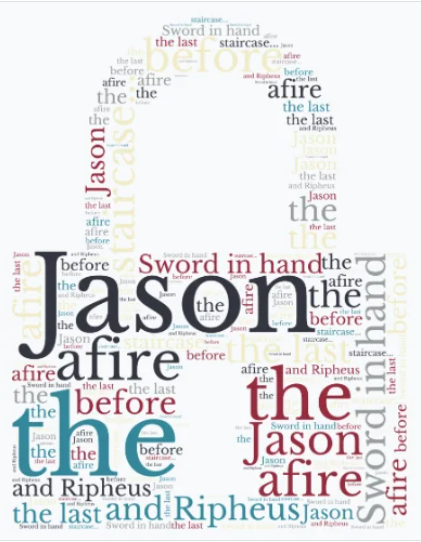
-
The back cover of HoA says, IIRC, that Ruin "was promised the right" to destroy the world. Conventionalism about promissory obligations has it that all promises/oaths/etc.* are established on the basis of practical agreement theory. EDIT: I think the ur-agreement was not automatically Physically/Cognitively charged by Honor, or even Honor's precursor component inside Adonalsium's nature, but I think as a Spiritual matter, it left a specific opening for later violation of the Scadrian pact to become compounded in terms of its detriment to Ati's Spiritual integrity. Like, he participated in two broken agreements, and this fact Spiritually corrupted him in some special way (even though the secondary violation wasn't his fault). Then the whole plan was seriously flawed and Adonalsium should not have been Shattered, the Vessels did something infinitely evil in killing their god, the production of the Shards was an evil act, so the existence of the Shards is itself an evil to be vanquished, maybe. *EDIT 2: my working theory about the different words "promise," "oath," "vow," "pledge," etc. is that, waiving some being synonyms, we can define their distinctiveness in terms of political or (better) aretaic "rank": A promise simpliciter is a promise made to a political or moral equal. An oath is a promise made to someone of higher rank. A pledge is a promise made to someone of lower rank. A vow is a promise made to someone of incommensurable/incomparable rank. &c. (and none of the above is absolutely fixed as far as mere word usage goes; the main thing is just to assign the distinctions in terms of some different words, but if you feel like, it's fine to say that e.g. a vow is made to someone of equal rank, etc.).
