Pagerunner
-
Posts
2193 -
Joined
-
Last visited
-
Days Won
9
Content Type
Profiles
News
Forums
Blogs
Gallery
Events
Everything posted by Pagerunner
-
I agree with your interpretation of "one of the Shards," because any given subatomic particle only has a tie to one of the Shards in the first place. Which is also how Ironeyes worded it a little earlier in his report. The only problem with only having mundane elements as reaction products is that there's nothing terribly interesting about either of them. Andy92's ideas are cool, especially about the superoxides, but they couldn't be produced by this reaction, which is a very well-understood one. If there's something interesting, and important for the future of Scadrial, I think there needs to be some sort of Investiture left behind. If not in the cesium, then in some of the hydrogen. And it fits very well with my suggestion that harmonium has extra Ruin, in the form of the lone valence electron; every single reaction would be transferring that Ruin electron, which would escape the decay that occurs in the rest of the atom. As to what it would look like for Ruinous Hydrogen to exist... where do the mists go during the day? They're the physical embodiment of a Shard, as well, just in a different form. I suggested in my first post that this extra Ruin working its way into the environment could turn the very planet against the inhabitants. Maybe it makes the Mists more violent. Maybe it has a broader effect, not as chemically-based per se; but as this Ruinous Hydrogen makes its way across Scadrial, the soul of the planet begins to align with Ruin. So, to put it a little more bluntly: there are only two things produced by the reaction of cesium with water, cesium hydroxide and hydrogen. The hydroxide isn't interesting. Either the hydrogen is interesting, or there's a physical manifestation of Investiture that doesn't manifest like a god metal does by affixing to subatomic particles. (Investitronium?)
-
Creating the Southern Scadrians' Medallions
Pagerunner replied to Argent's topic in Cosmere Discussion
Okay... why is this relevant? (Not being snarky here. I'm just a little confused what that has to do with my proposal, which doesn't involve any 'charges.') I think it actually supports my interpretation, since you can store abilities directly as abilities, and not need to convert them into a charge. Okay, I can see how that assumption would lead to harmonium replicating a very similar functionality to F.Nicrosil, but useable by anyone. I think I figured out why this idea isn't sitting right with me. I've assumed that primer cubes function by resonating with the bronze pulses created by a nearby metalborn, which is why they don't need direct contact with that metalborn. Humans, however, don't resonate with bronze pulses. I know we can still make the case that harmonium mimics the soul-infusing Investiture of whatever it was last exposed to, but without direct contact, I don't think it can latch onto someone's spiritweb. So, that would mean you'd need them to touch harmonium, and exposed harmonium would cause problems when you start to sweat, etc. That being said, it's my understanding. I haven't codified it, but that's really the seat of why I disagree. I can present an thoroughly developed alternative, which is all well and good, but if I were to speak against this theory itself, I'd say that interactions with bronze pulses have always been passive, where this proposed mechanism appears to be an active use of them. -
Creating the Southern Scadrians' Medallions
Pagerunner replied to Argent's topic in Cosmere Discussion
Bingo. -
Creating the Southern Scadrians' Medallions
Pagerunner replied to Argent's topic in Cosmere Discussion
For the first point, I'm actually saying the complete opposite: a Feruchemical ability is required both to convert an attribute to Investiture, and convert Investiture into an attribute. As Investiture, it is naturally unusable by anyone, even if they can come into contact with it (like Vin with Sazed's metalminds, or Wax with the unkeyed goldmind ). Nicrosil is the key exception; since abilities stored in it are already in the form of Investiture, there is no conversion. As I've thought more on the subject, I've realized something: I don't think the Investiture is coming out of a nicrosilmind when it is used in medallions. I don't think it's truly 'tapping' Nicrosil. I think that, as they touch the medallion in the Physical Realm, the Investiture contacts their spiritweb in the Spiritual Realm. It's not permanently attached to them, like in Hemalurgy, but as long as it is temporarily affixed the Investiture will still perform its function of allowing them to use the ability granted by the particular kind of Investiture. That's the 'hack' for letting you use sDNA for an ability you don't have; you literally store that sDNA in a Feruchemical Flash Drive (great band name, by the way), which can be run from the flash drive as long as it's plugged in to your computer. I've been waffling on some of the specifics of Nicrosil Feruchemy (whether it's copper-like storage, or if you put a time-dependent level of ability in). I personally suspected it was a copper-like effect at first, but I was thrown for a loop in how someone would be able to use Nicrosil Feruchemy to store Nicrosil Feruchemy. Can you clarify what you mean by Ability vs Charge? -
It was specifically not asked at one point on the AU tour. It looks like a follow-up was attempted on the last stop on said tour, but didn't get confirmation on this idea. Incidentally, how's the search going for that Windrunner-in-Oathringer WoB I'm pretty sure doesn't exist? Any luck?
-
Yeah, I just addressed this in another thread. I'm hammering out some specifics, and I was gonna make a big Update Post once I've gotten a look at the transcripts. But, first pass idea, I think it's an excellent point. If there's no nuclear reaction, then that pretty severely limits our possibilities on what could be left behind that's interesting. I think it's the hydrogen gas that gains a Ruin aspect.
-
About the residue. The harmonium reaction with water doesn't cause nuclear fission - it's entirely chemical in nature, and there's also a release of Investiture tied to subatomic particles that produces energy and makes the reaction more violent. Lerasium and atium aren't alkali metals, so there would need to be a nuclear reaction occurring to produce them from Harmonium. If it is just the electrons that are Invested (the nucleus itself might be too unstable if protons and neutrons had additional repulsion), then the transfer of an Invested electron from a harmonium atom to a hydrogen ion is probably the place to begin our search. The Investiture structure (not the atom itself) of harmonium could be destabilized, since it doesn't match an allowed configuration (harmonium, atium, or lerasium), and all that Investiture is released as energy, leaving behind a regular cesium ion. But, when we look at the electron that was transferred, it will be sitting there all alone as a Hydrogen radical. Let's assume that's an allowable Investiture structure. These radicals can interact with everything else in the reaction environment - cesium ions, water, hydroxide ions, you name it, and in most cases the resulting molecule wouldn't be legal for being Invested, and the additional energy of this final electron would be released through Investiture decay. But, when two radicals interact with one another, they would form a hydrogen molecule, H2, with two Invested electrons. If that's a legal conformation, then there would be small amounts produced in every reaction. (It wouldn't be every molecule of hydrogen produced in this reaction, it all depends on the specific reaction pathway that is used to produce H2. Radicals are extremely reactive, so most of them will probably interact with a water molecule before they encounter another radical.) So, from a chemistry point of view, putting cesium in water will get you cesium hydroxide and hydrogen gas. Nothing else is possible without a nuclear reaction. If the hydroxide isn't Invested, that only leaves the gas. If harmonium is unbalanced towards Ruin (as I suspect it to be), then the reaction with water would release small amounts of Ruinous Hydrogen, also known as Ruin's Mists. Oh, the humanity!
-
Huh, I interpreted it the other way entirely. "Out of Honor" means "from Honor," not "in opposition to Honor." The Inkspren reflect a portion of Honor's Intent, which is in agreement with scholars and soldiers who are careful and think before they do anything. I tie my interpretation of Honor's overall Intent to dependability, to keeping promises and oaths. And planning ahead is essential, so you don't promise something you can't deliver.
-
Very nice, and good job on the nuclear info. Did you manage to get an actual RAFO card in the end? And, since you're asking for questions... Did you get a confirmation that harmonium shares an atomic structure with cesium? Do we know which subatomic particles are Invested (all electrons, some electrons, electrons and protons)? Did we confirm that lerasium and atium are similarly comprised of Invested subatomic particles? The nuclear part... I'll think on that for a bit, and then I'll get back to you on that.
-
It's from Edgedancer, he's been signing everyone's copies of AU with it.
-
You rock. Post specifics as soon as you can - the suspense is killing me!
-
Creating the Southern Scadrians' Medallions
Pagerunner replied to Argent's topic in Cosmere Discussion
A lot of review in this post (which is good; discussion has been all over the place over the past year), but if I correctly understand what is novel in this proposal, you're saying: The medallions all need harmonium to function. Harmonium, which holds an 'imprint' of Metallic Arts when used in primer cubes, needs to hold a permanent imprint of Nicrosil Feruchemy in the medallions. Touching the harmonium allows anyone to 'trigger' the imprint, letting them tap nicrosil and use abilities stored in the medallion. Do I understand that correctly? It seems to me that adding a middleman in the form of harmonium muddles who it is that's actually doing the feruchemy. With the primer cubes, the cube is performing the Allomancy. If the harmonium is performing the Feruchemy, then how is it granting abilities to someone else using an internal magic? If it's transferring the particular ability to tap Feruchemical Nicrosil, a reverse resonance of a sort, then it sounds a lot like regular Nicrosil Feruchemy, storing a particular ability and letting someone use it later. Here's the Realmatic question that guides my understanding of this missing medallion link. How do you gain a magical ability in the cosmere? In every single instance, you need a piece of Investiture grafted to your soul. Investiture isn't just energy, but Spiritual substance that suffuses a magic user's Spiritweb. (Cracks in the soul, and all that.) For every other Feruchemical ability, there are two 'flavors' of Investiture involved. There is the piece of Investiture latched on to the user's soul, that allows them to be a Feruchemist. And then, there is whatever attribute is being stored, which is converted from something (matter, energy, cognition) into Investiture, which is stored in a metalmind. The conversion of Investiture back into an attribute requires the proper Feruchemical ability. (Tangent to support this interpretation: compounding works by drawing Investiture directly from Preservation and converting it to the desired attribute.) However, when you're storing in Nicrosil, you're storing Investiture already. There's no conversion required. And that's why I think anyone can tap it; because the sDNA for tapping is being stored directly as such, the sDNA for tapping, because sDNA is comprised of Investiture. When you come into contact with most metalminds, you might touch the Investiture stored within (Vin could feel Sazed's reserves when she swallowed one of his metalminds), but your body has no way of utilizing that Investiture in that form. But, anything stored in a nicrosilmind is already in the form required for the soul to use. Now, if you still want to fit harmonium in there, it's possible. Harmonium is a piece of Investiture, and that might be what latches onto the soul, granting F.Nicrosil every time, which then lets people tap whatever's in the nicrosilmind. I wouldn't think harmonium would be necessary in that case, though. tl;dr, I don't think the medalions grant F.Nicrosil, to allow someone to tap the mind to grant feruchemical iron. I think the only thing holding anyone back from tapping any nicrosilmind is the Identity block, since Investiture stored in a nicrosilmind is already in a form compatible of interfacing with a person's spiritweb. -
Great point. I tracked it down, it's not a WoB, it's from Peter. That's gonna throw off my work, since I had assumed all Alethi Js were English Ys, and I'd only identified one potential English J.
-
I've been looking at the phoenetics of Alethi, to try to remove English influences from our Glyph translation attempts. I've got 145 words, mostly names, a few cities, some Alethi words and glyphs. Not audiobooks, stuff I pulled from the Coppermind, so there are some places I wasn't sure on pronunciation. I pulled out just the consonants (I don't feel confident in being able to accurately ID vowels, even if I did have audio, and they're also not relevant to our current understanding of Glyphs), to see how often each consonant occurred. Notable: Alethi doesn't appear to have a "Z." Less notable, there are no words that start with an "O" or a "U." These might be due to the vocabulary I used, so I'd like to do a readthrough and get a more comprehensive list. More in-depth: There are some extremely common letters, that appear in about 50 words apiece (1/3 of our entire vocabulary). These are R, L, and N. There are many relatively common letters, that appear in between 20 and 30 words (10%-20%). M, V, T, D, S, Sh, K, H, J. I also put Glottal Stops into this category, but Alethi might be like English and not give them a letter. (But if they do, that could be represented by the circle that's on words that start with a vowel.) There are many letters that appear in very few words. There are many names of bridgemen, lots of Darkeyes, that have some of these unusual letters; and if they're from Kaladin's history, then there may be foreign influence in the names (since most of the Sadeas and Aladar princedoms weren't part of Alethela, but actually Rishir in the Silver Kingdoms era.) These letters are P, F, Th, G, Ng, Kh, W, X, and Y. (Although, X is an affricative, a combination of K and S. It doesn't really need its own letter.) There are a couple of Engish letters that I don't think are in Alethi at all. Z is the obvious one, that appears in no Alethi words. There's no soft Th like in the word "there" (Which I'll call Thh, and silently cringe at this terrible convention I'm creating), at least none that feel natural to me. (Which is really odd, since that means that V is the only confirmed voiced fricative in Alethi.) There may be one instance of a normal English J (remember, the Alethi J is pronounced more like an English Y), in the name of Agil, but that might also be a hard G. There's only one Ch, from Chanarach, so I think that might actually be a Kh in Alethi, and the Herald herself has a 'foreign' name. (Same way Jacques Cousteau begins with a letter we don't usually have in English. But we don't revere him anywhere near as much as the Alethi do the Heralds, probably. Not judging, whatever floats your boat.) Incidentally, I don't think that letter, which I'll call Zh, appears in Alethi either. Also, Ch and J are also affricatives, combinations of other letters (T-Sh and D-Zh, respectively). I'm not feeling too confident about my proposition that the Kholin "N" wasn't actually an "N" but an "Ng." There is one in Alethi, but only one that I found, in Inkima. And that might be pronounced differenty. I won't throw my idea out yet, but I'll be looking for it in Oathbringer. The only confirmed "W" is in Wistiow, and there's a Hallaw who I think ends in a vowel, not a consonant. But, like the Ng, it's in a Lighteyes name. I'm really confused about how the Alethi J and Y work. There are quite a few Alethi J's, which we know are pronounced like an English Y. But there's also an Alethi Y, from former highprince Yenev. And then there are some other places I might expect to hear an English Y sound that don't have a consonant written (like Ialai), that might have a separate consonant. If I personally were designing the language, knowing that Kh is a letter, I'd use a voiced version and call it a Gh, which is what Jasnah would start with. Ialai would have a Y, and Yenev would have an Ng (which would let me finagle that Ng into the Alethi alphabet a little more). Wow. This is actually really difficult to discuss, I'm having a hard time talking about Alethi consonants, English consonants, and IPA consonants. I'll try to put together a phoenetic reference table at some point, confirmed and suspected. Would anyone understand if I started throwing around IPA symbols and terms? EDIT: So, I kinda forgot to conclude anything. The numbers are nice, but why should we care, and why is this relevant to Glyphs? The English alphabet has 21 consonants, while the English language has 26 consonants, with the remaining five (Th, Th, Sh, Ch, Ng) represented by letter combinations. The Alethi alphabet appears to have 20 consonants. I can clearly identify 12 consonants that frequently appear in the Alethi language, and if I exclude X and W (which don't correspond to Alethi letters on Harakeke's transliteration guide), then there are 7 more that appear less frequently. If we assume that Z is actually an Alethi consonant, then identifying the phoenetics of the Alethi letters might give insight into patterns for glyph letter development. (I'd expect K, T, and P to all share some characteristics as unvoiced stops, as well as K, G, Kh, and J as velar consonants.)
-
Hoid has more unkeyed metalminds!!! (new WoB)
Pagerunner replied to Steeldancer's topic in Cosmere Discussion
Yeah, but let's make sure we clearly state our assumptions. My point was less about when Hoid had what, but when the medallion technology was discovered. Do we think that Sovereign was the first to come up with it? Or is it possible that he just rediscovered something from early in Scadrial's history? If harmonium is the eponymous Lost Metal, then maybe there are other aspects of the Metallic Arts that have also been lost to time, only slowly being rediscovered. -
You should definitely give him a slice if you get the chance.
-
Hoid has more unkeyed metalminds!!! (new WoB)
Pagerunner replied to Steeldancer's topic in Cosmere Discussion
Do we know that for sure? -
Hoid has more unkeyed metalminds!!! (new WoB)
Pagerunner replied to Steeldancer's topic in Cosmere Discussion
Classic Hoid. I bet it's F.Chromium, for Fortune. -
Bring a box of fish sticks and ask him to sign it. I hear he loves fish sticks.
-
See here. Looks like it needs to be exact.
-
Dude, we haven't even met Ishar yet. In all seriousness, the spren imitated what Honor did with the Heralds. Honorspren, who are attracted to people like Jezrien, grant the same powers. The second Bondsmith oath says to unite instead of divide. Here's my interpretation: that's big-picture leadership, not just "I will be in charge." Windrunners lead from the front. Bondsmiths lead from behind.
-
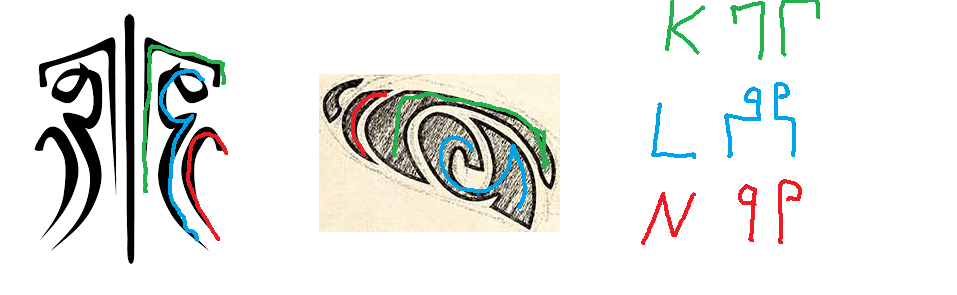
I hunted down something over my lunch break that had been tickling the back of my mind: The prominent first letter in Kholin might not be the Alethi unvoiced velar stop {K}, but the unvoiced velar fricative, {CH}. (Which is not pronounced like chapel, but is a sound I don't think we have anywhere in English. It's basically saying a "Y" without vibrating your vocal chords.) (Also, I had previously identified this consonant family as uvular. I've revised that opinion, I had them too far down in the throat.) This gets a little more into the phoenetics of Alethi. I've wondered how the Alethi Y works when the Alethi J fills in for the English Y, like in Jasnah. It's possible that the Alethi Y corresponds to the English NG, the velar nasal, which doesn't have its own symbol but actually appears quite frequently in the English language. (Side note, if you say "uh oh", there's a consonant called a 'glottal stop' that you say twice, but isn't written at all. I'm not saying the Alethi have a glottal stop, it's just one of the easiest ways to illustrate how a consonant that doesn't have a letter looks.) If the velar nasal were actually the last letter of Roion, Kholin, etc, then it could explain the difference in N's between nahn and kholin - they're actually different letters! A more strict transliteration of Dalinar's surname might be Choling, but that would actually be farther away from the actual name when pronounced in English. So, we see it written as Kholin. It would mean we have three different ways of seeing the Alethi language in the text: Navani's notebook, English -> Alethi Transliteration Names in text, Alethi -> English Transliteration Glyphs, Alethi -> Alethi Alphabet We can learn about the Alethi language from transliterations to and from English, but there might be letters that are dealt with differently in each method, like CH or NG. Again, typical work-in-progress disclaimer. There are some very clear patterns in the Women's Script letters that get thrown for some very unusual loops that I'm trying to address with this glyph investigation, as well. (I can accept that we've rolled labial and labio-dental into the same family, but why on earth isn't N with the T/D family! All three have the same tongue placement!)
-
Why settle for silver, Brandon?
Pagerunner replied to Fedcomic's topic in General Brandon Discussion
You don't understand. He's not writing fiction; he's writing history. He actually needs to visit these places, watch the stories as they happen, and then distribute them to us as if he came up with them himself. But, as we've seen, some places are extremely dangerous. He needs protection, he has to make sure he makes it back alive to Earth, to our Earth. He has recently told us he plans on writing a full novel set on Threnody... but to last long enough to get that much info on Threnody, he'll need to be there a while. So, he's collecting every second-place award he can. For the silver. To fight off the Shades. It's the same reason he collects swords, to power his Allomancy and Feruchemy. -
But doesn't that fit with what Isaac said, that glyphs aren't read, but memorized? In many cases, they're in order, but they don't have to be when they would ruin the aesthetics (like overwriting slave brands). Also, are if there are no letters that are mirror images of one another, then there's no reason the 'right' side of one glyph couldn't be the 'left' of another. Another avenue I'm checking. It's there in Sebarial's glyph, and in the outermost letter of Jofwu's Unknown 2 (which I've tentatively ID'd as Thanadal, especially since it has a small curve that looks like the other highprince N's), and in the outermost letter of Vamah. My hypothesis is that nasal consonants (the third in each set of five you present in Women's Script) have a loop or at least a curved line that can be dramatized as a loop. (Incidentally, it looks like you've swapped the positions of L and R on your glyph letter guide.) Hard to verify without a Y (which really should sound like an NG, shouldn't it?) EDIT: Some more thoughts on the drive in to work this morning. First, leftmost line in swirly Kholin is the 'centerline,' which I think signifies the glyph belongs to a person or family. Second, just a quick glimpse into my overall letter identification method. Assume order is irrelevant. Assume orientation is irrelevant. It's just that certain shapes must be present in the glyphs depending on the letters in the word. Assume there will be patterns in letter shapes, similar to the Women's Script patterns. That means I'm looking for specific identifiers, like both certainly-known glyph with a circle (Aladar, Gesheh) also have a voiced stop. Maybe the voiced stops all have curls at the bottom of the letters, so Unknown 1 has two big circles on each side because it's Bethab. Sadeas would have an 'upside-down' And maybe the nasals all have clockwise curls at the top, and all curls at the bottom are counterclockwise. It's a very iterative process, so I'll avoid going too in-depth into the justification for my letters right now. (Also, I need to do some actual work today...) I was more concerned with the order question, with regards to the Kholin glyphs.
-
Hey, how fast and loose can we play with order? Been looking at the Highprince glyphs some more, and it looks like the swirly Kholin and the straight Kholin have the same letters, in different orders. (I'm trying to build my own glyph alphabet from scratch, rather than start with the Thaylen letters, so right now I've got some quite different than Harakeke. It's still in progress, so don't get distracted. Regardless of how the letters may have been enhanced or simplified from their 'true' forms, they are undoubtedly the same letters in both forms of the Kholin glyph.) So, my takeaway, is that Jofwu's theoretical Roshar glyph might be fine with both R's next to each other, even though there are two in the word.