



industrialistDragon
-
Posts
580 -
Joined
-
Last visited
Content Type
Profiles
News
Forums
Blogs
Gallery
Events
Everything posted by industrialistDragon
-
 I have no idea what you're talking about! 0:)
-
Yes, modern "metallic" threads are usually some kind of plastic or artificial metallic color wrapped around or dyed into a fiber core. Up sides include (as you noted) extremely light weight and drastically lower chance of tarnishing.
-
lol, Well... actually... So, two things: One, it doesn't take a ton of weight to affect the drape of a skirt, and two this is not sewing, really, it's embroidery. Goldwork has a really long and interesting history! I never got too into the hand arts like embroidery and the like, but the threads used for goldwork, historically were real metal wires. Depending on the amount of money you had (goldwork has always started at expensive and climbed from there), the threads used would be various thicknesses of solid wire, wire coiled into a tight spring, foil or flat wire wrapped around a core, or base metal with a thin layer of gold plated onto it somehow. Mostly, the gold wires were couched onto the base fabric with a different type of thread (silk is common, iirc). Often there were raised shapes of felt or batting that the gold was worked over, giving the embroideries depth and a sculptural appearance. Then there's the beads and sparklies which would also go along with goldwork. These would be made out of solid metal or glass (or painted wood or bone or horn or clay, etc for the less well-off), and you can see how it would start to add up! So while it might not be considered heavy in general, say, when measured against, like, bowling balls or something, a band of embroidery around the hem of a skirt (especially if it's intended as a weight, and was constructed with that in mind) could affect the way the skirt hangs such that the skirt is less likely to swirl around with movement. The sheer number of stitches involved in embroidery has a stiffening effect in most cases, as well. Embroidery alone won't make it hang perfectly immobile and never moving, but iirc, the goldwork functioning as it was as-written was believable to me. And of course, a few links: a brief history of goldwork from the Goldwork Guild: http://www.thegoldworkguild.com/history/ A blog post about restoring some more modern goldwork: https://www.needlenthread.com/2013/02/deconstructing-goldwork-embroidery-part-i.html Wiki: https://en.wikipedia.org/wiki/Goldwork_(embroidery)
-
Over all: I'm with the others that the introduction of even more supernatural elements is muddying the plot. I don't mind that there's ghosts and [something], but I feel like adding in the aliens==ancient gods conspiracy is just too much (there's also some, er, bias issues around that whole new-age/conspiracy thing whatever-you-want-to-call-it). The vampires getting another shout-out I feel like is also unnecessary if vampires aren't in this book. If they exist in-world, it's fine to mention them, but I think the focus on this story should stay with the ghosts as much as possible. As I go: Pages 1-4 were really good about having kid-logic and kid reasoning, but around pg5 the story starts to slip back into adult reasoning patterns. The rest of this chapter wobbles in and out. So sage! Sage has metaphysical uses in a couple forms. Raw, on its own, it's thought to have a purifying or cleansing ability, like chewing on a little or rubbing a leaf between your fingers and using the aroma it releases. Under the pillow it's thought to have an ability to ward off (purify) bad dreams. It's not as much protection as some other things though. But I'm guessing you're more likely thinking about smudging with sage here. Smudging, in the non-native, hippie-metaphysical context, is again a purification and cleansing process, where the sage (possibly along with other cleansing herbs) is burned to release smoke and that smoke is what's thought to have the metaphysical properties, like an incense. Like most metaphysical things, there's no real attack power or aggression associated with it. it's purification and cleansing. It's not one of the dispelling processes. It sounded weird to me to have the psychic girl saying sage could stun ghosts, because that's a lot more aggressive than really what sage is thought to do. it's like saying washing with soap kills stains. Using soap with water makes simple stains more likely to get washed away by the water, but it neither kills them, nor is effective against stubborn stains. You need a specialized, strong detergent for stubborn stains and what that detergent is depends on the stain, etc. Sage smudging sort of washes away negative energy, but it's not gonna do diddly for an angry, stubborn presence. There's a host of other, more insistent things you can do with a stubborn presence.... Anyway. Moving on. Oh hey, agate! Agate is an umbrella term for a whole bunch of different types of quartz-containing rocks... and y'know what? It doesn't matter. I had a whole big thing written here and it's just one line. It's not that big a deal. I get too into the weeds sometimes. Just add "black" or "dark colored" to the front of it, and you'll be good. Almost all the serious-business protection rocks are dark colored. (agate by itself is just too general a term for metaphysical stuff. It needs a qualifier) There's some good stuff in this chapter, but I feel like it could be streamlined some. It felt like it wandered. I agree that the dog has a lot of screentime, but I was hoping it would be pivotal in the final confrontation and therefore earn it's on-page presence. It still seems a little superfluous at the moment though.
-
Robinski - 190806 - TCC Chapter 05 - 4273 words (L)
industrialistDragon replied to Robinski's topic in Reading Excuses
Over all: A little slow to get started, but the action was good. I'm seriously confused about what and who I'm supposed to already know. Was something cut? As I go: I am having some serious WRS with the beginning of this sub. I have forgotten what's going on and why Q is sore, and it felt like I was missing a bit of ... something for about two pages. Did this get cut a lot? It felt choppy, but that might be the fact that I can't remember what this chapter connects back to. Why is he being questioned by police again? Did I just forget I read like half a chapter? I like the dialogue around breakfast, but I still feel like I'm missing something. ... Something like... argh.. something to connect this chapter back to the rest? I don't know. I feel like I've opened a book to the middle and don't know the context of what I'm reading. This section also makes me think Q is being a little coy with the readers, almost, for the way he dodges around without answering very much. I know he's being uncomfortable with M's line of questions, but I almost feel like the lack-of-information is directed at me. I don't know.. Maybe the evasion is running a little long? Or maybe i'm still trying to re-remember where this-all fits in with the rest. And then it goes into 3 pages of pretty straightforward travel recitation. I don't mind some, and the bucolic quality does make M's lines near the end pop really well... but 3 pages feels like a lot, especially with the rest of this chapter in the mix before it. We're down on page 11 before the action of the chapter even starts to get going. it's good action, and I want to get to it sooner! The truck ride is great. I'm a little unclear why they switched vehicles, but the ride itself is just a hoot. K... the K cop... Am I supposed to know him? The story is acting like I've seen him before and I think this is the first mention.... Oh! Was there a section last time with them being questioned and it's not in here at all anymore I don't think? Okay, I think what I'm picking up on then is artifacts linking back to that part that's not there anymore. Maybe? This section is acting like we already knew and met K-cop prior to this, and there are bits and pieces referencing things that I can't recall at all in this version (Q self-diagnosing the muscle soreness, mentioning the questioning), so that would totally explain my lost and disconnected feeling if there's a section that got the axe but wasn't scrubbed out of this current part. -
Junk Junction Ch. 3 & 4_July 29 2019_(4628 words)
industrialistDragon replied to shatteredsmooth's topic in Reading Excuses
Overall, I like how practical E is, but I feel like they should maybe be agonizing over some of these choices more. E is prioritizing and reacting very much like an adult, and I think a kid would get to the same places eventually, but be worried about and act on different things. As i go: "had a good rack on the back, but no basket" -- Milk crates and bungee cords! There has to be a milk crate or a wire or wooden box or something that E can strap to the back. A front-type bike basket would not be great on a back rack, I don't think. I used a plastic milk crate and 3 bungee cords to haul a ton of stuff around on my bicycle before I upgraded to an actual back-of-the-bike bag... I think the thing that stands out here from this is the very adult way E is prioritizing and reacting to things. I think a kid that age could do everything I've read about so far, but I think a kid would probably put different emphasis on the importance of certain things. Since E keeps prioritizing and acting like an adult, I don't feel a lot of tension here. The situation would be scary for an adult, but not overwhelming and I feel like even a kid used to operating more solo would be at about the end of their ability to cope here. Like the first part, i'm also seeing some vocab and terms of art, especially around the pronouns and such that don't seem to fit quite right in the mouth of a kid. I definitely think a kid can be having those kinds of thoughts and worries, but I'm not sure if the language is quite right for a kid. I will also say, that having worked in a public library, that unattended minors that just roll in on their own are SUPER suspect. Libraries are not free daycare, and it's something librarians struggle with constantly. With no one to ride herd on them, the unattended kids also tend to be very destructive and disruptive. You also get some nice quiet ones like E, but there's no way for this librarian to know which one E is when E comes in. I'd expect someone to be watching E pretty closely, especially at the beginning, even if no one confronts E directly. Sort of like <pointedly shelving books with a direct line-of-sight to E> or <deciding to do a walking circuit of the building every hour or so that just happens to pass by where E is sitting> or something. Once E proves to be quiet, it'll lighten up, but if E is staying close to closing, someone's going to start checking up on them again, and more frequently as closing nears. Plus there's the dog. Legally, the only thing you can ask is "is that a service animal," and then you have to wait for the animal to damage something or cause a disturbance before you can toss it out, but you'd better believe that animal is being tracked by staff the entire time it's there. As with kids, dogs that prove to be quiet aren't watched as closely, generally. I've definitely given my fair share of stink eyes to "service animals" that clearly aren't. I was a little surprised E didn't get a librarian glare for that at least. I'm kind of surprised in general at the amount of freedom E has moving around this town. It's been my experience that young kids alone get hassled by well-meaning adults to find their parents pretty regularly. Yet E sails through the library, buying and picking up a pizza, eating it on the street in public, and standing in front of the psychic's building with barely any problems. I feel like there's a missed opportunity for kid-tension here. Generally, I think a lot of the "stalled" problems will work out if we get to feel more of the kid-tension and kid-emotions in this story. right now, I feel like there's a lot of adult energy coming off of things, and as an adult, a situation like that is scary, but not particularly tense or difficult. -
Robinski - 190728 - TCC Chapter 04 - 4948 words (LVG)
industrialistDragon replied to Robinski's topic in Reading Excuses
Sorry this is a little scattered. It's like I'm planning for a trip across the ocean or something! 5-minutes -- It's an odd little time jump, but it didn't bother me too much and I followed it fairly easily. I don't think leaving it as-is would be too bad. T's reaction is ... like @kais said I feel like there's a lot of melodrama going on here. It feels especially at odds with the controlled and ruthlessly pragmatic way T was behaving in the last part. It really felt to me like last time, that T had already considered this possibility, that she'd be caught somehow, because she was ruthless and pragmatic like that. It feels odd to open with her being a crying mess and unable to get a hold of herself, and seriously contemplating suicide. (especially with M, in front of whom she last time didn't want to express any emotion at all.) A little bit of panic, yes, but someone who can separate their emotions from their desire enough to apparently use sex to manipulate multiple people for career advancement to just fall apart over getting discovered? And this has never happened before, she has never thought of what would happen if she was caught in one of her assignations? I am having a hard time believing. I want emotion and reactions, yes, but not necessarily more drama, if that makes sense? What if M discovered the other lady, maybe? The one with political power? Ehh, even then... I'm having a hard time coming up with something that would put someone like T into such a corner that capitulation was the only thing they could think of to do... Because it doesn't really feel to me like M has enough dirt on E to get her over a barrel like that. An affair with a mid-level scientist just doesn't feel that big of a deal. It's implied T's manipulated people her hole adult life, and here she is falling prey to like the most basic of blackmail? I think I want a bit more of T's plan to get back at M a little more spelled out maybe. I'm still not entirely sure how the intern's login is going to do anything other than just get the poor intern in trouble... I think I kind of agree with @Asmodemon that the T and M povs, while good, do take away from the idea that this is actually the Q and M story it's supposed to be. -
Junk Junction Ch. 3 & 4_July 29 2019_(4628 words)
industrialistDragon replied to shatteredsmooth's topic in Reading Excuses
WE does transcripts for all its podcasts. They are hosted different places, but this one is on LJ: https://wetranscripts.livejournal.com/103734.html?nojs=1 If you go to the WE webpage and look down the lefthand column, to the very bottom of the season listings, there's a link to transcripts.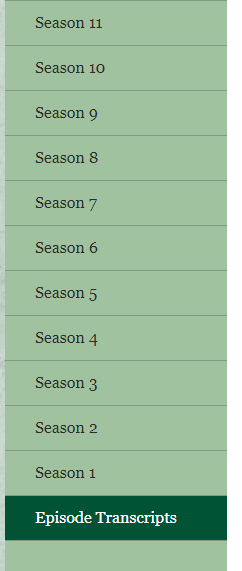
-
This isn't the same story as the one with the princess with the demon/anger management issues, is it? Who was in the carriage and obsessing over how much she wanted a baby while at the same time obsessing over how bad a mother she'd be? Princess, anger issues, lady-in-waiting, possible matriarchal society yet somehow with the same old strictures of the patriarchy just given the rule 63 treatment... anyway. I was a little confused at the beginning, trying to remember, but I like this princess much better than the other one so it doesn't matter that much. On the up side, this is well written, and I don't see anything on-the-face problematic, or even prominent-but-worrying like the other one. I immediately get a sense of the character of the POV princess, which is a big improvement over the angel-skeleton-apocalypse prologue-thing. It has a wealth of descriptive information about the places and things around the characters, which I appreciate. It is a little slow to get going. I don't mind a slow open, and not everything needs blood and thunder to get started, but I feel like the opening scenes could be slimmed down some. No less description, just maybe condensed a little bit. It almost felt like two chapters, before the town and after. The down side is that the not great things I did see going on in this are complex and somewhat difficult to articulate. I'll give it a shot though. The entire piece is heavily gendered, in ways both large and small. Some of it is I think intentional, but much of it feels unintentional. It reads to me like a checklist of gendered stereotypes and low-hanging fruit choices. More specifically: Women described in opposition to each other -- It's great that the two lead characters introduced so far are women, and that they are different from each other. I do get a sense of their personalities, but the way the text describes them almost always pits one against the other. It's not outright stated that the princess "is not like other girls," but she is very much treated that way, with her more traditionally feminine lady-in-waiting being used as a foil to show how much the princess doesn't care about clothes and being a "proper" lady. Again, it's not directly stated that caring about fashion and social norms is bad or worse-than, but then again, it doesn't have to be. By constantly comparing the two women characters, we don't see their friendship, we just see the text treating them like opposing sides on a sports match. "deep, breathy voice" // "slim, youthful beauty" -- I'm sorry, but this is such a male way of describing someone. It feels no little bit objectifying, and moreover, it's very distancing, generic language. It doesn't sound like something the protagonist would say, and it doesn't convey much information about the person being described (that couldn't be summed up with the single word "nubile" and just... it really made me cringe). I don't know if I've ever described a friend in that manner, even when they were 10 years younger and much more attractive than me. About the only saving grace here is that the description doesn't include her breasts. Moreover, what are the standards of beauty like here? Are they the same as our real world? Our modern time? For a really long time in a number of places, being fat and pale (two things modern society associates with being unhealthy or ugly) were marks of beauty, and this definitely feels like it's set in some sort of "historical" time. So is slim really beautiful here? Would she instead look underfed, and constantly having well-meaning types trying to get her to eat and be more healthy-looking? Even the equation of youth with beauty is not set in stone. So what is this description actually showing? It looks to me like it is showing the typical modern idea that "beauty" can only be young, slender, and sexually-appealing-to-men. Also, how does being conventionally pretty somehow preclude being a knight? Are singers on an equal-or-better standing with knights in this world such that becoming a squire would be seen as a step down or the less logical choice? In the kinds of historical contexts fantasies like this tend to draw from, actors, musicians, performers of any type were not well regarded, and women (when they were allowed in these professions at all) in them were often seen as socially and morally bankrupt. Is this world different? If it is, I would very much like to see more of those differences! It is really peculiar that it's the "not like other girls" warrior-princess who bucks social norms saying these things and describing people in this way. And again, this is more oppositional language. It's pitting being conventionally pretty against being a knight, all while in the context of one friend supposedly neutrally describing the other. Old saws and stereotypes -- it seems like the text never misses an opportunity to make a reference to the sort of gendered role distinctions that I'd expect from outdated newspaper cartoons like the Lockhorns or Andy Capp. "men who sat slumped despondently next to shops while their wives ... did business" -- "Men endure women shopping" is just as outdated now as it was 70 years ago. I can tell there's been a concerted effort to do more to set the scene, and I appreciate it and I have a much better idea of what's happening around the characters, but again, this is more oppositional and adversarial than I think is intended. It's pitting wives against husbands and making broad generalizations about both genders, that, again, has them on opposite sides of some kind of weird nonexistent conflict. Why aren't the men doing something else if they don't want to be around the women's work? What is keeping them waiting? Why do they have to be there at all, if this is a matriarchal society, where I would presume women don't need male escorts to be out in pubic? "hardly what one would describe as heavy" -- Would it matter if she was? Heavy people can be leaders and main characters and be so emotionally overwhelmed they need to sit down, too. "Main characters can't be fat" is a stereotype that's as insidious as it is ridiculous. It's also outdated, and this aside is, again, weirdly defensive and out-of-POV. Did something happen as she was walking into the room that made her self-conscious about her weight? Wood squeaks no matter who sits on it, and honestly, i didn't take her for someone who was so sensitive about her appearance that furniture making noise would make her defensive. "her middle-aged beauty" // "ordinarily a lovely woman" -- Leading with how pretty these powerful, intelligent, leaders of the realm are (and conspicuously NOT mentioning how beautiful the eldest woman is) does not do much to convey the importance of their power or intelligence. it does play right into the tired old stereotype of women being first and foremost valued for their beauty, though. They come off more as a trio of old shrews, harping on the princess. It's also a little weird for a young woman (who I assume is straight) to be constantly noting how attractive the women around her are. Also, "ordinarily lovely" in the rest of that sentence really seems to be implying "(but for the fact that she's not smiling, like all women should)" and again, I don't think that's what is intended here. Women are allowed to express their stress and unhappiness, whether or not that makes them look pretty, and even if they would be ordinarily be pretty without it. It would be nice if at least one of the interactions between any of the women here wasn't somehow combative or framed adversarially. It's tiring to be constantly seeing interactions as fights or win/lose comparisons. I feel tired reading it. Are women never allowed to just exist without judgment, even in their own heads? I will add a mention of the all-male blacksmiths. Women have always been toolmakers. Going back to the stone-age (here are some articles about women making stone tools : Science Daily, Scholarly (alternate), blacksmiths in colonial Williamsburg), women have participated in the fabrication of the tools and materials used in their society. We've just been terrible about recognizing it. The tension can still be there, but the fact that there are no women craftspeople here is one of those "men make things, women care for babies" types of stereotypes on display. The tension in that scene can still be present (women go on vacations and don't want to touch royalty, too) even if things get desegregated, but as it stands now, it just looks like low-hanging fruit. Why wouldn't women be blacksmiths? Especially if this forge produces detailed, high-quality, or decorative pieces; or conversely, if it produces high-volume things like nails? (also as an aside, women can pee in pits for leather just as well as men. It doesn't take a whole lot to make your background scene-setting characters inclusive, just a few pronouns here and there.) The matriarchy is just like the patriarchy, but with breasts -- First, thank you for putting pockets on the skirts. I appreciate that a lot. But second, as @Mandamon picked up on, there are some weird things going on here with regards to the strictures that appear to be put on women, despite the fact that this appears to be a matriarchy. Mostly, it just makes me wonder why -- why, if women are in charge and have been for a while, are things exactly the same as they under our patriarchy, but with some words swapped out? Why are they still fighting rapists in the matriarchy? Why are men objectifying women to the point where the men literally can't do their job, AND don't have the staff at hand to accommodate what appears to be an entire order of female fighters? Why are women still constricted by uncomfortable clothing dictated by a society that seems to be concerned with keeping women's horrible sexually-enticing bodies away from the innocent eyes of men? (Why aren't men dressed similarly? That's how it used to be, both sexes wearing their wealth as gaudily as possible.) It's low-hanging fruit to me, to not truly investigate how women running a society might affect the values, mores and culture of that society, and instead seeming to just take the highlight reel of Victorian ideas and gender-swap them. Research into real life matrilineal, matrifocal and egalitarian societies might give you some starting points. They don't tend to fall into the same channels as fully patriarchal societies and I think it would be really interesting to imagine something based around that instead of just using the "default, but with womankind instead of mankind." Since there's clearly a class structure in place here, the princess can still be bucking social norms in similar ways (talking to the laborers, letting them touch her royal flesh, not acting with proper class decorum, etc etc) and be wearing constricting clothing (because nobility in any age wears the weirdest, most-extra, over-the-top nonsense available), so I'm left wondering, why is this society Victorian, but with some words swapped around? Is the matriarchy a sham? Was this a recent coup? Do we have manly men off at war somewhere, leaving the womenfolk back home to govern as best they can (the poor things)?
-
So that pic (the woman in the dark blue jacket and white pants) is basically the definition of a blazer! Google's definition of the word is "a lightweight jacket, typically solid-colored, often worn as part of a uniform by members of a club, sports team, or school. " or "a plain jacket, typically dark blue, not forming part of a suit but considered appropriate for formal or semiformal wear." Merriam Webster isn't that specific, only calling it " a sports jacket often with notched collar and patch pockets" (which that blue jacket also fits) Generally, for men, a suit is an outfit where the jacket and pants are made out of the same fabric. It's the most formal. A men's blazer is a looser fit than a suit coat, doesn't have pants in the same fabric, and is less formal. There's also a least formal sport coat, but nowadays you'd likely be hard=pressed to find someone who can tell the difference between a sport coat and a blazer. Suit coats can be worn as blazers if you don't pair them with their matching pants, but you would never wear a blazer (or sport coat!) as a suit. It's a little different for women (of course it is) as "blazer" gets thrown around for just about any vaguely formal jacket of that type, and fit on women's jackets like that tend to be closer across the board, so there's no real loose/fitted distinction between a women's suit coat and a blazer. Basically, the women's style jackets were derived from the men's, but they never got formalized in their details the way the men's did. Any of the women's outfits and jackets @shatteredsmooth posted there could both be called suits... or blazers.
-
7/22/19—JWerner—Greek Confederates Ch. 4—4129—L, V, G
industrialistDragon replied to JWerner's topic in Reading Excuses
I like that we're staying with J. I don't know if I could handle more POVs this close to the beginning. That said, I'm having a hard time getting worked up about J's predicament and I definitely don't care about L. They're nice enough, but I haven't really gotten invested in either of them. The trigun lady is acting like a caricature of a villain here and that's sort of putting me off. I feel like most of the other characters are a bit more grounded than this. I like the touches of awkwardness J notices at the end, but the whip and the glasses flash and then the sword are a little too over-the-top for me. So trigun lady == White V == R by her city name? That's what I'm getting. I think. Maybe. I am still unsure why White V/R/B is necessary for this destruction. It could have been accomplished by anyone from the way it looks to me, and the mayor doesn't react to the name at all (as I thought was the plan? For White V/R/B to use her name recognition to make people call down individual bounty hunters and thereby destroy some group back in the city somewhere? I am unclear). They mayor only seems to be affected by the idea of a ton of knights descending on the town. J herself is only motivated to call a city bounty hunter because of the money she received. She's motivated by the White V name to go on a personal vendetta, which seems to me to be counterproductive to the stated goals of a couple chapters ago. (Also I am a little unclear why the destruction of a church creates this level of hatred in her.) I'm with @kais on the knights, though. Everyone says they're super scary, but we've not seen them do anything. I'm willing to go along with the "everyone says" for a while, but it's come up pretty much every chapter, as a major point, and I don't feel like there's been much to prove why they're the terror of the frontier. The one knight so far on the page has gone to lengths to be non-threatening (as I feel he should have in that scenario. Unfortunately, that doesn't do a lot for cementing the group as a whole as the worst possible boogeyman to come after a person, place, or thing.) and I'm not sure the White V/R/B's nonlethal, pinpoint, seemingly minimum-required-by-contract mayhem really does much to illustrate why the knights as a whole are so feared. So far, from what I've read, I think I have more reason to fear people who can drink magic potions or use neck batteries than I really do the knights. Are the knights feared because they're all potion-drinkers? What's to keep a fear of potion-drinkers from spilling over to non-knight practitioners? -
This is good. I like the set up. But, like the others, I agree that the inciting incident -- the adults turning into mannequins -- isn't being telegraphed quite enough. It's just one of the many supernatural things the main character is thinking and musing about, and they're all given about equal weight. With the amount of time spent on the doll, I sort of thought this was going to be a story centered on the dolls, not the mannequins. I don't know if the gender references need to be more subtle, but I think maybe they could be more in-tone with the rest of POV. I think I'd be hard-pressed to find an average 12-year-old who can toss around "cultural gender norms" in casual conversation, but I absolutely believe they would understand the concept the words convey. Maybe the phrases just need rewording to sound more 12-year-old-ish? So maybe "defy gender norms" to "mess with what everybody thought he should wear?" It's less precise, yes, but sometimes the precise words don't fit with the tone of the story, or come with extra associations that don't mesh with the world (I am thinking of @kais, and Foxfire, and "bone oil"). I like the inversion of the "evil dolls" trope, though. "In horror movies" -- there're some complicated things going on with the negative words in this sentence and it took me a couple passes to detangle it. Definitely rooting for the main character and looking forward to the next part!
-
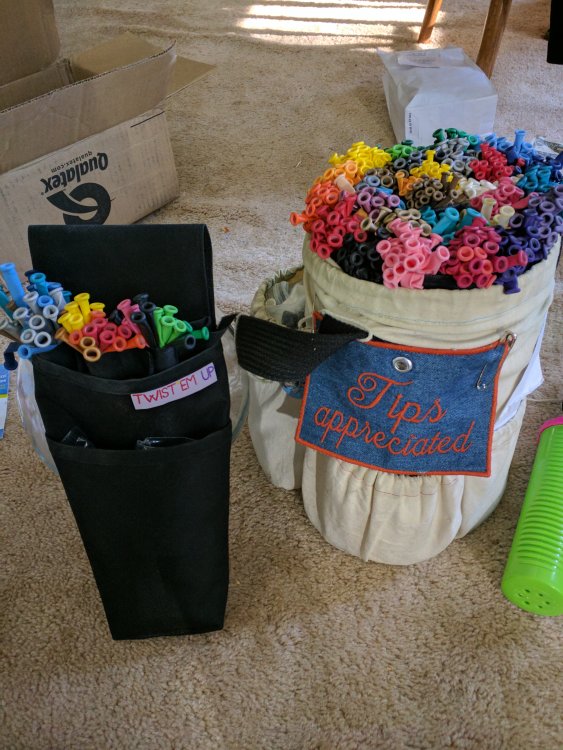
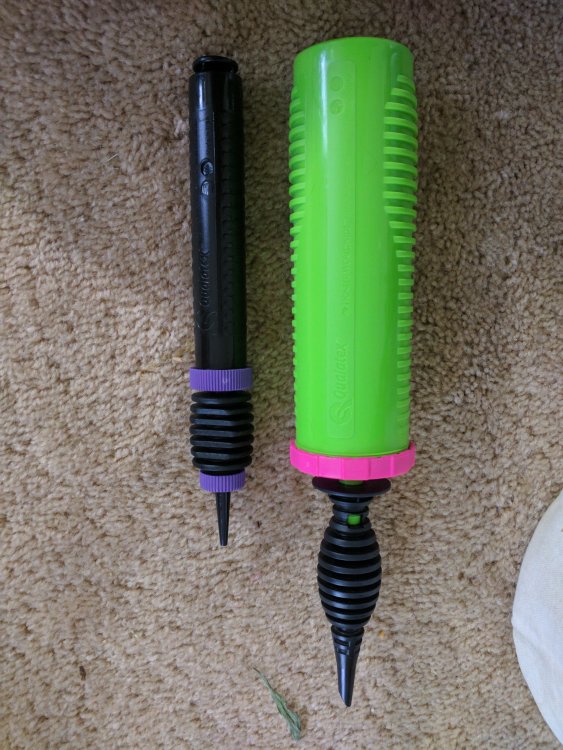
I finally got around to filling up my new travel-size balloon pocket. It's tough deciding what to put in a 3-slot pocket when you're used to having about 40 of every color the company manufactures, and that pocket pump is so tiny in comparison to my regular one... I still can't believe it's really happening. Eeeee!
-
Robinski - 190715 - TCC Chapter 03 - 4680 words (L)
industrialistDragon replied to Robinski's topic in Reading Excuses
Other than the sheer number of POVs in this section, I don't have much to critique. Mostly it's just "as I go" comments here. I feel like this section is not much changed from the first time I saw it? E reads better this time around. That's a lot of very short POVs in very fast sequence. I'm not fully against them (is the security officer's new? I can't remember) because they segue in to E's section well, but it is a lot. I am still not a fan of the politician's POV, but at least it's short and to the point. I appreciate that. Oh, I like the new nanomachine kill collar. That's quite devious and a great combination of ideas. I did notice the same line as @Ace of Hearts, but it seems very in-character to me, and it's a lot better than how this section used to be, and I feel like it's countered somewhat by E's talking of her genuine feelings for T. So, it's not great, and I'm content to let it lie, but it could probably be better. I'm just not entirely sure how you would rework it. Maybe "she decided to use her bi-ness-ality when she saw yadda yadda...?" "She decided her bi-ness-ality could be weaponized...?" ugh, I don't know. Both of those use "decide" but I hope they also show the presumption that she *is* bi, and her decision is just to use sex to get ahead... but do they work like that? Argh. It's tough. -
So, is this the same character from the first chapter? I honestly can't remember. If it is, I actually like this much better as an introductory chapter for her. There's not as an abrupt shift between this chapter and the information in R's, and R I feel like is the stronger introduction to the world than the first chapter, the contents of which I have retained next to nothing. If this is a different character, then I would caution against having 3 POVs in as many chapters right at the beginning of a book. Too many POVs at the beginning makes me feel like I'm being yanked in too many directions too quickly. I want to get settled in with a character and a setting, at least a little, before moving to something or someone completely different. I want to have enough time and story to care about the people I'm reading about and that can't happen for me when I get too many POVs thrown at me before I'm hooked into the world. I actually liked the slice-of-life sections in the beginning, they provide good characterization and setting, however, I feel like they could probably do with being shortened or condensed slightly. It feels like a lengthy setup for not much of a payout when the chapter ends so abruptly and with such a different feeling from the beginning. As-I -go: "a ball of wool the size of a human head" -- As a nerd aside, wool is a protein fiber and protein fibers are naturally flame-retardant and self-extinguishing. It takes a sustained and continuous, decently hot flame to get wool to really burn on its own. Additionally, drinking-strength whiskey is not a great accelerant, especially at room temperature. It'll provide a flash, but the flame it produces is easily extinguished and not terribly hot. So, this wool ball would likely char and smoke quite a bit only around where the alcohol is burning, but once the alcohol is gone, then it would quickly extinguish itself, quit smoking and just sit there. It definitely wouldn't be consumed by flames in the manner of an offering. It would also make the entire room smell like burned hair (and maybe rotten eggs). Wool is pungent when burned, lol. If you want a good material for burned offerings, plant-based fibers and materials are much more likely to maintain a steady consuming flame when exposed to small amounts of drinking-strength alcohol. if you want to see wool in action (I find the effect absolutely amazing), I found this really cool youtube video of a guy taking a blowtorch to a bunch of raw wool. I think it's so cool the way it just puts itself out when the torch isn't on it. Video link: https://youtu.be/Zp6v6Oa68BY The greek elements are still confusing to me. I agree with @Mandamon that the mostly-Christian church with multiple Greek gods pretty much one-for-one swapped for Christian iconography feels very odd and continues to draw me out of the story. "rests in peace in Hades’ realm" -- for instance, this is not how the Greek mythological underworld works at all -- it's using Christian imagery but with Greek mythological names swapped in, and that is off-putting to me. "Used to sell insurance" -- Trigun callout? Interesting.
-
Robinski - 190708 - TCC Chapter 02 - 4542 words (LSr)
industrialistDragon replied to Robinski's topic in Reading Excuses
I don't have a whole lot to add to this that @Mandamon and @Asmodemon haven't already. I can tell that it's improved from the last time I saw it, but the I feel like core issues I noticed about the chapter remain. The jobs not taken still sound more interesting than the one he does pick up and it is awfully convenient that the call happens when it does. I don't think the entirety of the "killing time in town" scenes need to go, because I think they add a nice bit of characterization and plot summary, however, they do go on a bit long and would probably benefit from some trimming or condensing. Sorry I don't have more here. -
This is much improved! It flows much better and I am not left wondering at so many things. Mostly, like @Mandamon, I'm still not sold on the Greek words. Is there some reason such a definitive link to the "real" world is necessary? From what I've seen, this would work just as well as an earth-analog or even a fully-secondary world. The Greek words just seem to me to add needless and confusing ambiguity to the setting. I get distracted wondering why they're there, whereas if they were made-up, I don't think I'd hang on them as much and would be better able to focus on the story. I actually enjoyed the scene with the graduate students. I thought it was a nice bit of character development and it helped cement R as a young adult, not a grizzled veteran. It might have gone on a bit long, but it was amusing and the dialogue flowed nicely. I do love awkward teenagers acting believably awkward. The fight is better, and I really appreciate the knight's introduction a lot more now. It's a lot more of R getting freaked out and overreacting and less of "let's have a random fight" and so it seems more natural to me. I also noticed they have roughly equal amounts of description, with less focus on the tiny details of their weapons, and I appreciate that too. I also like that the prof is in on it with the knight. I feel like that also helps explain the oddities still around the professors. That's not to say @Mandamon and @Robinski don't have a point though. The knight's motives for finding/hiring R are still a bit unclear, and it doesn't make a lot of sense to me for him to be saying he couldn't find her when he's orchestrated this big setup to get to her. This, to me, makes the fight seem a bit gratuitous (less so than last time, but still). There are still issues around the stakes of the fight as Robinski and Mandamon mentioned, as well. To me the enhancements suck the physical danger out of the confrontation, and the cavalier way the injuries are handled doesn't help. I like the idea that R is worried about being found out, and about protecting her charges, and I was wondering if maybe some heightened social or psychological danger in the confrontation might make up for the lack of physical danger? The knight's motives during the fight are clearer than last time, but still pretty muddled. Why is he going for kill strikes, or being on the offensive at all, if his end goal is to hire her? I suppose I could understand if he intended to get her to run out of battery juice so he'd have more leverage on her, but it seems to me that just having her do any kind of extra activity or heal minor injuries would make her use energy faster, so why go for lethal shots? I'm not entirely sure why he doesn't just end the fight. It's still clear he's the better combatant, so wouldn't a fast, humiliating subdue-and-disarm be as effective in getting R to stop overreacting for like a hot minute and just listen? I do enjoy the new dynamic of R freaking out and the knight just kind of rolling with it, I find that really amusing. It's also still mixed up with him fighting in earnest and that's less enjoyable for me. I'm still unclear on what his larger plan is, what he intends to do with R. He wants her to attack innocent people? And just, maraud around randomly until someone in the city notices? That seems... very nonspecific to me. Because, it's like, to me, he's really just looking for a certain level of general mayhem, yes? If so, then why does he need R, specifically? Couldn't he just hire any random thug/s to do that, without having to go through all the rigmarole of the fake dig and fight to get to R? I feel like, if R is ex-mafia with ties to political/municipal groups the knight wants to dismantle, wouldn't it be more reasonable to coerce R to give him information on his rivals/nemeses, or have her help him attack things in the city (things she knows about but he, presumably, doesn't), or have her/use her to broker alliances with the city mafia who might share his goals, or, just, something that plays more to R's particular strengths and unique experiences/knowledge?
-
This is a good piece of flash fiction! I enjoyed it. I do not think it needs to be any longer. 500 words is more than enough to tell a complete story, and I think this has mostly accomplished that goal. I have a clear enough idea of the setting with the mention of real-world items like buses and beer bottles that I don't need a ton of description. If this was a longer work, then sure, yes, I would want more. But for flash, I don't think it's always necessary to spend valuable words on more than just a sketch of the surrounding area. The tension of is-mom-right-or-not is good and kept up well in the main body of the work. It's flash -- as long as I'm not unduly confused by lack of setting or description, I'm not really sure extra is needed, even if it would help under different conditions. Where I think this story has issues is with the beginning and ending scenes. I feel like they sort of undercut the narrative of the larger middle by making things too specific, too defined. If it's never certain if the magic is real, then there's less of a need to have the mechanics of it spelled out, in my opinion. By definitively stating the magic exists, it paints the narrator in an unsympathetic light for not believing the mom, and opens the door to all kinds of questions that there just isn't time to answer in so short a space as a 500-word flash story. I feel like the middle part hangs together well on its own, and just maybe might need a bit of something to give it a definitive end note, and you've got a winner on your hands. I don't really hold to the idea that all flash or short fiction has to have a twist in order to be "right," and in this case, I think the twist is what's sabotaging the rest of the story.
-
Off the top of my head, there was the dual release of Red Threads of Fortune and Black Tides of Heaven by JY Yang relatively recently. I could probably dig up a bunch of "within 9 to 14 months" sequel releases, which is a relatively tight turnaround, but I don't know if that's quite what you're meaning.
-
07/01/19 - Turn of Ages 5 - hawkedup - 4500 - L
industrialistDragon replied to hawkedup's topic in Reading Excuses
This is the 3rd and 4th POVs we've had in just 5 chapters and I'm really starting feel strained by all of them. It's a lot of protagonists in a very small amount of space, and I haven't yet spent enough time with any of them to care about them or their world. These POVs are so far removed from each other than they seem like completely different books. I am really turned off by the secretary. Again, this doesn't sound like character voice, or a conscious decision on the secretary's part, but instead sounds like authorial voice telling me-the-reader that this is how things should be. This seems to be a theme in this work, with characters that are supposed to have problematic views but it ends up not sounding like the characters have those views, and instead looks like authorial voice condoning the problematic views and treating those characters as authorial mouthpieces. It is entirely possible to write flawed characters who hold beliefs that are reprehensible to modern audiences, but it must be done carefully so that it is clear that only the characters, and not the author, believe those things. This is not happening here. The characters sound like they are mouthpieces for the author. They can be fixed, but unfortunately, there's no one silver bullet for something like this, it must be systemic to the work as a whole. As @kais and @shatteredsmooth have suggested, showing reactions and changing some of the descriptions to being more character-focused can help, but each character is going to require different tactics to avoid this particular pitfall. I suggest these two Writing Excuses episodes as a start. In the season 9 episode, Mary Robinette talks about her experience writing a historically-based fantasy story and how she managed to balance maintaining accuracy in portraying historical biases while also writing something acceptable for modern audiences. While your story is not historical, I feel like her techniques would be applicable. In the season 11 one, DongWon Song talks about how to write characters whose opinions you don't agree with. Writing Excuses season 9, episode 3: Character Perception vs. Narrative Perception with Nancy Fulda (transcript is here: https://writingexcuses.com/transcripts/9-3 ) Writing Excuses Season 11, episode 48: Elemental Issue Q&A with DongWon Song (transcript is here: https://writingexcuses.com/transcripts/11-48) -
Are you sure that's Rey? That kinda looks like Hoth Leia hair and jacket...?
-
Robinski - 190701 - TCC Chapter 01 - 3690 words (LSr)
industrialistDragon replied to Robinski's topic in Reading Excuses
I honestly don't have a lot of things to comment on this. It always was a tight, neat chapter, and it's only gotten better since I read it last. About maybe the only thing I could think is maybe working some people descriptors in for M and Q. G is described well, and M&Q's clothing is described well, and there's age and home town for M, but there's not a ton on the bodies inhabiting Q&M's clothes. I have enough descriptors to be willing to let the rest happen in another chapter, but I'll want them relatively soon. "Ko Worldview" -- This made me lol. My Minolta XG-1 and I appreciate the idea of a world where that brand gained ascendancy. "vault/scamper/skip/hop" -- love the word choices here, and I love how sarcastic M sounds. "Homo sapiens as Lunch" -- Thank you for the wolf lampshade, and I also lol'd at the lesson name. Some of M's logic around deciding if the wolves are cyborg or android is a little confusing to me and I feel like if I was reading it the first time I might maybe have trouble figuring out why that distinction mattered. I don't know if it needs rewriting or trimming so much as maybe shifting some of the sentences around or maybe making the idea that the bot-killer device won't work on things with meat-parts more apparent? It did make sense eventually and was a tense scene throughout, though. Another lol at the last line. I do appreciate apologetic furniture. -
Over all, add me into the "feeling ambivalent with the ending" camp as well. @kais reminded me recently that this is the second book in this series, and looking back, I think that explains some of my sense of dissatisfaction with it. This whole thing seems to be suffering from second-book syndrome, where setting up the pieces for book 3 takes precedence over any real story or resolution happening in this book on its own. This feels like book 3, part 1, not a book 2 in its own right. I think it needs its own plot and character arcs that function away from setting people and locations into place for book 3, and looking back, I'm having a hard time thinking of anything that really fits that description in this. As I go: Is this O epigraph the same as the one last week? It feels very similar... Ri is still feeling out of character for me. This version seems like a different person from the last time I saw her POV. I still think, of the two, I'd rather have O as the adult POV in this book, if one is necessary. Couldn't this scene be told as well from Re? I dislike him, but his POV would at least provide some consistency. This is the first I'm hearing of the prophesy, too. It feels too convenient to me. Did it come up last book? If they're fanatics, and this is their guiding principal, how did they keep from telling anyone, ever, about it? Ri and her hand fetish. lol. I am amused by that, but I am definitely not feeling much of any wonder out of this potential-superbaby/3house arrival. It just kind of pops up as a thing here in these last few chapters and there's just not been enough time for me to feel like this is a big deal. "I guess he’s sort of a relation to you, isn’t he?” -- Gentle reminder that not every minority is related to every other minority. Also, isn't this kind of like implying that every human is related to every other human? I mean, insofar as they are the same species, but that's not what's being meant here, is it? Did I miss the part where the queen said she was directly related to In somehow? "hadn’t been able to stop them" -- Why would E want to leave people, any people, to torture and slavery of the kind she has herself witnessed? I'm not going to belabor the point this time, but it seems endemic to E and the Ari and it's not great. "They hadn’t, yet" -- Why would they? "They weren’t attacking, which meant they were waiting" -- At least I believe this sort of essentialist nonsense out of Ri more than I do out of E. I'm not sure what to make of Re's murder. Honestly, I'd've liked to have spent more time with him if this is supposed to be feeling momentous or important. I think right now I'm settling more on callous and yet another reason why I don't like him. Plus, I feel like I've barely even met this J person. Were they prominent in the first book? I don't understand why that one had to die, when, honestly, from the info I've read in this book, it's N who's the greatest threat and de facto leader. Has J actually done anything in front of Re to make Re want to kill them? N definitely has, since, at the very least, Re watched him attack the Eff... So they summoned the borg? I am again unsure what to make of this. It feels anticlimactic, and maybe a little unsupported. At least this meeting wasn't just talking? I'm unsure why M's section was there at the end. It didn't seem to do much to help the main plot and didn't feel like a strong end.
-
I don't have a lot to say that @kais and @Mandamon haven't already covered. I agree that there is just a lot going on here, and so I feel like none of it gets the amount of "on-screen" time it deserves. From the first section, I was also expecting the sea serpent to be most of the resolution of this section as well. Overall, my reaction to this section is much like my reaction to the first -- It's not bad by any stretch, technically it's written well, and the descriptions and flow are good, but neither did it really capture my interest. There was good tension with the fight to kill the monster, but like last time, the extreme choppiness of the scenes and the large time jumps prevented that tension from carrying over into any of the other parts of the story. Once again, I felt like I was reading loosely connected vignettes instead of a cohesive story. The fight with the dream monster was good and tense and well laid out, but once again, the time skips robbed the rest of the story of that energy. The ending is sweet, but felt a little flat to me.
-
Reaction and lampshading and a stronger on-page theme. From what I've read of this series as a whole, I've gotten a lot of "this is a thing that can't be true/is a fairytale" and not a lot of characters wrestling with that kind of long-held cultural idea being false on paper. There's just a lot of acceptance and treating it like a non-issue, then moving the plot current-book's along. No one's filled with wonder, skeptical, disbelieving, having a crisis of faith, trying to reorganize their worldview, rewriting science, or anything that I can see very much. They're all like "well, okay. let's move on." If "Fairytales come real" is a theme, then I feel like it should be brought out more fully across all the POVs. O comes the closest, but he's just sort of fobbed off by everyone else like "Oh, he's always doing silly stuff like that" YES. It would be good. Reduces the character count on this book, gives more room to get to know M's own characters and motivations. I would definitely read it.


