Seonid he/him Posted October 25, 2014 Author Posted October 25, 2014 (edited) I'm freaking stoked for this to get off the ground. One little thing has been bothering me but I might have misunderstood it. When you said that they had basically NO knowledge of star movements, what did you mean by that? I'm curious because every culture has some knowledge of the stars, no matter how old they were. In most cases, the stars are a very significant part of the local religion and creation beliefs. Also, ancients had relied on the movements of the stars to determine when it was time to plant and harvest as well as a way to navigate at night whether at sea or on land. I know it's something small and in all probability, pointless, but you seem to be keen for details and I thought that this would help a little bit. Definitely true about the ancient star knowledge. I was referring to the knowledge of the common people, which in this setting ranges from medieval peasant-level to dark-age barbarian level. If we are going to talk about the small highly educated class, then that's a slightly different story. The priests and shamans are often notorious star watchers, and the elites in certain cultures might have relatively high levels of astronomical knowledge (approaching Babylonian or Mayan levels of expertise), but the knowledge almost never filters down to the common people. There certainly isn't any realization of the modern concepts of solar systems or galaxies, but the models are similar to Classical concepts. Some few are even heliocentric (and so jump from Classical to late medieval and early Renaissance), and there are one or two folks that speculate that the other planets that are visible are inhabitable spheres like their own. (The idea of a habitable zone is definitely not developed yet.) But for every one that has insights ahead of his time, there are twelve that argue that the conjunctions of the planets control magic, or that the sky and the visible heavens are the incorruptible dwelling places of the gods. (It should be noted that this is a brilliant description of the outer realms, and is therefore true in some meaningful sense, but it completely lacks basis as a scientific theory to describe their solar system and local star cluster.) About terrestrial geography, by "they have no idea of the existence of other continents," what I mean is that no believable report has come back to them about the existence of other continents. Other continents are, to them, like the existence of the Americas to Europe in 1450. Sure, Leif Ericson had come across the ocean. Sure some other ancient cultures may have had some limited contact with the continent, allowing for limited exchange of plant species. But there are no historical records. Nothing is believable or demonstrable about it. Modern sailors treat it as legend, if they think of it at all. It exists in concert with a thousand other imaginary lands, and no way to distinguish that this one actually exists. And wow. That was what we in the business call an info-dump. Sorry about that. But thank you for pushing harder on the subject. Pushback tells me either where my concepts are weak or where the explanations are weak. Both are extremely valuable. Voidus is quite right. You put Roshar-levels of world-building into this world. The Magic system reminds me of a cross etween Investiture and Sympathy from the Kingkiller Chronicles by Patrick Rothuss. Can you only Ascend to another Class by being invested in by a higher being? Thanks for the compliment. And yes, you can ascend to a higher class by being invested. In fact, it is the most common means of such ascension. Edited October 25, 2014 by Seonid
Kobold King he/him Posted October 25, 2014 Posted October 25, 2014 Forgive me if you've answered this somewhere I missed, but here's another question. What kind of natural fauna and flora can be found on Edassa? Terran inhabitants like wolves, pigs, and oak trees, or wildly different and possibly magical creatures like you'd find on Roshar?
Lightsworn Panda he/him Posted October 26, 2014 Posted October 26, 2014 If it's not too much to request, can I request an Order of Inquisitors to be in this world? Thanks. Sorry about that vague comment earlier. I think that your tiers of creatures are developed, and the magic is good, but the realms themselves don't have enough detail. What stage is the world in? Are they on the verge of gunpowder, or just discovering steel? What are the countries like? How do the people adapt to the creatures? Seonid is still working on those features, and he did say the Material Realm is set Medieval Age - Mid Renaissance.
Seonid he/him Posted October 26, 2014 Author Posted October 26, 2014 Forgive me if you've answered this somewhere I missed, but here's another question. What kind of natural fauna and flora can be found on Edassa? Terran inhabitants like wolves, pigs, and oak trees, or wildly different and possibly magical creatures like you'd find on Roshar? The world is largely Earth-like (within 5% on most of the relevant parameters.) The species are imported, and so Terran ecosystems are the primary modes of life. I haven't closed the door on non-Terran species (either imported from other planets or native to this world), but none of them have yet been major plot points in any of the stories I've explored. But then again, I haven't focused much on the landscapes in any of those either, so that's not saying much. Sorry about that vague comment earlier. I think that your tiers of creatures are developed, and the magic is good, but the realms themselves don't have enough detail. What stage is the world in? Are they on the verge of gunpowder, or just discovering steel? What are the countries like? How do the people adapt to the creatures? I'm glad you feel that way, on all counts. This particular corner of the material realm is, like Lightsworn Panda points out, running roughly in the medieval/renaissance period. Other planets during the time period of interest have interstellar drives (which is how humans and other Terran species got here in the first place), but they don't feature into the plot. In fact, none of them are even aware that humans live on this world. Nobody cared enough about the refugees (the original human settlers of this world) when they left to take note of where they were going, and nobody remembers them now to wonder what's happened to them. As far as countries and kingdoms and politics and cultures and religions and histories and other such wonderful things, look for updates to the OP. There's placeholders there for a lot of content I hope to put in. Eventually, I hope to take all of the clarifying statements I make in the comments here and work them into the OP, so that newcomers don't need to go through the whole thread to find things out. But it's not like I have huge amounts of time right now to do that. If it's not too much to request, can I request an Order of Inquisitors to be in this world? Thanks. Well, here is my response to BreathTaker's character idea of a magical bounty hunter. As far as your character, he would certainly work. Magic during this period is dominated by religion, but is not exclusively religious. So your character could be a bounty hunter in the service of, say, the Court of the Gods, or an Inquisitor of the Church of the Martyr (or one of the other religions, though those two would be the most likely to actively train that skillset). Or you could have left a religious order or gotten powers outside of one and work in the service of a government or as a mercenary. Any of these would be consistent with the world. So the Church of the Martyr has a whole Inquisition, that has even ruled nations at some points in the religion's history. The Tribunal (think vaguely Greek-type gods with Roman Catholic-level theological and organizational sophistication) has an order of Paladins in their service; at times this order has functioned at an Inquisitor-level. There are likely some political organizations that have similar functions as well. The Navaran Empire definitely has Inquisitor-like political structures that help maintain control of the populace. So I think that you'll find more than one organization to suit your fancy. 2
Voidus Posted October 26, 2014 Posted October 26, 2014 Inquisitor's? Hmmm... I think that the Dark Alley might corner the market on those. You know, to protect everyone and everything and no we're definitely not unloading a truck full of spikes to Edassa oh look over there a tier IV being!
Jo and the Bush all/any Posted October 27, 2014 Posted October 27, 2014 I'm really regretting having a RL. There are so many Good RP's on this Site alone now. You've put a huge amount of Work into this World, and if I ever get the Time, I'd love to Join. Sadly I can't yet. But I just wanted to say how Amazed I am at this.
Lightsworn Panda he/him Posted October 27, 2014 Posted October 27, 2014 Ah, real life. Such a distraction. Well, here is my response to BreathTaker's character idea of a magical bounty hunter. So the Church of the Martyr has a whole Inquisition, that has even ruled nations at some points in the religion's history. The Tribunal (think vaguely Greek-type gods with Roman Catholic-level theological and organizational sophistication) has an order of Paladins in their service; at times this order has functioned at an Inquisitor-level. There are likely some political organizations that have similar functions as well. The Navaran Empire definitely has Inquisitor-like political structures that help maintain control of the populace. So I think that you'll find more than one organization to suit your fancy. Thanks and yay! Multiple Inquistion Orders! I was thinking of creating an Inquisitor character that's a Class II or so mortal. I think this has been asked before, and I apologize if I'm repeating the question, but when is the game going to start.
Seonid he/him Posted October 27, 2014 Author Posted October 27, 2014 Inquisitor's? Hmmm... I think that the Dark Alley might corner the market on those. You know, to protect everyone and everything and no we're definitely not unloading a truck full of spikes to Edassa oh look over there a tier IV being! Ooh boy. Spiked Inquisitors of the Church of the Martyr. I knew that the Metallic Arts had to be behind the fall of the Corentine Patriarchate somehow. I'm really regretting having a RL. There are so many Good RP's on this Site alone now. You've put a huge amount of Work into this World, and if I ever get the Time, I'd love to Join. Sadly I can't yet. But I just wanted to say how Amazed I am at this. It's Ok. My RL is getting more hectic than I expected. See below. Ah, real life. Such a distraction. Thanks and yay! Multiple Inquistion Orders! I was thinking of creating an Inquisitor character that's a Class II or so mortal. I think this has been asked before, and I apologize if I'm repeating the question, but when is the game going to start. This is an excellent question that deserves a good answer. So when I originally posted this thread, I intended to try to get it started about two weeks from then (so sometime this week, from now). However, I just got hired on for a new job that I start next Monday. Double the hours, about 2 and a half times the pay I'd been getting. Good gig all round. Except for the fact that, between that new job and my full-time university schedule, I'm going to be a bit time cramped. So the bottom line is this: I hope that I will be able to start this in the next week or so, but I won't know until Monday how well I'll be able to work in homework and my new job. If it works out, we'll get startedd sometime next week. If not, I'll postpone it until Dec. 12, when I finish the semester. (I'm only going to be going to the university half-time in the spring semester, so there won't be any time worries after the end of finals week.) Hope that that works out for all y'all. 2
Mailliw73 he/him Posted October 27, 2014 Posted October 27, 2014 That works for me. I'm crossing my fingers for Monday, though. When do you plan to post the time periods?
Seonid he/him Posted October 27, 2014 Author Posted October 27, 2014 Later today. Or tomorrow after my (next) physics exam. If I can get all of my studying done today, though, it will be today. 3
BreathTaker he/him Posted October 27, 2014 Posted October 27, 2014 I'm thinking a Tribunal Paladin. Working out the Deets now.
Voidus Posted October 28, 2014 Posted October 28, 2014 Should we put up a character template so that we get some uniformity in details across characters?
Tulir he/him Posted October 28, 2014 Posted October 28, 2014 Should we put up a character template so that we get some uniformity in details across characters? I think that is a good idea. Seonid, I'm cool with anytime this starts.
Seonid he/him Posted October 28, 2014 Author Posted October 28, 2014 Should we put up a character template so that we get some uniformity in details across characters? Sounds like a good idea. As this is my first forum RP (other than being a player in the Oregon one), are there any preferences for style? We could run this as an open universe like the Oregonverse, or we could do a bit more structured of an adventure, like a D&D game, complete with dice rolls and everything (I prefer 3.5/Pathfinder, but that might just be because those are the books I have access to), or somewhere in between. I rather like the idea of an open world, freestyle sort of game like Oregon, especially as on the Internet, dice rolling can get to be somewhat of an impediment - and the mechanics in general can sometimes get in the way of the storytelling - but I worry that the setting won't be quite familiar enough to most people to make that a live option. What do you guys think? And the time periods are here! I essentially chose 6 interesting events that had continent-wide ramifications (or at least close to that), and picked a year or two after them. Most of them Hope you enjoy the descriptions! All of them except the last one also have suggested cities, and the blurbs are focused around them. Winter, 1088 S.E. - Kingdom of Corento It is a cold winter in the far northern city of Corento (capital of the eponymous kingdom), but the fires of revolution are burning in the hearts of the citizenry. Erthron Terabinsk, priest of the god Taris, has been burned at the stake as a heretic. He fled from the Court of the Gods after a series of visions that convinced him that the very religion he was teaching and practicing was grossly mistaken. Denouncing the worship of all gods save Taris (who he refused to call by name, decrying the practice as blasphemous), he began gathering a following from the common people who felt disenchanted by the political maneuverings in the Court of the Gods. Under the increasingly heavy yoke of public persecution, he and his followers fled the sacred city of Al'Lidne to the northern plains of Corento, where they were accepted with open arms by the half-pagan populace. But the arm of the Tribunal is long, and the legions of the Sacred Temple laid waste to the countryside, finally taking Erthron captive at Afcer and leading him back to the sacred city, where he was killed on a hill outside the walls. A garrison was left behind in Corento, after massacring every follower of the apostate priest they could find, as a demonstration of the might of the Tribunal. However, they have misjudged the power of a martyr's blood, and the investment of a god. Tensions are already high in the city, with demonstrations almost every night - repeatedly put down with brutal measures by the Tribunal soldiers. One spark will be enough to light this city on fire - a spark kindled by the flames of the Martyr. Tonight, the news will reach the city, and tomorrow, the world will be changed. Summer, 1199 S.E. - City of Corle The hot sun shines down on the Middle Sea, and on the port city of Corle. Haman, son of the sea-city of Chironaos, finds himself on the throne of his people's greatest rival. A mercenary in the Royal Guard, in the cool winter of last year, he staged a coup, murdering the king and the whole Royal family in their beds, and asserting his control over the city. His kingdom is much reduced from its former glory, its best lands stripped away to the Imperiate of Navar, a heavy tribute sent to the Imperial city on the distant Malidin River. Navar is distracted, however, by a rebellion among the city-states of the Delta, north on the Jade Sea. And Haman's ambition is far from sated. His eye rests on the jewel of the Middle country, Alcorazim. City of Kings. City of Emperors. Occupied, its glory overthrown, its banners torn, its armies scattered and the last remnants of its leadership exiled to this city on the sea. This is the genesis of the Denvali Emperors, the line that will grow to become the most powerful rulers on the continent. At their command, rulers from distant Kanraed to the north and Riod to the south will bow down, and under their banner, the Empire of Alcorazim will rule more of the known world than any nation has ever dreamed of. This summer, the tribute will be withheld. This summer, Haman will have himself crowned by a High Priestess of the Great Mother, the Life-giver herself. This summer, a title will be claimed that has not been seen in nearly a century. This summer, an Emperor will reign in Alcorazim. Spring, 1299 S.E. - Malach Crossings The snows are melting on the plains of Caedros, and the new crocuses are beginning to show their faces in the hollows of the streams that feed the river Aron. But it is a joyless spring for the peasantry of these central plains. The war between the Empire of Kalon and the Empire of Alcorazim ended seven years ago, but the Kaloneri treasury is still exhausted from that conflict. To face the increasing demands from the Imperial throne at Kanraed-upon-Eieten, the provincial governors have increased the already crippling taxes. The craftsmen of Lushbeck groan under the burden, and only the presence of the Academy of War in the city keeps them in line. The eastern marches of the Imperial lands in this area have only recently been conquered, and the commoners wistfully long for their old feudal lords and masters, who were tied to the land they tilled, not to distant Kanraed. The largest of these, the Duchy of Caedros, abuts the still-free Lordship of Harleon and the Earldom of Feravut. Here, the heir to Caedros, Gaelet of the House of Wyst, has been living in exile. But the time is come for the duke to inherit his own. Under cover of stealth, he has entered his ancestral lands, visiting the Oracle of the Grove, in hiding from the Imperial authorities. With the promise of military support from Harleon, Feravut, and even distant Menkor, and with the blessing of the gods, he rides towards Malach Crossings with a few trusted men to overthrow the garrison and rouse his people. The discontent here is rising to a fever pitch. Here, at the meeting of East and West, the pebble started in motion by the events of this day will cause an avalanche that will lead to the end of the mighty empire and its throne. And from the ashes will rise a new nation. The air itself waits silently for the first blow to fall. Autumn, 1375 S.E. - City of Menkor The falling leaves coat the city of Menkor, washing it in beautiful colors for a few weeks. The festival of Harvestmoon is underway, the common folk and nobility alike celebrating another harvest, and the life it sustains. But all is not well in the Atani kingdoms, and not everyone is celebrating. Only 10 years ago, this would have been the festival of Yann, god of the fields, to be followed shortly by the ritual of supplication to Garyth, god of the snow, for a mild winter and a quick spring. The last five winters have been brutally cold. Many are convinced that it is no coincidence. It has only been 20 years since the Emperor of Alcorazim knelt at the Throne of the Tribunal, pledging his service to the Court of the Gods. 10 years ago, under threat of the Imperial legions, the Emperor was proclaimed chief priest of the High God Taris, the highest religious and political authority. When the king of Al'Lidne protested being forced to swear fealty, he was summarily executed in his own palace. The kings of Menkor chose conversion to the Church of the Martyr over allegiance to the southern Emperor, but the common folk are restive. Hidden under the veneer of orthodoxy are multiple heresies, fusions of the old religion and the new, and the blatant worship of the old, pagan gods. Even worse, the Inquisition has risen to power in Corento, in the far north, and are enforcing orthodoxy in all of the kingdoms protected by the Martyr. The popular Archpriest of Menkor, Father Julian Mathienne, has been seized and imprisoned for being overly sympathetic to the heretics. The entire priestly hierarchy in the city waits with bated breath, afraid that they might be next. The commoners suffer under the oppression of the Inquisitors, who seek out suspected heretics without mercy, and without regard for collateral damage. Public opinion against the Church is rising fast. Fearing political domination from the north as well as the south, and fearing for the life of his old friend, Father Julian, the king of Menkor makes a bold and startling move. He divorces himself from the Corentine Church, rejecting the authority of the Inquisition and claiming a broken line of succession. The Inquisitors and their soldiers are ordered to depart under threat of war, and Father Julian is led in his chains from the dungeons to be annointed the new Patriarch of the Church of the Martyr. Newly authorized, and still with the manacles of captivity on his wrists, Father Julian addresses the people of the newly created Menkoran Patriarchate... Summer, 1416 S.E. - City of Leoned The sun beats down on the sweltering city of Leoned, city of merchandise. The stench of sweat and unwashed bodies rises early from the auction blocks, where slaves - the city's lifeblood - are sold to the highest bidder. Black-skinned savages from the Jyid and coppery unfortunates from the Sorniss cities of the south mingle with their white-skinned Taravoy masters. These smells mingle with the smell of gunpowder from the ships cannon and the discharge of pistols as drunken sailors begin fighting. Above them all floats the smell of the jungle, intoxicating and rich. Ripe for exploitation. But the jungle will exact its own revenge. On the horizon lie the sails of a fleet of war. The house of the Great Tree has a new master in distant Sorniss, one who was once a slave himself, and he will abide the selling of men no longer. He has gathered a thousand ships and nearly a hundred thousand warriors of the People of the Jaguar, and they will bring the foul vermin who make a living from their vile trade home as sacrifices to the Lord of the Underworld, or they will die trying. The order of the world will shudder today. Spring, 1424 S.E. The world is in chaos. In mid-summer of 1423, the sacred mountain of the Lady of the Fire (Katuko'iphireia in the native language) in the Taravoy Islands began erupting, spewing ash and lava for months. On the first day of winter, it exploded, sending enough particulate matter into the upper atmosphere that it caused snow through the summer as far south as the Jade Sea. Tsunamis have ravaged the eastern coastline, destroying or severely damaging nearly every major port city. In the south, the Empire of Alcorazim, struggling to respond to a northern invasion, wavers on a knife edge between stability and chaos. The Lyusan Protectorates have been devastated, with nearly half of their entire merchant fleet destroyed in the harbor. The Taravoy cultural and political centers have been destroyed, and the surviving merchant fleets have turned pirate and, in some cases, even become invaders to maintain their livelihoods. The hard times have seen a large upsurge in the worship of the Life-giver, with many of the peasantry convinced that the ascendance of the Tribunal (especially the Emperor's patronage of the Court of the Gods) is the cause of their misfortune, and the harsh winter is evidence of the Great Mother's wrath. The ashes of the slave city of Leoned, burned by the Atzal invaders less than 10 years ago, have been washed away. The Atzal fleet was destroyed in harbor at Khirasun, but the People of the Jaguar still maintain their hold over Riod and the desert trade routes. In the north, the nation of Gaelet finally collapsed under the consistent pressure of Alcorazimai armies, but the king in exile rallied a coalition of northern kingdoms and invaded the Empire, driving all the way to the Delta before he was killed and the coalition fractured over leadership disputes. The northern kingdoms suffered a severe famine, and the political structures are decimated. The Menkoran Patriarchate of the Church of the Martyr is flexing its muscles, instituting socialized economic programs aimed at equally distributing what small food stores have survived the brutal winter. The organized forces of the Martyr Guard provide the only structure in the north that most of the common folk - the ones who haven't starved - have seen. The nobility, locked up in their castles, have not fared much better. Many of them have succumbed to the famine as well, and their turrets stand empty in the cold spring. The biting cold of the far northern winters also intensified, driving the Svalding tribes out of the mountains and disturbing the nomadic patterns of the Nessei. Hardly non-violent neighbors in the best of times, the kingdoms of the extreme north now find themselves under heavy raids in addition to popular unrest due to the famines. The Inquisition's power is crumbling in Corento, and there are rumblings of a full-scale revolt against the Mother Church. The eastern seaboard as far north as Osan was decimated. The Senlii Empire is no more, the Imperial Court and family lost to the wrath of a tsunami and the imperial forces weakened by famine and overwhelmed by the barbarian incursions of the Svaldings and Nessei. The Emirate of El'Hassan has fallen to Taravoy invaders, and the Kingdom of Ecline is under heavy pressure. Only the Rakalli kingdoms have escaped the devastation of the angry sea. Although times are still hard, reliance on the ocean for their food needs has also lessened the effects of the famine for the followers of As-Salah. These are just brief blurbs, designed to give an overview of the year and the time period. My recommendation, based solely on the character ideas posted so far, is Autumn, 1375. But most of the characters could be made to work with any of the dates. (Inquisitors of the Church of the Martyr will work with any but the first, as that is the founding event of the religion.) As you may have noticed, I haven't actually gotten around to posting the cultural information. I'm working on it, but there's a lot more than I expected. This should give you a taste of the world, though, and several of the different cultures. As always, I'll be on point to answer any questions you have. 3
Voidus Posted October 28, 2014 Posted October 28, 2014 I've liked the open way we do the Reckoners RPs but I'd be open to a more structured one too, the City of Menkor was probably my favorite too but I'm really open for any of them.
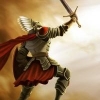
Lightsworn Panda he/him Posted October 28, 2014 Posted October 28, 2014 I'm leaning towards the Malach Crossings one, since a potential war is always fun, especially for a Panda Priest and an Inquisitor (yes, I'm doing two characters, and one is a Panda Priest). However, like Voidus, I'm fine with any. Your world just gets richer and richer in detail, Seonid. If it isn't too much, may I suggest that the Inquisitors look a bit like what I've attached below? Yes, they are the Inquisitors from Heroes of Might and Magic 6. They're awesome, OK?
BreathTaker he/him Posted October 28, 2014 Posted October 28, 2014 Storms this is awesome. I like 1416 because I want my character to have a pistol or three. Also panda, I think ceremonial armor would be awesome as a secondary set. When the inquisitors are out being inquisitive i think we could be free to wear what we want.
Mailliw73 he/him Posted October 28, 2014 Posted October 28, 2014 The first one, 1088 in Corento is probably my favorite, but that's because I like rebellion stories. How about we all put our top three so that Seonid can tally the votes? Mine are: 1. 1088 2.1299 3. 1375
Tulir he/him Posted October 30, 2014 Posted October 30, 2014 I don't really care, I'm good with any time period.
Jo and the Bush all/any Posted October 30, 2014 Posted October 30, 2014 So do Year 1375. It was everybody's third Choice, and the only year to appear on all three ballots.
Seonid he/him Posted October 30, 2014 Author Posted October 30, 2014 (edited) Sorry I've been out for a day or two. I finished my exam yesterday, so that's a load off of my mind. Joe is right, I think. 1375 shows up on all three ballots, and was also Voidus' first choice. Tulir is ok with all of them. I'll leave the other ones for spinoffs in the future, if we get enough interest. Tomorrow evening, I will post 1375-specific cultural information. There will be a lot about Menkor, the Tribunal and the Court of the Gods, the Church of the Martyr and the Inquisition, and regional politics. I'll also have brief information sets about other areas, just in case one of you wants to play a traveler from a far-away area (a Svalding or a Nessei mercenary, for example, or a Taravoy weapons dealer - a good source of gunpowder in this year - or a Rakalli Zealot, a former slave from the Jyid, or any other interesting character). Thanks for the interest! Edited October 30, 2014 by Seonid 3
BreathTaker he/him Posted October 30, 2014 Posted October 30, 2014 I picked 1416 first simply because I wanted my character to have some black powder pistols. Do you have any specifics down on weapon evolution? By that I mean: what kinds of weapons are popular, are any weapons restricted in certain cultures or areas (like spears are for Darkeyes), are there firearms, and how evolved are these firearms at the present time? Also, what kind of metal is primarily used, I'm assuming that since gunpowder exists we are close to the steel age or there already. Another question is, do Inquisitors/Paladins have weapons that identify them?
Seonid he/him Posted November 1, 2014 Author Posted November 1, 2014 I picked 1416 first simply because I wanted my character to have some black powder pistols. Do you have any specifics down on weapon evolution? By that I mean: what kinds of weapons are popular, are any weapons restricted in certain cultures or areas (like spears are for Darkeyes), are there firearms, and how evolved are these firearms at the present time? Also, what kind of metal is primarily used, I'm assuming that since gunpowder exists we are close to the steel age or there already. Another question is, do Inquisitors/Paladins have weapons that identify them? Weapon evolution is rather a large topic. I'll give details on what I suspect is the topic of most immediate interest: Gunpowder. Also, I'll lay out a basic overview of how weapons in Menkor (and the related kingdoms) are distributed. It should be noted that this overview really only applies to Menkor and its neighbors - other more exotic places will have some unique weaponry associated with them. Development of Gunpowder: Gunpowder was first pointed towards a military end by the house of Khusrui, a Taravoy merchant house, in 1251. The Taravoy are islanders, and are as at home on a ship as they are on land. Other than the mercenaries that hire themselves out, Taravoy are much more likely to face combat on the high seas than they are to deal with land combat. Given these peculiarities of Taravoy culture and experience, it should perhaps not be surprising that the first use of gunpowder was for ship-mounted weapons, specifically small-bore weapons designed to fire what we would now call grapeshot. These were mounted on the deck of the ship, with an eye towards clearing the deck of a hostile ship or significantly degrading its boarding parties. It was enormously successful, and remained a heavily guarded secret for a generation. By the mid-1270s, however, House Khusrui began to place the weapon on the market, earning such lucrative production and royalty contracts that the House was able to retire from shipping for over a century. By 1277, all Taravoy merchant ships carried the weapons, and new variants aimed at breaking masts and otherwise disabling the actual ships of any hostile power were under development. By 1281, weapons similar to the hand cannon had been developed for the marines on a merchant ship to use to repel boarders, and these replaced the crossbow on such ships within a decade. The secret of gunpowder continued to be heavily guarded by the Taravoy as a confederacy of houses. Informal agreements (which often had much more force than formal law) were enforced by murder and sabotage, and the secret was successfully protected for nearly a century. This is even more remarkable considering the fact that, from about 1290 on, Taravoy mercenaries armed with handheld gunpowder weapons were increasingly common among the armies of the mainland. Around 1300, House Khusrui - now the leading manufacturer and supplier of the growing mercenary industry - successfully completed and tested a bombard, a fixed heavy cannon for use against walls and fortifications. These quickly became popular on the mainland. Because these gunpowder weapons were strictly limited to mercenaries (and because anybody who tried to replicate them often ended up dead in a suspicious accident or a convenient explosion), they had only a limited effect in shaping the battlefields on the mainland. They were often quite effective, but their expense was often prohibitive. This changed in 1350, when the Lyusan city-state of Theiropols succeeded in developing their own gunpowder weapons, safely hidden away from Taravoy spies and assassins. The Taravoy response, in keeping with their mercantile ambitions, was to begin selling gunpowder weapons to the mainland. The Court of the Gods, realizing the potential for overturning the established social order, had forbidden the use of gunpowder in 1315, although many of the nations who professed allegiance still made use of the mercenaries, publicly washing their hands of the infidel's use of the weapons. The acension of the Alcorazimai Emperor to the High Prelature in 1355 only extended the reach of the ban. And the Empire's enforcement was considerably more effective, especially in the lands historically owing allegience to them. The northern kingdoms, largely aligned with the Church of the Martyr, and the kingdoms who converted after the Emperor became High Prelate enthusiastically bought the new hand weapon designs for their Royal Guards (as the expense prohibited their use more generally) and equivalent elite units. The Church of the Martyr itself constructed a manufactory for gunpowder weapons in 1360, and the Inquisitorial soldiery made the transition during the next two decades. Among the city states of the delta and the Lyusan Islands, gunpowder weapons became normative very quickly, and by 1370-1380 they were standard weapons. The first pistols were manufactured in 1373 or 1374. By 1400, cannons designed for use as battlefield artillery rather than siege equipment were being fielded (in limited quantities of course, and pretty much only by the Lyusans, Taravoy, and the city-states of the Berydian delta). The waning power of the Alcorazimai Empire resulting in many of the protectorate states openly flouting the Imperial ban. By 1415, the use of gunpowder had displaced other weapons among the Lyusans, Taravoy, and Berydians, while the northern kingdoms were mostly still maintaining only elite units with gunpowder weapons (with the exception of the Church of the Martyr). The eruption of the volcano Katuko'iphireia in 1423 changed conditions worldwide, and certainly froze development of new weapons. The widespread social chaos that resulted also had a practical effect of a technological regression in many areas, but within 40 years, new gunpowder weapons were widespread again, without the limiting factors of Taravoy pricing or Imperial bans. By 1500, they were normative across nearly the whole continent, except for among a few tribal peoples and the xenophobic remnants of the Senlii Empire, on the northern coast of the continent. Weapons in Menkor: As far as other weapons go, there is a distinction between weapons used by soldiers on the battlefield and weapons used by individuals. In Menkor (and the other nations of the central plains and the east coast) in 1375, various more specialized polearms that were popular in earlier years, such as the voulge and the glaive, have given way to the pike as the dominant infantry weapon. Pike formations, sometimes fortified against infantry assault by a supplementary force of halberd-wielders, are an overpowering advantage on the battlefield. The age of the armored knight is coming to an end, although heavily armored cavalry is still a potent force, it is no longer the completely dominating influence it once was. The primary cavalry weapons are the lance and the kingsword (so named because owning and using one requires a special permit from the king; the nobility are often distinguished by their centuries-old familial permits. Similar laws are found in every nation with landed nobility once controlled or significantly influenced by the Kaloneri Empire, with one exception. These laws are now archaic, and serve to reinforce an aging social order instead of enforcing a meaningful distinction in fighting ability between classes), although light cavalry companies are moving towards the cavalry sabre, with its deliberately unbalanced construction. Heavily armored soldiers now fight on foot almost as often as they do on horse. These foot knights, generally wielding heavy two-handed swords, are used to break pike formations so that the cavalry can execute a successful charge. As a result, weapons designed to defeat the heavy plate armor favored by the nobility and the wealthy have come into fashion, such as maces, flails, and poleaxes. These, however, find use most often by the heavily armored nobility. The most common counter used by the average infantry soldier is a polearm of some sort, such as a bill or a halberd. The dominant ranged weapon is the heavy crossbow. Specifically, a variant with heavy steel arms - allowing for a much stronger draw weight - called an arbalest is common across most of the nations of the central plains (note: naming conventions are not consistent across nations. The eastern countries, lineal descendants of the old Kaloneri Empire, call such weapons steelbows, and their wooden-armed cousins lockbows). Most of the northern nations now maintain a force of men armed with gunpowder weapons, although the high cost of importing them from Taravoy or Lyusan weapons dealers has prevented them from displacing the crossbow as yet. As the technology for making them becomes more widespread, use of the crossbow will die out. Longbows are still in use among the Cetar people, living in the southeast of the country of Gaelet, and among the Nilari nations on the eastern coast. The Nessei tribesmen still use composite bows from horseback, as do the Kinseni in the southern desert. As personal weapons, however, polearms such as pikes leave much to be desired. Their most effective use is in a formation with many similarly armed allies in support (with the signal exception of the halberd). The wealthy and permitted often carry their kingswords around the town to show off their connections with power, although the rapier is moving into fashion among the younger generation. (It should be noted that the kingly decree against the unpermitted ownership of swords has been extended several times to cover newer types and styles of swords. However, the name kingsword refers to what we would call an arming-sword, the long-bladed sword intended for use as a weapon by an armored knight.) People without permits generally carry a mace, a hand-axe, or a halberd if they feel a need to carry a weapon. The halberds carried by commoners within city gates are much shorter and have smaller blades than the type found on the battlefield, to be able to find usefulness in the narrow streets of many western cities. Likewise, the maces are much lighter as well, as they do not have to be able to crush through heavy plate armor. Spears are seen as outdated and ineffective, suitable only for hunting or the poorest of the poor. About the Inquisition of the Church of the Martyr - agents of the Inquisition often attempt to blend in with the local populace, the better to ferret out heterodoxy, heresy, and apostasy. There is an Inquisitorial uniform - the colors are white with a black cross (the sign of the church of the martyr is a stylized flame, but the black cross symbolizes the twin goals of the Inquisition, the vertical bar representing their duty of strictly making sure that the communication between heaven and earth was not tainted by heterodox or heretical practice, and the horizontal bar represents the duty of standing as a line between the Church and mortal threats both internal and external; the black cross is a descendant of the sign of the High God Taris, in the Court of the Gods. The cross is officially one that equally quarters the background, but it is often seen in a stylized fashion on soldiers of the Inquisition) - that is worn whenever official duty calls for it. The Inquisitorial soldiery generally wears a white tabard with the Black Cross over whatever armor they are otherwise wearing (in 1375, generally some form of partial plate or plate and leather), but the Inquisitors themselves are much more heavily armored (in their official gear). An Inquisitor in his full uniform (circa 1375) would wear a long white robe over padded under-armour. His legs and arms would be given some sort of flexible armor, like metal scales, to be worn under the robes. Over the robe would be a heavy breastplate with pauldrons (shoulder plates), and also plated gauntlets, as well as a closed helmet. As far as weapons go, they would carry a halberd, about 7 feet long with a heavy axe-head on it and a long spike on the tip. For secondary weapons, they carry a heavy mace (both spiked and non-spiked variants are common) or a one-handed warhammer. After about 1385 or so, black powder pistols are standard equipment as well (although individual Inquisitors may have gotten their hands on a pistol or two as early as 1375). A Paladin of the Court of the Gods would be like a knight in full plate armor. He generally fights mounted, with lance and kingsword (and sometimes crossbow - there are a few mavericks), and his horse is fully armored with plate barding as well. He or she is supported by a number of squires sworn to his service, who generally fight mounted as well, with swords and crossbows. Many Paladins and their squires have picked up some sort of weaponry designed to penetrate plate armor (preferably the type that can be used from horseback). Although the Paladins do not wear a specific insignia, their extraordinarily distinctive plate armor is an immediate identifier that they are something more than just another lord with money to throw around. Not to mention their magic. 2


Recommended Posts