



Leiyan
-
Posts
38 -
Joined
-
Last visited
-
Days Won
1
Content Type
Profiles
News
Forums
Blogs
Gallery
Events
Everything posted by Leiyan
-
Access to Dragonsteel Prime
Leiyan replied to TheFoxQR's topic in Sanderson Curiosities & Unpublished Works
Thanks for this information! I am lucky enough to be traveling to the area for a conference soon and I'm planning in a few extra days to read Dragonsteel at BYU. I have been trying to get it through ILL for literally 7 years without success. >.< -
Chapter 111 was a doozy. Wow. Dawnsingers... Voidbringers...
-
I just finished chapter 76 "An Animal" (via audiobook) as I walked to work. Literally had to stop, lean on a post and shed some tears for Evi. Not sure how I can go on with this day, leaving the book like this...
-
From where are we seeing the Arcanum Unbounded constellations?
Leiyan replied to I Am Witless's question in Cosmere Q&A
Well, that was easy. I just made all the white sections transparent, then copied it back on top of the original image as a new layer. Enjoy! I'd be curious to hear how you use it.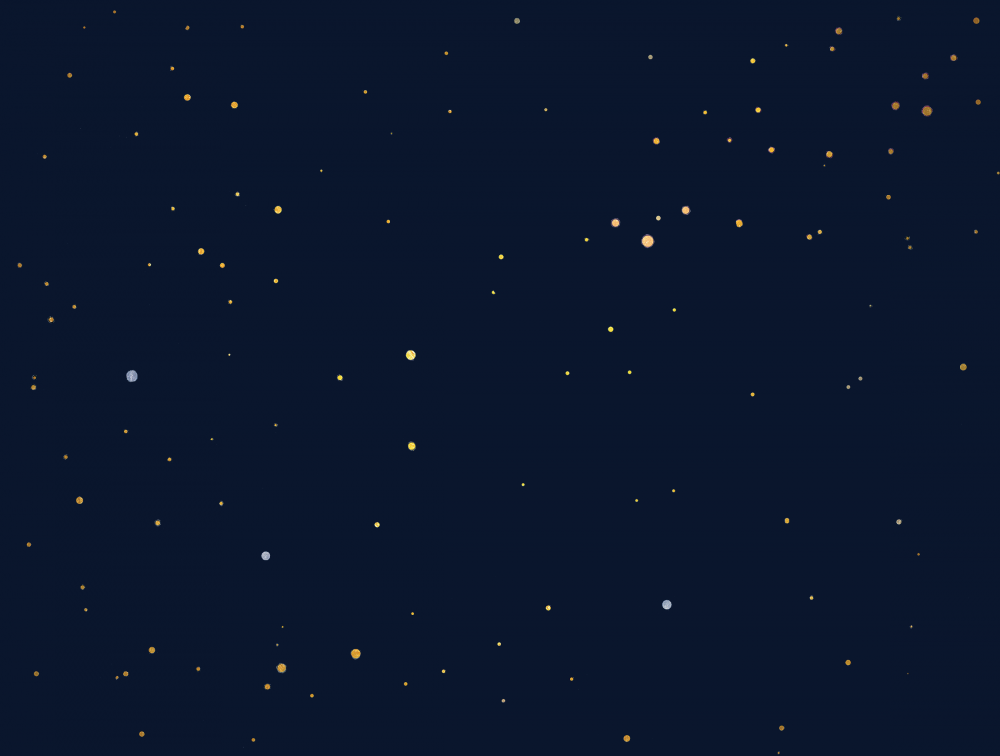
-
From where are we seeing the Arcanum Unbounded constellations?
Leiyan replied to I Am Witless's question in Cosmere Q&A
Oh sorry no I stripped the colors too, because it was easier, and the colors wouldn't mean anything in the astronomy software that I used. Hmmm, lemme try something.... -
From where are we seeing the Arcanum Unbounded constellations?
Leiyan replied to I Am Witless's question in Cosmere Q&A
It's probably a given, but this star field is not as seen from Earth. I stripped out everything but the stars and ran it through some astronomy software that tries to match it against our night sky. Failed. Figured it was worth a shot though, in case I got a hit. Though even if I had managed a hit, I would have been skeptical.
-
Jut checking again....anyone want to carpool down from the Boston area? Or...like the Hartford area, since I'll be passing through that way...
-
Anyone want to car pool from the Boston area? I carpooled from Boston to Philadelphia for a signing about 2 years ago, it's like a 5hr drive, but not too bad!
-
No problem =D I only made a point to mention it for Kurkistan's benefit, since he's copied the text from the google doc into his post just above.
-
I edited a little bit of the text transcribed on the Google Doc from my second time through the line, at 3:25:55. Some of the lines weren't attributed properly (some lines that Brandon Sanderson said were previously marked as Q, while some of my lines were marked as A...when it should have been the other way around).
-
Well, I didn't ask him to confirm it (I also thought it had been stated previously)... he just decided to say that it was -now- confirmed. From near the end of the Signing Q&A file (around 3:26:00ish) Brandon: There are three planets with sentient beings on them. Me: Are there more than three planets in the solar system? Brandon: There are. With non sentient beings. There are three planets of importance. Me: Roshar, Braize, Ashyn... Brandon: You may have heard a reading from one of those planets today... Me: I knew that! Brandon: I have not reveled that though! So it is confirmed. Actually, now that I think of it...I don't think I remember reading anywhere else that there were three planets with sentient life on them! Pretty sure we only knew Roshar and Ashyn had life....but not Braize? Hmmm!!
-
Here are the audio files from the Philly signing. =D Opening Talk, some Q&A, Silence Divine Reading (1hr, 32MBs): https://drive.google.com/file/d/0B62EN3c8XxsSWmFuUjUwOHVVeFU/edit?usp=sharing Q&A while signing books (3.5 hours, 100MBs): https://drive.google.com/file/d/0B62EN3c8XxsSbzRQcDBtQ0tYclE/edit?usp=sharing I asked about the moons, the solar system, the sun, the planets... He confirmed that the reading about a planet where sick people have special powers takes place on a planet in the Rosharn system. Though I think this is widely guessed, he said he had never confirmed it before. In general he was very tight-lipped about the Greater Rosharn System, which I thought was interesting! I did learn that Nomon is the most massive moon, and that is visually larger than our moon (not actually larger, it just appears larger because it is much closer to the planet). He would not confirm that Braize was the 3rd planet from the sun (I had thought I read an other interview where he says this, but I guess not?). IIRC, he did mention that there were more than three planets in the solar system in general, but really only Roshar, Braize, and Ashyn are of interest. He did tell me that the moons of Roshar relate to the Highstorms. I didn't ask a precise enough question so they are related in some way, but I have no details. He also didn't want to answer the question directly and seemed quite pleased that I had left him a lot of wiggle room to not answer. So, oops! However since he didn't want to give an answer, I think it confirms that the relationship is not something as simple as tidal forces. Brandon said he was pretty sure I was right about the moons orbiting in the opposite direction than the planet's rotation (he wasn't 100% sure off the top of his head). Though he did agree that there are no eclipses on Roshar, and confirmed that the moons have a high inclination which makes this possible. I asked about the sun in the Rosharn system, he wouldn't tell me if it was the same stellar type as our sun, though he said that the fact that the Rosharn sun is described as white and our sun is described typically as more yellow is NOT an indicator of it being different. Brandon did say that the Rosharn sun was younger and larger than our sun.
-
Red herring...? or is there a carved nightstand somewhere in the book? Edit: the above quote is from T's interlude =D
-
Page 827(The US hardcover has the wrong version of this image.) Probably doesn't affect me since I have the ebook...but I'm curious, which picture is this discussion about? Page numbers are not helping me figure it out. >.>
-
I think there is really only one epigraph that important to breaking the code: Obviously they are fools The Desolation needs no usher It can and will sit where it wishes and the signs are obvious that the spren anticipate it doing so soon The Ancient of Stones must finally begin to crack It is a wonder that upon his will rested the prosperity and peace of a world for over four millennia —From the Diagram, Book of the 2nd Ceiling Rotation: pattern 1 (chpt 83) This is from the same location as the code (Book of the 2nd Ceiling Rotation) and, like the number sequence of chpt 84, it is called a pattern. Every single other epigraph (except chpt 84) is described as a "paragraph." So, what is the pattern of this epigraph? and can we apply that pattern to the Chpt 84 code? Also...why is it called a Rotation? Was it originally written in a circular fashion? Would it start from the center and spiral out, with the 2-15th rotations following, or would each pattern be written in a separate circular piece? edit: I also saw a copy of this epigraph elsewhere in this thread, but it included punctuation... I just double checked, and there is no punctuation in the chpt 83 epigraph. So I don't think we need to code for punctuation in the chpt 84 code either.
-
From San Diego, but recently transplanted to Boston.
-
I'm going to reply to a lot of things that were accidently left behind. I didn't mean to just skip over replies, there was just so much stuff to consider! Good idea, Ccstat; I've done just that. I'll also post the cleaned up document when I have that finished... which will probably be next weekend. Of course, who knows what else we'll learn from WoR tomorrow... Since the moons share the same orbital period, and they have the same weird elliptical orbit that precesses in relation to the sun...I really do think they share a very similar orbit. Like the image you see in the top of this post: http://www.17thshard.com/forum/topic/6334-the-moons-of-roshar/page-2#entry103350 That animated gift is a representation of an asteroid (the blue line) that shares a similar orbit with Jupiter (the biggest red circle). They don't have the exact same orbit, but it's close. The mass difference between Jupiter and the asteroid would be much much greater than the difference of the masses between the moons, but I -think- the concept still holds. At least, I was under the impression that the moons sort of followed each other on the night sky. Though I'm not using Lagrangian points as a starting point anymore, nothing that we've come up with actaully contradicts having the moons at those places as a possibility, and if the two least massive moons were at Lagrangian points in relation to the most massive moons, they would certainly be in the same/similar plane. The lack of eclipses leads me to believe they share at least the same minimum inclination/orbital plane. But the "absence of evidence is not the evidence of absence." (it's almost a ketek!) Although if these moons never eclipse we would never read someone pointing that fact out, since it is unlikely anyone would posit the possibility of an eclipse. Did you mean the tilt of the moon's rotation? That one would be harder... It's likely the moons are tidally locked (the same side would always face Roshar, like the Moon and Earth), but I have no basis for this assumption. If they were tidally locked, and if the moons do have an inclined orbit, this might indicate a substantial tilt to the moons rotational axis. I would have to think on this some more... I would really like some observations of features on the moons over time. Well, a planet in a multi-planet system has stable Lagrangian points (points L4 and L5). You can look at Mars, Jupiter, Neptune...I think it was even discovered that Earth has some trojan asteroids hanging out in a Lagrangian point. In fact two moons of Saturn have other moons in their Lagrangian L4 and L5 points (last line in both http://nineplanets.org/tethys.html & http://nineplanets.org/dione.html). All of this is to say that having or not having stuff in a Lagrangian point is not proof of the existence or non-existence of other gravitational objects in a system. Eri, over the weekend I found a couple of articles that might talk about this. I haven't had a chance to read them yet (and I won't for a few days at least) to see if they can help answer the question for us, but I'll post if/when I get any more information. I'm curious about this as well! What I can tell you off hand is that Mars has an eccentricity of 0.0934 (which is actually pretty high for a planet) and it has objects at it's Lagrangian points. As other have already covered, if Braize was close enough to strongly affect the moons of Roshar, it would be close enough to strongly affect the planet of Roshar. Hmmm.... Well, the moons orbit every day, but you don't get highstorms every day, right? Although, perhaps the orbits of the moons cause a resonance? Like in a tub if you splash, and then splash again at just the right moment, the waves add up to make a bigger wave... Interesting... I was attempting to guess at the number of hours in a Rosharn day, but it was probably a bad idea because it confused the issue. I didn't respond to this directly before, but I think this was sort of addressed when I was speculating on the lunar phases. Nomon would probably start out as less than full moon and then move towards full moon (and thus be brighter) as it rose, then start waning again as it moved to moonset. Both Salas and Mishim are described in the text as "small" while Nomon is described as "large", meaning this is how they appear visibly. Kaladin gave the size description for Mishim and Nomon, while Dalinar is who Salas's size description is from. Still, I think they would relatively the same idea of what a "large" or "small" moon would be like, and I would trust that Salas and Nomon do have a fairly significant apparent size difference. All that being said, the apparent size calculations I gave were mostly guess work and supposition.
-
Not trying to prove anyone right or wrong, just trying to find the best model for the system given the information we have on hand. Since there is so little to go on, and it is so scattered, it's only reasonable to have to refine as we go. I do appreciate all the input and ideas and quotes! Perhaps all this was already known..somewhere...but I didn't see any posts on it, and, well, astronomy is sorta a thing for me. Figured I'd snap up the subject while I still could! I am actually just in the middle of trying to coalesce all of the important/major points into a single document, because this thread is a bit unwieldy with the various speculations and ideas.
-
I'm taking Tues and Weds off work to read! I'm getting the ebook, so on Monday I'm planning to go to sleep early so I wake up super early on Tuesday and get started!! Even though I've read all the excerpt material, I'm planning to start at the beginning, I want to make sure I'm in context for the skipped chapters. Super excited!!! :D :D
-
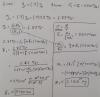
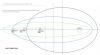
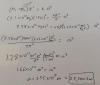
Lots of good points above…thanks for helping me to keep thinking about the problem… I want to get this right. =D --- So I took a closer look at Jupiter and its trojans…What I should say is that they share the same orbital period, and they share one focus (the sun), but they have different eccentricities, and thus, yes, different orbits. Here's an example gif of 624 Hektor (in blue), orbiting the sun, with Jupiter’s orbit visualized as the large red circle. (img source: http://en.wikipedia.org/wiki/File:AnimatedOrbitOf624Hektor.gif) Both Jupiter and Hektor take 4330 Earth days to orbit the Sun, but their orbits are slightly differently shaped ellipses, because of their eccentricities. It's very likely the same thing is occurring with the moons of Roshar in their orbits. --- The amount of time something needs to complete an orbit is basically determined by the distance it is from the object it is orbiting. This is given in Kepler's Third Law of Planetary Motion: (M1 + M2)P^2 = k * a^3 M1 = the mass of the large object that is being orbited (the planet). M2 = the mass of the orbiting object (a moon). P = the period, the time the orbiting object takes to orbit the central mass. k = a constant number equal to (4(pi)^2)/G [G is Newton’s constant]. a = the distance the orbiting object is from the central point of its orbit; in the case of an ellipse it is the semi-major axis. In the case of Roshar the planet, we can determine an approximate mass from its approximate density and radius. As for the moons, we don’t really have anything to go on other than the example of Phobos, in which case the mass of each moon is negligible when compared with the mass of Roshar and can be pretty much ignored in the equation. This leaves us with only two variables: P & a. Because of this, we know that P^2 is proportional to a^3. Since we actually know what P is (1 Rosharn day, or 19 Earth hours), we can solve for a. So let’s determine the mass of Roshar… As I mentioned, we can determine this based on what we know of the density and gravity of Roshar, similar to the work done here: http://www.17thshard.com/forum/topic/5854-setting-limits-on-the-size-of-roshar-the-planet-and-roshar-the-continent/ I hate doing math in a text editor, so here’s a picture of the math where we find the mass. Please keep in mind that all units are in Earth units. End result, mass of Roshar is about 2.1x10^24 kg. For comparison the mass of Mars is much much smaller at 0.64x10^24 kg, and the mass of Earth is about three times greater at 5.97 x 10 ^24 kg. Using the mass of Roshar in Kepler’s Third Law, assuming negligible moon masses and an orbital period of 19 Earth hours, we can solve for the semi-major axis. The semi-major axis for an orbit around Roshar that takes 19 Earth hours to complete is: 25,500 km. The semi-major axis is the measurement of the distance from the center of an ellipse to one of its furthest edges. The more eccentric an orbit, the flatter and more elliptical it will be. Also, a more elliptical orbit has its focal points further from the center when compared with a less eccentric orbit. To illustrate, here is a not-to-scale computer drawing(!) of three exaggerated elliptical orbits: (eccentricities are greatly exaggerated!) As I hope you can tell from the drawing, it is intended that all three orbits share Roshar as one focal point, but their second focal points are in different locations. More importantly the center of each ellipse (shown by the vertical lines) is at a different place as well. It’s not drawn with any precision, but the distances between an ellipses’ center and the long side of that ellipse, aka the semi-major axis (shown by the horizontal grey lines) should be equal with the other two ellipses. 25,500 km each. The semi-minor axis (the distance from the center to the short side of the ellipse) varies depending on the eccentricity. If we can get information on the eccentricity or the semi-minor axis of a moon, we can solve for the elliptical orbit of that moon.
-
I have more ideas I want to share about the moons, basically a complete revision of my opening post… please keep in mind, this is all preliminary, based on limited observations, and I expect revisions and we get more info… First, since it is already known that Roshar does not have an axes title (http://lunarubato.tumblr.com/post/42954839930/ok-so-here-is-the-information-we-collected-from), we know that their day and night cycles would be equal in length everywhere on the planet. I’m just going to use 10hr days and 10hr nights as arbitrary numbers, since it doesn’t really matter what I use as long as they are equal lengths. Because the times between moonrises are described so precisely, I still believe they have to be in the same orbit. So they have the same orbital period. However, the orbit is elliptical, which means the moons will travel faster around perigee and then slower as they reach apogee. As I said in a previous post, I’m beginning to think the lunar orbit precesses so that apogee is always towards the sun, and perigee is always away from the sun. This means that if Salas is opposite the sun when rising, Salas is basically at perigee, and is at the full moon state. Also, in order for any of the above observations to make any sense, I think the moons have to be travelling in the opposite direction as Roshar is rotating, and the moons orbit has to average out to geosynchronous, i.e. the moons need to go around Roshar exactly once per day. Typically, when you think of a geosynchronous orbit, when when object orbits once per day, you think of an object that “hangs” in the sky (like Calamity from Steelheart). It’s always at the same place relative to the ground, no matter what time of day it is. But this is only when the satellite is orbiting in the same direction as the planets rotation. If it’s moving at an overall geosynchronous orbit, but in the opposite direction of the planets rotation, then you’ll see it move…and you’ll see it move fast. Here’s another poorly drawn image! This is a view of the orbit of Roshar and its moons as seen from above looking down. The little stick figure, for the sake of this exercise, is standing on the equator at sunset. If you were standing where the figure is in the image, you would see the sun in the western horizon. As Roshar rotates counterclockwise the figure would be moving around the night side of the planet, and then at the top of the image of Roshar they would experience sunrise. Speculation on the orbits of Salas, Nomon, and Mishim: Because Salas is rising at about the same time the sun is setting, Salas must be opposite the sun, and it must be near to perigee in its full moon phase. As Salas moves clockwise, and Roshar orbits counterclockwise, Salas would immediately begin waning. It would be seen to set in the west in only a matter of hours, I’m guessing an hour before midnight and probably be seen as a half moon. Salas starts bright-ish, but competing with the setting sun, and only gets dimmer as it moves across the sky. Then we have to wait a bit of time, as between Salas and Nomon is “the darkest period of the night” known as “the hateful hour.” Nomon would rise around midnight as a waxing gibbous moon. Since it is midnight (and midnight in Alethkar means you’re facing directly at perigee) Nomon is moving towards the fastest part of its orbit. It will scoot along the sky rather quickly phasing into full moon, and then slow down a bit as it passes perigee and phases out of full moon. It would set, I’m guessing maybe 2 or 3 hours after rising, as a waning gibbous, or near half-moon. While Nomon is near the western horizon, Mishim rises in the east. Mishim would rise perhaps as a waxing half-moon. It will move faster as it goes across the sky, and I’m thinking it would set about 2 or 3 hours after it rises. This would mean it sets as it is near perigee and full moon phase, and about the same time as sunrise. I also think the plane of the moons orbit is inclined compared to the plane of Roshar’s orbit around the sun. If the lunar orbit was in the same plane, or near the same plane, as Roshar’s, you would get a lunar eclipse of some kind every single night. Since there is no mention of anything like this at all, I think it’s safe to say the plane of lunar orbit must be tilted significantly. Also, because Alethkar (and the whole super continent) is in the southern hemisphere (the “Frostlands” are southeast of Alethkar and the “tropical” Reshi Islands are to the north), I think the inclination of the lunar orbits is to the south at perigee and to the north at apogee. In the (badly drawn and out of scale) image below, the sun is in the center, and Roshar is visualized at two opposite locations in its orbit, and the orbit would be going into and out of the page. The moons orbits would pass above the sun as seen from Roshar when they are towards the day side. From the southern hemisphere’s perspective, if the moons were visible during the day, they would be low on the horizon. When the moons orbit takes them to the night side of the southern hemisphere, they would be able to cross higher in the sky. This is all leading me to other ideas, but those I would want to math out first...
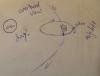
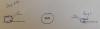
-
I think you saw this in the another thread, but Roshar has no tilt to its axes (http://lunarubato.tumblr.com/post/42954839930/ok-so-here-is-the-information-we-collected-from). Which means, the sun is always at the peak of its arc at noon, but not necassairly at the zentih. In fact it would only be at the zenith on the equator. Anyways, It was stated in the books that the Weepings happened at the end of every (Rosharn) year, like clockwork. I haven't even attempted to read any of the theories about the Weeping yet, so I shouldn't really speak about it... but, personally, due to my other orbital theories, I'm beginning to wonder if the Weepings occur when Roshar is at the point furthest from the sun (aphelion). Obviously they would have to occur at the same point it Roshar's orbit every year, and aphelion makes as much sense to me as anything else!!
-
I believe you are correct. Roshar spins CCW and the lunar orbit travels CW (or vice versa). If Salas rises in the sky opposite the sunset as seen from Alethkar, and then remains in the sky during the night, it cannot be moving the same direction as Roshars rotation at high orbital speed, or it would just disappear below the eastern horizon and stay ahead of the visible nighttime sky as seen from Alethkar.
-
Okay, I still believe these moons must share the same orbit, in order to always appear in the same order, and at the same time night to night. They wouldn't call them "First" "Second" and "Third" Sister if they weren't always in order, and, as Mysty pointed out, they wouldn't have a name for the time between Salas and Nomon ("It was the time between the first two moons, the darkest period of the night. The hateful hour, his people called it...", I-6) if it wasn't consistent. Though, I still need to math out how/where the moons could exist in a shared orbit before I can back this up fully. -Peter I totally missed this before....the elliptical orbits bring them closer to Roshar's surface during the night... always during the night. So the elliptical orbit of the moons must precess such that the apogee (furthest point from Roshar) is always pointing towards the sun, and the perigee (closest point to Roshar) is always pointing away from the sun. Here's a badly drawn image to illustrate... It's the (out of scale) location of Roshar, and the orbit of Roshar's moons, as Roshar orbits relative to the sun.
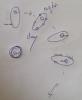
-
Oh, great catch, thank you! I'm putting all these quotes into an excel spreadsheet... hopefully, I'll get time to turn this into a database... I have some more ideas I am currently working out. =D


