.jpg.1d416e60c23975ab5cb90618ebb350db.jpg)

idanstark42
-
Posts
33 -
Joined
-
Last visited
idanstark42's Achievements
30
Reputation
-
So, I had some thoughts about the pressure issue. We this happen a few times. Vin and Kel smashing a coin, Wax smashing a gun. For this to work we need the forces inside the metal to create stress. This means they enact different force on different parts of the metal. What if the metal acts like a conductor for electric field, with very large Debye length? That would mean the force would get weaker and weaker in the material, and create a force gradient that could cause two oposing forces to collapse the coin. Thoughts?
-
That's really cool! I'll start using this If we do that, we need to take into account the atmosphere and greenhosue effects
-
I didn't use the time period equation on the planet and the giant, but on the dward and the giant. The planet will, of course, have the same time period as the whole system, and its mass is negligable. I did go back to check my calculations, and indeed I made some arithmetical errors (that's what happens when you do math too late at night). I still get something different then you, a much larger time period. Here is my calculations (for giant with luminosity 10^5): R (distance between giant and dwarf) = 400 AU = 5.98391483e13 meters m1 (mass of the dwarf star) = 0.5 Msun = 9.945e29 kg m2 (mass of the dwarf star) = 22.5 Msun = 4.47525e31 kg T (time period) = 5.26650248e10 sec = 1668 years When putting the distances I got, I get: For L=10^5 we get T=1539-1860 years For L=10^6 we get T=8660-10,450 years I think all in all these calculations are still a bit half-harzedous. If you have ideas for something more rigorous I would love to hear. Is there maybe additional information I didn't use that would help us cut some of these ranges?
-
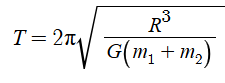
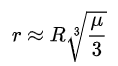
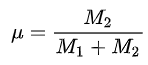
After reading this topic: I thought to look at other places in the cosmere. Most of them are missing some details that would allow similar calculations. Taldain is, however, a very unique system. The planet is placed in the L1 lagange point of a double star system. Those stars are also known to be a blue supergiant and a white dwarf, which gives as an approximation for their size, masses, temperature and luminosity. Assumptions: Dayside is a desert, and water evaporate pretty quickly when outside, so Taldain would be in the lower 30% of the habitable zone The Luminosity of the white dwarf is negligable (it's much weaker then the supergiant, and is surrounded by a particulate ring) The Luminosity of the blue supergiant is between 10^5-10^6 suns. The mass of the white dwarf is about 0.6 suns, and the mass of the supergiant is around 22.5 suns. The mass of the planet is negligable. Using the same formula from the original post for the distance between the blue supergiant and the planet, we get that the distance between the planet and the supergiant is r=301-342 AU for a supergiant with luminosity 10^5 suns, and r=953-1080 AU for a supergiant with luminosity 10^6. Using these distances and the formulas for the L1 lagange point i'ts easy to calcuate the distance between the dwarf star and the supergiant (r is the distance between L1 and the dwarf star): For L=10^5 we get R=379-430 AU For L=10^6 we get R=1199-1359 AU Using this formula (time period for circular motion in a gravitational system): The time period is: For L=10^5 we get T=37-45 years For L=10^6 we get T=210-254 years Any thoughts?
-
Have you posted this anywhere? I loved the steelpush physics thread the @DrPhysics referenced, I'm sure I'd love to see your model.
-
There's a WoB about it being based off of gravitational time dialation, so I would say it has something with locally changing the metric. This is still, as @DrPhysics said, problematic with a lot of physical principles. WoB: https://wob.coppermind.net/events/199/#e7747
-

A Quantum Description of Investiture
idanstark42 replied to idanstark42's topic in Cosmere Discussion
You are very smart and your contribution is amazing! Keep it coming Yes, I agree that Investiture is a crucial part of the Spiritweb. The question is, if Investiture is a QF, what is the geometric restraints required for Spiritwebs and SR in general for it to be able to "contain" (encode information about) it? Also, SR must also have the energy stored in that Investiture, in order to keep the conservation of energy. Great! So now the question is whether we can interpret that Investiture as being solely in PR, like electric charges: a excited state of a QF bound to the entity by some interaction, or perhaps we have to see it as an object going through all realms at the same time, as described here, in which every Investiton exists in all three realms simultaneously (not as a quantum superposition, but instead the same way that particles in our world exist in all three spatial dimensions)? Thinking about this could bring us to conclusions about the structure of the three realms. So if I understand correctly, it's not a plane, but some other copmlex geometric shape, perhaps not even a smooth one. This is very interesting. I wonder what we can find about the geometry of this space and how it's being dictated. -
A Quantum Description of Investiture
idanstark42 replied to idanstark42's topic in Cosmere Discussion
Hi Have'nt been here in a while, but the latest spoiler stream got me going again I want to continue talking, even though I'm still in the middle of the QFT book I'm reading. So we all agree that objects can have Spiritwebs, that means that everything Invested has a Spiritweb. Also, as you said, Spiritwebs are the conduit of for Investiture, so I canno't see how it can be made of Investiture. Unless Investiture is a really broad concept, about as broad as matter. As for the energy coming from Investiture, I agree. What I meant is that the place this Investiture is stored, where it comes from, is through Connections, mapped in the Spiritweb, since the Spiritweb contains all Connections of the being. So, in that sense, all Investiture comes from the Spiritweb (from the Connections in it), and so all the enregy for the Invested arts comes from the Spiritweb. This might not be true for an object that is Invested by itself, since it might be Invested by itself. I'm really just trying to start from the simplest representation for this. Do you have an idea for a simpler one? Yes. I agree. So we do accept that Frotune, Investiture, Identity and Connections should be either QFs. Although, I don't want to abandon the ideas that some of them could be geometric aspects of space, more related to GR in a sense. This would be hard (if possible) to reconcile with our attempt to describe this as an extension of QFT, but perhaps describing some phenomena as GR phenomena would give better results. Yes, this is an issue... One might think why there are only four directions to these... We could be looking at a complex three dimensional polyhedron rather then a two dimensional object, where every subastral is a complex two dimensional object, and Expenses are the planes connecting between those. In that since, a subastral that has four expenses connected to it is a quadrilateral. Anyway, as you've said, the mapping is not perfect, but changing the single point of least perception to an area of least perception, removing anything that is more then infiniticimal from the sphere in PR, would result in a line boarder instead of a point border, affectivly removing the boundry condition in CR I presented in the original mapping. I think this solves that issue, though it doesn't tell us much about the structure of CR or the subastrals. Nothing is overkill! Everything we do here is just fun thoughts I think string theory is a bit to advanced for me just yet, but I would love to hear a (simplified?) explanation about this. This is a good point. I will point out a very recent WoB from today's stream, where he said that the ideals in SR are created from human thought. So, while the realms themself are a not caused by thought, the thing that exist in them are. I think this gives us a pretty good place to start: The dimensional space itself, the vaccum, exists independetly of thoughts, while some QFs are created by thought and Percetpion. I think this requires Perception to be a QF. Yes, I finally see what you mean. Maybe I just needed time away to think about this. Those objects are Investiture in PR, which means that the Investiture QF must extend through all three realms, in some manner. This reaises a question: Let's take a block of godmetal. It is Investiture. Can I make it Invested? For instance, if it's in the shape of a hand, can I Awaken it? Or perhaps store Stormlight in it? Put a different type of Investiture in it? Perhaps it will just reject it by difference of Intent, but what I mean is more of a foundational property: If Investiture manifests as Fermions, what does it mean to be Invested? Maybe it just means that your Spiritweb holds Investitons? Do those objects have Spritwebs? I don't think so. Maybe for this reason they cannot hold Investiture. I'm just throwing thoughts, but what do you think? This makes sense to me. We could use this as a hint for the data structure. For instance, for the number of DF that this data structure would require (using QT): enough to encode a density matrix. So, C{2} -> C, at least. This sounds really interesting, can you explain a bit further? I'm not sure I got everything you meant by that. Also welcome to the discussion I do like Seeker's answer. This brings back the idea that the subastral itself is constructed by Perception. While CR is there already, the Perception does shape it into concepts, even creating gravity, i.e. shaping the geometry of spacetime in this region. The question that comes to mind because of this is does this effect of Perception actually dictates the mapping in such a significant way? If we can see it dictating such things as creating gravity, affecting curvature, could it affect other geometrical features? We know the expenses are much smaller then the space between the planets, because they are percieved less. So I think we can say that the Perception also affects the metric, acting in a similar way to relativity in the physical realm. A big asterisk on the last point, is that GR in PR works differently then in our world, since gravity is reliant on a Connection (as described in the arcanum about the surge of gravitation). This means it will probably work differently in CR as well. But the general idea, that the geometry of CR is affected by Perception, I think is a found idea. However, going back to Seeker's answer, some other questions raise: 1. Is the subastral completly flat, or does it have a curvature? The fact that there is a horizon, implies a curvature. Does that mean the entire of the CR is a on a sphere? Or perhaps another kind of sheet? Are there edges to the CR map? 2. How does Perception affect CR? It seems that Seeker implies that its individual, each person affecting their own view of CR: Would two people walking into CR at the same point but in opposite original position have opposite downs? Or would they bring a collective down with them, a sort of average? 3. Does this aspect of Perception affect souls? The recent WoB says that Ideals are created by Perception. Does this mean that Perception extends to SR as well? Affecting, perhaps the geometry, of SR? If we go by looking at SR in the platonic way, as Brandon seems to be implying repeatedly lately, each Ideal would be an axis, and we would have a n-dimensional data structure, where every soul would be a different amount of each Ideal. This would be viewed as a geometrical structue, which is affected by Perception, but perhaps this is a stretch. Well, it's 6 AM here, I've been writing for the last hour and a half, since the stream ended. I'll go to sleep now. I'm not sure everything I wrote here makes sense, because I barely slept tonight. If it doesn't please tell me -
It is the physical distance dictated by the Connection, which is spiritual. The idea is that the spiritual connection creates a physical force that tries to get the distance to match it, that force is proportional to all the things we've seen so far (mass of metal, strength of allomancer, duraloumin, etc.), but also inversly proportional to the sqaure of the distance, like any field force. I couldn't find the descending scene you talked about, but then again I had to search it online since I don't have the books here with me. In this model, you can slow down, when the force of the Connection is smaller then the force of gravity. Since the rigidity k of the Connection is finite. The equillibrium point would be somewhere in the middle of the air, so you cannot go all the way to the ground. You would have to switch your push on and off to calibrate your falling pace (similar to the PWM I mentioned earlier). Each time you turn off the pushing, the Connection length R resents to the new physical distance r, creating a new, lower, point of equillibrium. This will allow you to eventually, reach the ground. Again, the scene is not in front of me, but if there is a way to slow my descend (creating an average force smaller then mg), and a way to push myself upwards (creating an average force greater then mg), then there must be a way to calibrate the force, regardless of the distance. This model was meant to show distance relation. Calibration of the force by the allomancer, in my opinion, is best explained by PWM or something similar, but there might be a source I'm unaware of that removes this option.
-
Yes, in this model, all dependency on r is direct. If alpha is not constant, I don't see it as related to the distance. Perhaps to the power, as energy is drawn from the body of Preservation. Can you explain the percise situation this doesn't explain? Because I'm not sure I understand what you're referring. Do we see actual damping in the book? Or do we just not see oscilations? I think that without knowing that for certain we could say that it is very close to critically damped. We could add a damping force to the Connection itself, if neccesary. I did not run the numbers themselves (I don't think we have actualy numebrs, do we? If we did it would make it much easier to check)
-
You're right of course. I forgot about this. I see two interesting things in this part: the one where he said he went with his gut, and the part where he talks about fundamental forces. Fundamental forces mean that this is something behind metals per se, and we could look at a Connection at the fermionic scale, I would love to connect this to soemthing like the orbitals and the solutions to the Spherical Laplace's Equation, but for now I don't see if that's possible.
-
Ok, so here is the model. There are two ideas here: 1. The force is an inverse squared force (sort of) 2. The force is based on Connection. Let's start with the first. Given that the force is a simple inverse sqaured force with a constant nominator F = k/r^2 When one pushes on a coin (we'll get to the third law in a minute, assume for now that the push is strong enough to push the person upwards), there will be a point of equillibrium in the middle of the air: mg = k/r^2 r = sqrt(k/mg) Pretty basic stuff so far. This will be true of course for any force reducing with distance, so the only reason to hang on to the inverse sqaure model is that we are working in 3d, and this is just the rule for field forces in 3d. However, this idea solves, I think, our 1st law problem: depending on the strength of air resistance and friction, the initial position, and the constant k, there will be an oscillation period or there will not be (depending on the total damping ratio). This could be a tool to calculate possible values of k, since we know that for the most part there were'nt oscillations in the book, or if there were they were very small. Now for the second idea. This, I think, is the more far-fetched, but the one that solves our 3rd law problem. The idea is that the blue line, which is a visualization of the Spiritual Connection between the metal and the allomancer, dictates the distance between them directly, yet it has some form of elasticity. This means, that the actual force applied follows: F = k * (R - r) Where r is the current distance and R is the distance spelled by the connection. In this idea, Steelpushing allows the allomanct to add length to that Connection, and Ironpulling allows them to remove length from that Connection. This does not follow the inverse square that I talked about above, but I'll merge the two ideas in a minute. Let's assume the rate of adding length is constant R = r0 + αt Where r0 is the initial distance, and therefore the initial length of the connection, and α is the speed of the connection. For simplicity let's define r0 = 0. The force is then: F = k * (αt - r) = mr'' This simple equation is solved into r = αt + c1*sin(ωt)+ c2*cos(ωt), ω = sqrt(k/m) Which shouldn't be a surprise. I don't know yet what the right rate of change is for the length of the Connection, but something tells me it won't really be constant. What this does promise is that we have the position of the person which is directly connected with the position of the pushed object. Solving for the two body problem, first when they are both free and then when one is non-moving, we get the result of pushing on a coin: When the coin is in the air, the allomancer would be only slightly pushed, depending on the relation to the total mass of the system, and when it's on the ground, it will be pushed with the entirety of the force. So we have two seperate solutions, one for the 1st law problem and one for the 3rd law problem. Now we need to combine them. The combination I thought about is simply to put the second solution into the nominator of the inverse sqaure law. This made sense to me since in this model the strength of the power comes from adding the length to the Connection, but it can the constant k can still be modified using the inverse square law. We would get something like: F = k * (R - r) / r^2 Putting R = αt and solving is not so simple this time (I didn't have time to fight over this equation, but if you find a solution I'd love to see ), but what we can do is see what the potential is. The potential for force for any specific R is φ = k(2R/r + ln(r)) Which has a minimum point at, of course, r = R. Add mgh to the potential (or in this case mgr) and you get a slightly lower point of equillibrium. The interesting thing is that the force itself has a maxima in 2R, after which it becomes weaker until it reachs 0 at infinity. So, we got a model that follows the 1st and 3rd law requirements and work with WoBs and things we know about the world. The things that this model does not take into account and are very interesting: - What affects the constant k? We talked about mass of the allomancer, mass of the object maybe? metalic compund? what else? - What about the coin bending, breaking, flattenning or staying in the air? This model doesn't explain those issues. So what do you think?
-
Hi! I wanted to write here for a while now, but got busy with other things. I have a model I want to suggest, which is a submodel of @DrPhysics's model, with a few specificities that are meant to solve the issues brought up here. But before that, I have a few thoughts about specific topics brought up here: 1. Modulation of force: It seems from all accounts that modulation of the force is probably impossible, and what is possible is using PWM to control the average force over time. This made sense to me because of Kelsier's quote where he says to turn the poewr on and off. I thought that better control of the "strength" would be to learn to turn the power on and off quickly enoguh to have better control over the final result. 2. Mass of Invested objects: Invested objects are known to have some wierd things happening with them and mass. I always assumed this to be a non-classical effect, either reletavistic or quantum, and so I don't think we need to regard it in this model, since allomancers and the metals they control are usually not that invested. 3. Steelpushing/Ironpulling & Electromagnetic forces: I think there is a WoB that says those are definity not electromagnetic forces. They of course cannot be directly electric or magnetic forces, since they work on all metal and not just on those that are electrically charged or have some specific form of magnetism (ferromagnetic/paramagnetic). This brings up the question: what about transition metals? I mean, steel is technically a metal-nonmetal compund (iron & carbon in the books). What makes a material "metal"? I think, since we are talking about the cosmere here, and I will justify this in my model, that this "metal" a spiritual/cognitive idea defined into the connection that Preservation created when he created Allomancy. Finishing here because this is getting long, and I'll add the model in another comment.
-
A Quantum Description of Investiture
idanstark42 replied to idanstark42's topic in Cosmere Discussion
Ok. We've been at it for a while, so I want to make some organization about our discussion here: I think we exhusted the discussion about terminology, and we can put this aside, because, at least to me, this is the least interesting part here. The discussions that I think are worth continuing are: A. The structure of the Spiritual Realm A.1. Does SR have a temporal dimension? I think I agree that SR must have a shared temporal dimension with the other Realms, since we can see a Spiritweb being different at different points in time. I thoguht about the issue with causality, but since you can only see posibilities, we could say that SR somehow contaisn data about the current mixed state of the system, and the probability for every pure state (density operator?). Overall, I think I agree that SR must have a temporal dimension. A.2. What can represent Spiritwebs, Identity, Connections and Intent? We need to understand better those structures, in order to think about a structure for them. I do like the structure I built in the article, but let's put that aside and think abuot them in general. Here are some things we know: - SR is made of Spirtiwebs and Connections between them - A Spirtiwebs is mapped somehow to and obejct in CR and PR. This is not a mapping to a coordinate in those realms, but to an object, maybe a complex wave function. The limit of what is part of the object and was isn't vary. - Different Connections have different properties - A object, that is mapped to a Spiritweb, can be Invested, and can have Intent. - The Spiritweb, should be able to have, or at least transfer, energy in some manner in order to keep the conservation of energy (for example, the kinetic energy supplied to a steelpushed coin) Things this makes me think about: The set of all Connections could be viewed as a binary function from the set of all Spirtiwebs to some complex data structure representing the strength and nature of a specific Connection (f: S X S -> C where S is the set of all Spiritwebs and C is the set of all possible Connection attributes). This sounds like this might call for usage of graph theory. Are there objects in QFT which are not QF and can have (or transfer) energy? This is assuming we are going to use QFT as a framework (which we must, since black body radiation have been mentioned in universe). About SR sharing the same QF as PR, I don't think one could be in the Spiritual Realm, or at least, I don't think that a body can be there. Do you have any evidance of that? It should be able to interact with PR, but that doesn't require them to have the QFs, right? B. The structure of the Cognitive Realm 1. How can there be a mapping from PR to CR? So you just walk anywhere and get off planet? So I can draw a circle in CR and say "this is the subastral"? You could map like this: Let θ,ϕ be the coordinates for the sphere, and r,ϕ be the coordinates for the plane. let R be the radius of the circle on the plane. The transformation can be defined as ϕ = ϕ r = R*sin(θ/2) This would cause only one point of "discontinuity", which in the planar version would be the circumfrence, and in the spherical version we could call the least percieved point, since this is a good theory of where it would emerge. If this model is correct, then the only physical solutions would be such that the wave function is smooth in both the sphere and the plane. Since there is already a periodic boundary condition in ϕ in both of them, what is left for us to make sure is the boundary condition on the circumfrence of the plane that says that Ψ(R, ϕ) is not dependent on ϕ. This does mean that all points around a subastral are basically the same, but this is the only condition we get. The fact that we only get conditions on CR is nice, but it is a really weird condition. I don't think moving through this is possible. Perhaps another solution would be required, like saying that the least percieved point really isn't mapped, and for a person to be there it must be percieved by them. 2. What is CR in relation to PR? As you've said, there are people in CR, so the QF from PR must extend there as well. I see here two options: - PR and CR together form a R^{6,1} spacetime. - PR and CR are two R^{3,1} subspaces in a R^{4,1} spacetime (or perhaps a R^{3,1} X { C, P }). I see more sense in the latter, since it allows to explain perpendicularities as a 4D version of an Einstein–Rosen bridge, and because I think it better represent the conditions under which matter can move from one to the other. I still don't think this description is close to complete, since I do believe that SR also has a great influence on this structure. 3. Does Perception cause the existance of CR or simply effects its geometrical properties? I don't think we have the tools to answer this question, but without WoB I don't think we can know definitly right now. C. Investiture 1. What is Investiture? Where does it exist? I just want to quote the coppermind on Allomancy on this (quoted from Ars Arcanum of TLM): I went to the original quote, and there it is referred to as a manifestation of Investiture: Allomancy, and as such, steelpushing, isn't the usage of Investiture, it is a manifestation of Investiture. My point is, the terminology is confusing, and we should be careful about it. Let's say that Stormlight, Breaths and Godmetals are really all Investiture, how could Allomancy be one as well, if it has nothing Fermionic about it? I don't see a solution to this purely lingual conflict. I think the best solution here is to say that those aren't really Investiture, and think back about what is. BTW looking at our universe through a lense of "charges are dimensions" could be actually very interesting I think