sheep
-
Posts
268 -
Joined
-
Last visited
-
Days Won
17
Content Type
Profiles
News
Forums
Blogs
Gallery
Events
Everything posted by sheep
-
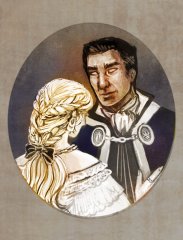 Dalinar and his mysterious dead foreign wife! More old Kholin family pictures because why not. Renarin: Adolin:
 -
 Major characters! CLICK HERE to open up full size. CLICK HERE to open up mini version to use in the new profile's cover photo. It fits!! I drew Sadeas to have a punchable face, and Amaram to be less punchable because he's supposed to be a smarmy smug wannabe-Radiant who looks like a normal dude from the outside. I imagined him to be late 30's or almost or about 40, because Jasnah was 34 as of WoK and he was her almost-husband. Taravangian is supposed to be like a wise sage kungfu master grandpa, who looks harmless. Taln wears yellow because topazes are the gemstone of the Stonewards, but later I looked it up and found out that topazes can come in other colours than orangey-yellow, but it was too late for that. Wit has a medieval pageboy haircut because his job is to something like a King's minstrel and his blue eyes are somewhere in between light and dark.
 -
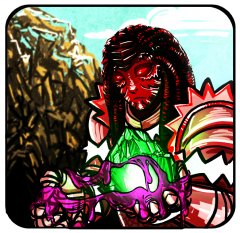 Eshonai's only canon picture is the chapter header icon in her PoVs. She looked like a tank!!! And because I was inspired by the Predator movie series, I draw her as huge and physically imposing relative to the other characters. But she still has a human-like face that isn't fully monster, even in Stormform. I tried to make it expressive, but clear that she's not human, hence the creepy glowing eyes. This is my impression of a chrysalis and gemheart. In my imagination, they were giant glowing, roughly faceted chunks of crystal that had mysterious flickering lights coming from the inside. And the "violet ichor" of chasmfiend blood was like a goopy slime that dripped out when you pulled the gem out of the chrysalis. Who knows, maybe it's really the texture of purple ketchup.
 -
This thread has not been abandoned yet! And I am kind of annoyed by this new site layout. It logged me out in the middle writing a long post because I was taking too long, so I had to start again. Anyways, this update will be mostly character designs because that's what I like doing, and if there's no point in doing stuff you don't like in your own free time. Words of Radiance Cast Since I don't think you can click to open images to full size, CLICK HERE to open up to its full screen stretching size. Some notes about this: I drew Sadeas to have a punchable face, and Amaram to be less punchable because he's supposed to be a smarmy smug wannabe-Radiant who looks like a normal dude from the outside. I imagined him to be late 30's or almost or about 40, because Jasnah was 34 as of WoK and he was her almost-husband. Taravangian is supposed to be like a wise sage kungfu master grandpa, who looks harmless. Taln wears yellow because topazes are the gemstone of the Stonewards, but later I looked it up and found out that topazes can come in other colours than orangey-yellow, but it was too late for that. Wit has a medieval pageboy haircut because his job is to something like a King's minstrel and his blue eyes are somewhere in between light and dark. Tyn I wanted to include her, but she died 1/3 of the way through WoR, so she's hardly a major character. I actually liked her. The coat, as I have mentioned before, is similar to a cowboy's duster and Mongolian traditional dress. It's also inspired by the leather buff coats worn by musketeers in the 1600's, which are weatherproof and warm while being useful for hand-to-hand fighting. These things are pretty good at being knife proof. You can look them up! Veil Veil is something like what Tyn's little sister would be, since Shallan keeps her own voice when she Lightweaves. But Veil is tougher and slightly older. And she wears all of Tyn's clothes. Someone mentioned it before, and I thought it would be amusing. Shallan gets Adolin, but Veil gets Kaladin. I think Kaladin would really like Veil, but we all know that's never going to happen. But hey, Brandon said that there would never get a traditional love triangle, so maybe this will happen in Oathbringer. Kaladin and Veil Shallan and Veil And something different... Eshonai's Victory Eshonai's only canon picture is the chapter header icon in her PoVs. She looked like a tank!!! And because I was inspired by the Predator movie series, I draw her as huge and physically imposing relative to the other characters. But she still has a human-like face that isn't fully monster, even in Stormform. I tried to make it expressive, but clear that she's not human, hence the creepy glowing eyes. This is my impression of a chrysalis and gemheart. In my imagination, they were giant glowing, roughly faceted chunks of crystal that had mysterious flickering lights coming from the inside. And the "violet ichor" of chasmfiend blood was like a goopy slime that dripped out when you pulled the gem out of the chrysalis. Who knows, maybe it's really the texture of purple ketchup. Costume designs now! For Adolin, Shallan, and Kaladin. ALTERNATE COSTUMES Adolin - Summer uniform, with half cape. Shallan - Fancy feast dress. Her motif is flowers because "blossoms and cake", so this was inspired by lotuses. Kaladin - Amaram's squadleader. What does a takama/warrior manskirt look like? Whatever I tried looked silly, so I threw in a slit for mobility and called it a day. HALF DRESSED Adolin - Unlike Kaladin, his socks don't have holes. Shallan - What do lighteyed women wear under their havahs? Kaladin - Bridgeman uniform. The vest was inspired by boating life vests. MODERN AU - CASUAL Adolin - Fashionable, but not edgy or statement clothing. Pretty much like a magazine page or store mannequin clothing. Shallan - Shops at the thrift store, because that's what artsy people do. She dresses modestly, but comfortable. Kaladin - Doesn't care about his appearance. URITHIRU KNIGHTS logo closeup Because it would look pretty cool on a t-shirt. MODERN AU - HOBBIES Adolin - Kendo practice. It's almost like duelling... Shallan - Safari naturalist, from the thrift store. It's called vintage, you know. Kaladin - Leather race suit. When you're on your bike at the track going 300km/hr, it's almost like flying when you don't have magic. I always thought Kaladin was a bit of an adrenaline addict. And if the modern AU had an animated series Sitcom Edition, it would be something like this: Date Interrupted Shallan and Adolin go to the local malt shop or greasy spoon diner, and Kaladin is there. Rock's Diner has pictures of the Horneater Peaks, Rock with his friends Lopen and Teft, and the Bridge Four freedom forehead tattoo design. And if the the duelling preparation room had lockers, Shallan would draw something for Adolin to stick to the inside of his locker. Other girls would write glyph prayers for their suitors before a duel, but since Shallan is not like the other girls, she would do something more creative. Because Vedens are not as stuffy as those silly Alethis! First Base Yeah, I know it's naughty. Avert your eyes!!!! And now, obligatory silly stuff! MULTIVERSE CROSSOVER! Would these two like each other if they met? Who cares, it would be awesome!!!!! If this really was a buddy cop movie, there would be walking away from explosions, one-liners, Horatio Caine sunglasses moments, saving the girl, and creative interpretations of the legal code.
-
I have noticed that you get emotionally invested in in-depth discussions based on personal interpretations of character personalities and motivations. It can be frustrating when people don’t agree with you, or when they don’t even understand your viewpoint, because they think the things you say are completely unfounded. And sometimes I think they are, because the way you speculate or predict future happenings is based on what you think would be the best and most appealing “character journey” to you, full of trauma sticks that would fit a single character focused story like Farseer, but would bog down an ensemble cast plot-centered story like SA. And where Robin Hobb trades in mercy/closure for the sake of drama, Brandon is not so sadistic with his characters as you would prefer. I would have liked if there was closure on what happened when Shallan fell into the chasm and Adolin ran to save Dalinar first. But the chasm scene was written as a novella within a novel and even though an “Adolin in mourning” PoV would be cute because I am a filthy shipper, I think it would slow down the pace of the high intensity action-drama of Kaladin and Shallan panicking about getting out of the chasm before the highstorm. So I know how to separate what I would prefer to what I think is best for the reading experience of the entire book. There is a point where you can get too invested in a story, you know. It’s only a book series, out of millions of series out there. I understand being emotionally invested in stories with characters you empathise with, but when you are reading any story, the author’s intent is that you should feel some sympathy with the acknowledged main character or main cast. I do not think authors think in terms of “favourites” when writing their character, there are just characters they feel familiar enough or have personality traits based on experiences that the author empathises with, that writing their actions come naturally. On the other hand, there are characters that take a bit more thought to plan out in order to avoid the OOC-zone. So when you feel an author is writing a minor character like Lift or Lopen instead of the one you like, it’s not preferential treatment, and it’s not an attack on you, or an implication that your pet character is less liked or less useful to the narrative. You are disappointed that Adolin doesn’t get a flashback sequence, and you have an issue with the fact that this means that his character can’t be explored in-depth like young Kaladin or young Shallan. But does his character’s past NEED to be explored? Adolin from the start was presented as the perfect prince daddy’s boy, and his current character is a subversion of reader expectations. It is arguable that what he is currently, and what he is becoming, is more interesting than what he was in the past – someone who was closer to the typical Alethi ideal with Alethi thinking patterns, even if he was never as cut-throat as Sadeas or Blackthorn or as arrogant as Relis Ruthar. I wouldn’t say scenes of his past would be boring, but they would be tangentially related to Dalinar and Renarin’s flashbacks, and having a third view of the same events such as Shshsh’s death would be kind of redundant. I would prefer more development and screen time on Adolin’s current character over his past, which to other people who do not like him so much, would feel tedious and something that doesn’t contribute to the narrative. It would be like the Kaladin prison scene. And you should have enough faith in Brandon that he won’t throw Adolin into the fridge or under the bus or forget about him. I do not feel like Brandon has “preferential treatment” just as he doesn’t have any specific hate for his characters. Characters, dialogue, exposition, magic systems – they are all just tools to carry the story. It is easier to enjoy the story instead of getting worried over it, if you step back a bit and read it as a whole instead of inspecting and analysing with a microscope. Isn’t that the point of ensemble cast epic fantasy, when you have a wide setting that is a whole planet/supercontinent, and multiple PoV’s? You are looking for the development and characterisation of literary fiction in an epic fantasy, and you are feeling disappointment because you can’t find them. Maybe that’s a blunt way to say it, but you admit to feeling empathy with Adolin’s characters because you believe you have many personality traits and experiences in common, and that is how you read into his character deeply in analytical discussions. Very few readers, or even the author, will likely go that far. Most people, including me, tend to stay within the text when building theories or assumptions from canon, referring back to the books and including quotes when possible. The disconnect you feel with most readers who don’t speculate comes from people, like me, who are not really as imaginative or in-depth as you, because where the canon is vague or not explicit in describing something, we refrain from making judgements rather than speculating on thin air. And that is why people don’t see what you see in analysing SA – you are extrapolating further and farther than everyone else, because you are relying on your personal experience to interpret character interactions between Adolin and Renarin and Dalinar. This is where the “talking to a wall” effect comes from, when you discuss with other people, or when they discuss certain subjective subjects with you. Brandon writes with a light enough touch that everyone is free to think whatever they want, so I do not see the point in trying to convince other people if they have formed their own opinions and strongly believe in them. Just like the way some artists draw Elhokar or Dalinar with a beard, Adolin as a sparkly pretty boy, or Kaladin as sprinter instead of a beefcake. I won’t disagree that words need to be said between Dalinar and Adolin, a conversation that isn’t just about talking shop. But IMHO, modern expectations colour expectations. You, and other readers, want them to confront each other in a meaningful and lovingly emotional way, because that is the way it would happen in the modern world with therapists and family units that aren’t rigidly constructed in a hierarchy where a father is a patriarch and a superior officer. Some Alethi men may want heartfelt discussions with their parents, but most would not, and the ones that want it and end up managing to conduct an emotionally honest conversation with his or her parents would not get as much as a modern reader would expect. They have emotions, but based on how emotions are expressed in Alethi culture, it would not be sitcom “gushing”. But to them, it would be enough. A simple pat on the back would say a lot, and say enough, to me. Compare to how (lighteyed) Alethi express themselves mentioned in-text: they don’t kiss each other in public, not even on the cheek. I would not be surprised if Brandon based some of Alethi culture of stoicism and scholarliness for men and women on classical Greek history. Kharbranth has always felt Greek to me, with the Palanaeum that is a clear reference to the Library of Alexandria. Anyways, I would say that Adolin is the odd one out for having emotional responses that surface so visibly. It’s not about age, or stage of life that prevents Alethi from speaking up about how their feeling, but their culture in general, which can’t just be viewed through the lens of a modern Earth upbringing. Most other Alethi are stoic in public and on duty, and when they aren’t, it’s when they feel their honour is being threatened, ie, someone insults them. The other time when an Alethi gives into his emotions is when he is on the battlefield and feeling the Thrill, but it’s taboo to discuss it with other people. Readers can pick up when Adolin is feeling distressed because the POV narration gives it away, but in-story, no one can read minds and Dalinar is particularly stubborn with his relationship with Adolin, and the reason for it was never actually addressed after I went back and looked for it. Dalinar never answers the question, but then again Adolin keeps shouting and doesn’t let his father speak. So they were both at fault at missing the moment that could have solved 1000 pages worth of angst. It was the first time in his life that Adolin confronted his father like that, and I think that if they have such a moment again, it will be less dramatic and more respectful. I do not expect it to be squishy. They don’t need to cry to resolve their differences, which is something that you want, but is probably never going to happen. Alethi men very very rarely cry, and the one time I can distinctly remember it happening was when Kaladin’s first bridge crew died and he almost jumped off the Honor Chasm. Dalinar just needs to apologise and publically admit he was being too inflexible, a flaw that he is aware of already. And he has managed to be honest about his feelings with Navani without breaking down and crying. Here’s a theory for you – what if Dalinar’s love for Adolin as a son is what keeps him from setting up Adolin with a serious prospective wife? He likes having Adolin around, even if they mostly interact as army officers, and if Adolin got married, it would mean him spending his time elsewhere “ensuring the succession” Unlike Renarin, Dalinar remarks on how quickly Adolin goes through the girls he courts, but he doesn’t criticise him, or tell him to stick with one girl for more than a month, or treat them better. He wants Adolin to make a good match, but doesn’t involve himself with the process. Yeah, it would be an extreme stretch to say that he’s deliberately encouraging Adolin to sabotage his relationships, but he relies on Adolin a whole lot, and his dependence on his son as someone who can speak it like it is without having to defer to rank like Teleb or Khal is important to him. Or at least it was when he was very confused and pre-Radiant. Some man-to-man advice about girls could have solved a whole lot of problems. But it does show that Dalinar is hands-off emotions-wise, and leaves it up to Adolin to deal with his own problems, self-inflicted or otherwise. It’s either out of innocent, non-malicious negligence or respect for Adolin’s sense of agency and learning from his own mistakes. He encourages Adolin to marry for love, which means that it’s well-meaning in end, since what he really wants is for Adolin to be happy. Even if it is difficult for him to show it. “Brought Down to Normal” would be the extreme end of the trope. I think what you prefer is more like a “Prince to Pauper” type of role switch. It can be really cheesy and heavy-handed in teaching moral lessons to stubborn and bratty kids in the hands of bad authors or YA authors, but I’m trying to think of epic fantasy or adult fantasy that has such a time. The difference between Dalinar’s treatment between Adolin and Renarin is that Adolin is the heir, and Renarin is the spare. Renarin is allowed leniency, because there is truth to what he is, he’s pretty much useless while Adolin is alive and wears the mantle of Highprince-in-waiting. Yes, in an ideal world, both sons would be treated identically and raised to be responsible leaders, but Renarin’s diagnosis killed that idea as a child. Dalinar is aware of it, and that is possibly why he is harder on Adolin. There’s some aspects of Dalinar projecting and making Adolin into the model of what he wished he was when he was young, but also something of Dalinar wanting Adolin to be what an Alethi leader should be, which he could never be – because Dalinar thinks he is weak and flawed, but Adolin, the better man, isn’t. That’s the difference between Dalinar’s treatment of Renarin and Adolin. Dalinar expects too much from Adolin, but doesn’t expect anything at all from Renarin – he just wants Renarin to stay at home without making trouble or getting in the way. You might call Dalinar’s soft treatment of Renarin to be a show of love, but it’s arguable that Dalinar’s firmness with Adolin is an equal show of love, and shows respect, of Adolin as an adult man and his ability to take care of business. And I think that if Adolin was treated softly in the same way as Renarin from the start, he would have turned out to be more rebellious and impatient, because Adolin yearns to excel at what he does for his own satisfaction, and not just to impress his dad and the other lighteyes. High fantasy might not follow cultural values of IRL medieval Earth, or Earth at all, but you have to keep in mind at all times that it’s NOT Earth. Dalinar loves his children, and he loves his Princedom and all the men who follow him. Just because he doesn’t show it openly, or show it in a way that you, or other modern Earth readers, think love should be showed, doesn’t mean that he doesn’t feel it. It’s just like complaining about the way Adolin and Kaladin don’t see anything wrong with the institution of slavery. Kaladin doesn’t like being a slave, but he doesn’t think slavery is wrong – he would just rather not be a slave himself. Even if it would be indentured servitude by our Earth definitions, since they do get paid. Shallan thinks Jasnah’s atheism is really weird in a negative way, and the idea of men being able to read and write (Amaram’s glyph writing) is unsettling to her. It would be a bit presumptuous for a modern Earth reader to say that what they think is wrong, and it would be improved if they knew better, because it’s part of the setting and the worldbuilding. It would be more unbelievable and immersion breaking if people in the story were to believe things that do not follow the outlined general beliefs of the world’s population, just as it would be Out of Character for Dalinar to break down and start gushing over his sons and how he mistreated them, or was a neglectful and distant father who cared too much for what the Kingdom wanted rather than their own happiness. Adolin is aware of his father’s personality, and is aware that he is the only person who can confront his father in an emotionally intimate way. If anything is going to happen, it would be up to Adolin to broach the subject rather than waiting for Dalinar to call him out on it. I think Dalinar would be more disappointed than angry about Sadeas’ death, because they had stopped being friends for years; even in his first PoV chapter in WoK, he wasn’t friends with Sadeas. If Dalinar had paid attention instead of being blinded by hope, he would have been able to see that Sadeas was a sneaky little cremling. He even knew before the Tower happened that Sadeas was untrustworthy. You don’t have to go through real-time studies, unless you feel that your grasp of language is really that deficient. You can read properly proofread and edited books published by major publishers and make a conscious note of how paragraphs and sentences structures. It’s easier if you are re-reading books you know well, rather than new ones, so you can focus on the style of the prose rather than content. I have no formal education in creative writing and English grammar past what’s mandatory for secondary schools, but reading and picking apart books and applying it to prose I write has helped me a lot in figuring out what is correct versus what sounds correct in my head. And Google helps. When I am figuring out how to make sure Neither/Nor and Either/Or are used correctly, or when to use “whom” or “whence” or “wherefore”, I make sure to Google if I am not certain and can’t remember it from my school days. The Golden Compass IS like Ender’s Game in a lot of ways, in that the first book is pretty iconic and readable, and you can stop reading after you finish and never pick up the sequels. I have re-read Ender’s Game multiple times, but never felt the urge to re-read the sequels after reading them just to find out what happened next. Ender is a Classic. Speaker for the Dead loses all the charm and close-focus on one small and well-defined setting that makes Ender’s Game enjoyable. Modern YA has pretty much popularised popcorn novels. Most are simplistically written in three acts, with one main character, one main love interest and one main villain, and the themes explored tend to be superficial, but if it is well-written, it will be thoughtful while providing closure. They don’t appeal to people who want something more sophisticated, more open-ended, more philosophical, etc. I don’t like everything Brandon writes, and no one has to. I didn’t really like Elantris, and liked Warbreaker more than Mistborn. I thought Rithmatist was better than Reckoners Trilogy, of which Steelheart was the best and Calamity was okay, but nothing in it struck me as being an above average YA teen thriller. Don’t feel guilty about not liking anything! Save your feelings for feeling nice things about the series you DO like. I am aware that beneath Adolin’s confident and charming public persona, he is not as happy as he appears to be. When I wrote him in the story, I tried to incorporate insecurity and apprehension/fear of the unknown in his character, to contrast with Shallan who feels insecurity but is more aware of it, and tries to rationalise it by passing it off on people around her, like Kaladin or Jasnah, or mentally blanking it out. I explored it a bit, but only within the context of a romance story, for the scenes where Adolin mentions his failed relationships and how they fail, but I make it clear he has no idea why it keeps happening, which is an unknown that makes him unconsciously uneasy. Another difficulty in incorporating my analysis of his character was that because I was writing from Shallan’s PoV and trying to stay consistent to that the whole way through, was that the depth I went into dissecting his flaws and weaknesses only went as far as what Shallan personally perceived. And she is not the most aware or omniscient of narrators. There is another side of Adolin’s insecurity, for how he admires the Blackthorn’s former glory on the battlefield, but I didn’t get a chance to fully explore it, because again, it was mostly Shallan’s story. Adolin’s problems don’t go away, and he still has moments of hot-headed impulsiveness, because it’s an important and character-defining part of his personality, but he learns to handle it better, or at least think and consider before he acts. The epilogue of the story takes place in a warcamp, and I think if I ever wrote more about the war, I would definitely include more of Adolin and his struggles, if he loses a battle or if Shallan and Kaladin wander off and end up in another chasm scene adventure. Because at the end of Shallan’s story, Shallan has finished her journey but Adolin has only just begun. With these kinds of laws, it’s pretty much only illegal if you get reported and caught. In Australia, the drinking age is officially 18, but no one will arrest you if you are drinking alcohol with the knowledge and consent of parents. So these laws are mean well, and are trying to protect people from abuses, but I don’t think they are unquestionable DA RULEZ that mean that feeling attraction or wanting to be in a relationship with this or that person is wrong and you should feel bad for wanting it, in this universe and in the Cosmere. Because Shallan is around 17.5 in WoR, and I don’t think that six months from being 18 is enough to make Adolin a paedo. Laral married Roshone when she was 15/16, and he must have been almost 40, Malise Gevelmar was 22-25 when she married Lin Davar. 13 and 17 would be a stretch, since one person is under 16, but if both people are over 16, then I think it comes down to a case by case basis on whether the age difference is inappropriate. Adolin is only courting Shallan, which you do for several months to several years, and courting, in the old-fashioned formal sense, means going out on dates in public, with chaperons and minimal touchy-touchy. In Alethkar, and because it’s a Brandon book, they wouldn’t be doing anything “mature” before they’re married, and since Dalinar dated Shshshs for 3 years, they’ll all be perfectly legal adults in Earth-years by the time that happens, if it happens at all. This is why I don’t consider their relationship inappropriate, and why I don’t see it necessary that any character be aged or de-aged to make the story more enjoyable to my reading experience. But it depends on the characters, and Adolin and Shallan act like, and are expected to act like, mature adults in their setting based on what we’ve seen from them, even if they are both capable of acting rashly and doing stupid things occasionally, which most adults are. If you have read the Scott Pilgrim series, Scott Pilgrim is a 22/23 year old Toronto guy who is dating 17 year old Knives Chau. I did not like this pairing at all, even if the author made it clear that nothing explicit happened and their dates were just hanging out at the arcade or the pizza shop. Knives is a high schooler who just wants a boyfriend, and Scott is an emotionally immature pathetic manchild who cheats on Knives because he is so pathetic he can’t say “no” when another girl hits on him. This is the type of relationship I do not like, and it’s not really the age that bothers me, but rather how unsuited for each other the characters are. This is why I can read classic romance novels where 10 year age differences are normal, and I don’t feel weirded out, as long as the relationships and the characters are handled in a mature and realistic way, which I feel Brandon Sanderson has done so far. But, essentially, this is a YMMV thing, and I personally don’t have a problem with it. I started dating my boyfriend when I was 18 and he was almost 22. It comes down to emotional maturity, and being a reasonable person who can communicate with other people in a clear and rational way, which is a skill that not everyone has, no matter their age. If Uncle Toe or Shshshsh were violently assassinated, that could explain why Adolin is so protective of his father when they thought the Assassin in White was gunning for him. Dying through childbirth complications is also possible, but the difference between Roshar and IRL Earth history is because they have fewer diseases, most women wouldn’t be having 13 children each like they did in early modern history. Most deaths back then were due to infections, and because Rosharans have Herald knowledge and can see rotspren, they don’t have as high a mortality rate. I don’t see lighteyed women having more than 2-4 children if they are all guaranteed to survive to adulthood, because they would have to provide incomes for all of them, and there are only so many Citylord positions you can hand out through nepotism. And since Adolin was guaranteed Shardplate since birth, it was all but guaranteed that he would survive to inherit the Kholin Princedom. It could have been an unfortunate horse riding accent, which would be kind of anti-climactic, but non-traumatising to Adolin since he doesn’t seem affected by as of WoR. However, Rosharans can still get mental illnesses. I’m assuming that the grandfather is Dalinar’s father and not Shshshsh’s, since it seems like Shshshsh and her brother abandoned their families in Iri. OT3 ships ARE fanservice, and if you expect them to be anything different, then you will be disappointed. From the 2000+ pages of SA already published, I think it’s pretty clear within the established character personalities that they would not accept a polyamourous relationship situation, and Adolin nor Kaladin have not shown any indication of being bi or gay. Kaladin in his bridgeman and bodyguard storylines up until 75% of WoR was more asexual than anything else, IMO. So any fan-written story that tries to go in that direction is ignoring canon, for the writer’s own satisfaction. And hey, if you can’t decide if Shalladin is better than Shadolin, why not give Shallan two boyfriends instead of making her pick one? Such stories run on author appeal, and honestly, if it doesn’t appeal to you personally, you don’t have to read it if the plot synopsis looks like something you wouldn’t enjoy. I personally don’t read a lot of fanfiction, because from what I have read, it is a sad fact that most amateur/hobby writers in general don’t have the motivation or the skill to develop or “sell” a story. So many stories are left unfinished, or are poorly plotted with a flat resolution, or are short stories under 5k words that read like popcorn – you read it, and then you forget it, because it didn’t develop enough either in story or in character to make it memorable. I don’t mean to sound harsh or elitist, but there is a rule of the internet that states that 90% of stuff will be terrible, due to the massive amount of content out there, whether it is on fanfiction.net or on deviantart. When I want to be immersed by a story, I read published fiction or well-reviewed completed serials. And from what I have seen on the creative side of Sanderfan content, the visual artists support Shadolin more than Shalladin, and both of those over the OT3 pairing. Could be a demographics thing, who knows. No video games? No fun allowed? What does Adolin do with his free time, assuming he gets any? I would think that “fun” activities are banned on school nights and weekdays, but they should be allowed on weekends. The Codes of War ban drinking on duty, drunkenness and duelling, but in a modern AU, there is no war, so Adolin should be allowed to chill out a bit on weekends, at least. Dalinar from SA disapproves of Adolin visiting courtesans, and who knows how that could be translated to modern Earth. I have the suspicion that it would make Adolin would be a very sad, repressed, and frustrated young man. I think Shallan is the type of person who can’t cook, either. If Shallan and Adolin ever co-habit, they would be the kind of couple that lives off takeaways. Whereas Kaladin is very conscientious about taking care of his stuff, and cleaning – Surgeon Lirin from SA made him do all the cleaning in their home clinic, and probably makes sure to sharpen his kitchen knives on a regular basis. It would be a nice thing for Adolin and Renarin to have friends their own age, if they did get cool new brothers-in-law like Balat and Wikim. I’m not sure about Jushu, because he seems like the most outwardly dysfunctional brother, while being essentially harmless. But Balat is the real messed up one, because he thinks he is perfectly sane, and what he does to keep control of his sanity is something that Adolin, who loves animals and hates bullies, would never tolerate. I think that if SA-Shallan has “reforged” herself after she has accepted her truths, she would have the awareness to realise that her family IS messed up, and she would be ashamed for Adolin to see them at their worst. If being “broken” doesn’t have to involve torture or abuse from an external source, there is still a good possibility that the “breaking” was internal. I think Kaladin bonding Syl properly came more from the Chapter 11 scene in WoK when he thought about jumping into the Honor Chasm than those 9 months of beatings and being hauled around in a slave cage after Amaram’s betrayal. It is possible that there was a point in Renarin’s life that he wanted to jump into his own Honor Chasm, and his choice of life over death was the action that bonded Glys. I get that people feel that Renarin’s reveal of being a secret Radiant the whole time came out of nowhere, and felt unfounded, because he didn’t appear to feel the same level of trauma of everyone else. Yes, it would be kind of dull in a narrative sense to have a second formerly-suicidal Radiant, but depression is a legitimate and serious illness so I guess I will hold my judgement on whether Renarin is “worthy” or “deserving” of being magically chosen until it’s made clear in canon. This is just a theory, but maybe Syl is adamantly against dead Shardblades because as an Honorspren, she is closest to Honor than any other spren “flavour”, and the idea of broken oaths between a Knight and his/her bonded spren makes her sick more than any other type? Honorspren hold personal oaths above written laws, so it would be understandable for her to feel revulsion from proximity to dead Blades, but you can compare her reaction to Pattern. Pattern has no problems with lies, and is closer to Cultivation on the spren scale. He had no problem thinking about dead Blades or dying, and he expects that he will become one someday. He was in close proximity to Adolin’s and Renarin’s dead Blades when they were figuring out the Oathgates during the Battle of Narak, and didn’t make negative comments on them to Shallan, which Syl would have done if it had been Kaladin in that situation. I think Kaladin’s dislike of Shardbearers comes from his past history and unpleasant associations with Amaram and his squad rather than the concept of Shardbearers in general. He had no problem with Moash being a Shardbearer, even if he would have hated to be one himself. Not everyone will want to emulate Radiants, not for generations at least, or however long it takes to finish the Desolation or defeat Odium for good. The general population has a huge mistrust of Radiants, which can’t be changed unless the Radiants visibly and publicly save the world. Until then, and until the number of Radiants ramps up, they will have to work with Shardbearers, who are not completely obsolete when they can handle the mooks of the Desolation, which are the Stormform Voidbringers. Sure, they might not be able to take on a Thunderclast when they can’t surgebind, but they can make sure the smaller, weaker monsters are taken care of when the Radiants, not all of which are combat-class, go to battle. And there will be normal people who are neither, because they seemed to have survived the previously. If lighteyes are the descendants of Radiants, and based on what we have seen of Alethkar, darkeyes outnumber lighteyes, and most farming communities are 95% darkeyed, there are people who not Surgebinders who managed to survive the apocalypse. So I would say that Adolin, as a lighteyed Shardbearer of privilege, is not completely useless in battle, as long as he doesn’t do something stupid to take himself out of the game, like run off ridgebark for a week straight to keep up, etc. Everyone will have to work together to pull through, darkeyes and lighteyes, Radiants and Shardbearers. Dalinar’s duty is to UNITE MEN. He wouldn’t let disagreements divide his army, not when the world needs saving. If you know a book is heavy before you read it, it’s always good to take a breather with a light novel to get into the mood. Between “heavy” books I like to re-read my favourite romantic comedies, or other books that I know end in a high note. Robin Hobb is rather good for having a reliable publishing schedule, so even if one book ends up in a depressing cliffhanger, you are guaranteed to find out what happens next in a year, and when she finishes one series, it is always a satisfying end with closure. Even it isn’t something that is 100% rainbows and sunshine. London was a book that I never bothered to re-read because I went into expecting historical fiction, but then it turned into a series of self-contained short stories that was closer to a family drama that happened to be set in the past. I don’t mind family dramas, nor do I mind travelogue style stories, but I do like character continuity throughout a whole novel or novella. That is why I rarely read fantasy anthologies, even if they are written by authors I like, who consistently churn out good stories that appeal to me. Many fantasy authors do this after finishing a series or writing in between series – they write a short story, or bonus story featuring a secondary character in a well-loved universe. It whets your appetite but leaves you hungry in the end. It’s a good thing when you can’t tell how much of a writer is in his or her characters. Writers usually put something of themselves in a character, but as long as they do it in a way that the average reader can’t pick it up, they did it right – it makes characters less predictable, and authors less annoying. It is always very tedious for me to read a story where it is obvious that the main character is the mouthpiece of the author, and everything the MC says is a reflection of the author’s beliefs – and sometimes I will put the book down if it turns into political or moral lecturing. I actually finished a book recently with such a MC, which had me rolling my eyes at how contrived it was. Brandon’s writing sexual/violent scenes in SA is criticised as being “sanitised”, but compared to how he wrote Elantris or Warbreaker, he has gotten much better. He’s still very subtle about it, but it’s still there if you look for it. And if Brandon’s theological references bother you, then it’s better to enjoy the story at face value instead of digging deeper into the analysis sphere in order to read between the lines, as some people did with their interpretations of Mistborn’s writing on metal plates. No one knows what Brandon meant by “traditional” love triangle. Adolin is afraid, and he’s insecure about “deserving” and being “worthy” of love. SA Adolin is or is heading in a dark place right now since everyone is too busy doing other things to ask him how is and how he’s feeling. But in the fic I wrote, Shallan has moved past the point where she just wants to use him because he’s useful. What would Adolin’s state of fear and insecurity be if he knew that Shallan cared for him, enough to follow him to the battlefield in what appears to an unambiguous act of love? Would he even get cold feet when he feels more than a crush for Shallan, and she feels for him right back? This is what I was thinking about when I wrote the last chapter of the story. Shallan has not appeared to show interest in other men in Adolin’s presence, and because Adolin is a good judge of character, he wouldn’t immediately jump to conclusions about any naughty things Kaladin may or may not have done. Kaladin isn’t untrustworthy like Sadeas, who is a textbook sleazy villain. Cross-dressing as a male soldier can never be a long-term thing. People will get suspicious if one officer looks like he’s permanently stuck in puberty and never needs to shave. Shallan understands that Adolin is a soldier, but she doesn’t understand why he needs to fight in the front lines and die in a last stand, because she disagrees with the codes of honour and chivalry from the Way of Kings. Shallan might have levelled up after her character development, but she is still Shallan – she will still lie whenever she feels like it, she can be manipulative and deceptive. But she does it for what she feels are the right reasons, because Adolin has become someone she wants to protect, just like she went to all those lengths to protect her brothers back home. That potential storyline was purposefully supposed to mirror Kaladin saving Adolin and Dalinar at the Tower, when Adolin refused to go if it meant leaving Dalinar behind. Is a post-epilogue epilogue even necessary? The point of a romance story is a couple getting together. Any further development would genre-switch the story from a romance to military historical fiction. There are male quartermasters in WoR – the soldier who gives Bridge Four their new bodyguard uniforms was male. I expect that you have to be able to read and write glyphs to get the job, since the Alethi numbers can be written in glyphs, but it must be horribly inefficient if you can’t write in the shorthand women’s script when ordering supplies or writing reports. But who knows, in a fantasy world. The difference between modern and medieval warfare was the sophistication of bureaucracy, and in my story, I wrote it closer to modern. Bureaucrats and non-combatants in a modern army are as important as combat soldiers, and that would be enough for Renarin to stop thinking of himself as useless, and show his tougher and more ruthlessly effective Blackthorn side. Renarin is closer to Dalinar’s ideal than anyone expects, I think. As for Kaladin questioning Shallan, from Shallan’s PoV, she is not attracted to him in that way. Kaladin still feels something for her, and thought they had something going on, since they danced together a couple of times, and Regency social etiquette says that if a man asks you to dance more than twice, he likes you. And his attraction is not something he can turn off or shut down after he finds out his best friend is going to marry her. Remember, in WoR, Kaladin saw that Adolin and Shallan fit together, and even though he was crushing on Shallan, he decided to just ignore it. So when Shallan rejects him, from her PoV, she assumes he can just un-like her, but it doesn’t work that way. Kaladin still liked her at that point, and after, and that was why he asked her in a way that ensured that she couldn’t lie about it. Anyways, hopefully I wrote Shallan as a sympathetic and understandable character, since I have always liked her since I first read WoK. Many readers didn’t like her in WoK because they wanted to go back to the Kaladin or Dalinar action, so to read something that is over 1/3 of WoK’s length in only Shallan’s PoV can be pretty tiresome for people. And I have read book reviews for WoK/WoR from people who thought that Shallan’s mental blanking of herself is pretty scary and was uncomfortable to read. The benefit of multiple PoV stories is that you have a better chance of finding a character you connect well with, but the benefit of a single PoV is that it gets the depth of development beyond all the characters in a multi-PoV, if it is well written. And I like the ambiguity of world it gives – when your narrator is not omniscient and sometimes biased and unreliable, it gives room to speculate on what is really happening, and what the other characters are thinking. What happened to the site? I went away on holiday and now it looks completely different...
-
A lot of people have been saying for ages that SA would be perfect for an anime series, but I honestly prefer the style of a Saturday morning cartoon. I like them bright and colourful with expressive characters, even if the action sequences end up simplified because no budget. They're only small A6 pieces of card, and I doubt people would pay more than $5 for one. Postage from my country, envelopes, and art supplies would eat up all of that, so I dunno, maybe it's better to hold onto it. I could give them to Brandon when he visits my country next year. I did actually do a Shallan and Jasnah scene! I don't have a good mental image of Sebarial and Palona, so I don't think I could create a character design that I think would do them justice. I still haven't got my mind around Sadeas and Elhokar yet, so I only feel confident about drawing them in their Shardplate. I can't remember if Elhokar even wears a crown or uniform when he hangs out at his house. Art time! click picture to open up to full res trust me, it's better that way Scenes from SA: The Animated Series. This time it's WoK Edition. "The Lesson" Chapter 36, "The Lesson", WoK I thought this was one of the defining moments in the Shallan-Jasnah relationship, and defining moments of characterisation, where you're just left with your mouth open going "did she just?!!". But no matter what I think of Jasnah, I think she's a fun character to draw. The background here was pretty low energy because it was late at night and I didn't feel like working at it. Process pic: "Man of Extremes" Chapter 64, "A Man of Extremes", WoK It's not the most action-packed scenes from WoK, but even thought it was pretty low-key, I thought it was dramatic and touching and made me feel sad feelings, so I remembered it. Dalinar said something that was pretty foot-in-mouth and when I re-read the scene, I laughed pretty hard at it. Hence the facial expressions that are something in between and . Yes, I am aware that in that scene Dalinar is wearing a winter trenchcoat version of his uniform instead of a cape, but I don't feel like changing character costume designs because I am lazy. It's the same reason why your favourite cartoon characters always wear the same thing. When you draw something over and over, you get good at it, and if you were to switch to something else, it would take weeks of drawing badly to get to a level of being good. And I do end up drawing it over and over, as part of the sketching process. Process pic: Vintage SA posters! If SA had a silent film or theatrical playbill or was published as an antique novel, I imagine it would be something like this. "Kaladin" "Adolin" "Shallan" Now to the traditional format! COSPLAY TIME "Foam sword" Yeah, it's really ugly, but most convention centres don't allow stuff that looks dangerous. "Painted sword" Wine bottle for size comparison because I don't have a yardstick or metrestick and I couldn't find anything else that everyone would be able to recognise. It's around 4ft long because this has got to fit in a car. "More foam crafting" Did you know that if you heated up foam with a hairdryer on high, you could melt it enough to bend it and make it keep its shape? "Inside view" It's a mess, but the cool thing about cosplay is that no cares about being practical like those historical re-enactor LARPer folks where every detail has to be perfect, inside and out. The inside of this is unpainted foam and velcro. OBLIGATORY SILLY STUFF! Modern AU Kaladin and Adolin shenanigans. "Horsepower" In a modern AU, Adolin is still a spoiled princeling who rides a white horse. In a modern AU, Kaladin is an adrenaline junkie who is smug about the fact that Adolin's fancy white horse can't compete with his 50+ horsepower engine. And when he jumps mud ramps at the local motocross track, it's as close as it gets to flying. In a modern AU, speed limits are for highspren. How big is Sureblood anyway? I drew him somewhere around 19 hands high. Good thing that Shardbearers are extra nimble, otherwise they would never able to get up in the saddle without a stepladder. And Kaladin rides dirt bikes because they have tall seats compared to street bikes and he has long legs. They can also take a beating and still work, and he likes things that have dents, as long as it's fixable. They're also made for off-roading, and you can hide in the woods when the cops come after you for not having lights or turn signals when you're on the street.
-
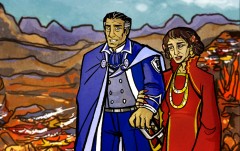 An illustrated scene in the style of an animated series. This is not one of the most action-y scenes, but I thought it was a touching moment of honesty and intimacy between Dalinar and Navani, when he got over avoiding her at every dinner party. It felt like an insight into the old Dalinar, and I think all of us are getting hyped for SA3. It was one or two particular paragraphs that made me go "what the chull am I reading here???", which inspired this drawing and the characters' funny expressions. And also I just wanted to try my hand at drawing weird Rosharan vegetation. There are some rockbuds and my attempt at shalebark. Chapter 64, "A Man of Extremes", WoK Full size: Process pic:
 -
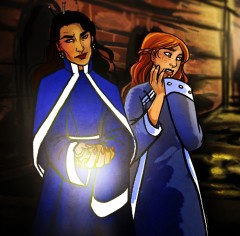 An illustrated scene from WoK in the style of an animated TV series. Some of these chapters more easy to imagine in my mind than others - and this is one of them that is memorable and leaves a lasting impact. Chapter 36, "The Lesson", WoK I really like Jasnah's design. There's something very expressive about her, even if she tries to be cold all the time. I guess it's all that outward arrogance and confidence. Process pic:
 -
The Stormlight Archives Regency Romance SHALLAN'S SKETCHBOOK PAGE 36
-
The Stormlight Archives Regency Romance PART THIRTY FIVE EPILOGUE “‘The second barge containing orders seventy-three through seventy-eight arrived and were successfully installed in the Oostbrug mill by the Corps of Engineers,’” Shallan read. “‘The installation of mechanicals in the refurbished mill include a steam forge and stamping press, hydraulic pump, sawmill, and gristmill. Estimates of production capacity are based on forecasted stream velocity and discharge – see Appendix Seventeen-Point-Three – and are expected to be within–’” she paused. “You know, I will just summarise it from here.” “Please do,” said Adolin with a chuckle. “I am glad you are here, or I would have had to go through all that myself.” “Renarin thinks in such a logical fashion that he expects everyone should be able to see the logic in it too, and understand it straight away,” Shallan said. “Everyone thinks he is eccentric, but I expect in his mind we are the completely irrational ones. Nevertheless, what it means is that he is trying to establish the camp in the model of a self-sufficient village, so we don’t bleed gold and ruin the local economies. Or have margins reliant on the timely arrival of each supply barge. “With the mill and industries, we can train the soldiers during the off-season, to ensure their future livelihoods and produce goods and services to trade for raw goods – food, lumber, fibre – with the surrounding villages. We don’t observe any guild charter regulations, so farmers will be coming to us to grind their grain and process their lumber, because we will take a smaller cut from the top – we can afford to; our labour is the cheapest when most of it is done by the mill engine.” “We try to earn local goodwill – but we will still commandeer their seed stock?” Adolin inquired, a frown tugging at his mouth. “It will make the locals dependent on us. We will be the only merchants in the area with manufactured goods in surplus, and we will happily take Anglethi sovereigns in payment.” Shallan turned a page in the ledger. “When the soldiers leave with the Regiment, the villagers will be grateful to take on the work. This scheme cannot fail – you must trust Renarin on this.” “I trust him, and I trust that it will work. It just doesn’t feel quite – right.” “What are our alternatives?” Adolin took a moment to silently untangle one particularly difficult knot in her hair – Shallan realised that she hadn’t been as fastidious about maintaining her appearance lately, not when she could only bathe quickly at night in the communal baths, when everyone had settled into their barracks or else risen for the night watch. She was also forced to share a small shaving mirror with the junior officers whose camp cots were separated from hers by a makeshift curtain. “I cannot think of any,” he said finally. “It is hard to decide what is wrong or right when it comes to war.” “You would end up questioning whether war is wrong or right,” Shallan said, firmly. “And that doesn’t help at all. It is better to think in terms of victory and defeat.” “I whole-heartedly prefer victory.” “So would I,” she said. “On the day the terms of surrender are agreed upon, we should find an Ardent, and get the licence–” “I have one already.” Shallan shut her eyes. “Does the chaplain know?” “I left it blank. No-one knows you are here.” “Good.” She breathed a sigh of relief. The consequences of being found out involved being tossed into the court martial’s cage – she would never meet punishment, not when she had the influence of a Duke and Lieutenant Colonel to soften the blow, or turn it aside altogether. But she would be dismissed, and stripped of rank, and sent back to Anglekar on the next barge, in disgrace. She knew that the Ardentry was not to be trusted – not when they had been so easily infiltrated in the past. “Shallan,” Adolin began, sounding hesitant – and concerned. “If I am severely wounded–” the brush in his hand gave one last pass through hair that was now a smooth fall of silk; he set it aside. “–Beyond any hope of recovery. Or if you find yourself – increasing – you must take the licence, and seek the chaplain. Please, Shallan – promise me this.” Shallan closed the ledger and leaned back, and Adolin pulled her into his lap, and buried his face in her hair, and his arms twined around her and held her warm and close. When she was like this, in his company, she could shut her eyes, and it was laughably simple to imagine that they were still at Kholinar Court, watching the sunlight slowly wandering across the windows and through the canopy curtains, shifting from the bright yellow-white of noon to the deep oranges and dusky purples of sunset. But now they were sitting on a folding camp cot in a one-room cottage in the dripping rain, and soon, she would be sleeping alone in her own camp cot. And in a month or two, she would be attempting to sleep – for the near-constant barrage of artillery and musketry through the entirety of the night could not be conducive to pleasant dreams. “You know that is something I do not want – not like that.” “But I want it, Shallan,” said Adolin softly. He was not pleading; he did not plead. But there was longing in him all the same, and it tore at her as she recognised it, and saw it reflected as a tiny and carefully ignored spark in herself. “I promised once that you could have all the time you needed – to decide. It is only a piece of paper to you, but to me – it is a regret. And I do not want to live with regret.” “No-one should die with regret either,” Shallan said, feeling something blurring her vision, until her eyes swum with a liquid haze, as if she were viewing the world through the bottom of a bathtub. His arms around her tightened, and the breath of his exhalation whispered through the loose strands of hair tucked behind her ear. “Very well,” she conceded. “If it comes to that, then I will do it.” “I find it very strange that upon our first introduction, I thought that I had no use for a wife, and you – well, you seemed perfectly eager to secure a husband,” Adolin said. He shifted her in his arms, and drew her backward until they lay together on the narrow, creaking cot, his chest to her back, and her head tucked under his chin. “You needn’t remind me – I remember it perfectly,” Shallan mumbled into the pillow. “I – I wasn’t myself then. Not truly. I was just … very lonely, without knowing that I was.” “I think I was just as lonely – and I didn’t want to know it. How things have changed.” His hand crept over her waist and clasped her hand in his own. He had large fingers, rough with callous on the palm, and they scraped over the smooth freckled skin on the back of her hand. “And now I have Shallan, who wears trousers, my Shallan who can prime and fire in twenty seconds.” Shallan laughed, and pressed herself against him. “The local laundresses and tavern girls say Lieutenant McRavad is the prettiest officer in camp.” “I agree with that – you are the camp’s prettiest officer.” “It used to be you, you know,” she said, with a snort. “Somehow you became less pretty when word got out that you were affianced.” Her feet rubbed against his leather boots. “I don’t think that discourages the greedy ones, though.” “They will just have to be discouraged, then.” His hand slipped in under the edge of the dressing robe, and stroked against her bare leg. It swept upwards, rough skin to smooth – and then it stopped. “Shallan,” said Adolin, unexpectedly hoarse, “you haven’t your smallclothes.” “If I knew you had prepared a bath for me, I would have brought clean things to change into.” She smiled to herself. “If it bothers you, I will borrow a pair of yours; I’m sure you won’t mind–” “It’s not necessary,” he said in a low voice. His hand went to her waist and undid the tasselled tie of the robe, and flung it open. “I do not mind – not at all.” For a few seconds he laid his hand flat against her stomach, and then it dipped lower, and then even lower. Shallan closed her eyes, and sighed, and Adolin fluttered kisses at the back of her neck and whispered things to her that made her blush, when she thought she was long past blushing; if she at any point in her life could be named the innocent maiden, she was certain the window of applicability for that particular description had long since been and gone, and she did not miss it, not when she had this wonderful man who could– “Hmmmm,” said Shallan. “I like it better when you say my name,” Adolin murmured, his lips at the shell of her ear. He nibbled at her earlobe. “Or better yet, that one time when you said that you l–” “You misheard me,” she grumbled, squirming in his grasp, feeling frustration in the form of an itch that prickled at her skin and drew it as tense as a drumhead. He held her close, and his hand returned, and she panted and sighed in his embrace, until finally she rested against him, limp and trembling, and her hair stuck to her forehead and her cheeks and lay strewn over his pillow. Men could be trained. And there were plenty of things to do between this and that, and she found that she liked most of them, and Adolin liked them too, and liked them all the more if she professed herself partial to any one or the other. It had been unpleasant at first, admittedly, and desperately close to awkwardness – she could not call it humiliating, but she had not thought it enjoyable, and upon that moment realised why many saw it as a tiresome contractual obligation, and acceded to the keeping of kept women, so long as it was managed discretely. It had brought her to tears – not joyous ones – and the next day Adolin could not bear to look her in the eye, and for three days after that, he had been afraid to even touch her, lest he hurt her even more. She had spoken to Kaladin, who rolled his eyes and told her that her hastiness had a nasty habit of landing her in undignified situations; he had walked away afterwards as if his explanation was at all helpful. And she had spoken to her maid, who was much more sympathetic about these things, and knowledgeable besides. To her satisfaction, she had discovered there were many thises that she liked before one proceeded to that – and the more thising one did, the less distressing became that. The rope frame of the camp cot creaked as Adolin rolled away, and she heard him kick off his boots, and the rustle as he divested himself of his waistcoat and neckcloth, then shirt and trousers; he folded them neatly and put them away. She heard the lid of his travelling chest open and close. The bed creaked again when he returned, and he fell in beside her, and pulled the blanket over the both of them. She tore the dressing robe off and it fell to the floor, and then she rolled around and nestled her head against his bare chest. She knew it bothered Adolin, and more so in the beginning, that they had – they were – engaging in activities more suitable for those married rather than those merely engaged. It was intimacy of the first order, and in this they had become truly intimate; they shared a closeness that was closer than many married couples had with one another, especially within the ranks of nobility: those who had married for the advantage of a smart match when they could not be spared the happiness of a love match. If he considered a formal arrangement preferable, she did not consider it necessary; the business with Loch Davar had long since been resolved as part of Adolin’s dower settlement. She held his trust, and his support, and his – his heart. She had them without a paper saying they were hers – as if a paper could give her these things – and they were more solid, more substantial, than any paper could ever be. They lay under the woollen blanket afterwards, and although it was uncomfortably hot, each was too content in the other’s company to make much of an effort to repair the issue. Adolin curled an arm around her waist, nuzzling at the back of her neck; his warm breath and inquisitive mouth stirred the strands of her hair that stubbornly clung to her shoulders and his cheek. It was always pleasant, when she could hear his heart beating, and there was nothing between them to muffle the sound but skin and bone; she could count them to ten, and then ten again, and each time she counted it took a little bit longer, until Adolin said her name in a soft and sleepy voice, and other things that were soft and warm and capable of filling the ragged cratered scars of her marked spirit. And every time he said such things, they ached a little bit less – because he believed in them, truly, and that granted her the confidence to believe that they were true. Later, one of the lamps dimmed, and flickered out, as the oil reservoir ran dry. Shallan became aware of the passed time, and she sighed, and reluctantly slid out from beneath Adolin’s arm and his blanket. She swung her legs off the edge of the camp cot. “Don’t go,” Adolin groaned, pushing himself up to a reclining position. “I wish you’d stay the night.” “Husbands and wives don’t sleep in the same room,” said Shallan, digging through Adolin’s basket of folded laundry until she found a clean pair of drawers. She pulled them on, tied the waist-string, and found her socks, and then her bodice. “Not if they’re civilised.” “But we’re not husband and wife.” “Then Sergeant Ilamar will suspect we’re illicit lovers.” “Sergeant Ilamar,” muttered Adolin, rolling off the bed; he helped her lace up the hooks on her bodice. “He will no doubt warn me that you are a trying to influence me – to win your step, or something of the sort. He means well, I know it, but he can be very stubborn.” “To be fair, I went from being an unknown to your adjutant,” Shallan said, breathing shallowly as Adolin got to the top row of hooks and pulled them in as far as they would go. “They say Lieutenant Colonel Kholin is partial to redheads.” “Do they?” “Well, only the laundresses do,” Shallan admitted. She buttoned up her shirt, straightened the starched collar points over her silver chain, and let Adolin tie her neckcloth with the deftness of familiarity. “I’ve been hinting that the future Duchess Kholinar is a cousin of mine, and so far people can readily believe it if it turns out to be purely nepotism.” She put on her waistcoat, and then tugged on her trousers and her heavy riding boots, and finally gathered her hair into a gentleman’s tail and tied a ribbon around it. The frock coat in regimental blue went on last. Adolin handed her the courier’s satchel. “Will I see you again this week?” “Renarin and I are for Ostend – to secure futures contracts for the coming campaign. We leave in two days,” she said. “Then we are to meet with your uncle the Graf von Iriale. Renarin speaks the language – we have hopes to borrow a few thousand men, or at least manage another supply line.” She slung the satchel over her shoulder. “You know how it is – the Supply Corps does all the work now, and your Infantry does the work later, and then the Medical Corps has to clean up after.” “Ah, you’ve discovered the old service rivalries. We’ll make a real soldier of you yet, Lieutenant,” said Adolin, and he smiled, and brought his arms around her in a close embrace, pressing his lips to her forehead. He wore the dressing robe she had earlier discarded, and Shallan had on her Lieutenant’s uniform once more – it was an amusing reversal of their previous state of dress and undress. And because she was curious, she slipped her hands beneath the edges of the robe and what she found made her giggle. “No smallclothes, Lieutenant Colonel?” “You took mine!” “I did not say that I mind,” she replied, with a smile. Then Adolin bent his head over hers and his mouth sought her mouth with a fierce hunger that had only barely been placated: it knew what it wanted, and now it found itself wanting; it was acquainted with the knowledge that such desires could be infectious, and had potential for reciprocation. Shallan raked her hands through his yellow-and-black hair; if it had been messy before, it was even messier now, but Adolin didn’t care. His hands slid down to either side of her hips, and through her trousers she could feel the grip of his fingers. She knew what he hungered for, for she hungered for the very same thing, and it was sorely tempting. But she couldn’t stay, and with a disappointed sigh, she pulled away. “Good-night,” she said, and rearranged the drape of her neckcloth. “Or ‘slaap lekker’, since I really ought to be practising more.” “Good-night, Shallan,” he returned. “I will see you upon your return, and I shall look forward to it.” And then he leaned forward and brushed her cheek with a light peck, and said in the softest of whispers: “I love you.” She opened the door, and in gusted sprinkling droplets of rain; they scattered over the rush mat and the floorboards and the wax-polished toes of her riding boots. She stepped out into the night, and the wind stole away the warmth of her body, but it could not touch the warmth that smouldered within her. She did not say good-bye, nor did she think it. It was something she and Adolin didn’t say to one another; they hadn’t spoken of the matter directly, but to her, the words would have been painful to say aloud – it would have been too final a conclusion – and she imagined that the feeling was mutual. Sergeant Ilamar glanced at her with a wary eye when the door closed behind her, and she passed him in his rounds. He, apparently, could not find any evidence of wrongdoing or ungentlemanly conduct; Shallan had made quite sure that her appearance complied with the strict standards of the Regiment and the Codes of War. Reluctantly, he brought his fist to his breast to acknowledge her as a superior officer with priority – although she was of a different service than he, Lieutenant McRavad had the post of staff adjutant. Shallan returned his salute promptly, and descended the water-slicked steps to the path, and then out from the circle of lamplight of the command quarters. It would have been sensible to return to her own barracks – to the room with a shared stove that the junior officers took turns feeding in the middle of the night. It was an oblong box of a place built by the Corps of Engineers to be temporary and efficient, and in that it was adequate; a designation of “sufficient” was considered high praise to the Engineers, whose tendencies leaned towards asceticism as often as it did for the officers in service of the Supply Corps. She did not return to the barracks. Her feet followed the path automatically, as they had done every grey lamp-lit dawn, until she stood at the door of the Supply Corps office. She drew the key from her satchel, and stepped inside, and climbed the dim stairwell with only one small flickering night lamp to shed light on the steps ascending to the second storey, until she reached the simple open-plan room furnished with rows of plain but functional wooden desks, amid towering bookcases and ranks of filing cabinets. Shallan opened her desk drawer and with her clockwork firestarter, lit the chimney lamp; she placed the three ledgers from her satchel on top of the blotter, next to her desk diary. She heard creaking footsteps emanating from the office in the back. The pistol from the bottommost drawer was in her hand within seconds. She forced a paper-wrapped cartridge down the pistol’s barrel; it was a tight fit with the larger size of lead shot that she used. Shallan had only one shot and she aimed to make it count, with a man-stopper of a bullet that dispensed with the necessity of carrying an officers’ sidesword – one shot would be enough when it broke bones and punched a hole in a man’s ribs that could accommodate a clenched fist. Of course, she had only ever done it with the hanging carcass of a hog. Most soldiers relied on muskets in volley fire to incapacitate an enemy – a pistol was only useful in short range or indoors, for personal protection. Nevertheless, it was perfectly appropriate now. The office at the end of the room had its own locked door, and contained the more sensitive files pertaining to the Regiment’s financial situation. It was Renarin’s office, and like most sensible people, the Major would be in his own room at this time of night. But she was not a sensible person, and neither, it seemed, was this intruder. She stepped carefully around the desks, sliding her feet over the joints in the planked floor that had loosened from continuous traffic in the daytime. When she reached the end of the room, the yellow illumination of a night lamp glowed from between the gap of door and floor. She gripped the handle – it was unlocked; it did not look like it had been forced – and then she heaved the door open – and pointed the barrel of the pistol at this guest who for some reason had midnight business with the Supply Corps. “Good evening, Lieutenant,” said Doctor Kaladin, his back presented to the door. His hands were busy sliding open the narrow rectangular drawers of Renarin’s scroll cabinet. The scrolls were heavy hand-pressed rag paper or vellum, sealed with ribbons and medallions of wax: it signified that these formal documents were expensive and important. Most were large contracts with various factors, or notes of ownership for goods that lay in foreign warehouses or had yet to be produced – a tenth of next spring’s wheat production from the local farming communities, or oakum that was still only pine tar somewhere in a Sverickan cellar. Shallan lowered the gun. “He has signed the requisition, you know.” “He could never say no to you.” “You make it sound like a bad thing.” “Restraint and moderation are good things. Their deficiency – if it is not a bad thing, it is not far from it,” said Kaladin. Then he sniffed. “You smell like his soap. It would do you good to understand the meaning of moderation, too.” “Some say cleanliness is next to godliness. And some also say you are deficient in both,” Shallan snapped. “Why are you here? If you disagree with orders, this should be the last place to make your complaint.” Kaladin slid the scroll drawers closed, and turned to face her. “I felt that the orders were in need of a small postscript.” His hand slipped inside his coat and drew out a battered leather document wallet. He unfolded it on Renarin’s vacant desk and brought out a half sheet, which he placed flat on the desk blotter. Shallan scanned the first lines and skipped to the circled numbers at the bottom. “A five-fold increase for imports of citrus syrup,” she muttered, reading, “Ground shell and bone meal … seven hundred spheres sterling.” She looked up. “We already order these things, enough for everyone in camp. This is three years’ worth at once. These – aren’t for the soldiers, are they?” Kaladin was silent. Shallan continued. “Adolin would have approved this.” For a moment, she paused, turning over the information in her mind. “Renarin wouldn’t have noticed.” The Kholins: not only were they capable and competent, but they were honourable – or as honourable as one could be when they lived their lives according to a rulebook written in the times when cannon horses carried armoured knights into battle, and every stately home welcomed troubadours. They were also, if succinctly described, mentally direct. They set themselves a goal, and then they would be single-minded in its achievement. Renarin’s task was ensuring the men under his brother’s command could have dinner every evening, clean socks if they wanted them, and when they faced danger on the battlefield, they would never be in danger of running out of powder or shot. That was his task; anything else would have been extraneous in his mind. And that lack of – of warmth, Shallan realised, was the reason that the servants of Kholinar Court did not want the Marquess Kholinshire as their next Duke. Renarin tried to be warm, when he remembered, or perceived it to be a relevant emotion to display in conversation. But it did not come naturally, in Adolin’s careless easy manner: he was by nature reserved and any attempt to the otherwise would have seemed false, or else contrived. Renarin, to his credit, was direct as he was competent – sometimes unsettlingly so – and he was commendably efficient. But she could not think him empathetic – at least not for the faceless thronging Flemish villagers. He was not one likely to be generous when sufficient would do. Once he found the mark with his usual precision, he had little reason to exceed it – and gratitude was not what his tidy and rational mind would consider fair payment. “Ensuring local good-will is just as important as ensuring that there will still be locals a year from now,” said Kaladin. “The spirit of charitability makes its appearance in our all-loving doctor,” Shallan said, taking up the paper. “Are you finished here?” Shallan did not wait for an answer. She spun around on her heel with a brisk air of martial decisiveness, and returned to her own desk. It was the only desk with a lit lamp; the rest of the office was shrouded in darkness. The sole square window on the wall was shuttered for the night; there were few windows when the constant damp mildewed papers that weren’t kept locked away with troughs of powdered chalk. Behind her, she heard drawers shutting, papers rustling, and the sound of metallic clicks from the lock on the door. She ignored them, and tucked the half sheet addendum into the receipt ledger – the one Adolin had signed off earlier. The functionaries who processed the orders of payment would accept it as official when she presented the books in the morning. “You should not be so dismissive of the locals, Lieutenant.” Kaladin’s voice suggested he was being dismissive of her. “I find their language tiresome.” She slipped her hand into the desk drawer and felt around for her book. “‘Chapter Three: on the distinction between het and de’,” she read aloud. She reached into the drawer once more, and set a bottle of whisky on the desk. “‘Het fles’, but also ‘de flesje’. Their language – sometimes I feel like I should understand it, when I see the words written down and can discern their meaning, but when it is spoken, it is – beyond strange. Do you want some?” She unstoppered the bottle, took a small sip, and winced. It was whisky infused with ridgebark – and it made studying late at night tolerable, when she was off-duty and had licence to indulge – when there was no-one to quote the Codes of War at her – and when wine, her drink of choice, was nowhere to be had. Kaladin took the bottle, and tipped it back for a mouthful. He did not grimace at the taste of ridgebark, and pushed the bottle back over the desk to her “Het. De. Het. De. Het is feest,” she said. “Een eenmansfeest – is het ergste soort feest.” Then she took another sip. “You find it so tiresome, but here you are with ridgebark and a book,” Kaladin remarked. “Many of us find ourselves doing things that need doing, whether or not we like it.” “Indeed. I find it commendable to see you so studious.” He paused, and his voice was more careful. “It may prove useful.” “Of course it will be – why else would I bother?” She hesitated, as his dark brows drew together in thought. “You think a friendly relationship with the locals will prove valuable.” “Yes,” he said, and seated himself on the desk opposite her, within her little circle of lamplight. “If this war goes badly, they may be of help to us.” “Ever the optimist, Doctor.” “Foresight can be remarkably useful sometimes. No, if the Regiment – breaks – and we must make an escape, the best course of action from here is to go overland to Vlissingen, and seek a ship for Kharbranth.” “Kharbranth, of all places?” “The Channel blockade makes things difficult. It is better – and safer – to be Duchess-in-exile in neutral Kharbranth, until there is a negotiation for truce.” Shallan stretched out a hand; Kaladin quickly slid the bottle out of reach. “And what of my Duke? I don’t want to be Duchess, let alone in exile, in Kharbranth!” “Shallan,” said Kaladin, “if the war goes badly for us here, it will go badly for Anglekar, and any son of yours will be fifth in the succession, after Renarin.” “I don’t want to be regent-in-exile either,” Shallan said bitterly, flipping through pages in her book with no real interest. “I only want my family.” “Then go back to Scotland.” Kaladin’s voice was sharp. “Stop playing with Adolin. Marry him or don’t marry him – I do not care – just decide if you want him, or go back to your own family.” Shallan closed her eyes. “My family is here.” “Then make it official.” “I – I can’t. Not now. Not yet.” “So you don’t–” “The day his heart stops beating is the day mine is torn through.” He was silent. Then he spoke, slowly, carefully. “All wounds heal with time. Even those wounds.” “You have said in the past that I could find my peace, and I did. I found it, and I found forgiveness, and strength,” said Shallan. “To be wounded like that, when I have known how it feels to be whole – I would seek mercy.” Kaladin’s lips flattened in disapproval. “If that is meant to be a joke, I do not find it amusing. Nor would I support you in such an endeavour.” “No. I did not think you would.” Shallan’s fingers idly folded over a corner of her textbook page. “I have a plan. Adolin, I know,” she said, “has an impulsive streak that would not allow him to abandon his men, even for a lost cause. I imagine he would rather go out facing the guns and cannons of the field than quietly surrender or submit to the guillotine. Heroic, no doubt, but I still find it objectionable.” “I expect someone has told you about his stubbornness in Ireland.” “He would not be here if not for you.” Shallan bit her lip, feeling pride stick to her throat. “He – we both of us – owe you a great debt and it is not something easily repaid.” “I do not ask for payment,” Kaladin replied, folding his arms. “That is why I dare to ask a favour,” said Shallan. Pieces were falling into place. Where they didn’t fit precisely, she took a sharp knife and trimmed them so they did. “If we are on the verge of a defeat – and if he tries to do something like that again, he must be stopped. With ether, if necessary. I can calculate his progressionals – if you administer the rag. Then I will find us passage in Vlissingen, and we will go to Kharbranth. Together.” “We would betray his trust, and he would betray the Codes, and the men he commands,” Kaladin pointed out. “And the King of Kharbranth does not recognise the sovereignty of foreign titles.” “It is better than the alternative. He might be angry – but when we take choice away from him, the responsibility falls to us – to me. And I do not care,” said Shallan. “I am selfish, and I do not care about that either.” Her hand went to her throat, and she felt the silk of the blue neckcloth that Adolin had tied for her. “Wealth speaks a language anyone can understand. And I wear wealth around my neck. Silver or aluminium – neither taste anything like food.” Kaladin rubbed a weary hand over his eyes. “That is as absurd a plan as I have ever heard.” “You don’t have to help.” “I didn’t say it was a bad one.” “Oh,” said Shallan. “If it pleases you, we will likely all end up middle class together.” She suddenly remembered the word that had been spoken to her in the servants’ hall, months ago. One of the watchwords of the revolution was – egalité. “It would not displease me.” “Nor I,” she said, and smiled. “I would not mind so much if the man I married made me plain Mrs Kholin.” “No-one could think Mrs Kholin plain, especially not Mr Kholin,” Kaladin said. “We prepare for all eventualities, but it may not ever come to pass. For now – for always – we live in hope. And we toast victory.” “To victory,” Shallan said, and when she took up the whisky bottle, Kaladin didn’t stop her. She took a healthy swig, and held it out to him, and he drank too, and the bitter aftertaste of ridgebark tasted less bitter after every swallow. “To Kharbranth,” he said. When the whisky touched her lips and numbed them, she felt it buzzing on her tongue and dripping warm down her throat to join the warmth smouldering inside her. When she said the words Together in Kharbranth aloud, she liked the sound of them, more than the sound of Duchess Kholinar – which was rather a mouthful, when she considered it. Together in Kharbranth. They were three words she didn’t mind saying, or thinking about – they were words, and they were also feelings and sounds and tastes and memories. How life took such twists and turns that the destination she sought a year ago would be the same destination she might find herself seeking a year from now. But the journey was different – the journey was always different – and this time though it might appear a full circle, re-treading the steps that had been taken in the past, something had changed. She had changed. And she was glad of it, and it felt good to know it – to know that she was no longer alone. Victory. The taste of it was bittersweet. If – when – she became the Duchess Kholinar, it would only be to accept her place as an equal to the Duke Kholinar. She did not want elevation for the sake of it – or to fulfil someone else’s Grand Purpose; she did not want to be a great lady, or the leading light of Society. She only wanted Adolin. Adolin would willingly give her whatever she wanted, and whatever he had he willingly shared with her, the material and immaterial alike – out of the depth of the affection he felt for her. And she, out of the depth of affection that was returned, could accept what he gave – things he gave to no-one else, things that could never be given back. She had them, and she kept them and carried them with her, and she did not mind having them; they were not a burden – they were a delight, and not the cage that she had long feared and unconsciously dreaded. She decided that she could share his title, and his name, and she could wear a Duchess’s coronet like she wore the chain about her neck – it was only as heavy as one thought it was. It was only perception, after all. And if he called her Mrs Kholin, when they were together, and alone, no-one had to hear. Author's Notes: Shallan as the Duchess - after wearing pants and being a man, she realises that being a high ranking woman means having way less freedom, even if it is the fancy life. She is afraid that it will be a golden cage, imposed by Society rather than her husband. Shallan from Chapter 1 wanted the marriage and didn't care about anything else - and now she is fine with having everything but the marriage. If she marries Adolin and he dies, she gets stuck in a cage with no fellow cage-dweller to make it bearable - that is what frightens her. Compare to Navani, who is considered an old has-been after her husband dies and her daughter-in-law becomes the true alpha queen bee of Society. Oakum - historically used for waterproofing boat hulls. It is made from boiling pine sap, which was for a long time a major Scandinavian export. In this AU, "Sverickan" means "Swedish" and the IRL Swedish word for their country is "Sverige". "Cleanliness and godliness" - IRL Francis Bacon quote from the 1600's, in the context of high-mortality plagues. "Citrus, shell, bone meal" - Vitamin C, calcium, and protein dietary supplements. Historically, the British Navy used lime juice to prevent scurvy, which was a problem before there were good preservation methods for food other than salting, pickling, or smoking. On Renarin - contrary to the beliefs of combat officers, Renarin is not useless. He is pretty pragmatic, and focused, and when he gets into his role he can be scarily effective like Blackthorn Dalinar. When he wants things done, he will do it, and ramifications come later - like when he jumps into the arena and has a seizure. He is good at preparing but not really good at improvising. If Renarin is the brains of the operation, Adolin is the heart. The Edgedancers' Oath "I will remember those who have been forgotten" is not really Renarin's thing. On Kaladin - he doesn't care about privacy and personal space. When he was a bodyguard in canon-SA, he was always poking around people's stuff (Adolin's fashion folio) and eavesdropping, and speaking in other people's conversations (the menagerie date). But he tries to be a good guy and wants to protect innocent civvies, even if no character in this story can be morally squeaky clean. Bonus info – the scars on his hands are from shrapnel, and the palm scars are from school whippings. He also has a tattoo of the service patch of “Cannon Crew Four” of the Sadeas Regiment. If he ever got a shirtless scene, I would have done an accompanying illustration. "Kharbranth" - parallel to Napoleon's exile in Elba. High nobles who stay and get caught by the enemy become political prisoners or puppets, or get the guillotine. Obvious book-ending here, if you can't tell. On being middle class – Shallan is beginning to unconsciously share the ideals of the Organisation. It’s open ended whether she will look for Mraize in Waterloo. It is also a nod to the end of WoR where Shallan and Adolin’s rank difference stop mattering when she is revealed as a Radiant. I tried to handle Shallan and Adolin’s relationship in a mature, tasteful, and realistic way. They are still messed up characters in various stages of healing and trust, and stuff around them is going to get worse before it can get better, but the characters themselves have progressed to a level that they might be able to work through it if they work together. And if this isn’t a happily ever after story, they can be happy enough for now. THE END FOR REALS
-
The Stormlight Archives Regency Romance SHALLAN'S SKETCHBOOK PAGE 35
-
The Stormlight Archives Regency Romance SHALLAN'S SKETCHBOOK PAGE 34
-
The Stormlight Archives Regency Romance PART THIRTY FOUR EPILOGUE SIX MONTHS LATER Lieutenant McRavad did not think much of Flemish winters. In the Low Provinces, the sea was never far away, even inland as they were. No, the sea made perfectly sure that its presence was known, when it surrounded the Kholin Regiment warcamp with a miasmic touch that filmed with rust anything metal that was not coated in grease or polished weekly. It was humid and damp when they had first made their landing, four months ago – and by the tail end of winter, it was now chill and damp; the nights brought a constant and diffuse drizzle that the pale noontime sun only managed to elevate to a scarcely preferable grey mist. Winters in Scotland were better, Shallan thought. It might be so cold in the highlands that each heaving inhalation felt like white-hot needles being pounded into lungs snap-frozen into immobility, and each whistling exhalation strained like staves against their barrel hoops, to finally shatter into a cloud of bloody slivers and seething white steam – but that was winter, and it knew it, and it was biting and bitter and dangerous, and everyone knew that. Flanders, conversely, was not so strict in observing the typical features of winter: it was either raining a lot, or it was raining a little, or it looked like it would rain soon. The Lowlands were marked by their invariably flat topography: one could easily see the horizon, and beyond the next line of trees was always another line of darkly ominous clouds. The march from the landing site of the HMS Cobalt Guardian to the then half-constructed warcamp had been bearable for Shallan, when it hadn’t rained every day, but now that she had settled herself into the routine of living in a fortified encampment, she was grateful for her specially constructed boots. They were knee-high riding boots that from the exterior appeared to be of the same basic but well-made design that junior officers chose from a cordwainer’s pattern book, but hers were unique: several layers of cork hidden in the sole gave her an extra inch and a half of height. Her only visible concession to stylishness was a slightly elevated stirrup heel whose flamboyance camouflaged the womanly gait she had not been able to completely disguise. Shallan – Lieutenant McRavad – wore a disguise inside and out, and it was the best costume and the most elaborate act she had ever in her life had the opportunity to audition. Now the encampment’s muddy street with its footpath of roughly laid planks was her stage, but she could still quite capably tread the boards in the early dusk of a Continental winter, and her cork soles lifted her above the puddles of oozing mud so that her woollen socks stayed warm and dry. Her regimental frock coat swept behind her; the extra layers of interfacing between the blue-dyed boiled wool and the silk lining held off the chill – and presented a set of slender, but still recognisably masculine shoulders to fellow soldiers, upon which were stitched the service patches of the Duke’s arms and the Supply Corps’ wheel and crossed swords. Bright circles of yellow lamplight glistened off the water-slicked planks of the path; the wind chuffed and hissed and blew fine droplets of mist-like rain into her face – they gathered into a net of glassy beads in red hair curling damp and unruly at her temples. Shallan hugged the courier’s satchel to her chest, and strode confidently through the circle of lampposts to the central command quarters of the warcamp, where a series of pre-fabricated cottages had been built for the use of the camp commandant and the superior officers in residence. The gatehouse guard waved her past their booth without a word. The personal honour guard pacing under the awnings of the connected cottages were not nearly so obliging. The officers’ cottages could not be said to be elegant or sumptuous when viewed from outside – they were simple structures of wood roofed with zinc-rolled iron, sharing one wall on either side with the adjacent cottages; all were arranged into a square around a central courtyard which contained cistern, boiler, and sewerage channel. It was not grand, but unlike a field tent, it could be both comfortable and dry. Best of all, it had its own privacy – something that was regrettably lacking in a communal barracks or even the junior officers’ quarters where the only distinction between one man’s space and another’s was a bedsheet strung from a rope nailed to the walls. Shallan ascended the steps of the raised wooden platform, and paused to shake off a wet clump of mud from her boot heel. She hooked the strap of her satchel over her shoulder, and tucked her hands into her armpits for warmth, eyes searching for the right door: they all looked quite similar in the misted half-light. “Lieutenant McRavad t’see Lieutenant Colonel Kholin,” she said firmly, in her throaty man’s voice, as figures detached themselves from a recessed doorway. She played up her native Scottish accent to roughen the consonants – it made her sound slightly older, and unmistakeably foreign, whilst still retaining the impression of being a trustworthy friendly party who happened not to be too foreign – and in possession of the natural hauteur of a noble lineage. People would see the red hair and hear the accent, and its being so relatively unusual in the crowds of darkly complected Anglethis resulted in their not looking further – for anything else that might prove even more unusual. Two men bearing muskets – with bayonets, Shallan noted, since gunpowder was notoriously unreliable in wet weather – stepped in front of her, blocking the path. They had dark hair and tanned skin and were at least half-a-head taller, even with the advantage conferred by her lifted boots. Both wore the blue uniforms of the Kholin Regiment – not officers’ coats, but the double breasted, silver-buttoned jackets of the high command’s personal bodyguards. One man, sporting the silvery pockmarks of a powder-burn from his cheek down into his collar, gave her a thorough up-and-down inspection. “The Lieutenant Colonel is busy: we just now brought in and filled his bathtub. If you bear a message–” here his eyes flicked down to her satchel, “–you can leave it with us, and we will see it delivered.” “I guarantee that the Lieutenant Colonel will want t’see me,” Shallan said. She held her ground, and settled into the relaxed yet still attentive posture of the at ease drill command. “To-morrow, just like everyone else.” “This is important.” “To you, perhaps.” “T’you, I say. Unless ye dinna care about being paid this week.” Shallan angled herself toward the nearest lamp, and its yellow-white light fell on the Supply Corps patch on her shoulder. She inclined her head and spared him a thin smile. The pockmarked guard glanced at his companion, who shrugged; with a final resigned look at Shallan, he walked several yards down the creaking wooden walkway, and knocked on the door. His companion, a sturdy fellow whose hair was shorn in a soldier’s crop, remained in front of Shallan with his bayonet at the ready. They waited. The door was opened, and answered by the unseen Lieutenant Colonel. There was a whispered conversation, and the guard saluted crisply and returned to Shallan. “The Lieutenant Colonel requests your presence, Lieutenant McRavad,” he said, the scars on his face twisting in disapproval. “You’ve been given priority to disregard the chain of the command. To-morrow, remember that calling is done during official calling hours.” “Lieutenant McRavad has the priority until I say otherwise, Sergeant Ilamar. Please remember that,” said a voice from behind, with the careless ease of one long-accustomed to authority. “Good evening, Lieutenant.” “Yes, sir,” said Sergeant Ilamar, saluting. “Sir,” said Shallan. And then she brought her closed fist to her breast with the enthusiasm and precision of a fresh recruit, and saluted Adolin Kholin. Adolin, clad in the regimental blue of his officers’ uniform, returned her salute with a smile. “I understand that there is important business to discuss.” “Very important, sir.” “No doubt. Shall we, then?” “Sir.” She did not look back when she followed him to his door, and when he closed it, and wiped his feet on the rush mat on the threshold, she could not hold it in any longer; she covered her mouth and laughed and laughed, in the voice she had not used for what seemed weeks – the voice she could not hide away when she had reason to have a genuine laugh, which was rarer these days than she would have liked. It felt good to be herself once more. When she wore the Lieutenant’s uniform for too long without reprieve, it became all too easy to forget that there existed anyone else, inside or out. “Your bath is ready,” said Adolin, “I know you are not fond of the communal baths.” He did not use his commanding officer’s voice; rather, it was coloured with warm affection, and everything else that was soft, intimate, and exceedingly inappropriate in the address of a fellow soldier. “Sometimes I think you prefer it that way,” Shallan remarked. She unbuckled the satchel and drew its contents out; the three books she placed on Adolin’s table, supposedly for dining – it contained a covered tray and ale flagon, and also numerous scraps of message slips, receipts, and hasty notes. Most officers on the field made do with lap-desks or small portable secretaries – nothing more than lap-desks with legs – and Adolin owned both, but like most career soldiers he had not the meticulously well-ordered mind that made the Supply Corps so invaluable to the war effort. Adolin might see the waging of an efficient war as a series of opportunistic pushes in the frame of a grand strategy; Renarin surely saw it as a prospectus – for an investment that would be fortunate to ever break even. Adolin’s shoe horn she used to pry off her boots; she threw her coat over his chair, undid her neckcloth and belt and waistcoat buttons, and then her shirt, until she stood in her drawers and the bodice she’d had made by a theatrical costumier who specialised in garments fit for a specific type of entertainer. “Do you think you could help?” she asked. She felt him unknot the ties at her back; she’d requested hooks instead of the standard eyelets for the lacing to make it possible for her to do herself up in the mornings, and undo them at night without the luxury of a maid, but it took time, and she had more than once been found close to tardiness in the morning call-up because of it. When the bodice fell off, the insistent crushing pressure that was her constant companion during daytime was suddenly released. She had accustomed herself to wearing it – to the point where it had been relegated to a corner of her mind and nearly overlooked, but never – no, never – forgotten. She took a breath of air and filled her unconstricted lungs. It was almost, but not quite, like that first brisk breath of winter air, or the first searing breath of ether, but it was just as welcome, and just as refreshing. “I do not think I will ever like that – that contraption,” said Adolin, as his finger followed the pink lines down her back. “I wish you did not have to wear it.” The seam lines containing the steel stays that made up the bodice’s boning did not chafe – she would not have paid the costumier in Kholinar’s entertainment district if it had. It did exactly what she expected of it, and it was merciless in its effectiveness. “That is something that a man would say, of course,” Shallan replied, and Adolin’s hands reached around her front, and gently traced the line of the pink puckered scar on her ribs. “And it would be said more if I had more to compress. But to my great relief, I do not.” She leaned against him and closed her eyes, and she let his warm hands roam across her rain-chilled skin, to reacquaint themselves with a body that had become ropy and lean in the six months since he had first laid hand or eye upon it. “There is work to be done, as always,” she said, “and though I am fond of you, it is not the only reason for my presence.” She glanced at the books on the table, leather-bound official ledgers stamped with the wheel and sword insignia and the numbers of an official clearance rating. Adolin sighed; it stirred the soft hairs atop her head, which were pulling free of their ribbon tie as they dried in the warmth of the cottage’s iron stove. “I wish there was less time spent on work, and more time for us.” “You would grow tired of me if that were the case. I know that I do, when I am too long alone.” “I tire of being too long alone,” he murmured, and his arms circled her waist with the scratch of winter-weight boiled wool. “And it is worse since I have known you.” And his hand dropped to her hip and slid over the band of her drawers which lacked flounces and lace, but had a string tie that she knew he found just as enticing – or possibly even more. He pulled at the tie; her drawers slipped slowly down to her knees. “You should wash before the water gets cold,” he said, and then he unclasped her silver necklace and brushed a kiss to the shiny white patches of scarring on her shoulder. “And you should read over those ledgers.” Shallan stepped into the tin tub in front of the stove, hair unbound, and sank into the water that rose up around her neck; the warm water soothed away the memories of cold water that fell from the sky and blanketed everyone and everything with a miserable grey sogginess that wavered between the two unpleasant extremes of humidity and complete saturation. She had thought she liked rain as it had always encouraged her in creativity – and she still did, she had to admit – but only when she was comfortably installed behind a window. Windows in a military encampment were few and far between: they were a luxury, and only allocated to permanent structures intended for use by high command. They were fragile to transport, and most buildings did not have any, or had very small ones that were used more often for telling apart night and day rather than appreciating a view. Things had changed much since she had left Loch Davar. She was different to the Shallan of six months ago, who had thought herself hardened in the ways of the world, and even farther removed from the Shallan of a year ago, who was frightened by thoughts of the ways in which the world worked. She felt fear on a regular basis – and this was a good sign to her; she no longer considered herself empty and broken – and she was hardened, and her hands were calloused, and she knew now there were things worse than merciful deaths within the walls of a manor house. It was change – but she would not be afraid to call it progress. She used Adolin’s scented soap, and dried herself with his towels – monogrammed with his initials – and bundled herself into his dressing robe, which was long enough on her that the hem brushed her toes. Adolin did not mind. Whatever he had in his possession, whatever he could give – he could spare it, if it was given to her. When Shallan was finished, she returned to the dining table, and saw that Adolin had his coat off, and was bent over the open books with an ink tray at his elbow. He dipped his seal ring into the ink, and pressed it onto a page in the ledger, and when he lifted it off, an impression of the tower and crown was left behind in a deep blue ink. He signed his name over it while it was still drying. “Receipts of acquisition,” said Shallan, surveying the open ledgers over his shoulder. “Renarin allows for an extra quarter margin for all supplies – an extra half to double if it is something perishable or necessary.” Adolin turned the page, his eyes following the line of numbers to the bottom-most figure, which was circled in red ink. “I do not like the way the wastage margin applies to horses.” “That is why we have the margin on fodder – so we don’t waste the horses unnecessarily.” Shallan was silent for a moment. “And it applies to men as well. But we don’t like putting a number on it, or even thinking about it. Renarin is the only who does.” “Renarin … is not as frail as people think he is.” Adolin signed the last receipt, dabbed at it with the ink blotter, and closed the book. “The statuses next, and then the advisories, I suppose. Have you eaten yet?” “No – not yet.” “Then you should share dinner with me.” He uncovered a tray to reveal a cold roasted capon, baked carrots and young onions, and a flat, dense loaf of brown bread baked in the camp’s field ovens. There was no time or sugar to rise the dough into the soft and fluffy rolls suited for a gentleman’s table, and though the bread was not gritty, it was not wholly wheat flour – it contained a mix of barley and rye that varied by the week, depending on what could be bought from the local villages. Simple fare, but it was filling, and better than the porridges and hard biscuits the enlisted men ate as their main staple. Shallan opened the second ledger and propped it open on the ink blotter as Adolin carved the chicken. The statuses were weekly reports on the activities of the Kholin Regiment Supply Corps. The Regiment had the most ponderously elaborate bureaucratic system of all of the ducal regiments – their ratio of non-combatant support staff to standing army was the highest – but it resulted in their Regiment’s being dangerously well-rounded with respect to firepower, manoeuvrability, and morale. It was the most effective on the field, and also the most expensive to maintain. She waited until Adolin had poured the ale, and began summarising the notes. “The supply barge is late again this week. I expect when it arrives we will get an excuse for the weather being lousy – that or searches or tolls at every pier and lock.” “Military vessels don’t pay taxes,” said Adolin, tearing the bread into rough halves. “It’s the Dukes. They quibble about who pays how much for the war effort, and then the funds are held in escrow, and the goods are delayed until the money arrives.” “The men still need to eat. Their stomachs – and ours – are not held in escrow,” Shallan said, irritably stabbing at a chunk of carrot. “I suspect that some of the Dukes are likely to be cash-poor rather than just miserly – Father writes that we are lucky to get the funds for supplies, late or not. He uses the argument that if we don’t all pull together now, we shall all meet the guillotine later, and it won’t matter how much money we’ve hoarded if it will end up in enemy pockets.” Adolin grimaced, and took a bracing gulp of ale. “Might as well spend it now, while we still have our heads.” “Money,” Shallan muttered. “We brought chests of gold sovereigns with us – but we can’t eat it. We need the supplies, but it’s winter, and the locals have sold all their surplus and won’t sell us their breeding stock or seed grain. Renarin recommends you sign the order for a requisition.” Adolin looked across the table at her, and his brows furrowed. “I don’t hold with foraging – it’s not much better than stealing.” “The villagers have hidden their cattle in the woods; they are not perfectly honest in their dealings with us,” Shallan retorted. “Whatever we take will be paid for fairly, in coin.” “They won’t have their stock in spring, and prices will be at a wartime high when we begin the campaign.” “Then will you let your men go hungry?” Adolin gripped his fork with a savagery that bled the colour from his knuckles. “They won’t starve – I can sign the order to trim the rations until the supply barge arrives.” “Then you will have to hang your own men for desertion and thievery,” said Shallan quietly, wishing that she did not have to be the bearer of bad news. She did not like to see Adolin upset as he was now, and she still had no fondness for disagreement or confrontation, though she did not cringe away from the prospect as she had once. Adolin did not enjoy arguing with her either, and Renarin used this knowledge to protect the Regiment’s interests: she was the one who brought Adolin the distasteful orders that he would have refused from any other officer. Without Shallan’s acting as intermediary, they would have been set to a marked disadvantage. Adolin looked away. “War is much simpler when all you have to do point yourself in one direction, and charge at the other side.” “Life can be simple if you want it to be. All the complexity comes from choice.” “And I made the choice to be a soldier,” said Adolin. His voice hardened. “I will sign the order. I do not want to, and I wish it were otherwise, but it must be done.” They returned to their meal. Shallan picked at the bones on her plate, aware that Adolin was observing her with an interest that he was unsubtly attempting to conceal. Daily exercise had increased her appetite, but she could never eat as much as Kaladin expected of her, and she had remained as slender as she had been – but she was undoubtedly stronger. “Do you regret becoming a soldier?” asked Shallan. “No. It was the right thing to do,” Adolin answered. “Do you?” Shallan took a sip of her ale. She much preferred wine, but every tiny village in the area brewed its own beer – she could not taste the difference – and it was safe to drink, unlike the water that required a thorough filtration and boiling; on the march, it was laced with a combination of bitter powders to prevent the occurrence of unsavoury bouts of indigestion. “No, I suppose not.” She hesitated, running a finger over the rim of her cup. “Not yet, at least.” “And why is that?” “I’m afraid that once I have gotten used to wearing trousers, I should not like going back to skirts.” Shallan smiled, knowing that this was one of the many regrets that could possibly be felt in future. But it was the most trivial of them, and she wanted to be light-hearted, because Adolin tried to be, and it was a fitting counter to the dreadful anticipation that lingered over the whole camp, with the oncoming spring and the beginning of the first push through the Ardennes. “The Society matrons would call that loose behaviour – and they would call me nothing less than wanton.” “I would not call you immoral,” said Adolin tentatively; discussions that veered onto such topics still brought to the surface his streak of bashful modesty. “Or else I would be immoral too.” “If you were, I wouldn’t mind,” Shallan said, and her bare foot underneath the table rose up and brushed against Adolin’s knee. “Your father would say that loyalty to King and Country is the greatest virtue that anyone could uphold. Perhaps it excuses wantonness.” “So would marriage.” Shallan laughed. “When did you become such a Society stickler?” “Since the day I knew that I loved you.” He did not laugh. This particular discussion was one that they had treaded and re-treaded many times before, and it made the both of them upset – not angry, never angry – but uncomfortably conscious that the situation had relegated them to being unwilling victims of circumstance. She could not have married him in their two months at Kholinar Court, when the transports were being readied for the landing at Ostend. Jasnah had tried to push them, but a rushed Society wedding with a special licence bought through heavy-handed philanthropy, or even worse, an elopement, would have been an implication that reputations were in need of preservation. Hers, specifically. The eyes of Society would be trained on her, in the expectation of a ducal heir in fewer than the requisite nine months, and she would never have been able to sneak away into her role as the Lieutenant McRavad. “It doesn’t mean anything – it’s just a paper, and a note in some Ardent’s book. If it really mattered, then your married soldiers wouldn’t be visiting the girls in the village tavern.” “It would be a guarantee of security for you. If – anything were to happen.” “My brothers have written to thank you for paying off the creditors and appointing a competent steward. That is all the security I ever wanted.” “You could have the security of being my Duchess.” “I do not want to be your Duchess if you are not my Duke,” Shallan said hotly, and that was the truth of the matter; it was the dreadful certainty of honesty bared to its very essence. She did not want to be a widow. She would not have minded being a wife – but a widow, especially a wealthy one who bore a husband’s title, and lived on a husband’s maintenance – that would have been too much for her, to be surrounded by memory and thwarted possibility in a Family that could not be her family, in a House that could not be a home when it echoed in its emptiness. Security was freedom to respectable ladies of quality; to her, this form of security would not have been anything but stifling. “Oh, Shallan,” Adolin said, in a voice that twisted and caught in his throat. He pushed his chair back with a scrape, and rose, and Shallan rose to her feet also, and she hurled herself into his embrace, for she wanted – she needed, and with an anxious urgency – the comforting solidity of his presence, and he wanted her just as desperately. Their limbs came together in a tangle, and his hand tangled itself in her unbound hair that fell in rough waves as it dried in the warmth of the iron stove. It was not as long as it had been after Kaladin had taken a pair of a shears to it, but it was thick, and it curled almost unmanageably in the damp … and Adolin liked the way it fanned out in a mane of red on the blue of his pillows. Adolin held her in his arms, and returned her embrace, and then a hand slipped under the back of her knee and he carried her away from the table and to his camp cot. The stretched lattice of ropes under the frame creaked as he lowered her down, and their weight settled on it, and Shallan let go; the edges of her borrowed dressing robe had flown open and she could not ignore her own state of undress when Adolin still wore his regimental uniform. “Don’t go,” she whispered, when Adolin stepped away to the table. “I won’t,” he said. And he returned carrying the ledger book, and her silver chain, and then he went to the travelling chest by the bed and drew out a silver hairbrush. “Will you read it to me?” “Yes. Of course.” And she opened the book to the section marked Week 17 as Adolin seated himself on the narrow bed behind her, and clasped the silver chain around her throat, and ran the brush through her hair until it snarled on a knot. His fingers unwound the hairbrush, and without tugging, he untangled her hair with the gentle patience she had grown fond of in the months since she had come to know him. Author's Notes: In this universe, Flanders is a province in the United Provinces of the Lowlands. IRL, this confederation would be the modern countries of Belgium, the Netherlands, and Luxembourg. This AU follows an alternate history and alternate timeline to IRL Earth. "Fortified encampment" - in the Shattered Plains, the warcamps are built into craters for protection against highstorms. In this AU, warcamps are built as star forts, for maximum cannon defence. "Ilamar" - this guy died at the Battle of the Tower in WoK canon. Seal ring stamps - can be used to make impressions on wax to seal letters and documents in the western style, or in this AU, can also be used with ink in the eastern style of carved stone seals. It's faster and more efficient since you don't have to heat up the wax. "The guillotine" - Let's just say that Napoleodium and the new world order don't really care much for old-fashioned hereditary nobility. On the hairbrushing - YMMV if you think it is emasculating when Adolin is supposed to be top Shardbearer tough guy in SA-canon. Adolin in this story is an effective commander, but when he is around Shallan he is the sensitive nice guy - compare his interactions with other people. Personal hygiene and grooming is very personal to most people, and it implies a high level of intimacy and trust if you let your significant other into the "personal space sphere"; compare to sharing a shower with your SO. In a Regency context, there are men's and women's roles (SA-canon has the gender restrictions of Arts and Majesty), and there are servant and master roles (SA-canon has lighteye and darkeye distinctions). It is the job of the lady's maid to brush a lady's hair, and the fact that neither Adolin nor Shallan care about it means that they share similar values, are comfortable with each other, and view each other as equals. Shallan in the beginning was uncomfortable with being dressed by her maid, to show she was used to being alone, and not having friends or outside support. So it shows she is opening up to people, and trusting them, and she really likes touchy-feely, which Adolin likes too. He has nervous tics like summoning and dismissing or talking to his Shardblade, and doing a repetitive task for a girl he likes is very calming. Kaladin in comparison isn't a PDA type of guy – another reason why he and Shallan are unsuitable romantically.
-
When people on the internet believe things, and from what you have seen of them, show no inclination of changing their beliefs even if you try to debate with them, and include facts and citations, there’s nothing you can do. If you are the type of person who gets upset when people like that don’t listen to you, I am the type of person who laughs and moves on because trying to have a discussion with those types is like having a discussion with a wall. You are only going to waste your own time! You can ask yourself the right questions, and think whatever things you want, but I personally don’t think I should tell people what questions they should be asking. I will only answer the question properly if I am actively asked – that way I know the person is honestly curious about my opinion, even if they don’t end up agreeing in the end. So things on the internet rarely bother me, but then again most of the time I am only a lurker and form my own opinions silently. I judge how good a book is by how likely I am to re-read it. I liked Mistborn – I read the original trilogy in an eBook omnibus, and normally I switch between 3 different series/books depending on my mood, but I read Mistborn all the way through over a week. However, it had twist endings, and relatively simple characters, and once I finished I didn’t see any need to go back to it. It has been a couple years since then and still I have felt no urge to go back – so I agree, it’s entertaining, but a little popcorn-y and a lot of the impact is in the twists and the Sanderson ending. SA is better in this regard, since I finished the chapters with the Tower and still felt enough interest in the world to start again later on. It’s a sign that Brandon has improved his writing skills, which is a good thing. I wouldn’t mind meeting him when he tours in a year from now. I made a four-foot long fantasy sword that I plan on re-purposing as a Shardblade. I know Shardblades are six feet long, but that is taller than me and you will have trouble getting it through the door. Character development tends to suffer in a multiple POV type of story – you not only have to balance all the characters, but you have to move their character development forwards at the same time, while also keeping track of the outside narrative and setting features. SA was never supposed to be an “exploration of the psyche” type of story that you find in literary fiction or literary fantasy, which mostly focuses on the struggles of one main character. There are few fantasy stories that do it well, and usually they have something like 2-4 main characters and tell it over a minimum of three books. Robin Hobb is a good example of character development, and Liveship Traders, which I felt was the best example within her extended universe had something like 4 main characters and an ensemble supporting cast, which had equal share of the screentime all through the trilogy. Brandon’s “1 flashback per book” format means that the characters are not equal – we are likely not to find out much about Szeth and Eshonai until they get their books, and then they will drop off the radar afterwards. The flashbacks are supposed to flesh out the characters’ rationalisations and choices during their focus book. I know you are the one who gets so upset that Adolin will never get one, but if you viewed his character (before the Sadeas thing), he doesn’t come off as a mysterious type of guy, and obviously he was never broken, so if Brandon ever thought about writing an Adolin flashback sequence, there must have come a point where he thought “What am I going to do to fill ~10 chapters/50k words worth of backstory where each is a turning moment in his life?”. Because that’s a whole lot of writing, something like 100 pages on a word processor, and Adolin isn’t traumatised (before the events of WoR Part 5), so whatever could be said about his past would be nothing more than fluffy fanservice than something that takes his character somewhere in the development journey, or explains something important about his characterisation. Sure, you could get a chapter of hanging out with his brother and mum, or eating chicken before his duel with Tinalar (? Can’t remember his name?), or bonding Sureblood, but it adds nothing that we don’t already know. There are no twists!!! IMHO, it’s better suited as a novella/supplementary reading off the main narrative if Brandon ever bothers, or multi-chapter fanfiction if anyone gets around to writing it. And the way you have analysed Adolin back and forth, I doubt anything in there will surprise you. Because I cannot see him getting some secret messed up childhood backstory reveal like Captain Kennit from the Liveship Trilogy. I know you like discussing and dissecting the Dalinar-Adolin relationship, but I personally see the reason why Adolin wants Dalinar around, and is protective of him is for his own reasons and deficiencies rather than wanting his father’s love and approval. Adolin’s main problem is a lack of self-awareness of his own insecurities. While he has Dalinar, he doesn’t have to be in charge, and he doesn’t have to face failure and defeat knowing that all of the responsibility falls to him. Dalinar’s presence is like the security blanket that protects him from himself, so while his father calls the shots and gives him orders and tells him to do things to keep him busy (like going around giving the ultimatums to the highprinces while the Chasm thing was happening to Kaladin and Shallan) he doesn’t have to think about the uncomfortable questions like why he has no friends and no girlfriend. I personally think Adolin knows his father loves him and approves him, when Dalinar calls him a good man, and a better man than he is, and as an adult, doesn’t need to be told. This is Roshar, not Earth, and there are huge culture differences. Where people here and now would think it is acceptable and necessary for adult children to get pats on the back and squishy talks from adult parents, I don’t think it works the same way in Roshar, where posturing and masculinity and looking tough is an important thing in social interactions. It is probably shameful for an adult man/warrior to get defended by his dad in public, as if he can’t hold his own – that is why Adolin does honour duels when he couldn’t duel for ranking, and Renarin gets protected because he can’t call Sadeas out in a fight, and no one in their society sees him as an adult and a man, even though he is past 16. You are projecting modern Earth sensibilities and social customs onto a society that doesn’t necessarily work the same way! Dalinar and Adolin don’t call out Elhokar in public for being a dumb chull after he does certain things in WoR, even though he definitely deserved it, probably for the same reason – reputation to the Alethi is a game of manipulating perception, and it would harm Elhokar’s standing if he was contradicted publicly. It’s a social concept that is missing in modern Earth, but the Romans (another macho, warlike society) had it in the form of dignitas and auctoritas. It’s like reading a historical novel about gladiators and complaining how the characters don’t have a problem with slavery. You can’t overlay modern thinking like that – it’s like going back in time to the Black Plague era and telling people to wash their hands because germs. They didn’t have microscopes, let alone the scientific method. So if you think there is a problem with Dalinar not showing affection to Adolin, and going harder on him than he is on everyone else, perhaps there’s a good reason for it. It could be a compliment (most readers would see it that way) that he thinks his son is that competent to be trusted with so much responsibility, and the affection he shows to Renarin is at the same re-affirming that he thinks his younger son is a weak little boy. And that is why Adolin doesn’t seem to notice a problem, or thinks its normal – his relationship with his father is normal for highprinces and their heirs, whereas Renarin’s is the type that Alethi society sees as “ruining” or “spoiling” a boy and turning him soft. Adolin, even though he is really insecure and nervous and stunted in his emotional development, in his POVs still views himself as an adult and a man. I am very curious to see how Renarin sees himself the same way. It does not seem like Alethi culture (just like most feudal cultures) has any phase between child and adult, like Earth society has with teenagerhood/adolescence. As a side note, Relis’s dad sent him back to Alethkar in a wagon for losing a fight. If Adolin had been crippled, or lost his Shards in a forfeit, I doubt Dalinar would have done the same to him. Dalinar would not have felt embarrassment at the second-hand loss of reputation, because his son matters more. IMHO, speculations only happen if there is room for speculation, in series that are either unfinished, or are so loose-ended or vague in world-building that readers finish the book and still have questions about what happened. There are many series with developed universes that I enjoyed, and I think are worth re-reading, and I don’t speculate or theorise about when I have finished them. But I can still feel the itch to create fanart, if the imagery or characterisation was so vivid that I can still remember the details when the book is closed and returned to the shelf. The work left a strong impression on me, but if all character endings are tied up satisfyingly, there is no need to speculate. I don’t know if it’s just me though – I will have to ask other fanartists what their thought process in creating fanart is like, since it’s different for everyone. I hope you enjoy those books. They both straddle the line of YA and adult fantasy, but I think the stories are mature enough that you can enjoy Sabriel if you are a fantasy fan who likes magic systems and a slow-burner romance, and Eagle of the Ninth for someone who likes historical fiction and beautiful writing – its style is something that I consciously drew on when writing for myself. I think the trope that you might like is “Brought Down to Normal” if you like characters in places of privilege losing it all after being hit by the trauma stick (or something similar). It is like the under-dog rising up type of plots that you get tired of, but the under-dog was once top-dog at one point. I checked the Tvtropes literature list but it’s not too impressive, though. How far are you in the story progress? 26k words is not too bad if you’ve set up the direction of the narrative and sold the characters in a believable way that fits the setting and fits canon, if your goal was to be as close to canon as possible, rather than diverging through an alternate ending or slightly different AU. Because you mentioned it, I went back to find some really stupid stories I wrote a long, long time. And I have decided that you write better than a 13-14 year old in terms of writing style, but compared to a native English speaker of that age, I think their understanding of English grammar would be better. Have you ever read the French translated versions of SA and compared it to the English edition? You can read the first Pullman book (“The Golden Compass” in the US, in UK/AUS it was published as “Northern Lights”) as a standalone with beautiful worldbuilding just fine. When I first read the books, I didn’t understand the religious references, just like I didn’t pick up the political/religious overtones in Ender’s Game – I just enjoyed the story for what it was, without looking further. If you are the type of person who likes picking out influences in consumed media, it would bother you, but if you just want to read a good story, it is very good. When I first read about Sylphrena and the Nahel Bond in SA, I was reminded of Pullman’s trilogy – they have the “magical bond partner” too, but it is not an outside, self-aware moral watcher like a bonded spren. I used to think beautiful writing = boring when I was a teenager, because I wanted action and snappy dialogue. But I tried slow-burner literature stories and now I like them a lot. In the story, Adolin hasn’t had any chances to pick the bad choice, and since he has found some level of self-awareness, any bad choices he makes are likely to be for what he has thought about and considers the “greater good” rather than a hot-headed moment of impulse. He still has the potential to dirty his hands with dark choices, but he has a support system and people who he can trust, unlike the post-WoR Adolin, so it would have to take a similar situation and being alone to do the same thing. In the AU, he and Dalinar weren’t betrayed by Sadeas – they lost half their army in an ambush, and no other army helped them retreat because they assumed it was throwing good money after bad. But I feel like bringing the story to an end on a high note is more satisfying, especially for something that is supposed to be a standalone – a happy for now ending. Ambiguously happy endings (where the good stuff is balanced out by sad things) are better for stories planned out as a series because closure. 17 and 23 are perfectly possible in the real world – yes, it would be kinda questionable if they met at a party or through a dating app, but Adolin and Shallan’s relationship was set up by members of his family, who thought that both people had something worth bringing to a relationship. And if Adolin wouldn’t date a high school girl, Shallan isn’t the type of person who would tell him until their second date and she had him hooked. Her father being dead and needing money is something Shallan tells Dalinar openly when they first meet, but she doesn’t tell Adolin – is it because he already knows, because Dalinar told him, or because his family wants their relationship to work? Or is any girl who dates Adolin expecting that money comes as part of the bargain so it’s not worth mentioning? I personally think an age gap like that can work in the modern world, as long as the maturity level is around the same, and SA Shallan has acted with the independence and self-sufficiency of an adult, even if she doesn’t have the depth of experience that other people would have. People with that age difference can get along with each other, and date, but as for long-term prospects like marriage, who knows. No one can even tell if marriages between people of the same age will last either. Also, if you have listened to the Oathbringer chapter, I think Dalinar is 24-ish when he meets Shshshsh at age 18/19, so the age difference between Adolin and Shallan in-canon is socially acceptable. If Dalinar courted her for 3 years, and she died 10 years before the events of WoK, then she must have died at age 35. Gee, that’s depressing. And because Rosharans don’t get sick easily like Earth people, you have to wonder what happened, since women don’t get involved in dangerous activities like going into battle or hunting whitespines. The Kholins are pretty much nouveau riche in your AU? I would have thought they were old money – glyphpairs and family crests don’t come from nowhere! Then again, in a Canadian setting, I don’t know if you can even have old money in a new world country, so I guess you can make it work. The alternative point of view to “what kind of person spends time taking care of others’ children” is that Dalinar sees Alethkar as his children, and he is their father who has to guide them and discipline them because they don’t know any better. And when he is the father of everyone, he can’t play favourites, not even with his biological children. Not when he has to save everyone from the end of the world. And this whole time, Dalinar has been father figure to Elhokar, who is not his child, but still gets called “son”, and gets the tough love beatdown at the end of WoK while Adolin is left to his own devices. Who knows, maybe Brandon will pull out his religious cards and Dalinar sacrificing his son becomes an allegorical act of tough love and doing what is best for everyone, even if it sucks for Adolin. I get the impression that you are projecting a lot of modern Earth beliefs and expectations onto Dalinar and Adolin’s relationship – which is why people tend to react strongly when you try to discuss it. Alethi aren’t prone to being sentimental and gushy, and men, warriors especially, don’t discuss their feelings and if they did, it would look really really OOC, even if it would solve a lot of problems. Adolin gets awkward asking Kaladin for girl advice, for instance, which is hard for him because it’s pretty much admitting to another guy that he sucks at being a player. At least it’s a sign that Adolin feels that Kaladin is on mostly equal level relationship with him, that they can discuss a personal thing like that. With Dalinar, they are not equal – they are commanding officer and subordinate. Therefore I think your expectations of the destination involving Dalinar having to “prove his love” to Adolin is a bit too much to hope for. Dalinar is not going to pop the l-word to Adolin - does he even do it for Navani?. When father and son finally see each other as mutual equals who deserve respect because the respect is earned rather than expected, all that is going to happen is some eye contact and a nod, because that is what Alethi men do. But to you that would seem “not enough”. I think Dalinar is likely to forgive Adolin for the Sadeas thing, even if the other highprinces don’t. He won’t agree at first, but he’ll understand it, and even if he has to publicly punish Adolin for it, it doesn’t mean he will enjoy or that he won’t regret it. Dalinar is a tough-love guy. And he can forgive Elhokar, or at least stop being angry at him, so he has the potential to do the same for Adolin. At the risk of making an Adolin-centric speculation in what is supposed to be a Dalinar-focused book, the journey is probably going to be Adolin forgiving himself and developing and internalising his own set of ethics and morality instead of piggybacking on the rules his father shoved down his throat. And Dalinar accepting that and moving on is part of his own character development. You think Dalinar calling Adolin the better man as a sad thing, and you want Dalinar to show love and affection to his son. For me, it would be weird if Dalinar started treating Adolin in the same way he treats Renarin, what you call “doting”. Even if Dalinar sees Adolin as a projection or extension of himself, and who he wished he could be from the start, there’s still a level of openly given respect at his son’s achievements that he doesn’t give to Renarin. Dalinar doesn’t go around calling Renarin a better man, he doesn’t even think of Renarin as a man. Sure, Adolin’s achievements are what you interpret as the skills that make him a good tool (the duelling), but within the canon-setting, duelling is his Calling and he gets glory/Tranquiline Hall brownie points for excelling in it – so what you see as using Adolin, in their society, the Alethi see it as rather doing a religious devotion. And Adolin loves duelling because it is something that he is genuinely confident in his skills, compared to other things like dating girls or fighting magical assassins – so even if he is a tool, he likes being a tool, and he consents to being one. The characters’ thoughts and motivations are many-layered, and you are fixated one or two reasons, which are perfectly valid, but I don’t think they are whole picture. IMO, the journey is Adolin discovering his independence and how to make it fit with his family obligations rather than Dalinar accepting it and granting his son independence/autonomy. That would be the most satisfying ending for me, even if you prefer that Dalinar “comes to his senses” and apologises for pressuing his 17 year old son (an adult) to accept an old book that his dead brother read as the framework to his life. But that kind of ending comes from self-awareness, and in a Dalinar book, Dalinar gets the development, so we shall have to see what happens. And write fanfics when it doesn’t work out the way we wanted it to. Not all fans want the OT3/OT4. Just the ones who disappointed by the SA canon relationships and want to write their own versions of what they want to see. I think the vast majority of SA readers are happy with the relationship pairings, or don’t think strongly enough to put time and effort into generating fan-content based on it. If you search by tags on the Archive of our Own, you will see that there are fewer relationship tags for the canon ship of Shadolin than the very briefly mentioned and mostly one-sided canon ship of Shaladin. The vocal minority fills in the gaps when they think there are some worth filling – that’s what it is. And that is why there are so many Kadolin stories, because Brandon is never going to go there, and fan content is the only way fans of that pairing will ever feel satisfied, when Shadolin fans just have to pick up their books and re-read a date scene. I’m not a big fan of such ships, mostly because I have to suspend my disbelief to read them, and have to go in knowing that it is not true to canon-characterisation, or canon setting where I doubt Vorinism would accept things like that. It would be easier for me to accept it if it was built up over several chapters of development, but no one writes stories that long – they start the Kadolin from chapter one and by that I can tell the story is pretty much pure fanservice. Maybe Dalinar dislikes what Adolin wears because he is too used to seeing Adolin in a uniform? Over here, schoolkids wear uniforms from first grade to the end of high school, and university is the first time in many young people’s lives that they can choose what clothes to wear every day of the week. If Adolin went to a private school with a uniform, then Dalinar would be so used to seeing him in the official school blazer, slacks, and tie that anything else would look weird, and somehow wrong. Schoolkids don’t change out of their uniform as soon as the school bell rings – they hang around the local mall or skate park in uniform, or go home and chill in their uniform so the weekend is only time where it’s okay to be low effort. And it struck me that the women in the Kholin warcamp aren’t expected to follow any uniform regulations, and Dalinar hasn’t been shown to approve or disapprove of it. Seems kind of a double standard if Dalinar thinks Adolin dresses sloppy but doesn’t say anything when Navani tries to look seductive. I like woollen jumpers and coats because Australian climate means that t-shirts can be worn the whole year round if you really want to. Woollen jumpers can only be worn for 2 months in the year if you don’t want to die of heatstroke, and they are really comfortable and I love layering. I have a collection of nice wool things and I look forward to the days where I can wear them. It’s the southern hemisphere version of people in the north looking forward to the days where they can wear their singlets/muscle shirts/tank tops in the summer. I cannot imagine Dalinar or Adolin knowing how to cook. If they live in a big fancy house with a big fancy kitchen, it’s never used by anyone except housekeepers and caterers. The Kholins live off dinners packed in labelled plastic boxes prepared by a housekeeper that they just have to dump on a plate and microwave, and for Adolin, protein shakes made from raw eggs, oats, whole fat milk, whey, peanut butter, kale and other things that look like puke when blended together and make Kaladin cringe worse than when people eat fried crab chouta in front of him. Adolin is surprised when he gets to eat food that actually tastes like food, since pre-game food is usually something like boiled chicken with no spicy curry that he loves, served with dry tasteless brown rice, buckwheat, barley, or quinoa. And no one at the table is reminding him to count his macros or telling him how many grams of protein per serving is in his food. It must be really shocking to know that some people don’t cook with a scale and individually count almonds one by one when mixing a green smoothie. Adolin and Tien would get along – I think Adolin was destined to be a cool big brother, where Kaladin is the distant leader type guy. Adolin is the type to bring over his old video game console that he is too busy to use, so he and Tien can play team games while Kaladin thinks he has outgrown such childish things. But he has insanely good reflexes and would be pretty good the first time he tried, because he is Kaladin. That makes me wonder what Adolin would think of Shallan’s brothers. If Helaran (the functional one) is dead/missing in an AU, Balat would be the oldest brother, and he and Adolin are the same age. Adolin is such a good judge of people – would he be able to pick up something is off, or wrong about Balat? Adolin wants to be liked and to be seen as likeable by people his own age, so I am insanely curious as to his reaction if/when he gets to meet his future brothers in-law. He is a family man and family is important to him, but what would he do when he sees evidence of Balat doing crazy things? Not to mention, what would Shallan’s brothers think of Adolin? Shallan is the one who brings light to the Davar family, but once she has tasted what the outside world feels like, she won’t want to come back, and maybe they would feel Adolin is responsible for some of that, and be resentful about it. Shallan is such a perv. Blackthorn Dalinar and Elhokar still have their differences though. They might be selfish or self-centred people who lack self-control and inhibitions, and awareness of the big picture, but Blackthorn Dalinar is willing to work to earn his kingdom/princedom, where Elhokar expects it to be handed it to him. The Kholin princedom is supposed to be Dalinar’s while Elhokar is the king of Alethkar, but Dalinar gave the responsibilities over to Elhokar, to give him something to do. Blackthorn Dalinar can prove he is stronger than everyone else if he wanted to, but Elhokar certainly can’t, even if he wishes. Elhokar is more like a weak and pathetic version of what an Alethi man should be, where the Blackthorn is the shining example of the model Alethi man. The things they share on the outside is more Elhokar wanting to emulate what an Alethi man should be, rather than trying to copy Dalinar exactly – Elhokar couldn’t have known about the flashbacks, because they happened when he wasn’t born, or was too young to remember. There’s one paragraph from WoK chapter 18 that I thought was important for how Elhokar seems himself: The higher your dahn ranking, the more worthy the Almighty thinks you are, and if you are king, you are supposed to be the most “blessed” out of everyone in the whole country. It is possible the stupid things Elhokar does is because he thinks he is, or he should be, “invincible”, or at least untouchable. It sounds silly from our modern eyes, but in history, there were similar concepts like “mandate of heaven” or “divine right of kings”, which we know to be rulers trying to justify/legitimise their dynasties, but in their cultural context, it establishes a rigid social hierarchy where everyone is supposed to know and accept their place, as subservient darkeyes or ruling lighteyes. We may see Elhokar as a selfish baby, but in his head, he probably believes that he should be special, or competent, and feels betrayed by God that he hasn’t been bestowed with the leadership qualities that Dalinar and Kaladin have. It doesn’t excuse his behaviour, but that is probably how he rationalises it. It is interesting that Adolin hasn’t shown much on-screen devotion to religious things – the only ardents he hangs out with tend to be training arena teachers rather than the religious ones. He is either second or third dahn (I don’t think his rank has been confirmed) which means that his innate Glory rating would be among the top 30 people in the whole country, yet he still feels like he should be better, and that he isn’t good enough. Elhokar is supposedly the highest ranking at first dahn, but he has to get drunk to realise he has room to improve. Even if he and Elhokar don’t turn out to have anything in common, there’s still interesting dialogue that could happen if they discuss this subject. Elhokar is a like a cartoonishly inept king, and Adolin is the down-to-earth guy with realistic modern Earth problems compared to everyone who else is worried about the end of the world. If they got their own chasm scene, maybe they could find similarities and awareness, like Kaladin and Shallan did. That’s a good thing if the soul breaking in future books isn’t as non-stop traumatic as it was for Kaladin and Shallan. Because Lift is a 13 year old surgebinder, and the others started attracting sprens around 5-6 six years ago when Gavilar died, and I would hate for a 7 year old child to be hit with the trauma stick, even if it is mostly mentally inflicted – though I cannot imagine that a child of that age would have the comprehension and awareness to break. 10-11 year old Shallan is stretching it. Since Brandon isn’t the most emotive writer when it comes to writing heart-wrenching scenes like he is good at writing cinematic action scenes, I am glad, because a tragic backstory written beautifully about a kid under 10 would make me cry. Even if she does grow up and turns out to be awesome. Why would it be shameful or embarrassing to carry a dead spren blade? They are pieces of a God, and they were once someone’s beloved magical friend. I do not think people would hide them in the closet and be ashamed of owning them. I think they would still be valuable and priceless heirlooms, and even if they aren’t used in battle, they would still be revered by the families that keep them for the historical and cultural value – and Shards are cultural symbols of power and authority to the highprinces, who use them to manipulate their vassals by lending them around. You can’t get rid of ingrained cultural beliefs in a decade, not when there is guaranteed to be some resistance. Maybe Shardblades would stop being trophies and prizes to gamble with at the arena, but Shardplate will still be valuable, and if the Kholins and other “goody-goody” princely houses get rid of their dead blades out of guilt, the less reputable families will snap them up because these things are pretty much indestructible. (unless you test them against Nightblood but that’s a whole other story.) I would honestly prefer Shardbearers to stick around, because it’s a lovely point of conflict between the “old” and “new”. And in the end, everyone learns a lesson about working together like a Saturday morning tv cartoon. I think enjoyment from a book comes from your expectations of it. If you go in blind, or are used to reading a certain type of story, and what you get is completely different, then you will not enjoy it. People who read “Assassin’s Apprentice” expecting lots of assassinations will get disappointed because there is barely any action – it’s just a slow-burner of a growing up story. I wasn’t expecting to read what is pretty much a short story anthology in one connected universe that was London, and it annoyed me so that I couldn’t really get into it, even though I finished it to the end. There are instances where I enjoy that format, but usually it is in the form of supplementary material that goes along with an established series, not something standalone. You want to get invested in characters, but you can’t, since they are guaranteed to go away after 50 pages. Writers write based on their experiences and their beliefs and their interests, even if they try to put themselves into another character’s shoes. That is why Brandon’s books tend to have a religious slant in them, even if it isn’t a main theme of the story. And that is why Brandon’s writing, outside of violent battle scenes, tend to be pretty “clean” in terms of glossing over more mature subjects. That aspect of it is pretty YA-level, even if the density and complexity of the story is way beyond YA. I personally think Brandon associates a happy relationship to successful character development – once a character has reached the end of their journey, they deserve to get their happy wedding as a reward, even if they die afterwards. Maybe it’s predictable, but to me it sounds like an “author appeal” quirk of his. So I would not say that Shallan/Adolin are destined to fail. Maybe they will go through a rough patch, but since they are major character and major supporting character, they will get development – and either they will get their happy marriage, or they will break up amiably just like the Wax and Marasi relationship which everyone was rooting on from the beginning. Not everyone has to be in a relationship, and people can get satisfying character development without it. Adolin would jump to conclusions, I agree with that. That is why I included the scene in the fic where he barges into the room and sees Shallan’s dress on Kaladin’s table. He assumes the worst possible thing happened, but is quickly proven wrong, and accepts that he is wrong because this relationship is one he wants to work. In the past, when a girl dumped him, I got the feeling that was it, and Adolin didn’t try to get her back – he only moved on to the next girl, possibly even before he got dumped. But once he gets into a relationship that he is genuinely invested in, he won’t immediately resort to abandoning ship as is default response. In SA, Adolin tells Kaladin he “wants to keep this one”, which seems like he likes Shallan more than the other girls, and wants to actively continue their relationship. I don’t know what it means in the post-Sadeas world, but in an AU where he doesn’t kill Sadeas, the day where the relationship might fail is a day that Adolin never wants to see. I have tried to keep most characters in line with their canon personalities, with small changes where their personality/outlook on life depends on turning points that never happened in the AU. Shallan is the type to take matters in her own hands if she has to, and there is no other option – she is the one who goes to steal Jasnah’s Soulcaster, instead of her older brothers doing anything. She also likes costumes – and it’s a throwback to the chapter when she kills an ardent and Adolin gives her his coat to cover the bloodstains. He says she looks nice in it, which is (hint hint) foreshadowing. She has transferred Adolin to the list of people she would do crazy things to protect (like her brothers), but at the same time, just like canon-Shallan, she is not above manipulating him to get what she wants, or what she thinks is the greater good. Renarin, too, I think is an interesting character, once he has gotten over his depression over being inadequate and useless. One of the scenes that made an impression on me, was the one in WoK after the chasmfiend hunt when he said he was pretty much a drain on resources and better off dead. It made me interpret him as a person who thinks outside the neurotypical box, and puts a value on a human life that normal people don’t want to think about because all human life is sacred. But numbers people, like insurance actuaries do it on a regular basis, and Renarin is a numbers person. Lirin said that surgeons make village people uncomfortable because they know what goes on inside their bodies when the skin is peeled away, and I write Renarin as someone who makes people uncomfortable because he can determine their usefulness with a dollar sign. He also doesn’t follow morality in the same way as other people – in the last chapter, he doesn’t call Kaladin out for flirting with his brother’s girlfriend, and he helps Kaladin drug Shallan so he can ask her some questions before her ether trip. It’s purposefully morally questionable, and I’m surprised no one reacted with a “what the heck why” type of response. The funny thing in stories with strong female protagonists is that often the male characters end up being only cardboard love interests. It goes both ways. The big reveal – one of the best parts in a story, especially if it’s one where the readers knew it the whole time, but the supporting characters/other POVs didn’t. That delicious, delicious irony. I would say that when a reveal happens that the reader didn’t know about from the start, it is only good if the plot is set up well so it doesn’t come off as a chull pull, and the story still stands up well enough that you can re-read it and it won’t lose all the impact once the surprise is gone. The best stories are the ones you immediately re-read to pick up the clues you missed the first time. I don’t know if darkeyed girls can pass as a boy in an Alethi army – it’s going to be pretty tough to do a cross dress as an enlisted soldier who actually has to do work and pull their weight. It’s easier as an officer (who are lighteyed only) who is supposed to live and eat separately from the enlisted grunts, and can tell people what to do instead of having to carry 40kg on his back and march 20 miles a day, but I don’t know if a regular soldier can do it for long – they will inevitably get caught. Soldiers change in front of each other, don’t cover their safehands, and probably wash in the highstorm like the bridgemen do. It gets obvious after a couple of weeks. slow to reply, sorry.
-
I'm not really a good teacher for art - I'm like those annoying and not helpful "how to draw" books where step one is "draw a circle" and step two is "draw an owl". The process I use is the same one most other digital artists use, and you can easily find tutorials or video replays on YouTube for how to sketch and colour things on a computer. I pretty much only use Photoshop. I have PaintTool SAI and Krita but I don't like flipping from one program to another. Occasionally I sketch pencil on paper to get my ideas down, and then scan it in and work on it digitally. Here are original sketches from the picture "Shardblade Proportions" from my OP. My tiny stub of a pencil - it's the animators' staple Sanford-Prismacolor Col-Erase. I use it because you can easily see it under graphite or black ink. Messy as Braize ballpoint scrawlings. But afterwards I scan it in and it looks much cleaner when I finish working it digitally, and change things that can't be changed on paper without using a bucket of white-out. Watercolour is more frustrating than difficult, IMO. You just need to have lots of control and patience to make sure the water doesn't go everywhere - I keep a box of tissues on the side just in case accidents happen. And when you are colouring something, you have to go from light to dark because there is no Undo button if you start with black instead of building up with it - when I post my process pictures, I do the lightest colours first, and outlines later. In digital art, I do the outlines first, and colour it like a colouring book. Gotta reverse gears when you are moving from traditional media to digital and vice versa. I am not the watercolour pro though - Botanica is the Sharder who does all the fantastic pen and ink and detailed paint work. I first started practicing with those cheap kiddie paint sets and use dinnerware to rinse my brushes and mix my colours, and I still do it today. Is it time for more art? YES IT IS!! What if SA was an animated series? It's too much to hope that SA would have the budget for elaborate backgrounds for every single scene, with full Ghibli colour, but I'd like it if any animated adaptation could convey the same kind of "atmosphere" and feel of Alethkar that I get when I imagine it in my head. Nothing is exactly like Earth, but colour palettes and tonal settings reflect certain environments on Earth, which probably inspired Brandon when he wrote SA. So here are some illustrated SA scenes in the style of TV cartoon, based on how I imagined the story and characters. CLICK TO OPEN TO MAXIMUM RESOLUTION. IT'S BETTER TO VIEW IN FULL!! "New Boots" Process: To me, the Shattered Plains is very western-like (or outback-like) to me, with caravan robberies and bandits! I designed Tyn to be like a cowgirl or (we call it jillaroo here) in a duster coat. I really liked drawing her, and I'm sad she died. Her character costume is inspired by Central Asian traditional dress (the pointy shoulders and boots which are a traditional design for Mongolian horsemen) and it forms a short cape thing in the back like the traditional Aussie stockman duster. Rockbuds! "Be Spectacular" Process: The architecture in the warcamps was described as curved to deflect the highstorms. That stuck with me, and I draw the interiors of buildings as rounded and curved as well. Soulcast buildings to me are all the same beigey brown colour which is combined with diamond sphere light to make the insides of rooms feel "warm", like a comfy Hobbithole or something. It's supposed to feel safe, and stormproof, but still alien looking compared to Earth homes that use a mix of wood, concrete, slate, and tiles in different colours and textures. A warcamp building gives the impression of being claustrophobic and underground since floor and ceiling are made of stone, and there are few windows, but obviously a native Alethi wouldn't see it that way. The Shardblade stances are real ones. The ritual prayer that gets burned before a duel is from my imagination - they are glyphs that are palindromic but not stylised into shapes. "Takeaway Chouta" Process: Obligatory silly stuff!!! This is what Shallan and Adolin did after their menagerie date, because Adolin promised Shallan a date and dinner, but the book didn't show them stopping at a restaurant or anything. Maybe they got takeaway chouta! You can pay the food vendor from the window! Adolin is such a friendly guy and the Roshar equivalent of a professional athlete, so I always imagined him as a big eater who doesn't care about being picky when he has to eat Soulcast food. The gravy covers up weird tastes or lack of taste, anyway. I drew the inside of the carriage as curved like Alethi architecture, and made the interior upholstery and curtains blue, because the Kholins like being flashy. The outside is probably blue as well, and painted with the family glyphpair. Kaladin is being a grump like usual, but he deserves it because he chose to be the third wheel. Some traditional arts now! Stormlight Archive character postcard set! Lol I don't have IRL friends who read SA dunno what I'm going to do now... "Dalinar Cards" I wasn't happy with the first one, so I painted another, and wasn't happy wit that...then dropped my brush and got a black spot on the third...so I ended up with four slightly different cards. I'm still trying to get a grip on how exactly to draw him, and it's not made any easier doing it in traditional format, which means mistakes mean having to start from square one. Extra pic of cards: The Adolin Shardbearer card isn't actually a bright electric blue. Colour settings are off. Process: Bonus pic "Adolin's Shardblade and Lucky Charm" Watercolour with coloured pencil on top. I drew the red one first and wasn't happy with it - there are things that bother me, number one being that red isn't the Kholin colour. Then I drew the blue one slightly different, with changed proportions and I'm not happy with it either - the Shardblade gets too narrow too quickly . This is why traditional media makes me want to headdesk even though it can make for some pretty awesome visual impact. Thanks for reading!
-
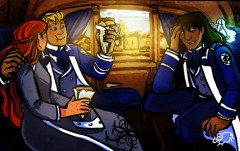 If SA was an animated tv show, this would be a filler episode, because C-H-O-U-T-A. Who cares what it's made of, because it's filled with fried crunchy bits and covered in gravy! Knowing that the gravy pot hasn't ever been washed since the cook first bought it gives the food character. Why is Kaladin such a grumpyhead? Full picture - CLICK TO OPEN!!! Process:
 -
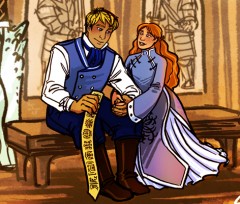 Before the homecoming game, the cheerleaders decorate the football team's lockers. In Alethkar, girls write prayers for their gentleman suitors to burn before a battle or a duel. This is how I imagined the preparation room in the dueling arena, and the glyph painted prayers for good luck and victory. In my mind, Soulcast rooms are a homogeneous shade of beigey brown that get decorated or carved later if people want to get fancy about it. And Alethis like curved architecture because it's functional, and it translates to curved archways and supports in building interiors because fashion. Those are real Shardblade stances! Full image - CLICK TO OPEN!!! Process pic:
 -
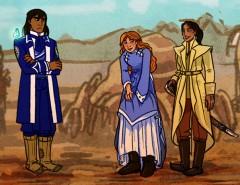 If SA was an animated series, it would be pretty awesome if it had this type of atmospheric feel. The Shattered Plains is coloured like a western, or outback Australia in my mind. Tyn is such a cool "big sister" character - it's a shame she died. I draw her as a cowgirl type, or "jillaroo" as they call it in these parts. And yes, she is wearing gloves, they are just a very similar colour to her skin. And Kaladin's socks have holes in them, and patches, because Kaladin is pretty good at sewing! Yes, that's my attempt at a chull! Full sized image - CLICK TO OPEN!!! Process picture:
 -
In my experience, having family with artistic skills, or having an artistic eye for critique or observing the world doesn't actually mean you can pick up a pen and draw well immediately. Just like anything else, it takes lots and lots of practice to get to the point where you can translate a mental image into a visual image on paper. You have to train yourself to connect your mind to your hand (I know that sounds really wishy washy but I'm an artsy type soo ) and I do not think Adolin can draw well if he can't even read and write glyphs, and probably hasn't lifted a pencil since he got big enough to hold a sword. Kaladin in comparison reads and writes glyphs, and if he doesn't have a creative imagination like Shallan does, he still manages to translate his thoughts into a recognisable image. He was the one who designed the Bridge Four patch and forehead tattoo designs, so I would say that even if he can't draw like an Alethi woman, he can get by. That's pretty much what he is, a sad square. One of my favourite character designs for Kaladin comes from the Tumblr user pmendicant. The design literally makes his face a grumpy rectangle. It's so fitting omg. Is it time for more art? YES IT'S TIME FOR MORE ART. Most of the time I work with art in digital format because it's so convenient and easy, and has all these cool features for streamlining the process, and you can do experiments with colour and design and trash everything you don't like, no big deal, since it's only pixels. The very occasional times where I venture into traditional media beyond basic pencil sketches and doodling, I am reminded why I stick to digital. Number one reason: Undo button. It is better than any eraser ever. Most artists have felt the soul-searing pain when their hand slips and the piece they were working on is ruined FOREVER because of a crooked line or streak of paint in the wrong colour or place. The Undo feature means you will never have to feel it again if you don't want to. Second reason: Save As. It's like going back to your save point when you die in a video game. Third reason: Layers. You will never ever have to wait for paint to dry before you can start going over a piece. Some watercolour character fanart here - I am not happy with it, and there are many things I wish I could fix but it's too late now. If I work over it too much it will wear a hole through the paper. It's a real problem with working on paper. Also I am bleh at painting and my hand shakes too much. The real queen of watercolours is the user Botanica, I seriously lay at her glorious glorious colourfully watery feet. Click to open pics to full res: Kaladin, Adolin and Shallan Original pencil sketch: Process pic The working area. I use a mug to rinse brushes, and a sauce dish I took from a restaurant as a palette. Shhh, don't tell Jimmy. Jasnah and Navani Original pencil sketch: Process pic Working area: One of the super annoying things is that water makes the paper curl up on the edges so it distorts the colours a little when trying to get a picture of it. As a side note, the blue colour I use for "Kholin blue" is not cobalt or even ultramarine as it should be. It's called "American blue" and it's like your eyes are getting assaulted by freedom when you look at it in full saturation. It's gorgeous. Now let's get back to digital. Open it up in full res, pls! It looks better that way! "Kaladin kicking chulls" The heroic moment of heroism where it's pretty much like the Alethi version of using a folding chair in a wrestling match. I even went back to the book to confirm that his helmet-glove was grey coloured Plate. Oh, and Syl's stylised design is inspired by Adventure Time princesses. I made a minimalist one-colour version first because I was lazy and messing around, but I wasn't happy with it, it seemed like it lacked drama, so I eventually coloured it. And a process pic for how I go about doing digital art. It's pretty much layers of sketches one under the other, and each time I go over the top, I change something, or smooth out a line, or add a bit more detail. Often I will sketch something five or six times, and it becomes a rainbow mess. But I never dig a hole through the paper!!! That is the best part. And one last pic: Renarin and Navani hanging out because that's what they do, talking about the fresh gadgets that are gonna drop tomorrow, and comparing specs vs pricepoints. I really like my character design for Navani. Shallan describes her as "motherly", but I can't draw her as a warm and loving mother, I just can't! My first impression of her from WoK was how Dalinar described her as a power hungry political manipulator. This woman married the ultrawarlordest guy in Alethkar, and was a queen! So I made her design and character costume something that would fit an empress. If she is the ultimate Ice Queen mother to Jasnah's Ice Princess, and turned Elhokar into a milktoast mama's boy, then she has to look intimidating and poised and elegant. Yeah, I'm kind of ambivalent on the Renarin design. He is kind of bland and in the background a lot so I dunno.
-
By the time you die, I think you will stop feeling upset at most things on the internet. The amount of content out there means that you will realise that very few things are new and original, and most of it is passed around. When you have seen it once, you have seen it all. Things have to be very funny or very stupid for me to have a real laugh at it these days, and even upsetting things don’t upset me anymore. Brandon is a realistic and reasonable guy, but it’s his fans who can be pretty annoying. The ones who recommend his books every time someone asks for a new series to read, whether or not it is something they would actually like or are looking for. He writes ensemble fantasy so there’s a character for everyone to like, but people who are looking for specific character types to read often don’t want to read 300 pages for Kaladin angst to get to the Jasnah chapters that they like. The worst people are the ones who talk about “forcing” themselves to read the 1000 pages and asking at page 500 if it’s worth it to keep reading or not. If I could feel upset or annoyed at what people write on the internet, I would feel annoyed at that. Because, seriously – if you have to force yourself to read a book, why the braize are you reading it?!? Reading is an activity for your own entertainment, not so you can ride the hype train. Am I the only who thinks that not everyone needs flashback sequences? They’re a useful tool to explain backstory and characterisation, quickly and effectively, so your MC’s motivations and decisions in the main/current plotline are justified and rational, but it is not subtle at all. For Kaladin, you could tell exactly what would happen before it happened, and Shallan’s too in some parts. It lost some of the impact on my first read, and on the second read it was boring enough that I skimmed it so I could return to the main narrative. Flashbacks are just really … not subtle for developing a character, IMHO. They work, and that is why they are used, but I prefer it when backstory is integrated in-text, in the forms of little clues and references instead of separate chapters. It feels like a more natural reading experience that way, and I like that better than being a separate story within the story. Flashbacks and “in media res” formats work for action oriented plotlines like Oceans Eleven, but in characterisation it is a bit heavyhanded. If Adolin gets his past explored in his moments of self-awareness or mental reflection, I would prefer that to flashbacks. And we have gotten some hints of it, like his bonding of a Ryshadium or winning his Shardblade in a duel. I read Bands of Mourning and there was one Wayne PoV chapter. Everyone likes Wayne, and when I read it, I didn’t like his “voice”. I don’t think he’s funny, and Brandon has a habit of picking character quirks and sometimes exaggerating to the point where it’s annoying and you just think “enough of it already, I know what X character is like!”. That is why I prefer Wax/Marasi, the boring characters, because they are readable for most people, whereas Wayne appeals only to a certain subset who think his antics are amusing because lol so random!1!1 To some people, David from Steelheart’s broken metaphors are like that. Of course, depending on where you say your opinion, you would get bashed by the superfans. And the stick, too. My first impression of Renarin was that there was something wrong with him, like an anxiety disorder, but I didn’t even pick it out as autism until later. He is still pretty high functioning, and his lack of interest in talking to people and the rarity of scenes where he has conversations and interactions with other characters are more due to his natural introversion than his being on the spectrum. The problem with Renarin isn’t being born “weaker” than what an Anglethi male should be, but his self-pity and angsty whinging. When he made a comment that was pretty much “Maybe I would be better off dead”, my instant reaction was to roll my eyes and that is why I am glad he doesn’t get PoV. By the time his book rolls around, there’s a good chance his character would have developed and progressed enough – Bridge Four seems to have helped – that his mental dialogue won’t be so annoying to read that your eyes roll so much that they get permanently stuck to your eyelids. Because all clues point towards his “breaking point” being self-inflicted, watching all the other kids have fun outside while he has to stay indoors for his own safety. Dalinar called out Sadeas, his FRIEND, in WoK for saying Renarin was useless. Dalinar wouldn’t have done the same for Adolin if someone had insulted him – he would have just quoted some Code rule that says that good officers don’t duel and words are just words. So Dalinar considers Adolin “the better man” and Renarin his little boy, which is kinda frustrating, because you aren’t supposed to play favourites with your kids!!! At least Renarin isn’t a jerk about it like Malta Vestrit. I have never done much speculating, because some part of me considers the story a property of the original author, and their intentions for their stories’ direction is the “right” one, and it would be presumptuous to make up scenarios with their character. It is why I felt weird about writing fan fiction for the longest time, and I still feel uncomfortable with writing stories based on the canon-universe with canon-characters because I feel like I wouldn’t know them as well as the author could, so everything I try to make is WRONG ALL WRONG!!!! I would prefer to write my own story than piggyback on another person’s. I understand your desire to create something with something that you love, like a universe that you are very familiar with, that gives you good feelings every time you read it, and is associated with happy things in your mind. I don’t speculate like you do, but I do it through creating art. When I finish a book, and it was very vivid and I felt sympathetic to the characters or story, I like to create character and costume designs – and that is my version of inventing things with a favourite universe. I know fan art is self-indulgent like writing your favourite OT3 ship in fanfiction, but there is usually a pool of artworks made by other people, and I really enjoy looking at other people’s art and comparing at how our different our mental images turn out to be. In the book series I recommended a few posts ago, the Old Kingdom Trilogy by Garth Nix, the second book features a character named Prince Sameth who is your typical friendly young man protagonist at first, but then you find out he is scared to death of his parents’ expectations and is even more scared when he gets a traumatic experience and suffers PTSD. The second book (“Lirael”) I thought was a very touching and character developing story that resounded a lot with me when I first read it a teenager, and is still enjoyable when I re-read it years later. The first book (“Sabriel”) isn’t bad, but it develops the world and magic system more than the characters, which is good, but I like character growth too. The other book I recommended, “The Eagle of the Ninth” is a historical with hurt-comfort themes that you like. It features a young Roman career soldier who gets permanently injured and discharged from the army and has to figure out where he fits in the world, with the help of a Roman-hating British slave he rescues from the gladiator arena. It’s very bromance and no romance. I like my romance in stories, but sometimes it’s really cute when people who don’t like each other at first develop a genuine friendship and mutual respect. Both stories have young men coming from places of privilege who have their problems that stem from some sort of self-perceived inferiority. Without having to be underdogs that get beaten and starved and other terrible punishments that make me skim because I don’t like reading endless violence/gore stories. I don’t find Adolin as special as you do as a character. All characters written by different authors are unique, but they use shared tropes and character archetypes, and if no one is Adolin, there are similar ones in completed series who develop with closure in a way that Adolin hasn’t yet done. People who don’t like stories. Why. I know there are people who get bored at stories too, especially really long ones, and that is why I included art in mine – to break up the walls of text. And also I want to be another layer of subtext, to highlight important themes or elements in the chapter, just in case my writing was weak enough not to make it obvious. How much have you written? And how long have you planned it to be to get to your end goal resolution? A novella is around 40-60k words, a YA novel is 100k, and a full novel is 125-150k+. Fanfics that finish up or get dropped are around 20k words. When you know your end goal and your end length, you can structure your chapters to be evenly sized and evenly paced bites of story to carry the narrative. But that may getting ahead of myself – if you have only just started, it’s more important to develop the voice and tone of your PoV characters, so that each one is distinct. And that is why I only used one PoV – once you have got your head wrapped around portraying one, it’s hard to switch gears and tell the story from the opposite side. When I try to write “beautiful” prose, I get myself in the frame of mind of describing a scene in terms of what it is like to see from the character’s PoV, and what they feel. I find that it’s way easier to write poetic prose in a character’s internal reflection rather than when they do things and talk to people – at that point I devolve to Brandon level “workman” writing. There is nothing wrong with “workman” writing as long as it gets the job done at the end of the day. Not everything has to be pretty writing, it’s just a preference. But if you don’t mind critique (and don’t get upset if I do it really honestly) send me the chapters where you think you’ve set the story’s direction. Pullman’s third book is theological and heavyhanded in the third book, but the first is readable. If you can read Orson Scott Card and enjoy it, you can enjoy this. The first book takes place in an alternate universe steampunk London with a 12 year old main character girl which can be annoying for adults to read (I first read the series as a kid and didn’t mind it), but the world-building and beautiful writing makes up for it. It will only offend you if you want to get offended at it. Or you can read it and make up your own mind. If Brandon wrote prose like this, his books would be twice as long. Now that I think about it, the Kaladin and Shallan from my fic are the grey characters, and it is Adolin (who hasn’t killed Sadeas) who is the squeaky clean one. Kaladin is a more interesting character when he is a good guy who manages to still be morally questionable – he invades Shallan’s privacy on a regular basis on the justification of protecting Adolin’s heart from getting stomped, but there’s a certain level of selfishness in what he does. In romance writing and reviewing circles, there are two types of happy endings: “happily ever after” and “happy for now”, and books get labelled with each one so people who prefer one over the other know which one to read. Do you know which one your story will end up? I have always thought “HFN” endings were more realistic and don’t break the suspension of disbelief if your setting is establish as dark and broken. There are many 17/18 year old girls out there that don’t mind dating a 23 year old guy, and some of them actually do because girls liking older guys is a thing, just like girls liking ugly rough looking guys is a thing. It is just uncommon these days because such people don’t often share the same friend circles and don’t have the opportunity to meet, or it would happen more. And also these days, we see ages in stages like child, teenager, young adult, adult, mature adult and we consider it weird when people date outside their little demographic brackets. In the past, in feudal times, and even until the 1950’s/1960’s, there was just a distinction between child and adult, and nothing in between. Shallan and Adolin in-canon would be considered adults and that is why no one thinks there’s anything wrong with it. Even in Regency romance settings, there would be nothing weird about 17/23. I went back to check my books and Elizabeth and Mr Darcy were 20 and 28, Jane Eyre and Mr Rochester were 20 and 37, Emma and Mr Knightley were 21 and 38, and there was one scene where he mentions that he held her in his arms when she was a baby (??!!??!!!!! ) so it seems age gap weirdness is only a recently societal thing. It is weird because people these days would question what a 23 year old would see in a 17/18 year old girl, but Adolin is hardly the type of guy who would take advantage of Shallan. Honestly, Shallan is more likely to be the one to “take advantage” of him, lol. Brandon made Adolin his age to justify his competence leading armies and being a top athlete (and probably the timeline of Dalinar leaving Alethkar and Navani and going to find and court his future wife) and if you were to write him as someone who is very capable managing business affairs and working at a corporate office part-time, then it would make more sense if he were his canon-age. I didn’t know Canadian universities played American football. It’s hard trying to integrate a fantasy story into a modern AU setting, isn’t it? If it were an Australian setting, the sports would be Australian football (we have our own version with no padding) or rugby, which draw big crowds but it’s definitely not a rich boy sport. The rich boys do sailing and yachting. If you can’t find anything, there’s always martial arts. SA Adolin preferred quiet duelling arenas instead of loud crowds (before WoR happened) so it doesn’t need to be a spectator sport. What kind of hero are you if you are willing to let the families of everyone around you suffer and die because you wanted to save your own? Stories where there is a choice between girlfriend and world tend to be so black and white and often predictable. You either save the girlfriend, or you do a last stand/heroic sacrifice and save both with your own death. It’s also arguable that saving your family/girlfriend first instead of defusing the bomb is destination over journey, depending on how the author writes it. I figure Dalinar would be the big picture man, too, since Kaladin is the small picture self-focused character and Shallan is the world exploration/setting exposition character. Whatever choice he makes will be guaranteed to be a learning experience for him and whoever is involved, and if you speculate too much about what it means for Adolin, you will only make yourself worried or sad. By the time Dalinar actually has to make a decision, there’s a good chance that Renarin and Adolin would have levelled up in their character development that they don’t need their dad to come and save them – because they can do it themselves, and they don’t need their dad to say he loves them, because they know he does. Be optimistic! Brandon doesn’t kill off characters or hit them with the trauma stick without a payoff in the end, even if it takes 2000 pages to get there. You worry about Adolin getting exiled from Alethkar, but in the end, he will come back levelled up and ready to kick chulls. Before a dramatic “hold the gates” ending, of course. Dalinar fathering Elhokar would be a real stretch, since Elhokar is mentioned to look like young Gavilar when he was still hot, before he got old and had his nose broken. I do not think Dalinar would have an affair with a married woman. Even when he was a Blackthorn, he always respected his older brother and wouldn’t have an adventure with his wife, even if he and Navani used to like each other in the past. Dalinar can be like Kaladin in that way. Respect means a lot to them, and means there are boundaries that they refuse to cross. Adolin being rejected by Jakamav happened in WoR – are you sure you didn’t like Adolin before that, in WoK? I think establishing character moment was supposed to be either than chapter in WoK when goes to the winebar and his friends insult his dad and he realises uniforms are important, or when he saves the courtesan from the guy who was trying to beat her up. They are the points in character exposition that are supposed to show that Adolin is more than he seems, and has a good heart under the pretty face. It is a shame that Kaladin is going to visit his hometown in SA3. He would have made an interesting “third son” in the Dalinar family dynamic, since he is pretty close to the family by now, and Dalinar calls him “son” (but maybe that is just a Dalinar thing since he does it to Elhokar). I wonder what kind of personality Dalinar projects onto Kaladin, since he really is the morally pure knight he has been looking for from the visions. From what I can tell, his treatment Kaladin is somewhere in between Adolin and Renarin. When Kaladin finds the scratches on the walls from Renarin’s future visions, and beats himself up for not catching the person who did it, Dalinar pretty much tells him not to sweat it. If it were Adolin, Dalinar wouldn’t even try to tell him it’s okay, he would just expect Adolin to know what to do without saying anything, because the “better man” would know what the right actions are. The question is – does Renarin get to choose his own wife for love or not? Because as introverted as he is, I don’t think he is interested in girls enough to go actively courting, and the type of girl who would throw herself at him is not the type of girl he would have anything in common in with. Oh yeah most fics are not very good, but at least some writers are trying to broach in interesting approaches. I wish there was more in the SA fandom, but it is rather small: not many writers and not many readers. Sadly, what little there is seem to prefer the kind of fic I don't particularly enjoy. The fic went in an unexpected way... Shallan disguising herself as a boy? I hadn't thought of that. Ever. Good twist. The fan artist community for SA is much larger than the fan writers, but then again, the same rules of the ratio of mediocre content to good content apply. Maybe it’s a good thing that it’s a small community – it means that the only people who are involved are “true fans”, aka the people who don’t write all those really terrible crossover fics with Harry Potter or Supernatural characters in the SA-universe, or the other way around. Things like that are the cancer of the fan communities. I prefer content where you can tell the author/artist actually cares about getting it right. And you don’t like the OOC OT3/OT4 shipping fics. It’s serious business. Leather pants and black skinny jeans do the same thing as leggings. And you don’t have to worry about what colour of underwear you have on underneath, in case it shows through when you bend over to pick something off the floor. Boots are great in winter. If you wear them in summer, you have to remember to shake out the spiders before you put your foot into them. This is a lesson from experience, especially for people who keep their boots in the garage/attic/basement between seasons. Ivy League preppy has different levels of formal. The casual type with chunky sweaters and colourful button up shirts and pastel chinos are more adventurous, especially when you mix different prints and patterns. Check patterns, plaid and gingham are popular. Smart-casual version of preppy: Casual weekend version of preppy: Woolen jumpers everywhere. Dalinar wouldn’t cut Adolin off for a silly reason! He’d have to do something really bad for that to happen. If he goes to Kaladin’s house, it would be funny if he arrived on their bi-weekly family spaghetti dinner day and he sees that angry, grumpy Kaladin has a loving family and a mum who makes him smile. That would be really cute and really sad, because Adolin would like Tien a lot, and all Tiens have to die!!!! They get hit by a car by an intoxicated driver or something, just like pet dogs in books for children. Or he could go to Shallan’s house. She would let him sleep in her bed if he is too tall to fit on the couch, or if the floor is too uncomfortable. But you can’t send and receive text messages on a payphone! How will Kaladin receive text messages from Shallan and Adolin consisting of a single grumpy looking emoticon? I can see where parts of Elhokar’s personality reflects the less inhibited self-aware Blackthorn Dalinar, especially the drinking and the jealousy bit. But Dalinar, even when he was the young version, still managed to be competent in battle as a general and a soldier, and had the charisma as a superior officer so that people would swear their loyalty to him, which Elhokar lacks completely. Elhokar goes through life living off second-hand respect that people have for Dalinar and had for Gavilar. Even Sadeas didn’t like the idea of killing Elhokar for that reason, not because Elhokar was worthy person on his own merit. His whole spoiled prince personality still seems like a dark reprise of what Adolin could have been if his father was less strict on him with the Codes. Dalinar might be a bad or distant father, but he still managed to instil some sense of discipline and temperance in his sons’ behaviour, which Elhokar lacks, even though his own father must have been equally absent from his own childhood. Elhokar’s relationship with his friends could have been a dark path that Adolin had a chance to go down, if he hadn’t believed in the Codes. Roshone took advantage of his friendship with Elhokar – or maybe Elhokar really wanted people to like him, and was willing to ignore the fact that he was being used. When Jakamav, Toral and Adolin went to the winebar with Inkima and Danlan in WoK, they were smacktalking Dalinar, and Adolin had a chance to redeem his “street cred” if he had joined in bashing his dad and the boring strict uniform regulations. Post-Sadeas messed up Adolin might find he has more in common with Elhokar than he expects. People are expecting bromance between Renarin and Adolin now that Kaladin is out of the picture, but I think it would be equally touching if Adolin and Elhokar had an honest heart-to-heart. They are both seen as people bearing the legacy of their fathers, and are in more need of self-awareness and self-discovery than Renarin or Dalinar, who are probably too busy being Radiants to talk to them. How many people will be broken enough and also honourable enough to attract a spren? There are plenty of people who have just one of those traits, like the bridgemen for being broken, or Adolin for being honourable. But it seems like the people who have some of both but not enough of either will end up as Kaladin’s squires instead of getting their own sprens. There are also people who have potential to attract sprens – if there were enough sprens to go around. Syl was the only honorspren that left, and the Stormfather tried to stop her from going to find Kaladin. I don’t think enough information about Jasnah and what she did in Shadesmar has been released to say that the spren families in the Cognitive Realm will start pouring into Physical Realm when it seems there is still a lot of distrust of bad feeling between humans and their bonded spren that they could kill at any point. Since there are very few copies of Words of Radiance to go around, and only women would be able to read it. How would people even know the words to say the first Oath? Everyone is still wondering how Shallan said them when she must have been around 10 years old. Adolin might stop using his Shardblade, but the other Alethi will still be using theirs. They still have a tactical advantage of being well-trained and used to fighting Parshendi, so even if they won’t fight side-by-side or back-to-back like Adolin and Kaladin in the arena, they could still have a separate unit of Shardbearers. Dalinar is pragmatic. The highprinces would never agree to be united if Dalinar forbade them to use their Shardblades, which they hold as items of prestige and status for hundreds of years, and use to control the loyalty of the lesser brightlords. I only like mentally messed up characters if their characters develop enough to become self-aware and better. But grimdark series revel in the violence and blood and ruthless MC’s, and they don’t get better because that would ruin the point of reading that subgenre. The only cure for being a sociopathic villain protagonist is death. I have read London, which is a brick of a book. It felt like a short story anthology with vaguely connected characters, and I prefer the same characters the whole way through, because it’s annoying to have to re-frame your mind every 50 pages or so get into the swing of the story. I have read Gabaldon too, but stopped after book two, as well as most of the Crichton books, but his tech thrillers have never drawn my interest enough to be worth re-reading, and they age really poorly. The problem with fantasy authors not writing women well is that most of them are men, and often they are the type of people who either don’t have a lot of experience with women, or write to an audience who don’t have a lot of experience with women and don’t really want to read from a woman’s PoV. Brandon himself is guilty of that – one of the reasons why people criticise Mistborn is that the romance is pretty much cardboard. It doesn’t even qualify for vanilla status. When he first started writing it, he was single and people of his religion don’t do things unless they’re married, so it was kinda obvious in the books, and even now he doesn’t write good romance. He wants to write scenes to show developing affection between characters like Dalinar and Navani, Wax and Steris, etc, but it just comes off as cardboardy when they make out. Please stop using the word “melt” or “melting” when writing them kissing scenes pls thx. Nothing much happened with Danlan or Adolin would have felt guiltier about it – but it essentially was supposed to be a free pass for Shallan to kiss another guy without consequence, just so she can confirm that Adolin is “the one”. Kissing isn’t enough to make the emotional response kick in – it’s the implication of something more happening that would make him feel upset and betrayed. I figure that because Adolin at his age is still pure pureness who has never gone on an “adventure” with anyone , when he had plenty of opportunities, like free visits to the bawdy-house, he thinks that doing the thing is an important step for couples in a relationship, not something to be taken lightly just to take care of urges. So if Shallan were to do something with someone else, when he considers it something that is supposed to be “special”, it would imply that he isn’t special to her, and that would be enough to make him go off the deep end. He would still need a solid confirmation that it happened though. He wouldn’t jump to conclusions immediately because he trusts Shallan and Kaladin and isn’t paranoid about people like Elhokar is. Not everything has to be drama! I find good stories integrate slow and thoughtful moments with drama, so each time a dramatic moment comes, you can savour the impact instead of being desensitised from one bad thing happening after another. This is why I can’t read books with non-stop drama sticks. My heart can’t take it. And yes, Shallan will cross dress as an officer in a non-combat service, because Renarin didn’t want her to sell the things that belonged to his mother. Renarin wanted to be a soldier once, and he knows that if Shallan really wanted it, like he did in the past, she would join the army in another way, through the Infantry or another combat unit where she would have a good chance of dying. You might not have guessed it would happen, but Shallan from the beginning of Chapter 1 has had no problem with pretending to be someone else, and when she dressed as a servant with Adolin, he didn’t disapprove of her not “knowing her place”, which is the period accurate attitude to women who don’t want to stay at home and take care of the babies. The main themes in the story are “perception vs identity” and “decision vs reaction”. Shallan has learned a lot about selfishness and regret, and if she can’t do anything to save Adolin’s life, she doesn’t want to stay at home and wait for him to come back, because she did that in Scotland with her brothers, waiting for Helaran to come back and fix things. Note that the answer she gives to Adolin is vague and open ended: “Will you wait for me?”/”I will do what I can.” Shallan’s big fears are that the things she loves will be taken away from her, and that she will die sad and full of regret like her mother. She is not afraid of dying, and if she thinks Adolin is going to die, she doesn’t want to die with regret when she had her chance at happiness, even if it was short-lived, because she is tired of her life of being passive, lonely, and afraid. And she has realised that Adolin, Kaladin, and Renarin are better brothers than her own, and family that actually cares about her rather than caring about how useful she is to them is important. Because “home is not always a place. It is people, and feelings, and sounds and tastes and memories.” And I like plucky heroines in romance novels just as much as I like plucky heroines in historical dramas, and the “Sweet Polly Oliver” character archetype is one of my favourites. There is nothing like the delicious irony when you know the MC is a girl when no one else does, and you’re just waiting for that satisfying reveal moment when she goes “I was a girl all along!”, especially when the oblivious love interest male starts feeling weird for being attracted a fellow soldier in his unit who is really mysterious and secretive about going to the bushes alone. But I will write an epilogue because all romances need an epilogue just so you can feel satisfied at the end of the book. It’s like the bonus after-credits scene at the end of a movie.
-
The Stormlight Archives Regency Romance SHALLAN'S SKETCHBOOK PAGE 33
-
The Stormlight Archives Regency Romance PART THIRTY THREE Renarin returned, with a soft tap on the door, and a large travelling case in one hand and a shoebox in the other. “Sister,” he said, “these were last worn when I was thirteen. You shall have to try them on.” He opened the case on the table, smelling of camphor; out came blue trousers, and a blue coat – lacking service patches on the arm, and only simple shoulder tags instead of officers’ epaulets – and a number of white shirts and blue waistcoats in different sizes, and blue neckcloths. The shoebox contained a beautifully polished pair of dark brown riding boots, with socks stuffed into the toes in lieu of shoe trees. “There’s the curtained corner for disrobing,” said Kaladin, gesturing to the curtain on a rail at the end of the room. “I thought you didn’t care about these things,” remarked Shallan, digging through the clothes, giving up, and selecting three shirts that looked about right. She supposed she would have to get a custom bodice made if she didn’t want to bulge in the wrong places. She didn’t have much in that particular department, but if she were forced by chance to take off her waistcoat, her presentation would make itself glaringly obvious. “I think Renarin should be spared the horror of it.” “It’s so horrible that the thought of it keeps you up at night, I’m sure,” Shallan retorted, dragging open the curtains. She stepped in, and closed the curtains, letting her face peek out at the Doctor. “But I think Adolin seems amenable to facing such fears.” There was a chair in the small curtained corner, and a door with a sign on which was written ‘DO NOT OPEN’. The handle had hanging from it a chimney lamp with a column made of red glass. She dropped the pieces of uniform onto the chair’s seat, and unbuttoned her dress and underdress, looking for a place to put it. There was none, and she didn’t want to throw it over the back of the chair and let the hems drag on the floor. It didn’t matter if the longer underdress touched the ground – that was their purpose, as they were cheaper and could be laundered with hot water and lye in the weekly wash, but the outer dress was made of more expensive and delicate fabrics that were spot-cleaned after wear by the lady’s maid, and carefully cold rinsed then wafted with steam twice a year. “Renarin,” she hissed, and thrust the dress and underdress through a gap in the curtains. She heard footsteps, and then he took them, and she pulled on the white shirt sized for a boy but still a bit long in the sleeves for her. “Storming Anglethis,” she muttered, as everything turned out to be either a tad too long, or slightly too wide for her slender frame. She folded up the cuffs and tucked the tails into the trousers. When she was finished, she did not think it looked completely unsalvageable. The fit of it was more suggestive of a financially prudent young lad with optimistic expectations of further growth, than a boy in his father’s uniform. A few new seams, hemming here and there, and it would be sufficient; Shallan could not dare to hope it should be as nice as anything made bespoke. She stepped out. Kaladin snorted. “If your aim was to look as Renarin did at thirteen, I think you are not far from the mark. Try walking.” She walked from one side of the room to the other, awkward in the boots that had enough room in the toes that she stuffed an extra pair of socks in there. She passed the surgical table, where the box lay open, spilling tissue paper over her shucked dress and underdress. “You walk like a girl,” Kaladin observed. “My governess deserves a medal of commendation, then,” Shallan said. “She always said I walked like a boy, when I couldn’t glide about as I was supposed to.” “The officer ranks are not known for any lack of flamboyance. It’s not the walk that is the real problem – it’s your hips.” “What of them? Are they that much of a horror?” “No, it’s rather that they exist,” said Kaladin, rubbing at the back of his neck. “Most ladies believe modish dresses will win them attention, but I should say trousers do a better job of it.” “Well, I do not expect to see them as the new Society fad anytime soon.” Shallan walked back and forth, in the thick duck cloth trousers that were strangely liberating and light without the swish of skirts she been long accustomed to. “They remind men that women not only have hips, but ankles and knees too. The horror!” “You should try it with a belt and neckcloth, and maybe this waistcoat,” said Renarin, holding them out to her. “The Kholin Regiments aren’t as lax on uniform as the others.” Shallan returned to the curtained corner and exchanged her waistcoat, and buckled the belt, and tied the neckcloth. It didn’t look right – not like Adolin’s or Kaladin’s. She didn’t know the right knot for it, and had automatically tied it in the fashion with which she was familiar, the one she used for Wikim and Jushu. She untied it, and tried again. Someone rapped on the door. Renarin whispered through the gap in the curtains. “My brother is here.” Kaladin answered the door. “Have you seen Shallan?” came Adolin’s voice. It was curious how Adolin’s manner of speech was exuberant and carrying and could be commanding if he wanted, but Renarin was always solemn and soft-spoken; it seemed as if he were incapable of raising his voice. “They said I would be able to find her here.” “She’s … busy,” said Kaladin. His back blocked the doorway. “Is she here, then?” Adolin paused. “That’s her bag on the floor … and that’s her dress on the table.” He lowered his voice; suddenly he sounded upset, and distress coloured his speech. “Kal! What’s going on?” “She will speak to you later–” “Let me through, man!” Adolin pushed past Kaladin at the door, and halted. “Renarin? What are you doing here?” Renarin was silent. He stepped aside. The curtain was yanked open. Shallan was unpleasantly reminded of the incident in her room, that morning. She turned around, and her hands dropped from tying the neckcloth. “Shallan?” Adolin’s face made a rapid transition from anxious to confused. His eyes took the measure of her, from head to shiny polished toe. “What manner of foolery is this? Is this some sort of game?” “It’s Renarin’s uniform,” said Shallan, keeping her own countenance carefully blank. “I can see that. But you’ve got the knot wrong. You’ve done the country squire’s tie. The regimental twist is like this,” he said, stepping closer. “Here, allow me.” She allowed his gentle fingers to undo the neckcloth, smooth it out, and wrap it once again around the starched peaks of her – Renarin’s – collar. She closed her eyes. “You must be wondering why I’m here. Dressed like this.” “Well, now I suppose I am,” he admitted. “It is a game, isn’t it?” Shallan opened her eyes, and drew in a slow breath. The moment of truth had arrived with enough force to make her head swim with its swirling inevitability. Adolin’s blue eyes met her own; he was perplexed by his own lack of understanding, and she saw that he was desperately grasping for something that made any sense at all. “I took the King’s shilling,” she said. She tried to pass it off lightly. “Sovereign actually. But the intent was the same.” Adolin finished the knot, and tucked the ends of the neckcloth under the lapels of her waistcoat. His hands stilled, and slid to her shoulders. “Joining this family,” he said, his expression guarded, “does not require joining the Regiment.” “It was my own choice. If it disagrees with you, we have no formal contract and you are free to select another whose priorities align closer to your own.” “I made the announcement during luncheon. You would be disgraced.” “I should have my Grand Tour in that case,” said Shallan, flippantly. “A withdrawal from polite society is the perfect response to such a blow.” “Then it is a shame that I do not want another.” His voice was low with feeling. A hand left her shoulder and went to her face; his thumb brushed against her cheek. He pressed his forehead to hers; his hair tickled against her brow. “I only want you,” he whispered. “I could not bear it if – if –” “No-one should have to go alone. We are Family,” said Shallan, thinking of their conversation in the hallway, earlier that day. “We can be selfish together.” “Together,” repeated Adolin. “I like the sound of it.” He kissed her on the cheek, and then very softly on the lips, and his hand on her shoulder drifted down to her back and curled around her waist. After a few breathless seconds, he drew himself away and ran a hand through his hair. “It is strange,” he said, “when you are wearing a coat and trousers. Renarin’s coat and trousers. I do not say it is a bad thing, just – very strange.” “Renarin will call me Brother. You could too, if you wanted,” Shallan said, with cheek. She smiled. “No,” said Adolin, smiling back. “I could not – it would be tremendously strange. For you will always be Shallan to me, my Shallan, no matter what you wear, or who you pretend to be.” Then he leaned close and spoke quietly. “Beneath it all, I know it is the Shallan that I love. And not like a brother.” Shallan’s cheeks began to glow a bright pink. It was she who always made Adolin blush with the saucy things she said, not Adolin who rebuffed her attempts at impertinence with a heretofore unexpected aptitude of his own. Then Kaladin said sharply, “Are you finished dressing?” And Shallan knew it for deliberate impertinence, and from the Doctor, it was completely expected. There was the hint of something in his tone that suggested that he might suspect that they had been in the midst of undressing. Some people, unlike other people – aggressively light-skirted visitors to the stillroom, for example – had standards. She stepped out of the curtains, Adolin at her heels. Renarin was tidying up the papers from her appointment, and returning the books to a glass-fronted cabinet. Kaladin was at the surgical table, attention directed to an open leather document wallet unfolded over her discarded dress. Her signing papers. She strode forward, relishing her new ability to stamp her feet without tripping on layers of skirts. Kaladin folded the wallet and tied the loop around it without looking up. “Interesting,” he said, “how you sign your, hmm, name with a different hand than you use for your other writings. The attention to detail is commendably convincing, Lieutenant.” “One must pay particular–” Shallan began. “Lieutenant?” said Adolin. Kaladin tossed the wallet to Adolin. “She didn’t tell you? Miss Davar’s service rank is in the Supply Corps.” Adolin unfolded the wallet and read its contents. “Not a combat position, thank the Almighty.” He looked up, and his eyes lit on Renarin. “But I am Infantry, and if she is Supply, there will not be much overlap. Shallan, I should assign you the role of adjutant on my staff.” Kaladin coughed and his eyes studied the ceiling. Shallan’s hand covered her mouth to conceal her amusement; she sent a swift glance to Renarin, who appeared impassive behind his spectacles. Adolin flushed. “You know what I meant!” he sputtered. Shallan patted him on the arm, smiling. “Of course I know what you meant.” It was not really an effective consolation, for Adolin reddened further and ducked his head in his acute embarrassment. Shallan found it delightful that not only could she make Adolin blush like that, but that he could manage it quite proficiently on his own. “It would be a good idea,” said Adolin, speaking quickly. “You would be allowed to dine with me instead of joining the junior officers’ mess tent. The least I could do would be to ensure that oats do not make an appearance at breakfast or any other meal. And if anyone were to make complaint about your, ah, behaving in a manner unfit for a representative of His Majesty, I could take care of it quietly.” “By that,” Kaladin offered, “he means if you sleep in past morning call, or make feminine hysterics, or if someone notices a woman entering your tent, Adolin will be the one to enforce discipline.” His hands twitched, and he scratched at the shiny stripes of scarring on his palm. “However, I have reason to believe that he would go easy on you. From personal experience, the worst you’d get is a tongue-lashing.” One dark brow rose upwards, but the rest of his face was smoothly neutral. “Perhaps you might even find yourself enjoying it. Who knows, when it comes to dealing with Scots.” “Doctor,” Shallan said, “do I hear you promoting misbehaviour?” “Misbehaviour often tends to occur without the benefit of promotion. It can be quite – spontaneous.” His eyes flicked to Adolin, who was decidedly pink the face. “Now, why don’t you practice marching on command? We will have to use the spoken ones; you must learn to recognise the pipe, drum, and flag signals later.” The next hour and a half involved Shallan’s walking back and forth in the stillroom, with Kaladin and Adolin and occasionally Renarin calling out bits of advice – which often contradicted, or did not make any sense when seriously considered; they were half-misheard words from half-forgotten training sergeants that contained as much cautionary anecdote as they did helpful advice. Shallan had not expected that being a common soldier should be that difficult – she had thought that acceptance to the Regiment required passing a physical examination of one’s sight and hearing, and some basic exercises done in the presence of the recruiting sergeant. And for the non-combatant roles for pay masters, secretaries, cooks, smiths, surgeons, baggage drovers, and engineers, the examinations were far from stringent. His Majesty’s Home Regiment at Fort Shulin accepted women, often the wives and daughters of officers, for the non-combatant support positions. But women were not allowed on the front; in times of war, men who held such position were transferred abroad, and their abandoned but necessary paperwork was managed by women. It was not an appropriate role for a single woman, especially not a gentle lady of high station, for whom the prospect of a salaried occupation would have harmed her own prospects for marrying well. That level of independence bestowed upon a young lady surrounded by many fit and active young men gave many – outside the military families – the impression that such a person would not make a respectable wife or a devoted mother. Fort Shulin, with its long-held military tradition and regularly hosted galas for officers of noble blood, retained some level of propriety; on the front, however, standards were completely different, and completely unsuitable for maintaining a lady’s respectability. It was a good thing that Adolin was not so closed-minded in such matters. They both knew she could never take the King’s shilling in her own name – and ladies were never expected, or even allowed, to take the shilling. On paper they were informal auxiliaries and never granted a rank – they were addressed as Miss or, if married, Missus Lieutenant, and did not wear uniform; military discipline came as a simple dismissal, or very rarely, a firing squad in cases of outright treason. Field discipline was in the form of the court martial’s cage. “You still march like a girl,” Kaladin said, arms crossed and looking bored; Shallan knew he found her antics entertaining. “You need more swagger. Imagine your head inflated three sizes larger than it is already, and that your trouser pockets are full of gold that you have to jingle about so everyone knows you have it. Let Adolin show you how it’s done.” “Here, like this,” said Adolin, counting paces beside her. His strides were longer; Shallan had to take larger steps to keep up. “You must put more emphasis on your shoulders and arms; it’ll be easier to find the pace when you do it with a musket on your shoulder and a pack on your back. Your, ah, move your hips too much.” Shallan glanced down. She could see the shape of her knees and hips beneath the trousers; it was rather daring to imagine herself wearing something like it outside the House. The long frock coat concealed much of her shape, and made her indistinguishable from any other untried but well-connected young officer fresh from the tutoring room, when viewed from behind. Without it, and without the waistcoat, she was distinctively feminine. Adolin didn’t seem to disapprove: she had caught him watching a number of times. And Kaladin too, once or twice, although he had the grace to be more subtle about it. But she really needed a restrictive bodice to keep things locked down tight. “Do I really need to do all this when officers get to ride horses?” she grumbled. “Have you ever gone on horseback for ten hours?” said Adolin. “You will eventually have to take a rest.” Kaladin snorted. “It’s either walking or riding, Miss Davar. I’m afraid even Adolin is not charitable enough for what you’d prefer.” “The roads are not very good outside the larger towns, and never in a winter campaign,” said Renarin. “We use oxen trains to carry supplies overland, and it churns country roads to mud. It is worse when it freezes.” “When it freezes,” Adolin said, “you will have to get off and walk or else your toes go numb.” He was silent for a moment. “Shallan, you needn’t do this. It’s not too late–” “You have done this all before – even you, Renarin?” Shallan asked. “Yes? And you’re planning to do it again. If you can, then I can. My problem is a lack of education in these matters. But then I have you all to help,” she said fiercely, feeling frustration prickle hotly in her eyes. “We shall manage it together – it is what family does.” Adolin’s hand caught hers and gave a friendly squeeze. She looked up at him, and he looked down at her, and she felt his sentiments of assurance and confidence; she knew he was uncertain about this choice of hers, but he was certain that it was a choice she thought as important as his own, and he could not begrudge her something that he did not deny himself – that was not done by an officer or a gentleman, and Adolin was both. “Speaking of Family,” said Kaladin, interrupting their moment with his usual tact, “shouldn’t you be joining your own for dinner?” “Father and the Dukes are staying for now, while they get a military alliance hammered out,” Adolin said. “There’ll be dinners enough over the next few days that it shouldn’t matter if I miss a few. I do not look forward to sitting beside Ruthar and Roion; they will just be haranguing at me for Sebarial’s getting the lion’s share of letters of marque. If their own merchant fleets were equipped with two dozen cannon per hull, then I might actually find them worth listening to.” “Is Sebarial’s Skyeel flagship?” inquired Renarin. He looked thoughtful as he glanced at the wall clock. “Skyeel, Stormwarden, and Roion’s Bowsprit lead the formation in the Channel until the other ships are refitted and armed.” “Renarin, Miss Davar – why don’t you go to the kitchens and see about bringing up a trolley for dinner? Adolin and I must discuss … things … that will no doubt be incredibly tedious to you,” said Kaladin. “Military matters, you see.” “Men’s things, you mean,” Shallan replied. “Exactly.” Adolin would tell her later if anything important had been discussed, thought Shallan. She and Renarin – who did not look unhappy at being thus excluded – perhaps he was used to it, or perhaps he didn’t care – walked to the kitchens in uniform, and went ignored by the servants. They were saluted without hesitation by common soldiers, and would have saluted higher ranking officers if they had seen any, but there were a scarce few higher than Renarin’s own rank of Major. Most people, Shallan noticed, saw the uniform, and not the person wearing it; in that way it was not dissimilar to her experience in servants’ garb. She had tied her hair back in the manner of a gentleman, and it was longer than what a gentleman’s barber might consider conventional, but her blue frock coat was the only thing people allowed themselves to see. “What do you suppose they’re talking about?” asked Shallan in a low voice. She was still working on making it deep enough to pass as a boy reluctantly proceeding into the changes brought by manhood. She had four brothers; she had heard them all go through it at one point. “You.” Renarin’s response was swift; he did not obfuscate. Shallan could not decide if the honesty espoused by Kholin men was a definitively good thing. “I see.” “I hope you do.” Renarin paused, as he usually did when he spoke, and Shallan waited patiently for him to continue. “You make my brother happy. He thinks victory in duelling and on the battlefield make him happy, but it is only satisfaction.” “You can discern happiness from satisfaction?” “Most wretches can.” They were silent as a trolley was collected and loaded with covered trays of food. A pitcher of ale was set on the lowest tier, along with a bucket containing a bottle of wine; Renarin inspected the label with a critical eye, but it appeared to pass muster. He pushed the rattling trolley back through the gauntlet run of a hallway, and when they stood in front of the stillroom door, Shallan asked one other question she had been thinking about since morning. “Where exactly is Waterlô?” “In the Low Province of Wallonia, on the Continent. Next to Flanders.” And then door was opened and Adolin turned to them, grateful to see her, or at least grateful to see the food – he looked as if he had not enjoyed hearing whatever topics of discussion had been brought up in his conversation with Doctor Kaladin. It was not bad news, she speculated, since Adolin did not look especially angry or distressed, but there was something different now, some sense of shyness when they had been so comfortable in one another’s presence only thirty minutes before. Kaladin, the insufferable man – he must have said something to Adolin to make him once again timid in her company, when she had just gotten him to the point that she could kiss him in a room with other people – never mind that there was a curtain to shield the view; the result was still assuredly undesirable. They dined around the surgical table – with no tablecloth, and no centrepiece, and not even wineglasses for their drinks. It was a slap in the face of respectability; it would have been irreparably appalling for the Shallan of six months ago to eat at a table where some poor soul had had his leg sawn off. But this Shallan didn’t care, because she felt at home – and that was more of a comfort to her, and more of a home than she had felt at Loch Davar six months back. There was plenty of food here, and plenty of good cheer and good company, and when she looked around the table, she did not see her hollow-eyed brothers in threadbare green wool. She saw instead brothers-in-arms in the crisp cobalt blue uniforms representing purpose, and direction – and that was infinitely more preferable than the miserable directionless waiting – on something to happen, for someone to save the estate before the final shilling had been spent. Choice. It gave purpose, and filled one’s life with the solidity of true substance. Only if one had courage enough to take it. After dinner, Adolin and Renarin left to return the dishes and trolley to the kitchen. Kaladin rinsed out the beakers, and Shallan went behind the curtain to change back into her dress. The uniform she folded into neat square parcels in the travelling case; she imagined Renarin had a careful pattern of organisation for how he arranged his clothes, but she did not know it, so she settled on placing the heavier coat and trousers on the bottom, then the shirts, and then the rolled neckcloths on the top. “Doctor, what did you say to Adolin?” she asked. “He was behaving somewhat peculiarly – he had difficulty looking either of us in the eye during dinner.” The drain in the scullery tub gurgled. Kaladin straightened, but he did not turn around. “Necessary things. Of a personal nature. If you are insatiably curious about it, you might ask him. In fact, I rather recommend that you do.” “Couldn’t you – cut out the middleman, as they say?” “And what would be the fun in that?” Shallan scowled in what she hoped was a ladylike fashion. She snapped the clothes case closed, and put away the boots in their nest of white tissue. Time passed. The door was knocked upon and swung open, and Adolin stepped through without Renarin. “Jasnah wanted to speak to him,” he explained, shrugging. “I suspect she wants to find him a match after her last roaring success. It is a shame that you have no sisters, Shallan. That should make as neat and tidy an end as anyone would like.” “Not everything can be as neat and tidy as a serial,” Shallan said, gathering her satchel. “Few things in life are. But we struggle along, and make the best of what we can find.” She was aware that this line of conversation could never be appreciated as congenial after-dinner chatter; she altered her course. “I don’t suppose we can go to the retiring room anymore. I might as well go through – I have been awake since dawn. Shall we go up?” “I shall stay,” Kaladin said. “Miss Davar, before you leave – you ought to take your things.” He offered her a sheaf of folded pages. Her calculated progressionals, from her appointment. Shallan took them casually, without looking; unbuckling her satchel, she stuffed them in, between her sketchbook and her pen box. Something tucked between the papers fell out: a blue silk tassel. She tugged on it, like a worm from an apple, and when she had it out, along with the bit of pasteboard attached to it, she held it up to Kaladin. “You should keep it. As a souvenir – I haven’t any need of it myself,” she said. “And thank you, Doctor. For everything.” He accepted it without comment, and slipped it into his pocket. “Good-night, Miss Davar. Adolin.” Somehow his voice sounded ominously knowing – and contained the barest hint of amusement. Adolin offered his arm, and Shallan took it. His other arm held the handle of the travelling case; Shallan had the shoebox. When the stillroom door closed behind them, Shallan smiled. It was a wicked smile. “Your room, or mine?” Adolin, to his credit, did not flinch at the question. “Mine.” Author's Notes: "I took the King's shilling" - moment of truth for both of them here. If Adolin tried to lock Shallan up for her own protection, she would have run away because in her mind, it would make Adolin no different than her crazy father. Renarin, Kaladin, and Adolin accept her decision, and decide to help her, all for different reasons. And because of that, she is willing to trust them and start opening up. "A tongue-lashing" - IRL 1860's slang. Kaladin is making a double-entendre, referencing a verbal reprimand and tongue kissing. "A wretch" - if you haven't figured it out by now, it's the in-universe slang for an ether addict. "You have no sisters" - reference to many Regency romance plots where the PoV female marries the brother-in-law that she thought was annoying or arrogant for half the book. Let's get meta in here. On Renarin - Renarin sees a lot of familiar things in Shallan, even if he doesn't know about the tragic childhood. He was prevented from training as a soldier for being born as an invalid, and sees that Shallan's limitation is her gender. He is aware that Kaladin has feelings for Shallan, but doesn't care enough to interfere unless Adolin is going to be directly hurt. On Kaladin - He's still crushing hard, and thinks she is physically attractive - compare to when he thought she was a skinny spotted frog. He deeply respects her, and doesn't try to stop her when she's made up her mind because it reminds him of his own decision to leave doctor school and follow Tien. His parents would have stopped him, but he didn't care. He has accepted that he's the third wheel in the triangle, and doesn't believe in that nonsense that says men and women can't be friends after the friendzone happens. He is happy that Adolin has found worthy wife and sabotaging their relationship is too evil and selfish for him. He also killed Shallan's brother, so it's possible he thinks he's unworthy. On Adolin - Adolin had his own problems at the start but Shallan getting over her problems and using that knowledge to help with him is very important to him, even though he doesn't know where she gets all that wisdom from. His whole life he has been expected to be the good son, the good soldier, and the good Duke, and part of his character's levelling up is accepting that he has a choice. Yes, he still has the potential to kill Sadeas, but in this AU he won't go blue screen afterwards because he has learned there's a difference between doing good and doing what's right. He also unambiguously loves Shallan, and if Shallan does not love him yet, she has come to a point in her development where she is not afraid to love him back. Notes on the whole story - This fanfic unexpectedly crept up to novel length, hah. It's longer than Twilight, and most YA novels, at over 130k words and 300 pages long on word processor and in ePub edition. If you want to read the whole story (broken into more cohesive chapters without unrelated posts/comments from other people) or download it for your eReader, it is hosted elsewhere. The prose was inspired by Regency authors, and many not so accurate period romances, but the tone changed early on because you can't have a Shallan without darkness (& NO PARENTS) or you risk going OOC. Much of the world-building is SA-canon details grafted onto a historical AU world, as cleanly as I could, to make sense in context. Some of it diverges from Alethkar, for example, AU House Kholin have been the royal family for longer than 2 generations. The social divisions and interactions between classes, and tech levels I have tried to keep mostly accurate to retain the flavour of the period. The original illustrations were created on Photoshop, with some mixed media from hand drawn pencil sketches and layered textures. Originally based on canon Shallan's Sketchbook pages, with stylistic inspiration from Ava's Demon, Lackadaisy, The Prince of Egypt, Transistor, Todd Allison, Leviathan, and Fate/Stay Night (original visual novel not the tv version). Several chapters I thought would read well as a graphic novel or visual novel. The character designs and painting style are my own. Just in case you wondered, the hardest part for me to write was the carriage scene where Shallan drifts on ether for the first time early on in the story. That was the place where the tone changed from romcom to dark, and I agonised over it to get it right, while still making Shallan and her family sympathetic rather than creepy psychos. The other scenes that were hard to write were Adolin's confession of love, and Kaladin's kiss and rejection, because they were extremely emotional and that is harder to do right than action scenes where you can just explain what characters did, rather than what they think and feel. Everything else was easier, yes, even Adolin's confession of cowardice and Lin Davar's death. The passages I liked writing the most were the times where Kaladin put ether on Shallan's wound and it was extremely painful for her. It's too simple to write "it hurt", and I wanted readers to cringe when you read it for the first time. So the lines "a single torrent of nameless, searing agony that swept away thought and reason until there was no sense at all, and only the sensation of pain remained" and "it stunned her insensate mind with more awareness than any abruptly thrown open curtains on any number of mornings. And all of that awareness was attuned to experiencing pure agony." Yeah, Shallan's focus on the pain (and also the descriptions of the food at every meal) is supposed to reflect her personal history and character. Some lines I like the most out of the whole thing were: "his wounded chest gasped in spurts of red", "they could sing, and they sang to one another, and they sang to Shallan", "Loch Davar, admittedly, did not have much that could be praised or even expected in a roof", "It was a different peace for a different sort of brokenness, but the journey was always the same painful struggle." Writing Kaladin's rejection was kind of painful to me, it hit home pretty hard. Even worse that I built up his attraction to her that readers could easily pick up on it, but Shallan was completely oblivious to it to the point where it was probably frustrating. But this isn't an OT3 story, so it had to happen - and I had foreshadowed from the beginning how similar they were, and how Shallan doesn't like that - "I imagine that if I were forced to spend my days with someone identical to myself, I would tear my hair out in frustration." There was a whole lot of foreshadowing in the story, if you feel like going back to seeing for yourself. And lots of throwback lines to previous scenes - there are plenty of lines of dialogue which is an ironic echo of something said earlier. Thanks for reading, hopefully it was interesting to you the whole way through:. I am aware most AU fics are hit or miss, and mostly miss. I had a surprising amount of fun writing this story, since I haven't written prose in years and it was interesting to discover how lots of reading other people's prose managed to rub off onto me. I am also aware that this story needs a good proof-read; every time I go through it I see small things that would be better changed or tightened up, but I am too lazy to go through and edit all these posts one by one. If you liked it, I did a good job then. I wanted this to be not just a fanfiction or a story, but a journey and an experience. THE END. (I'll write an epilogue later because I personally like the closure.)
-
The problem with skateboards is that they have moving parts, the deck and the wheels, and a spren can only be one of them. Like with the Shardbows - the spren can either be the bow or the arrow, but not both. But Syl can be a snowboard or surfboard perfectly fine, and if Kaladin can lash himself to a surfboard, he would be a pretty crazy awesome surfer. Brandon says that Alethi are partially based on Hawaiians and Polynesians, so maybe Kaladin can surf like one. Shardsurfboard vs Jetski, who wins. :ph34r: I want to take this time to share something really stupid with you guys. This belongs in the "Silly stuff" pile. Gorgeous digitally painted portraits are one thing, but there is nothing that can quite beat stylised cartoons for quickly and effectively expressing my interpretation of a character and their personality. You know you did it right if you can look at a picture and see story or dialogue happening, without any words being written in it. CLICK PICTURE TO OPEN UP IMAGE TO ITS FULL AND GLORIOUS GLORY "Let's draw Shallan" "Let's draw Kaladin" "Let's draw Adolin" The things Shallan draws are slightly sparklier and more exaggerated than real life, while still having touches of realism and truth. The things Kaladin draws reflect his honest feelings. Shallan is cute and goofy, Adolin getting smacked down now and then would be deserved and pretty hilarious, and in his mind, Kaladin is still a slave. Adolin can't draw but he tries anyway. It's okay to draw because it's not reading! Fashion magazines are okay because they're just pictures, not books! On the character designs - I want every character to have a unique "look" because otherwise they all look the same when they wear uniforms. An artist has done a good job if other people can pick up who each character is after a quick glance, without having to read the annotations on a piece. In this piece, it's relatively easy to distinguish Shallan from the boys because she is much smaller than both of them, But I always wanted to be able to distinguish Adolin from Kaladin, and not just by their hair colours, as anime often uses in the shows where all the characters look the same and wear school uniforms. For this reason, I draw Adolin with even features, aka "conventionally attractive", and make him more expressive in terms of how his face changes when he talks or responds to people in conversation. He is described as "handsome" in-canon, but I use boyish, charming and cute handsome rather than set-your-ovaries-on-fire hot. Kaladin in canon is apparently rugged and masculine like a pile of rocks, with a chin that can lead armies. I draw him with no lips, no smiling or laughing, and a nose that is slightly too big, but overall his appearance is one that some girls might like, if they are into rocks and eyes so deep and dark and mysterious you will fall into them and wake up ascending into Shardholderdom.
-
The Stormlight Archives Regency Romance SHALLAN'S SKETCHBOOK PAGE 32
-
The Stormlight Archives Regency Romance PART THIRTY TWO The waking-drift was rather curious in its combining freedom of thought – a product of the drift – with the lucidity of one’s real and physical life. One could become dangerously devoid of inhibition, but still be perfectly capable of thinking clearly, and speaking intelligibly enough that people often could not tell that one had just left the embrace of ether. In this lay the importance of driftwatchers, those whose duty involved preventing acts of impropriety before one had a chance to act upon them. An indifference of mind arose in the waking-drift’s gently tenuous embrace; it was the follow-through to the indifference of body from the true drift. There was still awareness in both – unlike ether dosages for inducing surgical insensibility – but the main effect was a lack of concern. One could be cut and bleed and see the blood, but one would not scream from the pain of it. One could remember and dwell upon painful things without feeling the pain of them. Painful things. Like, for example, the day Shallan had killed her own mother. Her mother was ill, in the mind, if not in the body. She had fits of dementia, and her moods wandered unpredictably, and all of them at Loch Davar held onto her happy days; when she had her bad ones, the ones where she railed in her room, and tossed porcelain shepherdesses out of the window to smash onto the courtyard below, they closed their eyes and waited for it to pass. Father wouldn’t acknowledge that Mother was ill. He loved Mother too much. He blinded himself with his love for her. And that was it. Father loved Mother, spirit and soul and heart and everything else. He was a man of strong feeling, and passions, and he had in him the old berserker blood of the northern clans; everything he did was done with passion. That was the reason for the Davar siblings numbering five, when most respectable noble couples only produced two – an heir and a spare – in order not to dilute the family holdings when split in the form of inheritances and dowries. Mother and Father didn’t care – they were much the same in thought and action. They matched; they balanced one another – as long as they had each other. Father could never have loved Malise. Never. Nothing – no-one – could ever replace Mother, and that was how he had broken, when he had gone away in his own mind, and could never find his way back. Something within him had cracked; it died, and it had rotted into putrescence, when Shallan killed Mother. The checks on his behaviour had snapped. He forgot himself, once too often, once too far, and Shallan had had to kill him too. Mother’s death occurred when Shallan was eleven years old. Mother had her off-days, and had been in seclusion from Society for several months by then, after having made a scene at a garden party. There had been rumours about her; most thought she had been sent away to take the waters, or to try the sea air when the country air of the Loch had not proven itself effective. Shallan was summoned upstairs for her weekly presentation in Mother’s boudoir, to show to advantage the skills mastered in lessons with her governess. It was the governess before Madame Tyn. She would be expected to curtsey, recite, sing, and sum on command, on pain of her governess’s dismissal and replacement. Shallan was always anxious before the weekly meeting; she was always desperate to please Mother, and give the answers she wanted to hear. The right answer was not always the acceptable one in Mother’s strange and twisted mind. But this time, Mother was on one of her bad days. She had berated Shallan, and screeched at her, but Shallan was used to it. She dodged out of the way of the thrown hand-mirror, and the tea settings, and then the candlesticks. She, by then, was used to Mother calling her a spawn of Damnation, a bastard of Braize, a terrible wilful changeling child born with a terrible cursed soul that could not be fixed. It hurt; it wounded a child so desperate for loving approval, and each word felt like a slash across her young and impressionable heart. Father closed his eyes to it. He loved Shallan, but he loved Mother, and he could not accept that Mother could not love her. So Shallan endured it, more often as Mother descended into her madness. Instead of waiting for her bad days to pass, they started hoping that the sun would rise on a rare good day. Until that day Shallan had gone up to Mother’s rooms, and Mother told her that she had finally found a cure for that cursed soul. Shallan, filled with the hope of a childlike innocence, had approached Mother, expectant and trembling and eager in her desire to finally please when before she had failed in every attempt. Then Mother had brought out the letter knife and tried to stab Shallan with it. Mother chased Shallan around the room, swearing and shrieking. It was typical behaviour for her by then, and went ignored by servants and family alike. Shallan had knocked things down, and thrown things on the floor behind her, but Mother came on implacably with the light of righteous, manic fury burning hotly in her eyes. Shallan had looked around for something to protect herself, found the dressing table stool, and threw it at Mother’s legs. Mother fell to the white carpet. The letter knife flew out of her hands. Shallan picked it up. Mother leaped at Shallan, and bore her down onto the carpet, and they had rolled around struggling and scratching, and Shallan had slashed out with the knife and cut Mother’s arm, first once, and then twice, and three times. Mother fell back, and her blood dripped down her wrist, twining around her hands like vines on a trellis, pattering onto the carpet and staining the pure white with bright spots of red. Mother cradled her wrist, smearing her arms and her dressing gown with bloody handprints, and when she looked up at Shallan, there was no anger there – only emptiness, the bleak and miserable emptiness of regret. There was no love, nor any capacity for love. She was hollow, all the way through, and mother and daughter knew it for an unavoidable truth in that instant; when their eyes met, they shared something in common as they had not shared in years, so many years that Shallan could barely remember it; she was too young. She took one bloody finger and drew a line over her other wrist, and Shallan understood what was meant. She had ever been the precocious child. When she was finished, she closed Mother’s eyes, and kissed her cooling cheek, and placed the letter knife in her hands. She sat on the bed and cried, until the silence was noticed, and Father’s heavy footsteps pounded up the stairs and down the hallway and then he burst through the door. The coroner said Mother had done it herself. The village gossips said Father had driven her into it, by locking her away in the manor house instead of sending her abroad to a sanatorium, as was usually done for cases of chronic hysteria. Perhaps Father believed that there was truth in that, for he blamed himself, and his outward passion turned inwards and twisted him from the inside until he was not the same man anymore; from then he stopped being Shallan’s loving father. It was easier to believe that Father had caused it all, and that Shallan was not responsible. She had just been there, but she could not remember anything. She was the innocent victim, the victim of circumstance, and she accepted it. She accepted everything that had happened with willing compliance, and let others choose for her. It was easier that way, just as it was easier to forget what had happened. No-one knew Shallan had done it, and no-one blamed her. They pointed their fingers at Father and whispered about him, and he did not deny it; he was cut from Society and he turned to drink. The seasons changed, and the social Seasons came and went, and Father grew grasping and selfishly protective. Helaran had gone away to school; Balat and Wikim had expected to go away for their education, but Father kept them close and did not make the necessary arrangements. He kept all of them close – and Shallan the closest of all. But Father was dead now, because she had killed him. She was broken, and had been broken since she had taken a life for the very first time. She knew now that it had been a choice, a choice to protect herself. Shallan had saved her life by choosing that over death; she did not have to be broken. And in the end, she rather thought she had saved Mother as well. Shallan opened her eyes. Her cheeks were wet with tears. Kaladin’s eyes stared down at her. “Oh,” she whispered, memories lingering behind her eyelids, voice feeble with dry lips and parched tongue. “He’s dead. He went away for ever, and he will never come back. Kaladin – he’s dead.” Kaladin looked as if she had struck him. He turned away, breathing heavily, hands clenching into fists at his sides. “Kaladin,” she said, thoughts whirling with the cool and emotionless clarity of the waking-drift. “Your father once asked if one could kill to protect. My own father taught me that, yes, one can.” I have a plan, said the calm and detached Shallan in her mind. “What did you see in the drift, Miss Davar?” said Kaladin slowly, turning around and all but pinning her to table with the force of his gaze. “Truth. Do not worry, one time is enough. I enjoy it – but I do not crave it. How strange,” she replied. And indeed it was. She did not try to keep the vapours inside of her, clinging to the abyss, as she had done that last time a week ago. She would enjoy it – anyone would – if it were offered again, but she felt no urge to seek it out and return once more to the bliss of a gratification that she recognised was no true happiness. “Now, can you untie me?” She rattled the straps at her wrists, and felt the pressure of the strap at her forehead. Kaladin undid the buckles, and the straps dangled once again under the table. Shallan sat up, swung her legs down, and would have collapsed onto the floor if Kaladin had not caught her in his arms. She flung an arm over his shoulder and laughed. “Your hair is so different to mine! And it smells like ether! You smell like ether!” She took a deep sniff and pulled at a lock of his hair, then she patted his head. It was not soft and fluffy like Adolin’s, but coarse and in dire need of a comb. “Do you cut your own hair?” “Yes.” He looked at her, eyebrow raised. “Can you cut mine?” The stillroom door opened. Renarin stood at the threshold, bearing a tray with a teapot and a platter piled high with sandwiches cut into neat triangles. He surveyed them over the frame of his spectacles. “Should I come back later?” he asked. “No,” they both said at the very same time. Kaladin cleared off the table and brought chairs, and they ate their lunch on the surgical table, and used clean beakers for cups. Shallan was hungry – the last time ether had given her quite an appetite as well – and she ate more than Renarin. “Renarin,” she said, with her mouth full – she was still in the grip of the waking-drift, and did not care about sensibility and seemliness. “How much does it cost to buy a commission?” Renarin put down his beaker of lukewarm tea. “It depends on the service, the regiment, and the rank.” “I have ten unworn silk gowns worth a hundred spheres sterling apiece, a set of silver hairbrushes, and a silver necklace. What would that buy me in the Kholin Regiments?” A chair scraped backwards; the table shifted, and tea slopped over the edge of Shallan’s beaker. Kaladin towered over them, his eyes flashing with anger. “No. What you’re thinking – the answer should be no. You too, Renarin.” Renarin sipped placidly at his tea. “Regimental Infantry Lieutenant, easily. You still need enough for the uniform, equipment, and horse.” “Lieutenant Davar,” said Shallan. “I like the sound of it.” “Shallan,” said Kaladin warningly. “You wanted to be Duchess Kholinar once. What happened to that?” “I don’t want to be Duchess Kholinar if it means I must be the Dowager Duchess.” “What you’re doing is against the law. I could report you. And Renarin too.” Renarin folded his hands over the table. He glanced at Kaladin, then Shallan. “Doctor,” he said, “do you think Shallan would enjoy a month in the court martial’s cage?” “She wouldn’t be court martialled.” “She would still spend a month in there while Adolin sorts things out. If you can recall–” “I still disagree.” “There is another way.” Renarin rose to his feet, and walked over to the stack of papers. He inclined his head, and Shallan stood too, and joined him. He opened his coat, and drew out a slim leather wallet from the interior pocket, which he unfolded on the table. “Your progressionals are accurate for all that they were roughly done,” he said. “Sign here.” It was a rectangle of heavy cotton-rich, watermarked paper, printed in the square blue letters of an official document, and embossed with a swirling gold border on the edges. It read Certificate of Qualification on the top, with spaces on the bottom for date and signatures. Renarin’s name was already signed in one corner, next to the blue wax roundel and attached silver ribbon of his personal seal. Shallan picked up the pencil and signed Shanall McRavad on the indicated space. “Welcome to the Supply Corps, Lieutenant,” said Renarin. And then he handed her a gold sovereign. “I don’t have a sphere shilling, but this has the King on it, so it will have to do. Everything will be taken care of – you needn’t sell my mother’s chain and brushes.” “Thank you.” Shallan smiled and threw her arms around Renarin; he stood stiffly, and then his hand patted her on the back. “I would be proud to call you Brother,” he whispered. He returned to the table and resumed his half-eaten lunch. Shallan folded up her certificate, and slid it back into the leather wallet, smiling all the while. She heard Kaladin’s footsteps from behind her. “That was a terrible idea,” he said. “Exactly the type of thing a driftwatcher is meant to prevent.” “It is the right thing to do. I would regret it for ever if I didn’t. And no-one should live in regret.” “No,” he said. “But you could die.” “Then I will die without regret. I have faced death many times already,” Shallan said fiercely, glaring at the Doctor. “And I have killed, and I can kill again. I can kill to protect. I will not die doing nothing, I promise you that.” Kaladin sighed and rubbed his eyes; he leaned heavily against the table. “I suppose you want me to cut your hair.” “Not yet. You promised to take me to the range. I would like that, very much.” “Whatever the lady desires,” said Kaladin, deferring to his usual sarcastic tone. “Though I think it would be superior officer now.” “Lady will do. But you never called me Lady Shallan anyway,” said Shallan. Then she grimaced. “We shall keep the superior officer business between us.” Kaladin lowered his voice. “And Adolin? What will he say when he finds out you are throwing away the titles and security he offers?” “He will understand that there are things more important than names and wealth. And I am not throwing them away – merely delaying them. If the main duty of the Duchess must be delayed, then why not all of them?” She walked back to the lunch table, and seated herself, pointedly ignoring Kaladin’s fallen chair. “Now, I can tie a neckcloth, and ride a horse astride, and give a close shave with a straight razor. What else do I need to know?” “How to wear and walk in trousers,” Kaladin said. “Have you ever done it?” Shallan reddened, and picked up a sandwich. “Um. A few times?” she paused. “Thrice, perhaps. I wear woollen stockings on cold days; that’s very nearly same thing.” Renarin exchanged a look with Kaladin, who looked faintly amused. “Shallan,” said Renarin carefully, “I have my old parade uniform from when we reviewed the troops at the start of the war. If you should like to have it, it would be no problem.” “If you could spare it, you would do me a great honour,” Shallan answered. “Thank you.” Renarin slid his chair back and silently left the room. “I know you disapprove,” said Shallan. “Whatever gave you that impression, Miss Davar?” Shallan ignored him. “How old was your own brother when he took the King’s shilling? Would you say that he was better prepared than I?” “He was fifteen. He signed with a false name and a false age. And now he is dead.” “You know well that not everyone can be saved.” Shallan hesitated for a moment, then ploughed ahead. “Sixteen is the minimum to take the shilling from the drumhead. Adolin went to the marshlands when he was seventeen. If he could do it, why not I?” His eyes were dark with a feeling that did not show on his face. “If you say, ‘because you are a woman’, I shall be tempted to strike you.” “I wasn’t going to say that. No. It would be a great loss if you were to die.” Shallan bit her lip and looked at the crumbs on the lunch tray. “I have come a long way since you called me a nuisance, haven’t I?” “Yes. And there is still a long way left to go.” “Then I am glad I should not have to go alone.” “No. Never.” They lapsed into a companionable silence. Kaladin finished his lunch, and collected the plates, then carried them to the scullery tub where he pushed back his sleeves, washed the dishes, and stacked them on the sideboard to dry. He did not say anything, or endeavour to make conversation, or attempt a petty justification to explain why a man would lower himself to doing what society called woman’s work. Shallan knew him well enough by now that Doctor Kaladin did not care for what society expected him to say or do, and if he had read Arts and Majesty as he had read The Way of Kings, what he made of it was coloured with his innate scepticism. But he seemed to respect what other people thought of it, if they happened to align themselves with the intention behind the words. Perhaps that explained his prayer in the Courtlea village church that day, when she had been under the assumption that he was as Godless as Jasnah. Shallan opened her satchel and slid out her sketchbook and pen box. She swept away the breadcrumbs and began drawing, clearing her thoughts. It was much easier when the waking-drift still lingered in the foggy edges of her mind; it had been so recently that she had experienced the ether-induced clarity that it was no struggle at all to reach for it, and grasp it so it enveloped her once more. Perception. That was the key. The latch, the lock, the cage, the door. It was all a choice. And she could make it. She smiled. She dug through the pen box. Blue ink. That was exactly what she needed. Shallan drew, and sketched, and dipped her finger in a small puddle of spilled tea on the table to wash out the blue ink into something just a shade lighter and less opaque. Kaladin cleared up the supplies left over from Shallan’s drift, wringing out the nose cloths over the scullery drain. His movements were patient and methodical, and he looked as if he had done it all before. He was a surgeon. Of course he had. And it was not indulging wretches in their vile habits that he did, but applying anaesthetic so that people whose legs had to be off did not kick him in the face in their pain and terror. Shallan tried to imagine Kaladin being kicked in the face. She doubted it would result in a change to his perpetually grim countenance – his brows would go down instead of up, and that would likely be the only difference. But Shallan had seen beer dripping out of his nose, and that was indignity in plenty – enough to satisfy her unladylike wicked streak. Shallan could accept the existence of this playful wickedness in her; it was different to the cursed soul her mother had long accused her of, for all that she had believed that they were one and the same thing – the very thing she was told would unavoidably condemn her to Damnation, where she belonged. Not everything in her was unlikable, she realised. Society might not turn an appreciative eye to certain aspects of her character – she could never be the agreeably biddable ingénue expected for someone of her station. But Adolin didn’t think it important, and Kaladin didn’t care – and Renarin did not seem to have any expectations either way. So she did not have to care either. They were not flaws. She was flawed – everyone was – but she could be redeemed. She was worth redemption, and if other people would not give it to her, she would find it, and seize it for herself. For it was all in perception. Perception. If she could find herself a new woman, a new man could not be so challenging. That almost made her laugh aloud. She had already found a new man, and he was wonderful and honest and kind and gentle, and that was enough to mark him dissimilar to the all men she had known in her young life. And since he had slept in her bed, and seen her in the bathing chamber – though they happened to be affianced and hadn’t done certain other things – they were as yet unmarried. It was enough for her to delight in the deliciously wicked revelation that Adolin, by technicality, was her lover. Of course, no-one would ever say it, and precious few would even think it, but it was all in perception, and she liked the sound of it. She smiled as she sketched, and Kaladin took care of the housekeeping tasks – refilling the lamps, trimming the wicks; he even swept the floor and gathered the dust into a pan that he tipped into the autoclave boiler’s coal bin. It didn’t bother her that Kaladin did the work better suited for women or servants, or women servants, when a week ago she would have thought him impudent for disregarding the dignity of his own place and position within the household. Addressing the quality by their noble titles was a conventional display of respect for most people. Kaladin showed the depth of his respect in other ways. He was capable of it, even if she had not recognised it upon their first being introduced. He had respect for her. She could return it, and make it mutual. That feeling, at least, could be easily managed. The afternoon sun lit the clouds with glowing orange light in the tall windows of the stillroom, and Kaladin drew the blinds and lit the lamps to spare their eyes from the blinding glare. He took away the padded table cover and straps, and wiped down the table, first with water, and then with diluted ether; Shallan did not even feel much distracted by the fumes. It did not have the same draw as it had in the past, but the familiarity was the same. She could like it, and allow herself to like it, but she did not hunger for it. Not anymore. Author's Notes: Lin Davar, Malise, and Shallan's Mother - a failed love triangle, based on my own interpretation of canon-SA with a Regency twist. Shallan's Mother and Father are darker versions of Mr and Mrs Rochester (Jane Eyre), the crazy wife locked in the attic. Malise loved Lin when she married him, but he never loved her. "Heir and a spare" - happened IRL, and in Alethkar. Main character siblings only come in pairs for some reason - Gavilar/Dalinar, Jasnah/Elhokar, Adolin/Renarin, Kaladin/Tien. The Davars are weird for having 5, and I felt like there was a reason for it. "Mother's death" - and Father's death have been foreshadowed for ages. Earlier chapter "sad girl with bloody hands and a mourning veil of ether fumes" was a reference to both of them. How she killed the Ardents was supposed to be Shallan (un)consciously re-enacting the trauma to order to accept what happened. "Kaladin – he’s dead" - Shallan is talking about Lin Davar, Kal thinks it's Helaran. "Buy a commission" - until the 1870's, officers got their rank in the army by buying them, and regiments were funded by noblemen pretty much being sponsors. IRL a Lieutenant rank would have cost ~£750, but you had to pay for equipment and servants. "Court martial's cage" - Kaladin went to military prison for dereliction of duty (AKA desertion) before the events of this story.