



JohnTMS
-
Posts
18 -
Joined
-
Last visited
Content Type
Profiles
News
Forums
Blogs
Gallery
Events
Posts posted by JohnTMS
-
-
I really like this, and the nomenclature for allll those surges in particular! Not much to particularly disagree with, but an idea I'd like to expand upon:
8 hours ago, PanLin said:Just as the Dawnshards represent the four 'core' aspects of the Cosmere, I believe the four fundamental forces manifest in the Cosmere as another set of four realmatic attributes, ones that every conscious being has:
- Investiture
- Perception
- Intent
- Resonance
Something I've been toying around with for a little bit is attempting to find another definition vector for the Dawnshards, and seeing where that goes if anywhere.
Quoteyurisses
You once said that Investiture follows its own version of the laws of thermodynamics. The first one is that Investiture is neither created nor destroyed.
Is the second law of Investodynamics that the amount of corrupted Investiture in the Cosmere cannot decrease?
Brandon Sanderson
Basically, the idea is that there is a third item in the equations--matter, energy, and investiture. That's the basis of how they work.
Entropy is not corrupted Investiture. The second law stands as is. However, there is a fourth law that relates to Adonalsium, which I'm not going to talk about at the moment.
/r/books AMA 2015 (July 14, 2015)EXIST looks a lot like the 1st law of Thermodynamics.
CHANGE looks a lot like the 2nd law of Thermodynamics.
The 3rd and 4th then, may be physical manifestations of the remaining 2 laws.
I've gone my own places with that as a music guy, but that's for its own thing that has nothing to do with the surges, I should probably get to working on getting it up on here though.0 -
22 hours ago, JohnTMS said:
I completely get getting hung up on the little things, and that leading to an ever-cycling delay on things, don't beat yourself up about that for a second!
I appreciate this reply immensely, and in vast swaths I'm in agreement with you! 16-TET was just a fun idea anyway, not core to the framework; as Brandon wished I would've preferred if it could have been so lol.
But I think a combination of my secondary restraint regarding the infinite nature of the Harmonic Series, and that of my metaphoric use of harmonic context to explain the interaction with said infinity has led to a major misunderstanding.
This video does a much better job of explaining these concepts than I ever could. I highly recommend giving it a full watch if you're at all keen to it, but I'll also be referring to timestamps of it from here on out:
2:33-About 4 Minutes
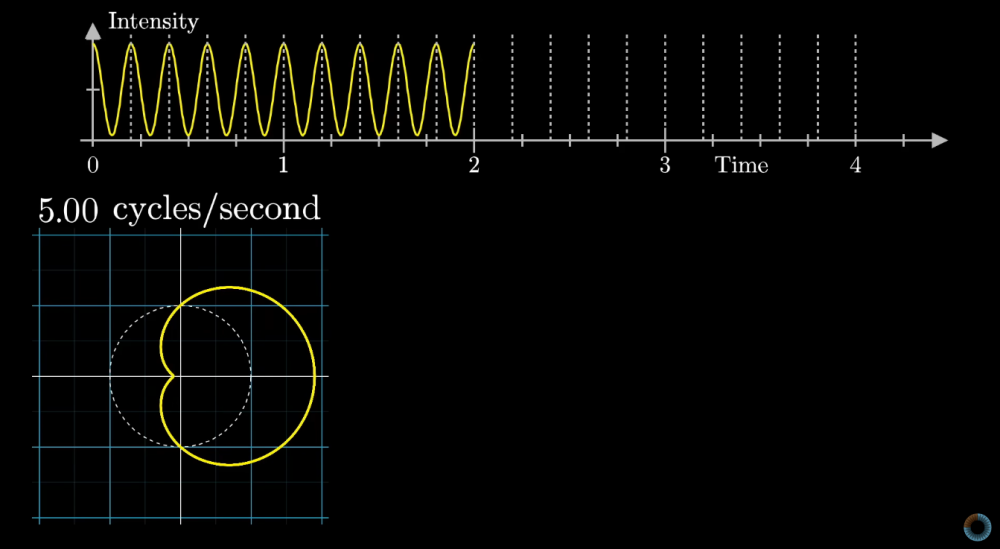
This part is more vibes for me than anything else, but I see the figure above as the relationship that the logicspren shares with higher-order frequencies when exposed to certain stimuli.
1:49-2:28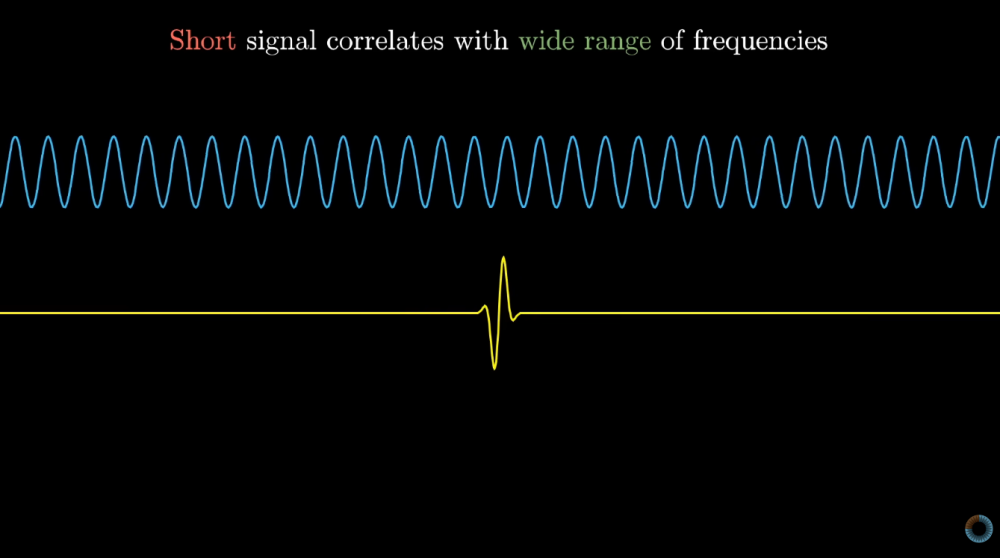
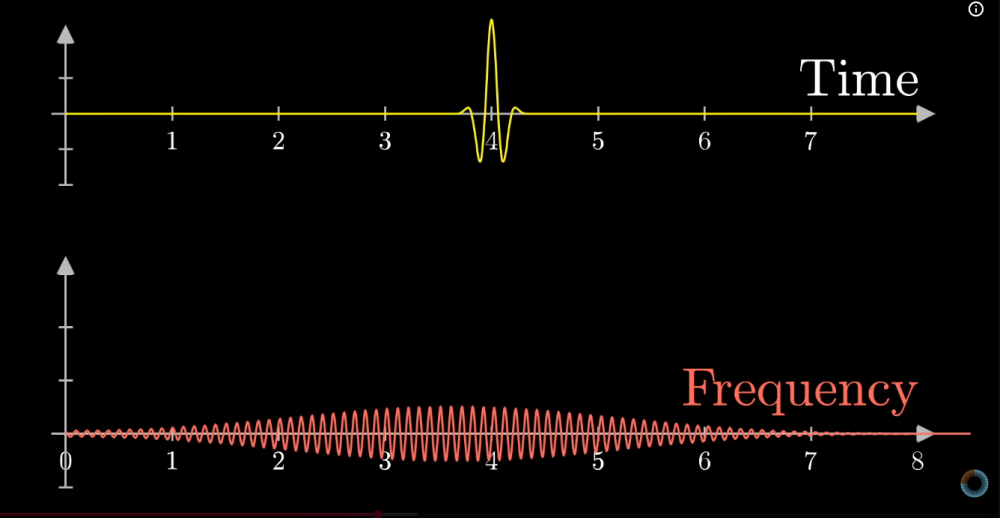
The correlation between a Realmatic Fundamental or somewhere in its Pure Tone, and low-frequency temporal pulses such as claps, stomps, or the blinking rate of a logicspren, can be explained in a similar fashion.
My initial thought of ringing Dyads to produce the Invested nature of Rhythm, as opposed to just performing as a musician, may be a step too complicated under this framework, actually. If a short signal, such as Rhythm, can correlate with such a wide range of frequencies, then attunement is likely manipulated in two ways:1) The Rhythm itself varying
2) Intent and Connection
Think of asking a person with perfect pitch what note a clap makes. Provided they were forced to answer, not just shrugging their shoulders: depending on how they were listening, or the Intent of their ear if you will, any and all answers could and would be correct.
So Intent on the user's end cover's where in the frequency band the attunement goes, and Connection anchors the user to the right Realmatic Pure Tone, or Intent.
8:44-10:21
The entire segment on Quantum Mechanics/Special Relativity:
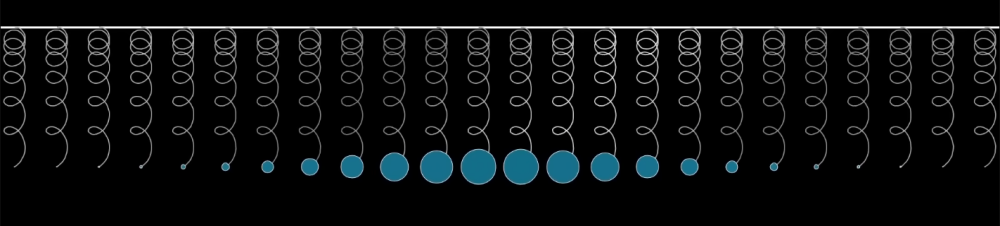
This is where things have to be scaled in terms of approaching infinity, though this video does not cover the topic.
Take the above figure as a different way to represent Realmatic Pure Tone, with the balls getting smaller with less mass now representing each higher-order frequency as the figure expands outwards.
If you take the infinite expanse of Realmatic Pure Tone, or rather a space that has infinite information on it such as the Spiritual Realm, and equate that to an infinite number of discrete pulses in time, does that not make time itself infinite in the Spiritual Realm?
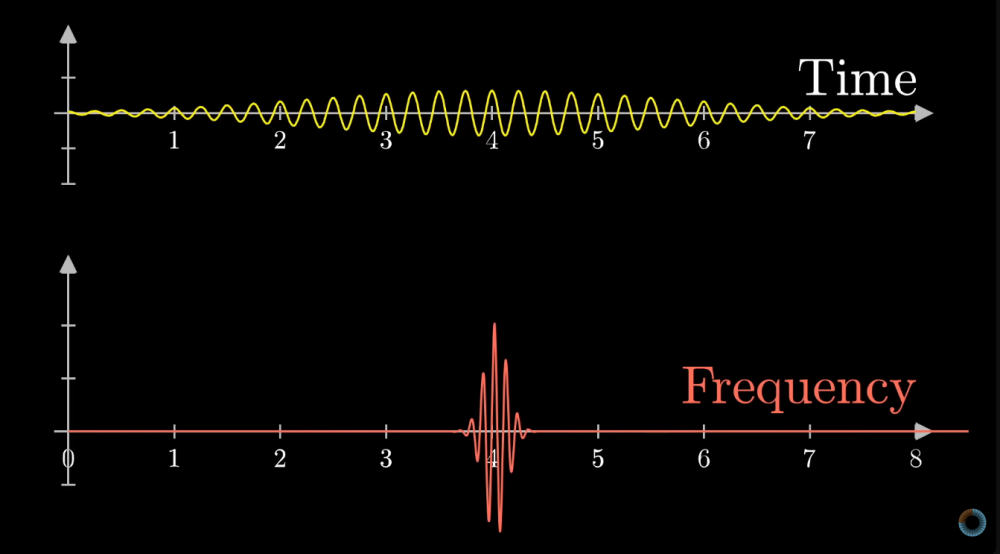
All of that to say, after some thought:
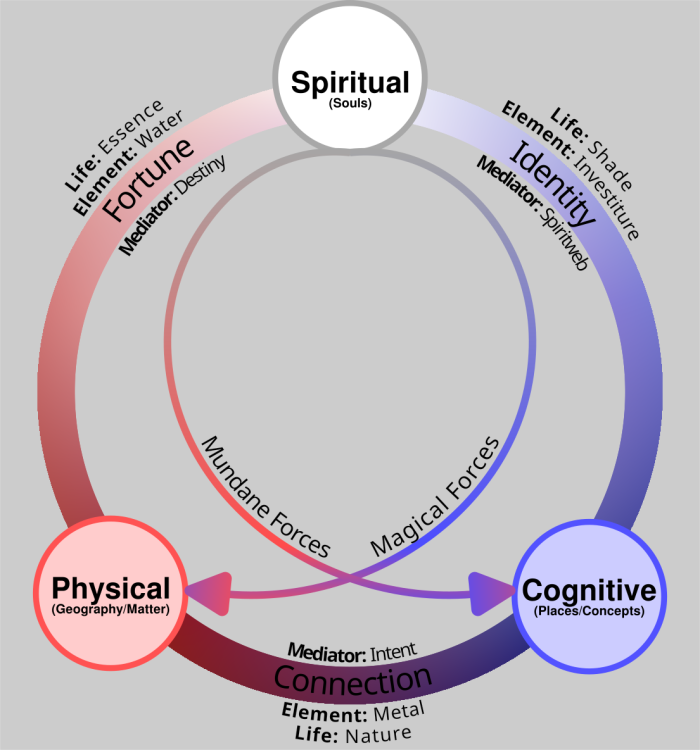
I posit one can take all the above, and apply the concepts to add the following descriptions to each realm:
Spiritual: Frequency domain
Physical: Time domain
Cognitive (vibes): Blend of the two, dependent on the mediators of Intent and Spiritwebs; expressed similarly to Special Relativity.
I'm beginning to get attached to thinking of it this way:- The Spiritual Realm is the event horizon of a Singularity; the Singularity being that of the realm of the God Beyond, never to be touched.
- The Physical Realm is just standard spacetime, if you will.
- The Cognitive Realm acting as the accretion disk, matter (Investiture) getting thrown about in strange and wacky ways.
0 -
3 hours ago, Pagerunner said:
I appreciate you posting this topic. It's one I've tossed around a lot since Rhythm of War, but I keep derailing all my writeups by getting into suppressors and Enlightening and all these complex interactions that happen in that book, and I have a hard time actually figuring out how to start it. I've got a few big areas I'd like build on your thought:
The Frequencies of the Tones
First of all, there isn't a sixteen-note scale for the Shards. It was Brandon's initial intent, but it doesn't work, so it's not happening:
But I think it is a very good question to dive into anyways: what are the actual frequencies? I think the popular theory is that it's a scale-and-some-change, that there are twelve notes in a chromatic scale and then four Shards that are the beginning of the scale in the next octave. (So, for example, C through the next E-flat.) This has a lot of potential for harmonic Shards that get along (that might share the same note on different octaves) and dissonant Shards that would be opposed (who could be a half-step apart, and have a lot of musical tension). The big problem I have with that is that it's going to put a lot of constraints on the actual Shards themselves, if we were to attempt to map Shards to pitches. Every Shard would need at least two very dissonant Shards (for the half-step above and below, and then any for that octave-and-a-half-step), and then you'd have to consider the fifths as being fairly well aligned, and man that's a lot to keep straight and we're just getting started. Based on the WoB above, I don't think Brandon designed the sixteen Intents around a chromatic scale; he's doing it the other way around, coming up with the Shards and then fitting them to pitches somehow. So either a) most of the musical relationships wouldn't actually matter, beyond maybe the octaves, or b) the notes are not using the chromatic scale.
I wouldn't mind a digression into the nitty-gritty of why we have the twelve notes we do in western music, but I'll keep it at the level you presented it above: the harmonic series, where you have a fundamental frequency and use multiples of that frequency for your harmonies. But instruments that we play don't rely solely on the harmonic series to play a full scale: they all need to change the fundamental (whether hitting different drumheads on a timpani, moving your hand up on a string on a violin, or depressing a valve to add tubing to a brass instrument). The harmonic series defines the scale, true, but an instrument that only uses the harmonic series (like a bugle) can only play a selection of notes. I think that's a second option, that the Shardic tones are like a bugle. So that would give you four octaves (say, 110 hz, 220 hz, 440 hz, 880 hz, 1760 hz for your A's) and then a selection of notes within that range (330, 660, and 990 hz being being Es; 550, 1100, and 1650 being D-flats, 770 and 1540 being G's, and then I think an E-flat and an A-flat to round out the last few primes [with the associated minor changes to make it actually sound good because music is crazy]). I think this does a good job of giving us a wide range for the tones, rather than cramping them together in a single octave, and it's a little simpler to try to harmonize Shards. The ones nobody likes (like Odium and Ruin) can get the dissonant multiples of 7/11/13, and then you have a few groups of 'good' Shards that all fit into a major chord.
But, the one I go with is purely based on vibes. Three octaves of the pentatonic scale gives us sixteen notes, and it's (relatively) harmonically pleasing for any of them to go together. If I recall correctly, this scale is also based on the harmonic sequence, but without a need to space the notes evenly across like the 12-note chromatic scale, so you don't need to incorporate some of the more dissonant multiples. I like it because I don't think that any of the Shards are truly dissonant, since they were all part of Adonalsium's "divine virtues" but are now "without context," so I like how this doesn't have any really harsh dissonance like an E and an E-flat.
The Shape of the Rhythms
This is where I'm going to greatly disagree with your interpretation. I don't believe rhythms are sine waves or dyads or anything like that; I think they are complex piecewise functions that become the amplitudes of sine waves, while the tones are the frequencies. A manifestation of Investiture (whether they be Stormlight or allomantic powers) is defined by a waveform with both frequency (tone) and amplitude (rhythm).
We can get order-of-magnitude estimates for frequencies just from assuming that sound works in the cosmere like it works on Earth. For tones to be heard as pitches, we'll generally say that they fall in the range of the piano (27.5 hz to 4000-ish). There is a periodicity to the rhythms, but even a fast rhythm is going to be single-digit cycles per second. Two pitches will give you an overtone together; but a metronome and pitch won't make an overtone. The metronome is just too slow. So that's why I don't think you can look at rhythms in terms of a second frequency that's a harmonic of the Shard's tone.
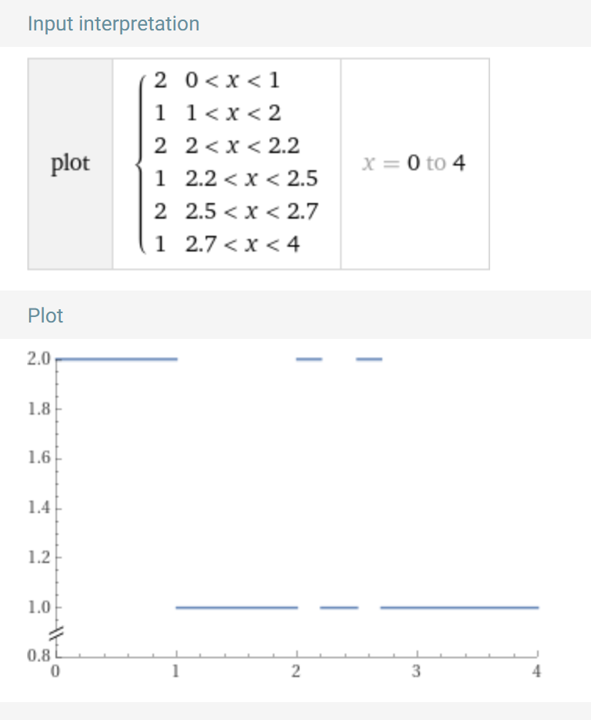
I've got some images from one of my abandoned writeups; let's see if I can get them embedded. Here's an example of a simple piece of music with both rhythm and tone:
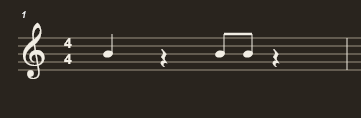
Here's the rhythm represented as a piecewise function with the magic of math:
And then given a pitch (or its tone):
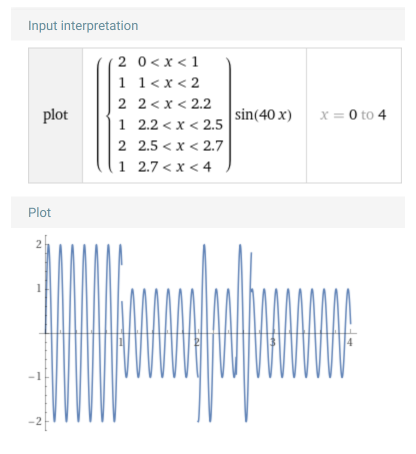
That's more what I feel is going on: the Command is defining the broad shape of the overall wave, while the Intent of the Shard powering the system specifies the frequency of the wave. You can't just mix and match any old rhythm with any old tone; in the example I threw together, you've got discontinuities. So there is a little bit of a relationship between the periodicity of the rhythm and the frequency of the tone; you need any of your step changes to happen at a node when the sine wave is at 0, so amplitude step changes are continuous. (That will explain why the surges work slightly differently depending if they're of Odium or of Honor; they're very similar broad shapes, but subtly changed to match the tone.) But even though the rhythm's pattern will need to reflect the tone's frequency, it's not in a way that will produce resonance or overtones.
Combining Shards
We actually see the tone of a combined Shard from Venli's perspective. It's not the Tone of War that I'm thinking of: it's Odium and Cultivation (which I think we've been calling the Tone of Freedom):
It's a single tone that is two other tones mixed into a harmony. What does that even mean? A tone can't be a harmony, so it has to be a harmony in context of all three tones, Cultivation/Odium/Freedom.
Is Freedom an overtone? That might cause some trouble with some of our scale options I presented above. (What if Cultivation was C, and Odium was C#? What if Cultivation was C, and Odium was an octave higher?)
Is it a third note that is in harmony with both, but not necessarily an overtone? (Like if Cultivation was C and Odium was G, then Freedom could be E.) That might also step on some toes for the scales, but that's why I liked the pentatonic scale, because you had the most room to play around in.
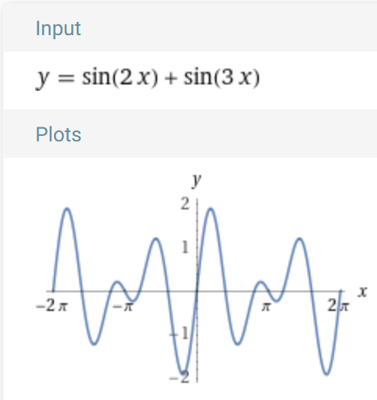
But the biggest trouble is going to be the sheer number of notes. If you assume that each Shard has its own unique tone (16), and then you assume that each Shard pair has its own tone (16*15/2), then you've got 136 notes, which is over 11 octaves. If we take our lowest note on our piano (A, 27.5 hz), and we allow a half step for each Shard or paired Shard, then we're going to reach over 27,000 hz, which is outside the range of human hearing. Even if we start using microtonal stuff, it's still going to get extremely cluttered, and I can't imagine we'll be able to give each Shard combination a unique tone if we try to meaningfully apply harmony.
So, just by crunching the numbers, we can see that we're going to have to reject the idea of new tones for combined Shards. Even though the text describes it as a single tone, it will have to be understood as multiple tones together. Maybe something like this:
I completely get getting hung up on the little things, and that leading to an ever-cycling delay on things, don't beat yourself up about that for a second!
I appreciate this reply immensely, and in vast swaths I'm in agreement with you! 16-TET was just a fun idea anyway, not core to the framework; as Brandon wished I would've preferred if it could have been so lol.
But I think a combination of my secondary restraint regarding the infinite nature of the Harmonic Series, and that of my metaphoric use of harmonic context to explain the interaction with said infinity has led to a major misunderstanding.
This video does a much better job of explaining these concepts than I ever could. I highly recommend giving it a full watch if you're at all keen to it, but I'll also be referring to timestamps of it from here on out:
2:33-About 4 Minutes
This part is more vibes for me than anything else, but I see the figure above as the relationship that the logicspren shares with higher-order frequencies when exposed to certain stimuli.
1:49-2:28
The correlation between a Realmatic Fundamental or somewhere in its Pure Tone, and low-frequency temporal pulses such as claps, stomps, or the blinking rate of a logicspren, can be explained in a similar fashion.
My initial thought of ringing Dyads to produce the Invested nature of Rhythm, as opposed to just performing as a musician, may be a step too complicated under this framework, actually. If a short signal, such as Rhythm, can correlate with such a wide range of frequencies, then attunement is likely manipulated in two ways:1) The Rhythm itself varying
2) Intent and Connection
Think of asking a person with perfect pitch what note a clap makes. Provided they were forced to answer, not just shrugging their shoulders: depending on how they were listening, or the Intent of their ear if you will, any and all answers could and would be correct.
So Intent on the user's end cover's where in the frequency band the attunement goes, and Connection anchors the user to the right Realmatic Pure Tone, or Intent.
8:44-10:21
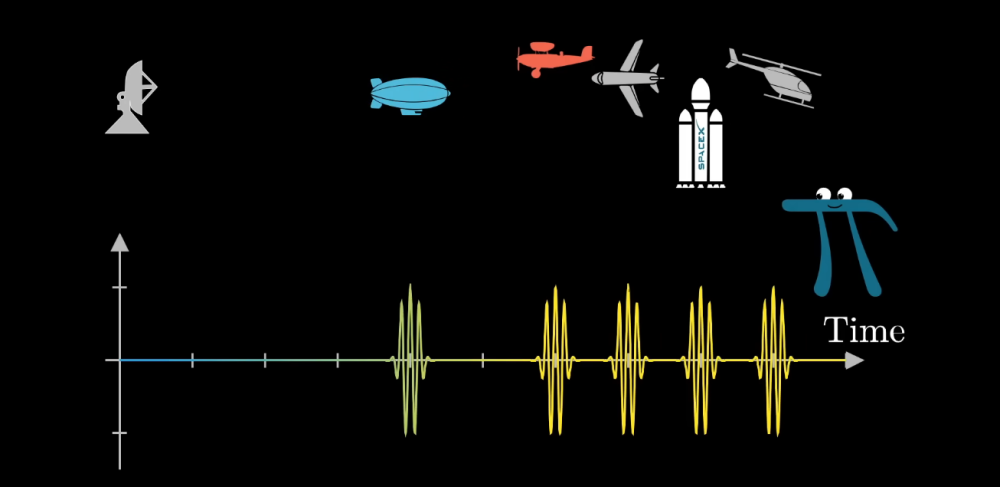
Quote"But in practice, there's all sorts of different objects in the field...locations of multiple objects extremely ambiguous...Instead, a more precise understanding of how far away all these things are would require having a very quick little pulse confined to a small amount of time.
SpoilerThis concept can be mapped onto Space-Age Cosmere navigation, as of Isles of the Emberdark, at least!
The Grand Knell pulses out at a continuous rate, each confined in time. Allowing the implementation of the Doppler effect to more directly allow Navigators to more directly detect objects, etc., that are in the way between their current position and the Knell.The entire segment on Quantum Mechanics/Special Relativity:
This is where things have to be scaled in terms of approaching infinity, though this video does not cover the topic.
Take the above figure as a different way to represent Realmatic Pure Tone, with the balls getting smaller with less mass now representing each higher-order frequency as the figure expands outwards.
If you take the infinite expanse of Realmatic Pure Tone, or rather a space that has infinite information on it such as the Spiritual Realm, and equate that to an infinite number of discrete pulses in time, does that not make time itself infinite in the Spiritual Realm?
0 -
19 minutes ago, Master_Moridin said:
I'm curious where this comes from? The epigraphy you quoted describes how the logicspren blinks in a pattern in response to Light leaking out of the gemstone at a controlled rate. It makes no mention of the logicspren being Invested by something in this process, or that the type of Light corresponds to the pattern of blinking.
To say that I'm arguing that something is specifically investing the logicspren and I'm needing to know what kind of Light is involved misses the crux of the argument.
Spren don't get Invested. They are Investiture. Investiture, as we know, has different Intents, Pure Tones if you will, post-Shattering. If logicspren are comprised of say, for sake of argument remnants of Honor's Investiture, the rate at which it's pulsing, i.e. the gears of the literal clock that logicspren got turned into would be timed to whatever Investiture it is comprised of.
Under this framework, whatever the rate that the logicspren blinks at, if it were instead comprised of Odium's Investiture, and leaked Voidlight, would change to reflect the Intent of the Investiture involved.0 -
On 6/2/2026 at 1:23 AM, JohnTMS said:
The Harmonic Series, and thusly the possible consequences of Invested action, go on upward infinitely and forever. My discussion on it should not.
This is where it begins to feel like me putting on my aluminum-lined hat, as it were. A thought that just crossed my mind.
If Realmatic Pure Tone 'goes on forever', then couldn't one argue that in the Spiritual Realm, there is "perfect information" present for any given Pure Tone? While the specific calculus of the litany of options with my limited understanding there prevent me from hammering down the details, I'm aware of a slant to Heisenberg's Uncertainty Principle that can be applied to the realm of time-frequency analysis, Fourier analysis, whichever discipline one decides is most accurate, known as the Gabor limit.
So if you have a realm that for the most part could be described as frequencies, i.e. a frequency domain with perfect information on frequencies and amplitude, would that same realm have zero time domain whatsoever?
Ergo, the Spiritual Realm seems timeless in nature because it is timeless.
SpoilerWhat does this mean for the concept of Fortune? Just the infinite expanse of the frequency domain (Spiritual Realm) filtered, oh look another signal processing term how neat, through a combination of 1) the Pure Tone/phenomena derived from it utilizing it, for example the Atium-Electrum alloy and 2) futher filters, or limits on bandwidth so to speak for possible futures, the extent of which dependent on the user?
Oh, storms what have I done0 -
If we're going off crackpot ideas... (Spoilers all Cosmere)
SpoilerI see any potential, or eventual manifestation of Discord as a shift in the Fundamental frequency that comprises Harmony, brought about in some fashion similar to the proverbial straw that broke the camel's back that is all of the internal issues Sazed as Harmony has been facing.
0 -
On 6/2/2026 at 4:29 AM, PanLin said:
Ooooh maths and music, I'm SO here for it.
First up, I think this is a fantastic theory that really has bones. It's clear you've put a lot of thought into it. Sanderson has put too much emphasis on tones, rhythms and resonance for it all to be meaningless.
Just off the top, thank you so much! Lots of thought and feeling so to speak, the notes I have that birthed all that are just ridiculous.
On 6/2/2026 at 4:29 AM, PanLin said:Something about this feels like a bit of a leap in logic, but I can't quite place why.
Maybe it's simply that, while there is a direct relationship, that formula is too simple (unless n is doing some super heavy lifting)? I think the missing piece is just something around Intent, which is obviously super impactful in the Cosmere and potentially more difficult to represent in a mathematical formula.
I think that leap in logic stems from the lack of ability to use the redefined Realmatic terminology such as the distinction between Realmatic Fundamental and Realmatic Pure Tone, prior to having reason to define them. n being a whole integer just makes the math much simpler, but that would likely only work if the logicspren is 'attuning' to a Realmatic Fundamental, rather than a higher-order frequency elsewhere in its Pure Tone. The mathematical relationship in that case would still let the model function as far as I can tell.
On 6/2/2026 at 4:29 AM, PanLin said:We know that Adonalsium could've been split into any number of Shards; assigning each one a unique set of intervals instead of a single unique frequency gives us a functionally infinite playground, as opposed to being restricted by the Planck frequency (unless there's genuinely a realmatic difference between, say, 440Hz and 440.0000001Hz, which is kind of feasible, if a little unsatisfying). It also means that, for example, both Ambition's and Whimsy's Tone could be played in the key of C, but they would still be wildly different Tones; the important bit is the relative harmonics, not the absolute frequencies themselves.
From this, I wonder if the humble sin wave is Adonalsium's Pure Tone, regardless of the actual frequency, and each of the Shards technically has a Pure Chord, or a Pure overTone (if you want to maintain the terminology used in-world), with the number of component tones related to how fractured that Shard is.
This could also help to explain the purpose of Intent in mortals trying to create Tones. We know that Intent is needed to generate a Pure Tone with opposing polarity, so maybe, with the naturally Invested nature of the Cosmere, one can naturally vocalise a sound that has only the right intervals, something that is impossible to do in the real world.
Also, normally (assuming western notation that is somewhat allergic to microtones), once we hit 13 notes in a chord, that's functionally the same as a 12-note chord. However, the use of Intent means that, for example, someone accurately generating Adonalsium's Tone would literally be creating a pure sin wave, which means an octave is realmatically distinct.
This is actually in line with where some of my further reasoning has taken me in my notes; just with a different slant away from say Ambition and Whimsy's tone being in the key of C, for the sake of argument.
Let's do some makeshift Realmatic Music Theory!
Western tuning has our chromatic scale at 12 distinct tones before repeating; 16 Shards of Adonalsium (cherrypicked from His Realmatic Pure Tone), 16 new Realmatic Pure Tones, 16 notes on a novel Hexadecimal chromatic scale?
Now as for the types of chord progressions and new styles of interval this noveau Equal-Temperament Tuning, and thusly all the kinds of music made off of this hypothetical harmonic framework, that is far beyond my current level of diving in. I'm sure someone's played around with the idea musically before, the 20th century had some veeeerrry experimental music, even prior to the popularization of distortion.
On 6/2/2026 at 4:29 AM, PanLin said:I got carried away and started to address this above. I don't think your translator has met its limit, I just think this isn't quite the right approach for combined Shards. It sounds like you're contradicting the core of your theory by first saying that intervals are the important part, and then saying that an individual frequency defines the combined Shard (but if I've just misunderstood, please correct me!).
Maybe, instead, the specific overTones of a Shard help to inform (or are informed by? Not sure on the cause/effect here) how compatible two Shards are. Maybe Honor and Odium just happened to share more intervals in common that Preservation and Ruin did, making the resulting expression stronger as a result of more resonant intervals.
Personally, I think Shardic Tones becoming less complex as they re-approach Adonalsium is a neater theory that is also more in keeping with the idea that Adonalsium was a stable expression that got mad screwed up (technical term) by the Shattering, but I appreciate I've just come in out of nowhere and taken liberties with your theory, so apologies for that

No need to apologize! Taking this concept I just introduced of all Realmatic Pure Tones being squeezed into the range of a single octave, this actually explains that there could be multiple mechanisms for the formation of hybrid Shards. Realmatic Fundamentals that lock well together, while with as not as many voices as in this example, should produce similar results. The absolutely screaming overtone here being the new hybrid Realmatic Fundamental.
Ones that don't mesh as well result in sum or difference tones appearing underneath both Realmatic Fundamentals to make a new one, that while still functional lives in the shadow of the original two. Like Harmony's experience as a Shard, for instance. Funny, that.On 6/2/2026 at 4:29 AM, PanLin said:Similarly, one could generate a triacontadyad (really testing my knowledge of prefixes here) to imitate the 32-interval Pure Tone of an even more fractured Shard
Pretty much, yes! However, for simplicity's sake I find the term triad to be interchangable in this context; playing further into harmonic interaction in the Spiritual Realm.
On 6/2/2026 at 4:29 AM, PanLin said:Also, bonus thought: how does this map to different allomantic metals having different rhythms?
Waves of sound transfer through, or resonate, differently depending on the medium they're being transferred through.
Let's say you have Vin swallowing a vial of copper. Burning the metal introduces a new medium for which the resonance of the Investiture to, put reductively, modulate, which order in the sequence of Realmatic Pure Tone is being expressed the most. Burning Steel changes the resonance to either a higher or lower-order partial/overtone in the Realmatic Pure Tone, the rest of the Allomantic metals differing the same.
On 6/2/2026 at 4:29 AM, PanLin said:Similarly, (spoilers for Emberdark):
Spoiler1) Same principle as allomantic metals, different scale, almost certainly a differing Realmatic Pure Tone involved.
2) Modulation of a frequency, absolutely! Believing it to be solely of Ambition is also a reasonable conclusion to draw. I have more thoughts there but I genuinely hesitate to posit on them directly.1 -
19 hours ago, CoderDrag0n8 said:
Dang we have someone quoting brandon like he wrote the bible
you don't need a works cited pages for your oaths buddy.
When this is what's been rummaging through your head, it begins to feel more necessary, I think.
I acknowledge the light of truth I wield, and that the shadows cast elsewhere from it may instead cast doubt.2 -
For sake of simplicity, assume full spoilers for the Cosmere to date of writing.
Abstract (TL;DR): An observation made in Rhythm of War led to the craft of a falsifiable hypothesis, and a logical, in-universe experiment that can be crafted to test the hypothesis. If the hypothesis is eventually proven true, it allows numerous real-world harmonic and acoustic phenomena to be applied to phenomena derived from Investiture in nearly seamless fashion, from the bottom up.Scope: There is a critical distinction that must be made regarding the scope of this work. I am not here to assert specific frequencies etc. in terms of raw numbers, e.g. A=440 and similarly derived phenomena. As is with all (western) music, especially for those not of the 2nd Heightening, things will be described and derived, generally, from principles of harmonic relativity. With that in mind:
Observation:
Rhythm of War, Chapter 15 Epigraph:Quote"Logicspren react curiously to imprisonment. Unlike other spren, they do not manifest some attribute—you cannot use them to make heat, or to warn of nearby danger, or conjoin gemstones. For years, artifabrians considered them useless—indeed, experimenting with them was uncommon, since logicspren are rare and difficult to capture.
A breakthrough has come in discovering that logicspren will vary the light they radiate based on certain stimuli. For example, if you make the Light leak from the gemstone at a controlled rate, the spren will alternate dimming and brightening in a regular pattern. This has led to fabrial clocks. When the gemstone is tapped with certain metals, the light will also change states from bright to dim. This is leading to some very interesting and complex mechanisms."
A light blinking in a regular, one could say intervallic period, could be expressed as a number, one that can be converted into an, albeit low, frequency in Hz. Label this frequency as f2.
Take a measurable source of the Pure Tone (for now using real-world terms as opposed to Realmatic, this should clear up shortly), in this case the Pure Tone of what is Investing the logicspren. Take that and use it as a constant, label it f1.
Hypothesis:Fundamental, f1 will have a neat mathematical relationship with the pulse of the logicspren, f2. Specifically:
Spoilerf1/n=f2
If this mathematical relationship holds true for the logicspren, it can then be extrapolated to say any localized, periodic oscillation of Investiture is a direct translation from the source Intent's frequency.
Therefore, this gives birth to a new principle of Realmatic Theory:
QuoteStatic, symmetrical Invested rhythms are deep subharmonics (f2) of a given Realmatic Fundamental (f1), 'low' enough to be perceived across time rather than as a pitch.
.thumb.png.39d6014e5a78b2b2a5ebce61c5b1520a.png)
The Harmonic Series, when translated into musical terms, reflect the series of phenomena known as overtones. This topic alone is a rabbit hole unto itself, so to avoid falling in, let me quickly annotate an additional constraint to the scope of my portion of the discussion; The Harmonic Series, and thusly the possible consequences of Invested action, go on upward infinitely and forever. My discussion on it should not.
Let's take the real-world term pure tone, referring to merely the waveform of a given fundamental pitch, or tone.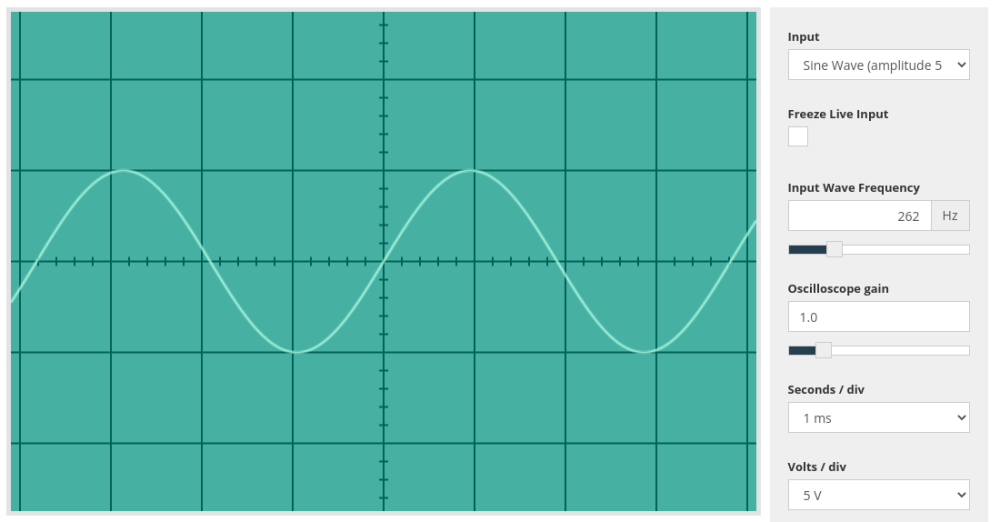
Pure Tone, in the Realmatic sense, likely refers to the combination of two things:
- The Realmatic Fundamental; the Realmatic equivalent to the real-world pure tone.
- The infinite Invested Harmonic Series resonating off the Realmatic Fundamental in totality.
Below is the same diagram of the Harmonic Series from before, now representing the whole of Realmatic Pure Tone, with the Realmatic Fundamental traced briefly (shoutout to MS Paint):
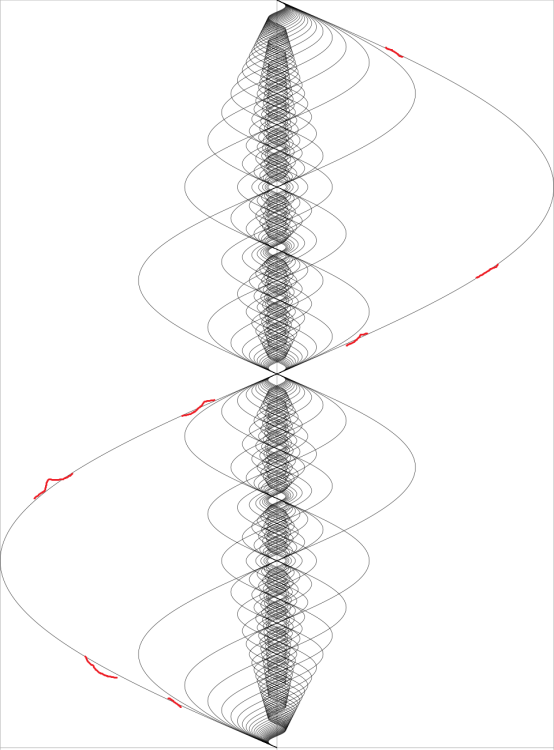
Subharmonics and Everyday Sounds: Every sound we hear has a frequency. From the shining overtones of an immaculate choir, booming low brass, and the rat-a-tat-tat of a snare drum; to the whirring of engines, human speech, and rapping one's knuckles upon a desk. There are essentially entire subgenres of music dedicated to making definitive tones out of manipulating ordinary sounds digitally.
What are the other implications of this hypothesis, if correct?
Singer Rhythms:
The lateral move of applying this notion of subharmonics to the Rhythms Singers use adds a layer of complexity, as Rhythms seem, per the text, to be almost universally asymmetrical. How then, do they attune to somewhere in the sequence of the respective Realmatic Pure Tone? Let's first analyze the form that is the Singer Rhythm:
Like real-world rhythmic patterns, Singer Rhythms have an internal structure, and can be ever repeated. Take, for instance, a relatively simple real-world rhythm that could feasibly mimic that of a Singer Rhythm:
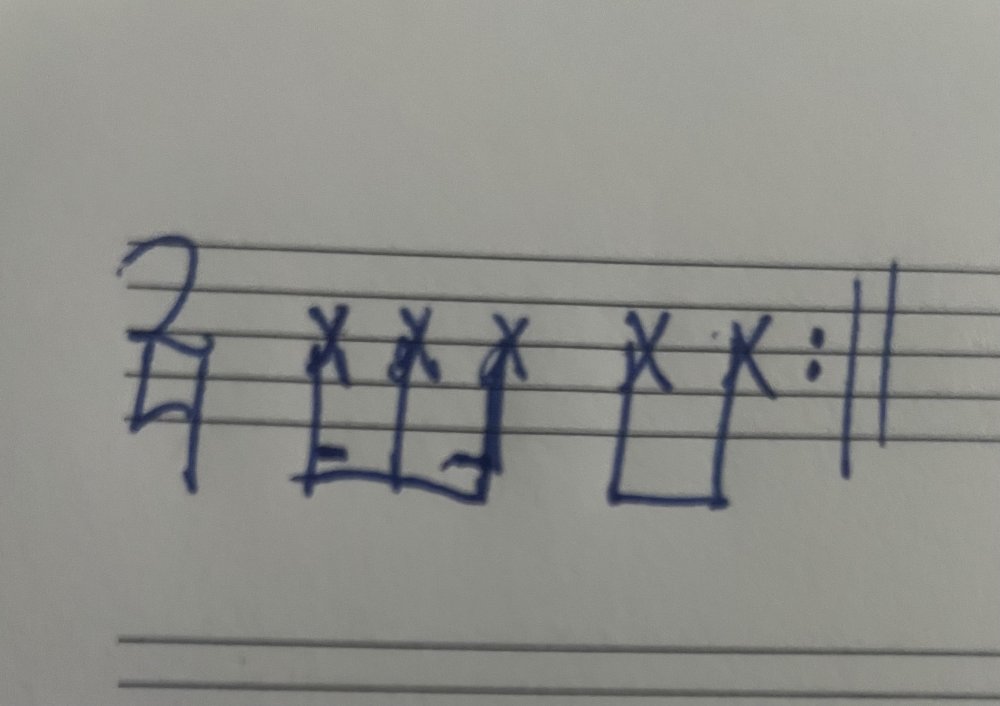
This can easily be split into two sections:
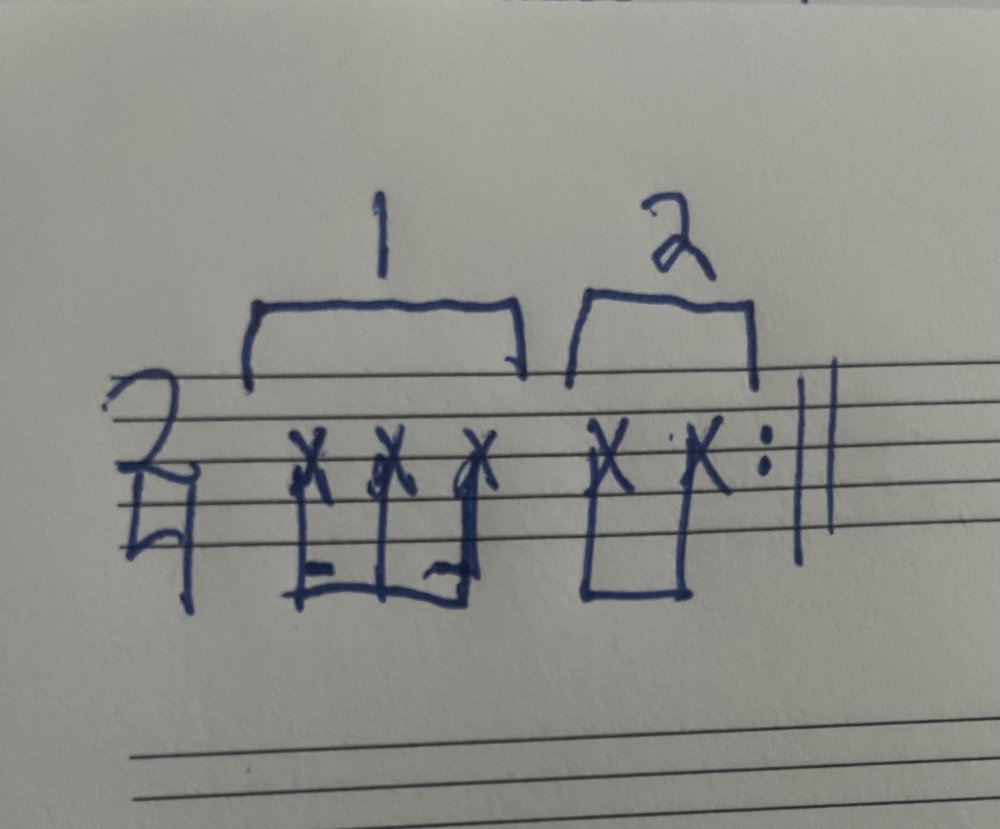
This may produce, when sped up in a similar fashion to that of the hypothesis' logicspren, or that of Gabe the Dog (R.I.P.), the presentation of two oscillating tones.
Tones that, if sped up further, oscillate fast enough to form a dyad, or interval in musical terms.
Dyads, like a properly resonant (lower case) pure tone, or Realmatic Fundamental, also end up 'ringing' their own Harmonic Series, with the segment, or overtone, that becomes acoustically strongest depending on the delta, or interval, of the frequencies in the dyad.
The dyad formed through the expression of the Singer Rhythm, for this framework to hold, would have its strongest overtone be in line with somewhere in the sequence of Realmatic Pure Tone, be it the Realmatic Fundamental, or somewhere else in the Pure Tone.
Resolution of Ambiguity:This model, however, produces an complex, yet solvable, logistics problem.
If one gives each Intent a specific, unknown to us for the purposes of this work frequency aka Realmatic Fundamental with which Pure Tone rings out of their own infinitely scaling Harmonic Series, one will inevitably run into overlap. That problem suggests the possibility of recipes for in-universe confusion like powers not working as intended, or deriving the wrong Invested Art altogether. The distinct lack of those problems being prevalent at any relevant scale in the Cosmere suggests the system already found a solution.
I propose that this solution too mimics real-world phenomena, in this case harmonic context.For simplicity's sake, let's take a segment of the series that comprises a Realmatic Pure Tone, and analyze the role of shared frequencies between Intents. In other words, as the Harmonic Series goes on forever, any given Realmatic Pure Tone contains common chord tones with others:
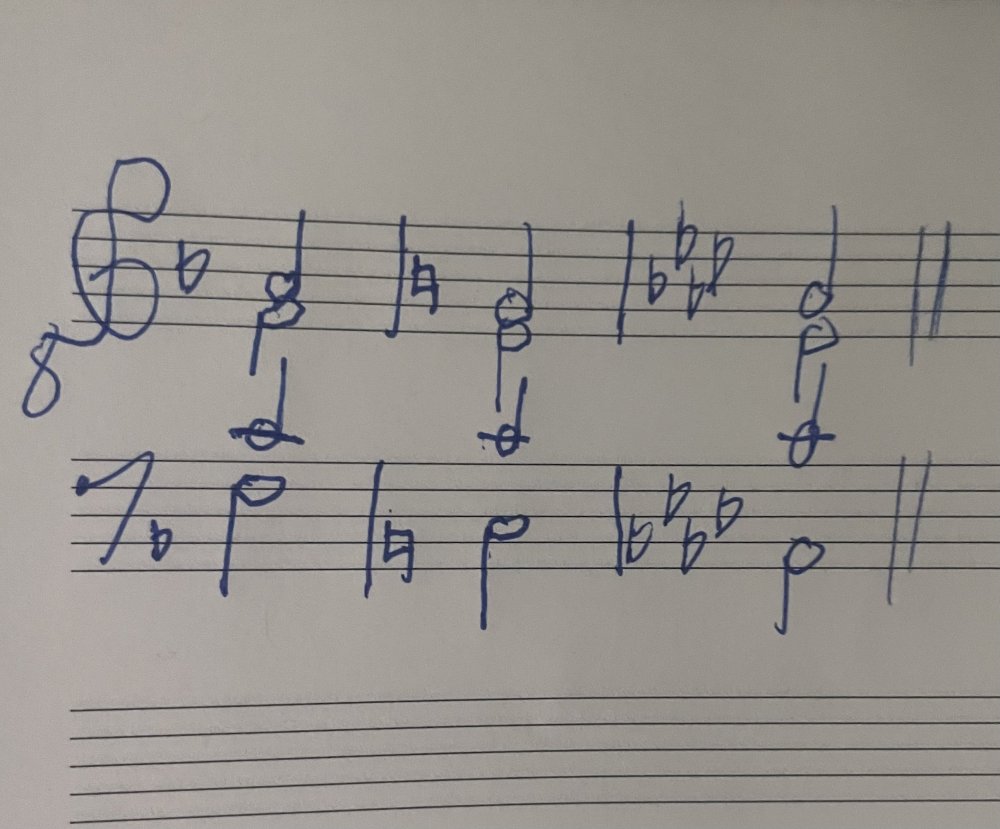
Each of the chords presented here are sharing one tone.
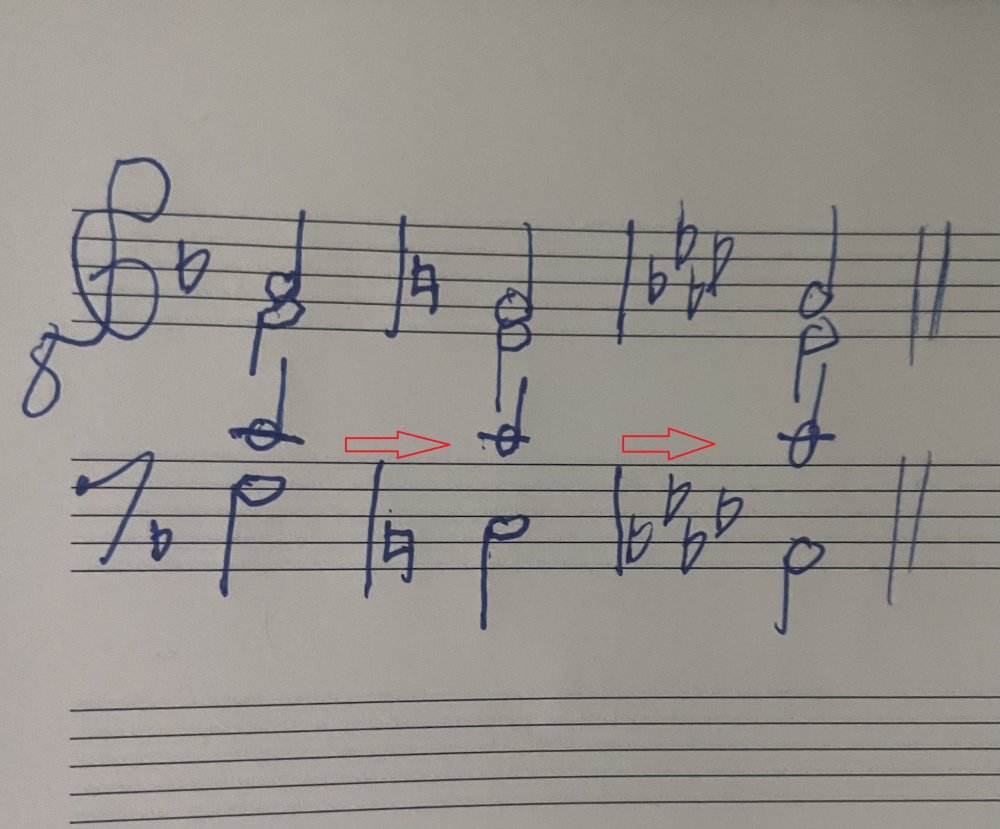
Meaning, put in Realmatic Terms, this ambiguity can be solved with a combination of Intent and Connection.F major is different from C major is different than A-flat major.
Dominion is different from Ruin is different from Odium, or whichever combination is deemed relevant; despite any similarities or overlap.
Throw this back to the Singer Rhythms. It's no wonder that humans cannot be taught them, they lack the right Connection and/or hardware in the form of gemhearts to attune properly.
The Novel Nature of Hybrid Shards:Hybrid Shards, such as Harmony, are said not to be a combination of its original Intents, but more of a novel being, or Pure Tone, derived from them.
Take the Realmatic Fundamental of each Intent involved in the synthesis. Once together they form, like asymmetric Singer Rhythms sped up, a dyad. But rather than changing the tones forming the dyad to align with differing portions of Realmatic Pure Tone; the dyad rings out, of which the strongest overtone formed becomes the new Realmatic Fundamental which will then ring out its novel Pure Tone.Alternatively, some interaction with combination tones of some sort better reflect the phenomena. However, the specifics of the math even in relative terms, and the descriptions of underlying mechanisms in that realm escape me.
Perhaps that is where my ability as attempted Realmatic translator meets its limit.
Regardless:I am fully aware of the sheer massive scale in terms of new information, let alone recontextualization of existing canon, that lies above. I commend beyond measure anyone willing to go through this journey of a post, bearing with my own attempt at putting knowledge we have under new contexts and lights. I can only hope the Surges of Illumination and Progression, so to speak, have served me well.
As with many other theories out there, there's bound to be mistakes, misconceptions, and/or misapplication of concepts and ideas. Regardless of perceived innate error-this has been some of the most fun I've had writing in my entire life.
Journey Before Destination.8 -
18 hours ago, JohnTMS said:
Life before death, strength before weakness, journey before destination.
In a sense you could argue I've said those words for about as long as I could speak.
RoW Ch. 12 Epigraph: "One of my pleas is for artifabrians to stop shrouding fabrial techniques with so much mystery. Many decoy metals are used in cages, and wires are often plated to look like a different metal, with the express intent of confusing those who might try to learn the process through personal study. This might enrich the artifabrian, but it impoverishes us all."
No man is born perfect, nor should they ever expect to attain perfection as such. But growth through acknowledgement of wrongdoing can only help the pursuit of truth for all. How can one show the truth, if they cannot first be truthful with themselves?
I believe I know the words of the 5th Ideal... perhaps even the 6th...and I believe them with every axon of my being...
But I know they cannot be accepted, until the most resonant portions of my search for Truth has been transcribed, preferably cast in metal. Until then, they ring hollower than a cracked bell.
SpoilerWhen the time is right, I shall again speak the Ancient Oaths.
0 -
Life before death, strength before weakness, journey before destination.
SpoilerQuoteI will seek truth wherever it is hidden.
In a sense you could argue I've said those words for about as long as I could speak.
QuoteI will reveal truth to all who seek it.
SpoilerRoW Ch. 12 Epigraph: "One of my pleas is for artifabrians to stop shrouding fabrial techniques with so much mystery. Many decoy metals are used in cages, and wires are often plated to look like a different metal, with the express intent of confusing those who might try to learn the process through personal study. This might enrich the artifabrian, but it impoverishes us all."
SpoilerI will wield truth as a cleansing light, even if it must cleanse myself.
SpoilerNo man is born perfect, nor should they ever expect to attain perfection as such. But growth through acknowledgement of wrongdoing can only help the pursuit of truth for all. How can one show the truth, if they cannot first be truthful with themselves?
1 -
6 hours ago, Treamayne said:
Hope that helps
Truly, it does! Walk with me still:
SpoilerQuoteReaderWarrior
Brandon: What is the difference between ANTI-Investiture and NEGATIVE Investiture?
Brandon Sanderson
Let's let the Arcanists-
What we're calling Negative Investiture is almost all exclusively a warping of the death of Ambition. Anti-Investiture is a very, very similar thing, but it is man-made. And they have similar functions. But the Negative Investiture is mostly self-aware in a very weird way. In a non-
The Anti-Investiture built by Navani is functionally the same, but not self-aware, not necessarily from Ambition. And that's the distinction in my mind right now. But we'll let the Arcanists drill down on me- there's Argent flipping out. He might have a different definition for it and he maybe can-
The team of Arcanists might convince me that I should use a different definition .
Exactly! The Coppermind's article on the Evil, with numerous citations from Isles of the Emberdark, use the term Anti-Investiture, though Negative Investiture or some other term may end up being more correct down the line. But in this case, Negative Ambition Investiture and Anti-Ambition Investiture should be, as Brandon stated, "functionally the same". Self-aware or not, power derived purely from Inverted Investiture of Ambition alone does not explain the nature of the Evil as they currently exist, and specifically for the Eidolon residing on Threnody - the Three Simple Rules, the Shades, and changes over time I noted.
QuoteThrenodite Essay:
Long ago, soon after the Shattering, Odium clashed with (and mortally wounded) the Shard Ambition here. Ambition would later be Splintered, though that final act took place in a different location.
Duly noted, The Coppermind's article on The Grand Knell may need to slightly alter itself around its 2nd citation, perhaps. However, regardless of precisely where Ambition died, I'm merely positing that the Grand Knell may have been the original source, or at minimum transporter, of the Evil that came to Threnody. If ships can now sail the pulses of the Current in the modern Cosmere, presumably, even with zero outside influence, its pulses plausibly would have been stronger closer to its creation. [If you really want a real-world comparison that probably only fits halfway, consider it a black hole shrinking due to Hawking Radiation.] Strong enough maybe, if 'necessary' to carry a Nephalim all the way to Threnody, alongisde the then-cataclysmic waves coming from the Knell.
Long story short, location of Ambition's death doesn't matter in the particulars in terms of my question(s). Just if the metaphorical bell that began tolling right after it happened, being strong and close *enough* to throw an Eidolon or the mechanism to Invert it to its current state, to Threnody.QuoteQuestioner
I had a question about Odium's intent for going after Ambition. Obviously, with Devotion and Dominion teaming up, he didn't want a twosome over there. Are we ever gonna learn more about the background on Threnody? 'Cause Khriss implies that there was always Investiture there, before the clash. So I'm looking for a little bit of information about the Evil before the Admiral's background story.
Brandon Sanderson
Before the clash, the Evil was not the Evil. It is the clash that warped it. And Secret Project Five has a splintered piece of Ambition as a plot point. Some of these books... All that stuff I said about not having to know multiple magic systems? That goes out the window for things like Secret Project Five. Those are books that are about that. You will find out some more there; it's gonna take me a long time to get to what actually happened with Ambition, why, and things like that. Know that Odium was not expecting it to be as hard as it was and ended up severely wounded in that clash.
Right.. So if Emberdark and other future novels that share this similarity in requiring in-depth knowledge of multiple magic systems to fully understand - magic systems that we as readers may not fully comprehend ourselves until potentially many books after... Then for concepts explored in them, we should keep an open and clear mind when trying to see how new information folds into the old, as well as to look for an answer that fits every bill. Answers all the (my) questions, or as many as we can with a synthesis of the canonical information we have and information on how Sanderson's larger systems tend to play out emergently.
QuoteRoW Epigraph to Ch 27:
"That said, the most worrying thing I discovered in this was the wound upon the Spiritual Realm where Ambition, Mercy, and Odium clashed—and Ambition was destroyed. The effects on the planet Threnody have been … disturbing."
Again, right.. so more fuel to the metaphorical fire of having multiple systems of Invested Art at play in the grand scheme of this clash, and its long-lasting repercussions.
QuoteIslayThePeaty
Does Ambition factor into Sel, either in the events we've seen on-planet or in terms of where Uli Da was ultimately spintered?
Brandon Sanderson
I'll RAFO this for now. Suffice it to say that this specific splintering has had far-reaching effects.
Exactly! Hence my curiosity! Hmmmmmmmmmmmmmm *buzz*
QuoteQuestioner
Was the creation of the Evil an intentional result of the splintering of Ambition?
Brandon Sanderson
No. Odium didn't really know what he was doing, but he knew he didn't want to have the same thing happen that happened on Sel. And what happened was worse. So, this is why Odium had to recuperate and could not really attack Honor and Cultivation and kind of had to sideways work with them a little bit, because of what happened there.
A navigational constant with some Anti/Negative 1-6 Invested Entities that like to be near it doesn't precisely sound like something categorically worse than what happened on Sel, even if Odium had to recuperate after the event that created it. Unless that particular clause in that WoB is referring specifically from the perspective of Odium/Rayse themselves, given the delta between how Rayse interpreted his own Intent versus the rest of the Cosmere.
QuoteLegionrip
In Sunlit Man there is an incredible amount of Investiture at the core of Canticle. We know that Odium, Ambition, and Mercy clashed near Threnody but that Ambition did not die there. Could Canticle be a grave or tomb for the corpse of Ambition and its Investiture?
Brandon Sanderson
It could be, but it's not.
Legionrip
It would connect the Threnodites being in both systems. The rings could be intended to keep the Investiture from spilling out into the rest of the system and making it incredibly dangerous to traverse like Sel.
Brandon Sanderson
This is a great question and a great theory; but I know where Ambition's corpse is, and it's not there.
This, in conjunction with the wording previously described for the page on the Coppermind regarding The Grand Knell, seems to create quite the point of confusion for everyone trying to think about this. Here's my interpretation, synthesizing the sources we have:
- RoW Ch.27 Epigraph and the Threnodite Essay suggests that while the final Splintering of Ambition/creation of The Grand Knell may not have happened super close to Threnody, or even in the Threnodite System itself - it must have been close enough to Threnody to impact it in a major way.
- Making the Coppermind's generalization of the Grand Knell being "near Threnody" accurate in the grand scheme of the Cosmere, but in terms of the specifics, something that breaks down.
1 -
Moderate-to-Heavy Spoilers for Isles of the Emberdark lie ahead!! BEWARE!!!
SpoilerOff the rip, should get out of the way that I still need to actually read Emberdark for myself. But slightly differing versions of these questions were floating around in my head, before spoiling myself on various articles on the Coppermind
oops, so if there is anything canon that I'm getting wrong there, or otherwise, please let me know!Have a handful of questions and lines of reasoning that have been wracking my brain as of late; walk with me?
It is my understanding that the Eidolon, Nephalim, Evil, whatever one desires to call them, are Splinters of Ambition comprised nearly wholly of Anti-Investiture.
This alone begs the question, in terms of Intent, what could/would Anti-Ambition Investiture do, precisely?
Pulling from Khriss's essay on the Threnodite System, prefacing Shadows for Silence in the Forests of Hell:
Quote"...the waves of destruction, carrying with it ripped off chunks of Ambition's power, twisted both the people and the planet of Threnody."
If these waves of destruction were twisting the people and the planet, I find it reasonable to assume it could twist any chunks of Ambition's power it carried with it; inverting these splinters into Anti-Investiture if they were not already.
Additionally, the turn of phrase waves of destruction, seems to be intentional. Given what we know about The Grand Knell, in both origin and modern function in the Cosmere as of Emberdark, the Knell could be what Khriss refers to in their essay here.
And in regard to the Evil on Threnody specifically:
Quote"... a terrible force that consumed the continent, feasting upon the souls of men. I do not know how much of this is metaphoric, or how much literal."
In conjunction, these quotes read to me as this Anti-Ambition Investiture being keyed towards consumption. In other words taking the measured, stable, and sustainable model of growth that standard Ambition Investiture may arguably lean toward.. and simply removing its own guardrails, so to speak, and inverting the growth inward.
ALL of this to ask..
- The Evil on Threnody grew to consume roughly an entire continent. What made it stop?
- Anti-Ambition Investiture aka 'consumption' as an Intent does not explain the Evil's current behavior, such as that of the shades, the Three Simple Rules, and other oddities. What else then, could?
- The "waves of destruction" as noted by Khriss shortly after Ambition's death, seem in description and consequences described to be far more powerful than how The Grand Knell appears to be, powerful still it may be, in the modern Cosmere. What changed?
Now, I have my own thought on all of these, but I'm dying to hear what you all think!
Be well, all
0 -
On 5/26/2026 at 9:06 AM, Unintelligenius said:
Who is your favorite and least favorite Cosmere character?
If you could shadow one character for a week, who would you follow around?
All-time favorite would have to go to Wayne, hands down. On the flipside of that, #stormmoash
For a long time I would have answered your latter question with Sazed, pre or post-Ascension doesn't really matter to me. But given some recent rumblings in my noggin, I would change my answer to Khriss.
On 5/26/2026 at 11:37 AM, coldfuzion76 said:... if you could bring any two characters together from any of the books, who would they be? No limitations in time/space/Investiture, Super Smash Bros style. My example is Wayne and The Lopen. Those two together would be hilarious!
Honestly that's such a solid answer, that I'm having a hard time coming up with one that I prefer over it. I'll have to mull over that one further!
23 hours ago, Through The Living Grub said:Beautiful pfp.
Welcome to the Shard!
What has been your single most favorite Sanderson book so far? Favorite series as a whole?
Thank you! I only figured some MTG-related fanart of one of my favorite characters would pair well with my MTG-slanted username! (Jace, The Mind Sculptor is the parallel, if anyone happening to mosey by is going 'huh?')
Series as a whole so far, Stormlight not even close. I will go to my storming grave defending W&T - it's only the halfway point, people! While I find it impossible to pick a singular book, I do have an all-time favorite reveal, and I guess therefore one could argue favorite book since it's everything that folds into the reveal that made it so phenomenal for me on a first read, and to this day...
QuoteI am, unfortunately, the Hero of Ages
21 hours ago, CoderDrag0n8 said:Do yo like Dragons? Wayne? What Radiant Order's Ideals resonate the most with you.
Love em'! Adore the rusting man even more!
QuoteLife before death, strength before weakness, journey before destination.
SpoilerI will seek truth wherever it is hidden.
SpoilerI will reveal truth to all who seek it.
SpoilerSpoilerSpoilerSpoilerHey you're still here! Want my own take on a 4th Truthwatcher ideal?
Spoiler...
Spoilerokay...
SpoilerSpoilerSpoilerSpoilerI will wield truth as a cleansing light, even if it must cleanse myself.
0 -
Hello all,
Super excited to finally join up here on the forums! Suppose I'm done being that much of a hermit to pop out of the woodwork every once in a while to throw out my 2 steel coins, so to speak.
Still have a handful more Cosmere books to read before I'm fully caught up,- Yumi and the Nightmare Painter
- The Sunlit Man
- Isles of the Emberdark
but sans anything from Fires of December, I don't mind spoilers in the slightest!
Hope everyone reading has a phenomenal day
 0
0


.png.54a18fa8a99205258bf2fc87ac77b988.png)


Adonalsium was 4 barbershop quartets in a trench coat
in Cosmere Discussion
Posted · Edited by JohnTMS
S/o for topic name
Hi!! Me again!!! While I actually have a follow up to my prior topic in the works, which hopes to a)deeply simplify many explanations without the use of arcanum-external sources, and b)expand the application of ideas more cleanly to ones already tried, and to 'new' spaces, which will eventually get posted.. SQUIRREL!
I've seen this one so many times at this point that I forgot to even consider it for a while. But the Cosmere operating under 4 Laws of Thermodynamics
(I'm not counting the zeroth real-world one, too easy)whatever the 4th Law does and its ties to Adonalsium are, opens up the possibility of mapping Dawnshards onto them.I can see EXIST mapping either onto the conservation of the 1st Law, or potentially onto the 3rd Law. For the sake of this argument, I'm going with the former.
CHANGE, furthermore, can be rather cleanly mapped to the concept of entropy.
Leaving 2 unknown Dawnshard names, and under this idea 1 unknown function; knowing the 3rd must deal with the 3rd Law of Thermodynamics.
This is where my music brain took over again.
I'm not exactly sure how popular of a warmup it is across the hobby and other choral settings, but there was a warmup that a barbershop chorus I sang with for a while did every rehearsal. 4 chords sung on an open vowel, changes directed 'on the sticks', or at the directors' discretion and cue.
In the key of C, the progression with more 'popular music' language, the chords are:
The exercise then resolving that Ab7 into Db with the same voicing as we began in C, and we continued until we were stopped.
The first two chords in this progression very much act as analogues for EXIST and for CHANGE...
Taking specific notes away, and looking at it through the relationships between not only each chord but between each voice in aggregate, we must then provide the chord structure in Roman Numeral analysis, with brief explainers along the way.
Once I get a recording that I'm proud to share outside of close friends who read the Cosmere and a singular discord, I'll happily edit-in an example of how this sounds strung together for 2 run-throughs!
But now here comes the most speculative portion of all of this, playing 'director makes quartets out of the chorus' so to speak, with the Intents and the chords/voicings I have before me using the incredibly scientific method known as Vibes. The process was messy, yet not as messy as I thought it would be. The end result of which is as follows:
Beside each Intent I also listed out which scale degree in relation to the key of the progression they would consequently sing. This in isolate produces another model to map out and organize the Intents. Rather than bog it down with my own further analysis of it, I'm just going to present it with no further explanation.
Shoutouts to Jasonioan for making the joke that became this topic title!