



TheFlatScadrian
-
Posts
48 -
Joined
-
Last visited
Content Type
Profiles
News
Forums
Blogs
Gallery
Events
Everything posted by TheFlatScadrian
-
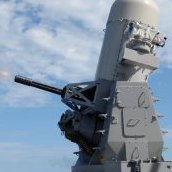 So in the original post, it was the entire U.S. military invading Roshar for really no reason. Politics aren't a consideration; in fact, the main point being that it's really more about tactics, logistics, and warfare than stuff like politics or public opinion. It's pretty much just a mono-maniacal invasion. If we're taking this in a more literal, realistic scenario, like 'The Earth Discovers Roshar' I doubt that any major global power would attempt to conquer Roshar. They'd probably all just ally with major Rosharan countries like Alethkar and Jah Keved, and it'd become a political chess board with almost no real "Earth v. Roshar" conflict (Funding research and discovery, supporting allied Rosharan countries, backing preferred groups in civil wars, etc.). But this is really more a "Is it possible" than a "Would this actually happen". And in that framework, I think the U.S. wins, because of range, power, and precision.
 -
I have (finally) returned. I'd like to clarify that there are no nukes, and no shards, as of the original post, but it would be interesting to see. As for Shardplate: Yes, shardplate is difficult to break... by Rosharan standards. To a modern firearm? Who really knows? Unless we get kinetic impact ratings, there's no way to tell. But it is believable that a series of sustained gunfire (gunfire guided with a hyper-precise radar-locking system) would shred it in seconds (Due to dead-plate breaking under Kaladin falling on it slightly faster than terminal velocity). Seeing as modern turrets can shoot down missiles moving twice the speed of sound, I don't think a Shardbearer would be able to do much (Especially as modern anti-air 20mm cartridges tend to either be explosive, or aluminum-capped). Could a Windrunner slice and dice a tank? Yes, but only if they know where the tank is, and if it's shooting from 3 miles away beyond a hill they really don't. It's not like they can see the rounds mid-flight; they're too fast. Best shot is Shadesmar, and that's only if they can find the bead and (without Jasnah; Edgedancers do have an advantage but Jasnah can't be everywhere at once) convince it to change itself into something else. Which it probably won't, because it's perceived by Rosharans as malevolent and Americans as loyal and trusty. As has always been my argument, as powerful and capable as Radiants and Fused are, they can't survive, say, a 10-ton thermobaric weapon. Urithiru's roof can't survive a bunker-buster. A Lightweaver won't realize Infrared even exists. I mean, even a 5.56x45mm (M4 Carbine) could stop Lezian, so long as it's a headshot. ~~~ As for the military history side of things (Long, and tangential, and not super important, so you need not bother):
-
I'm going to answer some things in a more essay style rather than a direct "Quote / Response" format to make things a little easier to read. Here we go. Alright, so let's start with the whole setup and everything about it: Yes. I gave the Unites States advantages here. That's because I wanted to see what would happen if they had a fighting chance against Roshar; because I wanted to analyse a surprise invasion against the Rosharan continent, to not only see what tactics the most advanced military on Earth could do, but also how the Rosharans would defend against an unknown and foreign force. That was why I made this thread. So the U.S. has enough of Roshar's common knowledge to retrofit their vehicles and make plans, and one-way single-point teleportation, and... that's about it. In an open conflict, in which both sides have a perfect understanding of each other and access to each other's resources? Who knows? Honestly, if we give both sides full everything (Without nukes or Shards) then we could debate endlessly about anything with any outcome. But that's been gone over before. I made this thread to specifically go over a fun idea I had for a strategic invasion, and created a series of both limitations and some liberties to make it happen. If we're going to talk about this, we talk about it my way, because I made the thread. I'm not going to add or remove restrictions at whim, so long as you agree to engage at the standard I initially placed. Thank you. Now then! With that out of the way, let's get on to the fun stuff. Alright. So Highstorms are huge. They're powerful, fast, and full of debris and detritus that destroy nearly anything in them. At least, if you're in the storm. As has been shown countless times through the entire series, the way that most ships, caravans, towns and cities deal with High storms is just by... hiding. And building sloped structures. Roshar has countless natural buffers and windbreaks, everything from mountains to holes in the ground and even large boulders. If you want to protect a large city on Roshar, you put it behind the mountains. What you seem to think is that while the Rosharans apparently just take the weather, the Americans can't. But that's not true. Caravans in the Frostlands, ships on the coast, villages in the Reshi Sea --- none of them just take the weather head-on. They get in shelters and hide inside tough, short, sloped structures. And you say that the Americans just can't? Or won't? Remember, they know what is common knowledge of Roshar, even before the first teleport. They'll have plans in place. They'll have portable windblades and designs for short, dugout style buildings. If soulcasted stone can withstand a Highstorm, concrete almost certainly can. Small, portable radio towers can be taken down in minutes. Machine gun nests are concrete cubes on mountain sides. Vehicles can be parked in caverns dug into cliffs. Smaller airplanes can be strapped down, ratcheted into the rock behind HESCO barriers and mountains and covered in tarps. Even the largest vehicle in the force, the U.S.S. Gerald R. Ford, can be anchored in place behind a large enough rock face on the coast with the planes below deck. And on Roshar, craggy as it is, those are not that hard to find. And all of that can be done with simple Earth tech, and already is done with simple Earth tech. It's not going to be that hard to train people. Now then. Lightweaving. Let's assume that a Lightweaver is attempting to hide a small Radiant strike team on their approach to a military base. As infrared and radar scan the surrounding areas, then the Lightweavers have a problem. Because the U.S. doesn't understand how the bonds or the spren or the Oathgates actually function. All they can see is the outcome of those things' use. Roshar has a similar problem. They don't know that communications use radiowaves, or that RADAR uses microwaves, or that IR Imaging uses infrared. And think of the outcomes they see: instant audio communication and instant detection. They're not going to even realize that radiowaves or microwaves or infrared even exists, much less how to manipulate it. I don't want to continue harping on about my own theories when it comes to Lightweaving, so we'll go by your standard. If a Lightweaver attempts to generate an illusion, then they will be seen by RADAR, they will be seen by LiDAR, they will be seen by Infrared, because they don't know to manipulate those forms of light around them or through them or what have you. There's also the interesting matter that most Rosharans are taller than most Earth males (5'8" average), especially the Alethi, who are on average 6-foot-plus. Shallan, who is considered short on Roshar, is ~6-foot-even. This means that, if a U.S. soldier is suspicious of another American, they could simply fire a shot, or just throw a punch, directly over that person's head. This could potentially kill a Lightweaver instantly if they're an imposter, but would let the American live if they aren't. It's not going to work every time, but it will a lot of the time, meaning that you can hardly use Lightweavers for the one thing they're best at. And even after all that, it's actually very hard for Lightweaver to be on the move and still remain invisible, so there's that. And another thing. Again, Oathgates are not that hard to figure out even if they don't know how exactly they work. The U.S. might never even learn about Shadesmar and still capture them all anyway. Alright. One more thing. Yes, Urithiru would be cooked. You said the walls weren't going to be damaged by a blast like that, and now you're saying they can be, and that'll prevent the spread. Urithiru is so strong it'd just launch the heat down all the corridors, and although yes, there is the big window, 7/8ths of everything around the blast is corridor, so there aren't actually going to be walls for force to bounce off and out the window. Urithiru is toast.
-
Roshar has: - Radiants - Fused - Shardbearers - Soulcasting - Mass Teleportation As well as: - 300,000,000 people - A heavily war-based economy and culture - Home-field advantage - Extremely hostile environment So I gave the United States: - The element of surprise - Some time to retrofit for a hostile foreign environment - An isolated home base that they can't even return to - A single defendable supply point That does not seem unfair to me, largely because I just want to see what happens. And I don't see your frustration, especially as you don't seem to think they could start a conflict in the first place even with all of this. Nor can the Rosharan equipment! The only people not locked down by the storms are the Radiants and Fused, and that's because they're above them. The U.S. can build slanted concrete hovels far faster and much easier than Roshar can. HESCO barriers can weigh over 30 tonnes and those won't be blown away. And again, they could just use a natural windbreak. Besides, Roshar can hide entire castles from Highstorms behind mountains, so I don't really see the issue with a C-5 Galaxy. And the Everstorm is rough, sure, but it also is similar in wind speed to haboobs in Afghanistan and Iraq. It also doesn't have the fine dust, or crem, that make real haboobs and the Highstorm so destructive to finer equipment, so modern equipment can certainly survive it. An average Forward Operating Base from Iraq could survive it, with only some repairs needed. And AM-2 promptly flies away in ~300MPH winds. And whatever stays gets torned by flying rocks, and covered in crem. And the B2 get blown away and destroyed, or do you think planes on open field can survive tornado? Its not like there is no wind magically behind the mountains. Military usually handles hurricanes by moving the planes elsewhere, which is not workable solution on Roshar. Building hardened shelters will take a lot of time, which they don't have when continually disrupted by regular Highstorms and Everstorm, plus Radiant and Fused attacks. And the planes cannot stay on aircraft carriers, because..wind. Yes. Yes, they can hide an aircraft carrier. Just weigh anchor in Kharbranth, or any other one of the numerous massive port cities. If the U.S. just minds its business and doesn't provoke anyone there won't even be a need to conquer, but even then, it's not like the locals can do anything. A ship could stay at sea during an Everstorm, although there'd be a lot of preparations. Unless you put the AM-2 and the B2 and the base behind a mountain. Yeah. There's wind back there. But not 370MPH wind. Not even 100MPH wind. Much more manageable. Sort of like how Rosharans already do it. Weird how that works. They can absolutely build concrete structures in time. They can do it in less than a day. And planes go below deck on carriers, of course. It doesn't even take that long to do. At the spawn point, of course. You can still do long-range refuels without the Air Force's tankers. True. But it also means that a single shot is going to do a hell of a lot more damage. Less tankiness for a smaller profile is always a trade off. And the projectile used by most U.S. military aircraft, the PGU-28A/B, has an aluminum nosecone, as does the Enhanced Lethality Cartridge used by most CIWS modules. In real life, these nosecones are for aerodynamic reasons, but against Shardplate they take on an even more devastating effect. Imagine an extremely powerful core of tungsten or steel alloy slamming into Shardplate through aluminum. The Aluminum isn't the force that kills, but it is the medium that negates a Shardplate's reactive abilities and helps the core of the rounds deliver pure, unchallenged energy directly onto the plate. Brandon says, So you get hit in the chest, get split in two pieces and the shock kills you near-instantly, and you don't come back. They can heal only if they don't die instantly. If someone gets hit by a 20mmm round, well, they're... ...well, they don't have a heart to do CPR on anymore. Sure, they can heal really well if they're still alive, but damage that catastrophic is not something you can heal in time to not die. This holds for Fused too; it's why they can kill Fused with spears and daggers if they aim well. I really can't find anything specific, which has been a problem throughout every facet of this entire thread, honestly. We'll get some random idea, like, "It's got more oxygen" and nothing else. I've been using 30% because that makes sense to me, but it could be higher or lower. We know there a greater density of Oxygen, but that's really it. From what I could find, it's generally agreed upon that the atmosphere is on average denser than Earth's, even with the smaller gravity, or at least that the pressures are similar. That's what I'm going to use, because I think it makes sense, as a "higher oxygen content" wouldn't really work as well as it does in the books if the atmosphere wasn't a similar density. What you said makes sense, but I don't think it's the typically agreed upon explanation as I've seen on this site and the Coppermind, and Arcanum. So for now, I'm going to keep working with the "30% oxygen" and "slightly denser than Earth" framework. It's those forces coupled with relative acceleration that's the problem. When the molecules are pulling equally in opposite directions, then yes, you're good to go. Unequally, in non-opposite directions, at high speeds? That's a lot more strenuous. I think we would certainly see some Windrunners and Skybreakers kicking butt, but I also don't see them lasting too long o being too effective against radar-tracking and anti-air. Attempts to assault and destroy anti-air by the Radiants can also be defended by conventional means. They've got time. And the easiest part of all that is the math itself. Extremely uniform calculations as to gravity, density, and atmospheric content? It's really not that difficult, and the changes are not enough to warrant a full retrofitting. At worst, they just add a pump system to add more nitrogen to the intake. It'll be expensive, but not that expensive, and it's not going to be decades, or even more than a year and a half. I meant that it's uniform to predict. Like, it's uniform in its effect. Yes, the effect increases exponentially as distance decreases, but the effects are visible and they are, as you pointed out, easy to predict. Even for a sniper. Especially for a sniper. And if you where on magic planet with flying dudes, and you saw bullets all curving towards a specific thing, then I think you'd assume they had gravity manipulation. And it'd be pretty easy to tell where it is because everything is going towards it. Nope. Reverse lashings require constant contact and proximity. Adhesion can be left. But not reverse lashings, which are entirely based in Gravitation. Rosharan magic (And Soulcasting in particular) is specifically mass-conservative. Brandon said, This, seemingly, holds for all the Surges, as Soulcasting is a Surge. (Division is simply a separation of molecular bonds, not matter destruction, for example) Plus, it would be thematically inconsistent for Illumination, as a Surge, to do two different things at once. See, the issue is that every other surge only does one thing, or more succinctly, performs one interaction with particles nearby. They can be applied in different ways. For example, Gravitation can be used for both Lashings and Reverse Lashings, but in both cases the Surge is fundamentally convincing particles that a certain direction has gravity. Except for, apparently... Illumination. Most people seems to think that Illumination can do three things: Generate matter out of Investiture, manipulate photons, and expound energy that exerts on particles. And we know that it's not from a combination of Illumination and Transformation, because the Truthwatchers can do the same thing with an entirely different Surge, and the Masked Ones (Mavset-Im) can do all the same things a Lightweaver can without another Surge at all! In truth, Illumination only actually does one thing when you're casting an Illusion: it convinces particles that something is there, when it's not. It's not making a 3-D projector, it's making a pseudo-structure that only light and specific particles (like air) interact with. Or more simply, it manipulates light and air, but it doesn't make them. The reason a Lightweaver can make light in darkness is a mix of the fact that there is always ambient light. Even in the deepest caves, there is ambient light. "Darkness" is subjective because we, as humans, don't have very good eyes. (Stormlight glows, sure, but it doesn't create enough of each type of light to make convincing illusions.) it's not a question of what Investiture (Stormlight) can do, because Yolish Lightweavers can generate light. It's a question of what Illumination is capable of. Just because Investiture can delete someone's soul doesn't mean Division is going to do that. Anyway, that's my theory. Okay. So, the reason I pointed all that out is to exactly describe what you're pointing out. The Radiants cannot fight on an open field. If there are tanks and planes within range they cannot win without heading out into open space (We'll get to Shadesmar in a minute). Their magic is all proximity based, or at least, proximity must be achieved to get the magic started. Ranged attacks, from Jasnah and Soulcasters, are really difficult and requires intense concentration, and limited almost exclusively to Transformation. It typically requires being able to see what you're casting. And if you can see them (your eyes) they can certainly see you (with advanced infrared imaging) and they probably saw you before you even knew they where nearby. And if you're right, that Illumination is just a projection of light, than LiDAR could see through illusions with ease. Which is not great for Lightweavers. So as fun as it is to say that Jasnah could stand on the front and soulcast stone shells around tanks, which she could, she wouldn't really be able to without revealing her location. And if someone gets a shot off (as in, a shot with a kinetic force of 13 megajoules and a velocity of 1,555m/s with a mass of 10kg and a composition of Depleted Uranium from five miles away) then they're toast. They just can't win in those specific situations. It's not going to work. Which means their best bet is sabotage. Which brings us to Shadesmar. Your strategy -- that they go to Shadesmar and soulcast stuff from there -- is their best bet for a quick and relatively minimally-consequential war. Except for the fact that Oathgates exist, and they're one of the only things that lets you leave. If Jasnah is sitting in a hovel on the obsidian wastes soulcasting stuff, she's going to get low on Stormlight fast. She's also going to not really be able to leave. She'd teleport back to the Physical Realm... 50 miles out to sea. Which makes getting Stormlight from a Highstorm... difficult. Especially if you're surrounded by enemies at what is arguably their easiest thing to defend. Here's the thing. For Jasnah and a bunch of Soulcasters to actually exist in Shadesmar, she needs huge amounts of Stormlight to do the things she wants to do. That dictates an extremely bloated, cost ineffective supply chain bottle-necked by limited teleportation capacity, necessity for Radiants to be in Shadesmar to escort and deliver Stormlight, and constant Stormlight production, so... And the thing here is not that the U.S. doesn't have the same problem. The thing here is that they have precedence. If a bottle-necked, dangerous supply chain can only be defeated by a different bottle-necked, dangerous supply chain, than the first side has the upper hand (especially if the first supply chain has much bigger bang for its dollar). Issues. Especially when the Military has surprise, and could just deny use of all your Oathgates, or, keep such close watch on them that they bomb them to crap anytime anyone so much as sneezes within 100 yards. And the one time you might be able to use them... is in a Highstorm. Which would be wonderful. And even then, the amount of damage Jasnah could actually do is doubtful. It's not possible for her to soulcast massive amounts of generalized matter from Shadesmar, so it would be an individualistic endeavor, focusing on several beads at the same time. And once those things enter Shadesmar fully, well, the speed at which most modern vehicles travel is going to mean that the beads are not in the same relative place in Shadesmar as their Physical counterparts. And hey. I'm not going to say that it's a done deal. But the U.S. certainly has a much greater chance of stopping this than you'd think. Because... that's just good military tactics. Press your advantage. The blast happens so fast the Sibling can't react, because apparently it has just real-time perception. End of story. And no, the stronger (also called harder) a material is, the less energy it absorbs, which means that the tower is so strong it makes things worse. The reason the tower can't be scratched with a knife is because it's so hard (Mohs Hardness Scale). You're thinking of elasticity. The same reason a balloon inflates is the same reason everybody in the tower becomes a casualty of rapidly expanding flaming super heated air pressure. The tower fails even more so to something called Rebound Overpressure. When an energy wave bounces off of a surface, it actually has a spike in energy. Someone I am close to was on the bomb squad for the FBI (He also served in Iraq, actually, which is where I get a lot of my information about the war on the ground), and we've discussed things like this at length. Ever heard of a shaped charge? Just by applying pressure in the correct way, an explosion that previously didn't do anything against a solid steel beam will instead punch a hole straight through. The same concept applies here. Pressure, against hardness, leads energy down the path of least resistance, increases energy on rebound, and creates a massive shockwave far, far bigger than the bomb would've been in open air. A tiny pile of gunpowder on the ground under a loose bullet isn't going to move that bullet very far, but if that bullet is in an enclosed barrel with that gunpowder behind it? Way, way more powerful. And of course, Roshar has far more oxygen to fuel this massive fireball, so there's that too. You where saying that the Rosharans could just attack and destroy the carriers the moment they arrive, which I, rather snarkily, responded too by implying that Kaladin and Adolin, two very good people, where completely willing to murder several people they didn't know for no reason. That's sort of what I meant. The consciousness severs when the body dies, because the Fused and the bodies they take don't really share a complete avatar. Also, we've seen Fused die to daggers in the neck, or spears through the chest, so it's really not that hard to say that an average rifle could kill one handily. And being reborn is the most annoying part. But there's always Internment. Just intern the Singers, and there you go. Every time one of them tries to return, kill them again. And he wouldn't decapitate their leadership, assuming he can teleport three times before teleporting away. He gets at best, two or three guys a teleport, before gunfire forces him away. It's not like when entering a hostile foreign planet they're just going to decide to just sleep all night, and not have huge amounts of active and awake patrols. ...again, Stormfather. Roshar would know quickly after ships spawned, and there is that. Plus, of course, US has to have been doing reconnaissance for a while to reach Shinovar and learn about it, which means Roshar already know about them. the Stormfather cannot, explicitly, see into Shinovar. Nor can he see anything in time if the carriers set up in a week and get the scanners and at the end of the week, the B2s, out in time, which is certainly possible, before the Highstorm even hits. A week is enough to comb Roshar from 65,000 feet and never have anyone notice. Could the Cryptics easily and quickly figure out a language with zero etymological connections to anything on Roshar or the Rosharan system and interpret it correctly enough to predict movements and somehow intercept invisible instant communications in any reasonable length of time? To finish, I'd just like to say that I really don't think the U.S. "conquers" Roshar. But I do think they crush the initial weeks, because I don't think they're as bad as all that. And really, that tracks with nearly every conflict since WWII. Crush the initial resistance, and then either leave, and call it a job well done, or stick around, and lose to the insurgency. ~~~ Speaking of languages, I looked at your profile and learned that you are Czech, or at least living there. Do you speak English, are are you using a translator? Just curious. Honestly, it's super neat. I really like how universal this community is! I started putting my writing through a translator twice, to see if any of the phrasing changed too much, just in case. I know that English is frustrating language, especially when being translated into Czech. Did it help some?
-
So, the reason I set it up this way is more for the sake of the tactical side of the question more than the purely realistic side. In an open-field engagement, where both Earth's continents and Roshar exist on the same planet (with different atmosphere/gravity for some reason) and both sides have perfect knowledge of each other, then who knows how it'd all shake down? If anything, the most realistic take is that the U.S. allies with the humans, they fight off the Fused together, and then they drill oil wells everywhere and McDonald's opens locations that sell Chouta. You're right that it's balanced oddly, but I wanted to give the U.S. a legitimate attack so that the discussion would be a more consistent analysis of an engagement from a tactical/militant standpoint of the U.S.'s attacking capability and Roshar's defensive capability, and that meant preserving the isolation of American production and command. Now, why wouldn't the U.S. just pop through with a mars-style rover and easily learn about the atmosphere and gravity and things like that? It's a similar idea to space exploration; where you have no hardware return, and only get information. It'd actually be easier. And once everything is learned, you just upgrade everything at home, and days after the preparations they have a full map of Roshar and can launch an attack anywhere. That's because hurricanes and tornadoes... ...rotate. So their winds can be fast, even if they're not moving fast directionally. Seeing as Highstorms do not rotate, or even deviate in direction at all, their top speed is their net wind speed. 370MPH is more than enough to lift a freight train, anyway, so the point is rather moot. ...by avoiding them. Almost every city and village is built in a way that it won't be hit head-on by the Highstorms, excluding Alethkar (which has massive wind diverts). The U.S. can do the same. A huge percentage of military aircraft can take off and land from aircraft carriers, which can use natural windbreaks on the coast (Which are plentiful; Shallan and Jasnah use one during their trip to the Shattered Plains in Book One). They find an uninhabited mountain, park an ESB and carrier by the cliffs nearby, and expand from there. Throw out some AM-2 matting (behind the mountain), have your B2s land on it after the initial raid, and there you go. And this is assuming the portal isn't on the leeward side of Roshar, which would mean they would have to worry about it far less. (Also, there are Navy-capable air tankers for refueling) And coincidentally so are planes, but those are also limited in other ways (i.e. engine is only in the back for example). Also, Rosharans and US soldiers are equally susceptible to passing out from G-forces, so not sure why you think plane could make sharper turns. Sure they have suits to help a bit, but Windrunners have Stormlight that strenghtens their entire bodies and constantly heals them. All in all, Windrunner can be just as fast as plane (if they have Shardplate), and can maneuver better than any plane, because they have fewer restrictions. And Rosharans are limited by not having excess metal around them to soak up shots, and far smaller numbers of actually flight-capable individuals. You might say "but they can heal". 20mm wide moving mach 3. It's not something you heal from, because it kills you faster than the electrical pain signals can reach your brain. It carries leagues more kinetic force than several war hammer strikes (Which can break plate) and several of them are already aluminum tipped, anyway. You're right that the Windrunners / Skybreakers might be able to go mach speed (And that G's don't apply), but it wouldn't be comfortable. Studies have shown that the only real way to survive it as an average human is with specialized suits (Although Shardplate meets this requirement, as of Rhythm of War, not everyone, not even most, have these). (See the speed of sound breaking Red Bull jump; the Red Bull Stratos project; it's pretty sweet!) Stormlight would keep them protected to the point that they could, but I doubt they could go much faster, and it's going to drain Stormlight far quicker. It's a little difficult to fully understand the tremendous forces involved, but unprotected the pressure will rupture surface vessels and damage tissue. On Roshar, it's actually harder to literally go "mach" (faster than sound) in the first place, due to the denser atmosphere, but even to achieve traditionally mach speeds on earth would be extremely stressful on the body, and shardplate. True, that pilots have similar restrictions. But that doesn't mean that it makes things easier for Roshar. I was more saying that the playing field is more level than you think. Windrunners are, in fact, experiencing opposing forces. When you lash in two different directions, that is a literal example of "pulling G's" because you literally have two identical gravitational forces moving every cell in your body in two distinct directions. They can't really turn that sharply at high speeds, not because of the pressure, but because the blood will literally leave their brain, or flood their brain from the conflicting forces. And if they undo one lashing and then do another, then the opposing force is momentum, and just as potent. They wouldn't get such acute motion sickness initially, otherwise. So they either slow down to turn sharper, or speed up to turn wider. And I wasn't saying that they'd be picked off by jets (although that is a possibility) I was saying they'd get picked off by anti-air weapons, which are specifically designed to kill targets that move like them. Testing? Because certainly, we have to test mars rovers on Mars, before we send them to Mars. And it's not like it's that hard to calculate or mimic denser oxygen (Controlled-climate) or lower gravity (reduced weight strain on engines). And reverse-lashing/attractors are gravity wells. They are predictable, and they are abusable. It is a uniform effect, actually. It's literally a gravity well; a localized gravitational point. It's predictable to a T. (It's like playing Super Mario Galaxy) You're right that it can only affect specified objects, which I forgot. So Dalinar and Kaladin stand in a single area and draw every projectile of a specific type directly towards them with a force of 100 G's, protecting their squads. And then they're killed within minutes as hundreds of assorted .50 AP, 5.56 and 7.62 tracer, and 20mm rounds hit whatever they're touching every second, and somebody shells them, because reverse lashings are really bad if you want to avoid exploding. My arguments for my opinion on this. I can't find a single instance of light actually being generated in the entire series nor in the Coppermind or Arcanum. Plus, manipulation of pre-existing molecules is almost entirely what the surges are, so for Lightweavers to just randomly be able to manifest light directly is not thematically consistent. I was talking about soulcasting massive objects or areas at-range. See above. As for beads, that's all speculation; I've got no idea. Would an object from Scadrial on Roshar have a bead, or would it have mist? Because Jasnah saw the sniper with... what? Her 50x magic vision? In a battlefield? And what if it was a tank five miles away? Or a machine-gun nest with explosive rounds under a ghillie net? Or an airplane at 50,000 feet? It's just a somewhat ridiculous assertion that anyone can see what's coming and then prevent it somehow. Both Roseite and Shardplate are susceptible to kinetic energy; the bullets in Era II were old-school, low-power rifle rounds. And the pilot is susceptible to thermal energy, and gas weaponry. Take a HEAT round and send it into battle from five miles, the first shot gets drawn in and explodes the fabrial/radiant, the second slaps Jasnah across the face, all in a few seconds. It's not that hard to see the most powerful characters dead fast just because their most powerful powers rely on near-direct sight. No retrofitting for planes (They just need new fuel), and the retrofitting for first-wave cars/boats takes a couple months at most, and this is all before Roshar even realizes that the U.S. even exist, because smol rover drone. And yeah, they "learn" powers quickly, but also saying that they establish a massive logistical support chain (bottle-necked by an Oathgate, which is just as captureable as any other building) of Stormlight for one of their most powerful military assets to sit in Shadesmar and soulcast random stuff at a point they won't find for weeks (ships scaring off following Radiants with gunfire, not actually needing to return all that often because of stores, and it's several hundred miles out to sea)? Makes perfect sense. So they capture them after bombarding the invincible platforms so much that no Rosharan would ever dare use them for fear of being targeted and incinerated. Like I said, a bunch of soldiers coming out of a big building is pretty obvious even if you don't know that it's a portal. Rig the whole area around it with mines, claymores, and IEDs, and then hold the perimeter, so if anyone uses it they just explode/get shot the second they arrive, and with Jasnah either dead or sitting around in Shadesmar you can no longer access Shadesmar for tactical reasons (And if Jasnah is in Shadesmar, then you can't get her Stormlight anymore) You mean ground penetrating radar, LiDAR only gives surface readings. And ground penetrating radar is not particularly a curate unless you roughly know soil composition, which, Urithiru will be rather atypical, even for Roshar. What with actually being spren and all. I do mean Radar, thank you. But LiDAR can still see through windows, and Urithiru has a massive one that shows the Atrium down its entire eastern side. Plus, cameras. And the Sibling can't do much in Rhythm of War, which is when this is set. Sure, maybe Dalinar could get there, but only if he survives the initial bunker-buster strikes (still a lot of power going off in an enclosed space, even if it's not enough to cripple the place) and only if he's close by, and that's assuming the US didn't send the no-nuclear MOAB to hit just moments later. The MOAB isn't even designed to destroy soft targets with the blast. It's designed to burn them. That's how the MOAB works. And (As I am now clarifying for the second time), I am not saying that the stone of the tower is getting destroyed, because obviously it could not be. I am saying that, in fact, because the stone is so tough, that the force of the blast will instead be forced down all the hallways and passages of the tower, roasting everything inside. I'm not saying the bomb destroys the tower, because it can't, and that's not what the MOAB is designed to do. What I am saying is that it turns the tower into a pressure cooker (which is proven fact for thermobaric, pressure based weapons). The 11 tons is for the dispersal, not the destructive power. The fire and shockwave are the real killer. The strength of the tower works against it, because instead of absorbing the force it redirects the pressure down every hallway. I didn't realize you meant soulcasted gold, but that makes more sense. So they just capture the soulcaster. Easy money. I was more pointing out the irony that Kaladin and Adolin, two very honorable guys, are going and murdering a bunch of people that haven't provoked them, have not been around long enough to do much, and they can't even understand. It's technically possible, but highly, highly improbable. As for the Fused? Sure, they might just attack. But they still die like a normal people if their consciousness is severed, even if they comes back next Everstorm. Lezian can't just heal if the body's mind gets vaporized. Yep. That's the idea. (And anyway, Roshar is enormous. The U.S. is still limited against it) Fair, linguistics are the biggest hurdle. For both sides, so it's not viable that Roshar would ever even learn anything about the U.S. (Unless Dalinar captured a soldier, but even then it's not like the soldier couldn't just... lie. They'd have no way to tell, and Dalinar's above torturing) They have these really cool mobile bases called ships. They could conquer Shinovar with carriers and nobody would care (or probably even realize they had) until they'd already established a massive military presence there. ~~~
-
First, through conversation, we refined my poorly worded prompt over a few questions. It's U.S. controlled teleportation, but that can't send military-capable hardware back through; only (because this is all hypothetical) non-military support and communication. That's been established for most of my conversation with Returned, but yeah, I know that's a change from your perspective. I'm still annoyed with myself that I wasn't succinct in the first post, but yes, this is the current standard and it's not going to change from here. If the winds were faster, the storms would, in turn, also be faster. I did get the speed wrong; I'll give you that. It's actually 370MPH, not 300MPH (which is already little faster than EF5 tornadoes, which can already lift trains). But the point still stands that they could just avoid them. You know. Like Roshar has. Runways are just flat chunks of earth. You can land jets on rock. And any camp, station, or checkpoint can, (like on Roshar) be behind a hill. And modern aircraft carriers and submarines can run for 25 years without refueling, so power's not an issue. They don't have wood or concrete? Wood is not that hard to find. Concrete is not that hard to make. It has everything to do with G-forces. Kaladin nearly passes out from turning too sharply in Words for Radiance while fighting Szeth. They are absolutely limited by both velocity and conservation of energy, which severely limits their ability to turn quickly at high speeds without first slowing down. They're not just out there playing Snake in 3-D space. (Spoiler for length) They are slower and nimble (Anti-air) or faster and predictable (Air-to-Air), and everything in-between is covered by precision radar and infrared imaging. The United States military is specifically designed to counteract all aircraft, including (Similarly) drones that might match movement similarly. I forgot reverse lashings, you're right, and those could work. Of course, assuming that they even know what bullets or missiles or bombs are, or that guns or missiles or bombs are even projectile based. It's not like you can see them in flight. There are some extremely interesting descriptions of things like this by soldiers in WWI and WWII; the explosion comes before you even hear the cannon fire, and at the ranges most militaries use today, they'd never hear the cannon fire. They would eventually figure it out, but not initially. And then, of course: "Sir, the bullets seem to be curving up." "Then shoot lower down." ~~~ "They're shooting down." "Then increase the lashing." "If I do, we'll all start floating." "Damnation." ___ "Dalinar, I lashed that cinderblock over there, so any incoming shells will miss us." "Perfect. If they can't hit us directly, we can't die." "Exact---" BOOOOO--- If their illusions where a simple generation of light and air they could see through them from the inside, which they explicitly can't. It also makes more sense as to why they can soulcast illusions; the stormlight is telling light and air particles how to react, but not just creating them; it creates a pseudo-ontological structure that only light/air particles interact with (which can then be soulcast into matter). If they where generating light, they'd interfere with ambient light (causing a visual halo effect), and actually occlude the innate manifestation of darkness within an enclosed illusion. It's more so that they're influencing particles. Light is literally a particle, meaning that interacting with light directly alters light's path. However, sound is a collection of particles, particles that can be stationary. They can "generate" air, because they're interacting with particles on a fundamental level, but they can't just manifest vectored air particles. Yolish lightweavers can generate light, but they aren't the same type. And you're right there, I am in fact wrong. My apologies. I still don't know how accurate or even if they could soulcast more undefined cognitive stuff from Shadesmar, but I've covered that. Yes, they can... with a much harder strain. It's really not that easy. And all that's assuming they know the planes are there and can soulcast around them, or find their beads directly (Again, if they have them. Would a plane from Earth that's never existed on Roshar, or its fuel, before have a bead, or would it have some cognitive alternative? Like... voxels or something). Jasnah steps up, soulcasts some troops, draws her blade, and POW, a sniper turns her head into a water balloon at 600 yards (After missing the first shot in a perfectly accurate mathematical arc due to the reverse lashing fabrial next to her, but she didn't notice over the battle sounds). ...Right. Because the books haven't at all emphasized how ridiculously hard it is to actually leave Shadesmar, and certainly it hasn't been implied that Jasnah took years to figure it out and even then, couldn't last an extended period in Shadesmar without significant backup and movement/Stormlight availability issues (especially sitting on obsidian 100 miles from shore soulcasting beans into fire all day). Any evidence for this? Because as far as I can tell, there is none. As far as I can tell, there isn't any evidence against it. And it makes sense, because air, large bodies of water, or massive chunks of stone don't have individual cognitive aspects, so... I have no idea, man, I'm just running with what I've got here. They still know where they all are (As of the initial prompt), and it's still stone with fragile gems inside, susceptible to vibrations. Even then... "Sir, that massive government building in the middle of that street isn't appearing on certain frequencies, and thousands of soldiers keep coming out of it." "Huh. Guess it's a target, then." No, I think it could put a 5m x 5m hole in the ceiling. LiDAR. Plus, the massive window on the Eastern side. ...yes. Yes it is. This is proven, tested fact, actually. Explosions spread much better and maintain forces in tunnels leagues better than in open air (Because of pressure). Because much of Urithiru's structure is extremely compact, too, meaning the same force has less space to actually dissipate into, forcing pressure down tunnels much, much farther and more powerfully than otherwise. Like a water tower. Expect the tower has just suffered a massive explosion inside and there are several highly flammable things in the pipes. And 11 tons of TNT is in fact enough to burn over a kilometer in every direction, as shown in war, and especially in what is effectively a bunch of tunnels. (Not accounting for the O2 making it closer in power to 15 tons) So yes. Blowing up that much explosive inside a tower isn't enough to destroy the tower, but it is enough to incinerate a huge part of the not-tower stuff inside it, including Radiants. I don't assume that some wouldn't, but I do know that once they get there it's not like they can really leave (Unless they get wounded, as explored above). And why take some gold to go (When you can't) when you can just take all the gold and the other stuff, too (because you have to)? So Kaladin and Adolin head down and silently slaughter an entire fleet's worth of people in the dead of night whose intentions they do not actually know within a week of them arriving, because obviously. That is not what I said. I said specifically that the U.S. has no NATO military support. But I did say (in the initial prompt, and many times since) that the United States has access to all production capacity and trade as they normally do, which includes peace and wartime NATO contracts for gear and supplies. Just not actual military assistance. Just to clarify. I didn't say people would ally with the U.S. I said the U.S. would ally with people. That's a different thing. If the U.S. attaches itself to little local causes and things, just "because", that's a different thing than natives coming to the U.S. to just ask for help, and is much easier to manage, and get out of. Plus, it weakens enemies without weakening the U.S. And linguistics is difficult, sure. Never said it wouldn't be. Okay... everybody should slow down (Just a little), and re-read the title of this thread again. It's likely a loss, yes. I'm playing devil's advocate, because I think the United States has a far, far better chance than everyone thinks. I've changed how much I believe it, as the chatter fluctuates. I said, looking back at all my posts, just once that I think the U.S. would win the initial phases (Due to several reasons), which I still think is true. But a long standing occupation is probably nonviable, just as much as an initial Rosharan victory is improbable. Most likely, the military slams the big problems in the first few months, sweeping across the borders, but also stretching thinner and thinner, before getting locked in a counterinsurgency war across a continent that they can't fully control. It's an initial military win, and a long term war loss. It'd be like Iraq mixed with a Devastation, but less destructive than a Desolation and more confusing than Iraq. The planning, tactical side is largely what I've been gunning for. And frankly, I've been pretty pleased with how it's all turned out. Debate for both sides is one of the best ways to discover realistic problems with a thesis, and I've gotten as much out of this as I've put in because of it.
-
The Mechanics of Lightweaving (edit: On Roshar; not Yolen)
TheFlatScadrian replied to TheFlatScadrian's question in Cosmere Q&A
I think that's right, but I'd also wonder as to how that generation differs. Air molecules can exist without being in a wave, but photons can't. It think you're right that Lightweavers could generate sound, but I also think that it still fits my thesis. It'd similar to just moving yourself and generating sound that way. I don't think they could generate air molecules that have a vector already, like generating light, but I think they can exert force on the particles to make sound, like they can with ambient light. Of course, light is weirdly both wave and particle simultaneously, so it could go either way. I tend to think that when they do stuff like this, or the opposite (Walls of darkness), they're just dispersing or gathering the limited light around them into or away from an area. There's always some ambient light around to do this, even in deep space. Could they dampen sound, too? Make a sound bubble? -
Alright. Time for basics, because we've had a lot of conjecture and I'd like to establish a baseline of capability for the U.S. (We all know what the Rosharans can do by now, and it is impressive). ROSHAR: The Big Stuff (and how to beat, or at least avoid, them) ___ Fundamental Differences: - 30% Oxygen (approx.) Simple, but not easy. Every internal combustion engine would need to have the intake choked by approximately 25% to reduce the O2 intake enough for sustained combustion at reasonable temperatures (accounting for reduction in nitrogen). Airplanes would need better fuel types that can handle higher oxidization without over-combustion. Everything would need an update to ECUs and avionics. This would take months to over a year at most for the entire military, but initial landing phases would be easier, taking a few months at most. A small metal plate insert and the tech update would be simple math, and just take a while to implement on larger scales. The specific technology for this potential jet fuel already exists, and at scale, but it’s more expensive. - 70% Gravity (6.87 m/s^2) This actually makes everything easier. The lower gravity makes much of the strain away from mechanical operations. Engines are under far less strain for tougher jobs, and airplanes would not require full engine speeds to take off, helping to counteract the potential over-combustion of the higher atmospheric oxygen count. Also, guns become more accurate, but some basic, easy mathematical re-calibration for weapons systems would be in order. ___ Weather Phenomena: - Highstorm (300MPH, variably predictable) Managed in the same way as the Rosharans do, with shaped structures and natural formations. - Everstorm (120MPH, highly predictable OR unpredictable under Odium) Actually, less of a problem for an average convoy. Wind speeds in excess of 120MPH are only slightly above-average for most desert sandstorms, but not unmanageable, and most ships could remain at sea. - Crem (accretes over time, removable) Managed in the same way as the Rosharans do, with routine cleaning. ___ Average Military Capacity: - Infantry (Swords, leather armor) Guns. - Archers (Bows, leather armor) Guns. - Siege Engines (Catapults, ballistas) Guns. And tanks. And attack aircraft, if you’re bored. ___ Advanced Military Capacity: - Fused Guns. Repeat every Everstorm. Consider implementing internment for singers, or perhaps mass freedom and outfitting, convincing members to refuse being reborn by Fused. - Thunderclast Bombs. Repeat every Everstorm. - Shardbearers (dead sword/plate) Susceptible to kinetic weaponry (Like war hammers, or Kaladin's legs), which almost all modern weaponry happens to be. Guns and tanks. - Soulcasters Have to touch something to soulcast it, so useless at any kind of range. Supply chains are very important, but they're also not robust or redundant due to thousands of years of not accounting for air support. While far more mobile and lasting, Soulcasters are much less robust and can be destroyed much more easily than a conventional supply line, limiting their maneuverability. Guns, assassination specifically, but also remote explosives. - Truthwatchers Limited to the present-sight in most cases, with rare exceptions. Losing Renarin, specifically, would be unrecoverable, and even now he's dodgy at best. He can predict a false win as much as he can an accurate loss. ___ Surges (Magic System): - Gravitation (Illumination ineffective (See below)) Gravitation still means G-forces, even with Stormlight; it’s nigh impossible to reach mach speeds. It’s also exceedingly hard to turn more unpredictably than a military aircraft, especially at speed, as they must either slow to turn, or turn in longer arcs (We have seen Kaladin experience a near red-out while flying at significantly slower speeds). Seeing as how Gravitation is more mathematically consistent than average flight, it makes movements easier to lead with gunfire. They cannot lash missiles, tank rounds, artillery shells, or bullets. They have to touch something to lash it, and even if they could catch up (Or even see it), lashing doesn’t invalidate momentum or propulsion, meaning more and more Stormlight must be applied to fully stop, or better, deflect a projectile. Autocannons, preferably with a mix of radar and infrared tracking. - Division A simple case of area-denial at range. Guns. - Abrasion Same. - Progression Same. - Illumination They can’t actually generate light and sound, nor can they manipulate wavelength frequency. They can only manipulate ambient light and air, and use those to create illusions or focus light. Radar and infrared are not ambiently common at the wavelengths the modern military uses them, and could not be faked easily. Nor is it likely that the Lightweavers would even ever learn how Radar or Radio works, much less take advantage of it. - Transformation For Lightweavers, only individual items can be casted, and they must be shifted through convincing their beads to change, making perception matter rather heavily. The perception of, and thus the soul of, enemy goods and munitions would be less-than-willing to shift for enemies. This is why Lightweavers don’t already do this en-mass. For Elsecallers, Access to Roshar from Shadesmar can be cut off easily, even from the single Elsecaller, via Oathgate capture. Generalized, mass-casting cannot be done in the Physical realm from Shadesmar (Air, water, stone), and even in the Physical realm, only the one Elscaller they have can do it at scale, and only from relatively close-by. A more complex case of area-denial at range. Guns and strategic capture. - Transportation Don’t park your Humvee near a perpendicularity, but if they bring Dalinar, shoot him. Guns. - Cohesion A simple case of area-denial at range. Guns. - Tension Same. - Adhesion Same. ___ Installations: - Oathgates Can and should be captured or annihilated. - Urithiru To clarify a small misconception, the GBU-57s actually worked perfectly during the initial impact and penetration in Iran. The problem was that the payload, once delivered, did not fully destroy the actual structure of the facilities due to the bunker construction. It was a bunker win, and a warhead inadequacy, but not a penetrator loss. Here's some fun math, because I was bored: Punch a considerable hole in the roof over the main atrium hall (Which is a floor to ceiling shaft), allowing continued, smaller explosives to widen the gap and suppress resistance until the hole is big enough. Then, you drop a GBU-43B into the hole, and detonate it halfway down the tower. A concussive pressure wave spreads a fireball throughout the whole tower in moments, instant-roasting everyone within a approximately three-fourths of a mile, and obliterates anything that isn’t the base constructive rock of the tower (Stone walls / floors / pillars). Urithiru is composed of twisty, snaking passageways, but it’s also more pressurized. The forces travel farther and hotter faster than they would in an airburst. This explosion turns the tower unusable for weeks, if not months or years. The Atrium is mostly destroyed, along with its lifts, and nearly everything else throughout a decent chunk of the central tower. ___ I never said it’d be easy. But it’s definitely possible. Especially if the Spren eventually decide to stop trying, which is fairly reasonable. And this is assuming that the Cryptics don't bond to the United States soldiers (Which I would venture is probable, and certainly possible), which would be devastating for Roshar. And yes. I do think the U.S. gets the first strike, because it's fair to say that a random off-world group appearing and setting up somewhere would be suspicious and worrying, but I doubt the assertion that Roshar would attack outright, or that anyone would know of or be able to prevent the initial strike, which would cripple their forces. Yes, Korea and Iraq were NATO-backed, but this scenario doesn't occlude that the tactics, production, and trade agreements of NATO have ceased or are otherwise inoperable. If the Military has access to it now, they have access to it in this, so long as it isn't a nuke (because that's boring), satellite (Because that's absurd), or direct military involvement (Because that's not the question). Yes, Roshar is huge. But a huge percentage (Far beyond 50%) of those people are non-combatants for several reasons, especially if the spren give up after the initial devastation. And especially if the Cryptics bond with U.S. soldiers. And especially if the U.S. allies with people.
-
The Mechanics of Lightweaving (edit: On Roshar; not Yolen)
TheFlatScadrian posted a question in Cosmere Q&A
So, I was reading Stormlight, and apparently Lightweavers can't see through the other side of their illusions, which struck me as odd. Most people discuss Lightweaving as a generation of light and sound, rather than just a manipulation of it. But if the illusions are generating light, then you would be able to see through illusions from the other side, because you could just have the light shine outward without it shining inward. You also wouldn't be able to make total darkness inside a covering, because even the darkest illusions would still generate some visible light. What I think is actually happening is that the Lightweaving illusions are more like a false ontology of an object, one that tricks ambient light and air into interacting like there's something there even when there isn't. So, if you're making an illusion of, say, a stick, you're not generating light that shines in the form of a stick, you're using Investiture to maintain the idea of a stick, that light and air then interact with as if it where real. If they were generating light, then the ambient light, which would normally shine through the illusion, would have to be simultaneously manipulated around the illusion, which might make some angles appear "brighter" for no particular reason, possibly making a faint but visible halo around an illusion. The same would be even more noticeable with sound, where generated sound waves would cause the need to displace or redirect ambient sound waves in odd ways. This even plays into the idea that Lightweavers can soulcast their illusions; they're making the illusory shape physical. (This still works for lasers and darkness, because it's simply a less defined version of ambient light manipulation. Thinking of illusions as "fake things" is really more of a way to conceptualize it than how it actually works on a fundamental level, but the standard holds.) So my question is this: Does Lightweaving generate light and sound? Or can it only manipulate ambient light and sound? And secondarily, if they can't generate light and sound, and only manipulate it, can they then manipulate the frequency of waves, or just their direction? Light is already visually additive, so they could turn just three colors into many different hues and shades without changing wavelengths. (And this matters, because if they can't generate light or sound, then in Era 2 Infrared cameras could see through fake Lightweavings of living things, because biological-low-band-infrared isn't common in ambient space and couldn't be manipulated, and if they can generate light and sound, than radar waves would have strange bouncing effects when being manipulated by Lightweavers) -
16,729,438 ways to torment Hoid
TheFlatScadrian replied to Aliroz-The-Confused's topic in Forum Games & Random Stuff
45. Spoil Mistborn Era III. -
See: The Gulf War (also known as Operation: Desert Storm or The Liberation of Kuwait) See also: Korea (after Inchon); Iraq II (Initial invasion). Since we're bringing military history into this, we should clarify. Vietnam and Afghanistan were never invasive wars; they were entirely counter-insurgencies fought largely on allied borders, so their successes or failure don't really apply here. But Iraq I and Iraq II do, and what we can learn from them is that the biggest issue always comes later: Insurgency. See, the number one reason the United States pulls out of foreign conflicts is a failure to end insurgency. The Second Iraq War was the only invasive war the United States had fought since the Gulf War, and it started with an unstoppable roll straight through the entire country. It's highly likely that the initial American invasion would see a sweeping victory across the board for large swaths of the Rosharan continent, as is the usual. Because settlements are so few and far between, controlling large portions of countries, at least initially, can be a lot easier, even if it allows insurgents to slip by unnoticed. This is largely due to the fact the the Radiants are few in numbers and already stretched thin, and a large majority of Rosharan countries would be stuck with primitive weaponry, and at best, dead shardplate, which we can all agree a decent infantry force could annihilate in a matter of days. Now, insurgency would happen post-invasion. But a large problem for the Rosharans is, again, that they don't even have conventional explosives. They haven't even discovered gunpowder yet, so most average Rosharan resistance groups are going to be stuck with medieval gear. Not even the greatest Rosharan tactician can overcome that obstacle when the enemy can just unilaterally deny you to even get close in the first place. The largest problem would be the Radiant insurgency, which is likely to occur. But, as @Returned and I previously discussed, there are several reasons that this may not be as all-encompassing as you think. (It involved Aircraft Carriers, several thousand tons of ANFO, and the psychology of a target you can't ignore; it was quite interesting, you should check it out!) ...Yes. Yes I am. Now, not to be rude, but you are coming into this a tad late. We have discussed a lot of this so far already, and it's highly likely that Roshar would not be able to counteract an initial strike. Rosharans cannot defend, feasibly, against the superiority of the United States's aerial capabilities. And the Radiants are smart, but for that very reason they're not going to just outright attack an entirely new force that isn't attacking them and they know nothing about, especially if that force is more capable than them technologically, even if not magically. So, in the initial post, it was sort of just assumed that he United States had access to common Rosharan knowledge, but over the course of a conversation I had with Returned we refined it to be that they'd been surveying the Rosharans for weeks without them knowing to find their military strongholds. The question then became one of "how do the Rosharans not notice"? But in reality, Roshar is enormous. And if a single small aircraft carrier arrived to deploy a few surveillance craft at 65,000 feet, then the Stormfather would never see the planes and only barely notice a large metal thing he had never seen before in a natural harbor somewhere. The Radiants might get around to figuring out what it was eventually, but by then it'd be too late. Unless the Stormfather points it out (And who knows what he'd do; he never mentioned several things that could've been monumentally tactically important already in the canon), it's unlikely the Radiants would ever notice. ("They" as in the Radiants would learn the language of the invaders. Dalinar would learn English, not teach the Americans Alethi. Sorry, the grammar there was rather bad!) Urithiru could be nuked. Easily. Atomic weapons generate a central temperature of nearly 100 million degrees Celsius, nearly 6 times the core temperature of the sun. Small nuclear bombs have moved up to 11 million metric tons in one blast. (Look into Project Plowshare; it was this really crazy time when the U.S. thought they could do civilian excavations with micro nukes) But we don't have nukes here, so let's get more precise. Even without nukes, it could be damaged beyond all reasonable usability. Urithiru is, indeed, as big as a mountain. It's also weaker than one. By a lot. It's mostly empty space inside (seeing as each floor is about 15 feet tall) and the entire center of the place is a massive hollow main hall. A GBU-57 MOP, the U.S.'s largest non-nuclear bunker-buster, can penetrate 200 feet deep in solid bedrock. It's easy to imagine how much better it'd do in a place that is only 15% the strength of that solid stone. A few of those could be easily sent through the roof (They're accurate to within a foot). They then explode with 13,600 kilograms of force, a destructive potential equivalent to two tonnes of TNT, or ~8.6 Gigajoules, which is sent rippling through a large, brittle structure that isn't even solid stone because of all the strata lines. And that's ignoring the GBU-43B, the MOAB, which explodes in the air and has a yield of about 11 tonnes of TNT, or ~46 Gigajoules. If the burst happens right above the central tower, that's a blast wave that travels downwards through the entire tower as the blast is said (read articles by BBC, NYT) to obliterate everything within a mile radius. And that's not accounting for the fact that oxygen is denser on Roshar and that Urithiru is at a high altitude, putting it at the perfect place to have both the highest kinetic pressure wave, the biggest inflammatory effects, and the maximum destructive radii of the bomb to be at peak capacity. And if the bunker busters hit first, it opens a hole big enough to send the MOAB inside the tower. Seeing as Urithiru is only a kilometer tall, that might pose an issue. (And no, Windrunners and Skybreakers couldn't tear down the planes and missiles. Because they have to touch them, and those things are moving at mach 2+ and an altitude of 65,000 ft. You can't even see them, and much less reach them.) I think that sending Jasnah to just sit in Shadesmar and just sort through and soulcast individual crates of burger meat and 5.56 ammunition would be... less than ideal. How are they going to support that long-term? Why don't they do that in the books to the Fused? Would new resources entering Roshar even have a bead to be transformed initially in the first place? You're right that this is a logistical nightmare, but remember that the U.S. maintained a similar nightmare for twenty+ years, and a much larger one for eleven in WWII. And the U.S. doesn't have to conquer the whole thing in one go. There's no cap to time here unless they get pushed out entirely; they could go on for decades. Besides, the population density of Roshar is about 7.5 people per square kilometer, as opposed to Iraq's 60 people per square kilometer (in 2009) which makes things easier. True. Except that, like Radiants, a few rounds of 5.56 or 6.8 can kill them, because a wooden spear can kill them. The Lady of Pains failed miserably the last time she did a plague and never did them again. And even then, who knows if Rosharan viruses or bacteria could even interact with an Earther at all, and vice versa? And if they can, and we're bringing in potential biological warfare, the the U.S. could just do the old colonial favorite and launch smallpox in and wait for a few months. And Lezian's susceptible to 20mm. Especially as most aircraft carrier-mounted radar-tracking Phalanx CIWS ELC 20mm rounds are aluminum tipped. As for Shadesmar, you're probably right, although who knows? Many of the Radiants are brand new, and young, and if they got surrounded by dudes with guns they might just go along with it and enter Shadesmar under false pretenses, tricking the Sibling. Although, their bond would eventually be destroyed and the Sibling and Sentries would not let it last, but that doesn't mean an attack aircraft couldn't sashay out to Jasnah's place by the teleportation zone and introduce her to the Mk-82 from 40,000 feet before then.
-
To be fair, there have been no military-failure-caused losses in the past 150 years in the United States. Most wars lost by the U.S. are due to politicians either pulling out too soon or letting them go on for too long, because no clear objectives where made. But enough with my rambling about history that doesn't need to apply and I shouldn't have initially bring up in the first place. Let's talk about fun stuff. You are right. I do tend to get carried away in my dismissal of the Rosharans, and they are much more capable then I tend to give them credit. I also tend to think about them more from a psychological aspect then I do the United States, largely hypocritically, as by my own admission I have said the same problem still apply to U.S. morale (the soldiers aren't unthinking machines). It's my undying love of really cool and explosive military equipment making me biased, but I digress. Let's not forget that they are in the middle of a massive war with a seemingly (to them) more dangerous faction that is actively attacking and enslaving their people than a few humans with some advanced, never-before-seen technology building stuff in the Frostlands. Their priorities, barring their interests, are elsewhere. However. I do absolutely think that they are going to investigate (Especially with Navani absolutely losing her mind that these strange humans can fly with supersonic fabrials). However, what makes more sense in this scenario is a diplomatic envoy, especially with an ongoing war. They need more allies, and if they have the chance to ally with these guys, here's one that might seem like a god-send. So they learn the language through Dalinar, learn as much as they can while the U.S. obfuscates the truth and postpones lending them tech while they fly surveillance until BOOM --- Urithiru, the Oathgates, and several military installation don't exist anymore, although the Radiants are living in a really cool utilitarian Rosharan version of the Mines of Moria. Even with Truthwatchers, I'd say they're not going to just attack the United States outright (possibly if they misinterpret the visions of bombings as them messing up relations instead of the U.S. just lying, although that's a dubious outcome with the Cryptics around). So the war continues from there. Fused are an issue but more of a repeat insurgency nuisance than a completely focused military threat, the Radiants trade blows with the United States over coastlines and major cities, and Shinovar continues to not care. Aluminum is never discovered by Americans, but neither is radio, radar, or infrared by the Rosharans, even if both sides do use it to some minimal effect unintentionally (For example, ELC rounds used by C-RAM systems are aluminum tipped and would do more total damage against shardplate without the U.S. ever noticing or capitalizing on it; Intent allowing Lightweavers to manipulate Infrared under certain constraints despite the Lightweaver being unaware of doing so). And sure, lets say that the only things that can return home to the United States are communication and anything that is no longer battle-worthy or never was in the first place. The wounded, hospital and cargo ships, salvage from crashed planes, empty containers, etc. This means that an aircraft carrier can't just camp behind the teleportation, but cargo ships can still come and go to resupply it, exposing risks in the chains of supply. That's a more fun scenario. We could also assume that if a high-value asset (that is not a direct munition, like a bomb, shell, or bullet, which are all still under standard production constraints) is lost, it can't be replaced. Anything more as or more expensive then, like, a Humvee. That could be a fun counter, but I want to hear your thoughts on it! (And Aluminized ANFO is just scary for any Cosmere types, so I had to mention it. I doubt the U.S. would ever use it though because it's more expensive. Aluminum is just one of those things that appears a lot in really convenient, but random, places in the modern day (such as in chaff; who knows what'd happen if a pilot sent some out and a Windrunner breathed it in?) and if it ever got used it would be devastating to Roshar. I will say this, without hesitation; I doubt, after our conversations, that it ever would be found out. Not without extensive research and pure chance over months or more likely years, and the war could certainly be won or lost by then. So you're right that I mention it a lot, but after everything I've changed my mind about it) Now then. What do you think about the possibility of the United States ever figuring out how to access Shadesmar? If one of their soldiers bonded to a spren, and they kept an Oathgate under control, they might just end up taking it on simultaneously, if mostly as a counter to the Radiants. I could see them controlling parts of it, especially as the Spren are fairly under supplied in most places.
-
Also known as: the United States in every conflict since 1812. That's really not an unreasonable assumption; the United States has always been a redoubt just by virtue of it's distance from every major conflict. Even Pearl Harbor was deep into the Pacific and half an ocean away from central U.S. reinforcements, and that was before the near-instant communication and satellite imagery in the digital era. The Germans and Japanese couldn't access, affect, or observe the United States at all and they still held out for years. But lets assume that they can only send back communications, so they need a carrier and or short, securable airstrips that can be slapped down just about anywhere. I ask --- would the Rosharans even, or be able to, care? Sure, it's odd, and maybe they'd send someone to check it out, but initially I don't think they'd figure out, or even be able to counteract, the danger posed by the surveillance planes, until it was too late. They don't know an attack is coming, and flying fabrials that don't seem to be doing anything are a much smaller issue than the Fused. And even if every Radiant and leader survives, they're still locked deep in the mountains and under heavy watch, which is not a fun or easy place to be. And apparently, it's way to easy to get significant quantities of cheap chemical explosives, so the U.S. has that going for them. I don't think any of my most prominent plans involve aluminum at all? Your points about the other groups are valid, but it is a rough time constantly killing enemies that come back every week, which is the biggest concern. Spren might leave humans eventually, especially with heavy losses, but Fused get to perpetuate those same challenges, if less challenging, indefinitely.
-
Szeth-son-son-Vallano, Truthless of Shinovar, wore black on the day he was to kill a king. He never did understand the nickname.
-
~~~ Now, I think we've pretty well established that the Radiants are toast. The U.S. strategy, starting with a massive strike on military installations (that may or may not be learned of a head of time) would wipe out a huge chunk of the Radiant population, and subsequent raiding to draw out Radiants and fending them off with subterfuge, sabotage, and trickery (as well as the old favorite, rigging several thousand tons of aluminum-based mining explosive inside an expendable but irresistible target), slowly whittling away their numbers until the spren leave entirely and the Radiants are once again extinct, would probably work. What's really scary are the four next issues: - The Fused The Fused can respawn indefinitely using local singers, have millennia of tactical knowledge, a deep resentment for humanity, little-to-no regard for their own safety or civilian safety, and actually enjoy challenges. Their biggest weakness would be Aluminum (which we've established is a weak maybe, especially within the first few months), as well as their lack of innovation, and their tendency to underestimate things. Possibly interning the Parshmen, as terrible as that is, is the only way to catch a rebirth once they've all died once or twice, but that'd be a logistical nightmare and bad for morale (barring, you know, total genocide). - The Heralds Same, but largely less problematic because there aren't that many of them and they're all crazy anyway. - Shinovar They have the Honorblades. Imagine ten Assassins in White running around, never needing to replenish Stormlight or eat, sleep, or even breathe. Horrifying. And that's not including Szeth with Nightblood. They still fall to radar-tracking and similar things, but who knows how long they last before then? - The Lopen He's far too powerful to make anything even remotely fair, so I'm going to make an executive decision and say he's not allowed to fight in this one. What do you think?
-
A large portion of U.S. surveillance aircraft can fly for very extended periods of time at very high altitudes. I do say in the initial post that aircraft can be sent through as well, in flight, so you could just bee-bop in with an SR-72 and learn a lot about major military installations and the weather there. It’d take a minute, but LIDAR and RADAR scanning, photography, and high-altitude surveillance could pretty well give you a picture of military prowess. I mean, if I saw a bunch of flying people show up on radar around a giant mountain military base with giant glowing portals that seem to correspond with every major city and battleground, I think I’d blow up that place first. I don’t think they, say, even know what Spren are or that Shadesmar exists. But flying dudes and slidey dudes and glowey dudes that carry enormous flaming swords would probably catch their attention. And they fly so high that not even a Windrunner or Slybreaker could even know they were there; much less catch up to them or even reach their altitude (Kaladin already notices a difference in the air in Urithiru, doubling, tripling, quadrupling that height would be less than ideal). And from what we’ve seen, I don’t know if the Stormfather would notice or even be able to notice a comparatively tiny E-3 Sentry, or a U-2 Dragon, or an even smaller RQ-4, which has almost no Investiture footprint (because it’s an unawakened, classically-computed drone) flying by at double to quadruple his height (the edge of space, 65,000 feet is possible and standard for the RQ-4, while the U-2 operates closer to 70,000.) But ground involvement is probably a little too much to ask. Actually, definitely too much. A Shin-looking man that speaks no native languages and keeps wandering around government buildings writing stuff down with a little black writing “fabrial” might be pretty noticeable. You’re right that finding key figures might be difficult, but for similar reasons as above it might not be as hard as you think. It’s often true that royalty are easy to spot in context, and once the initial landings occur they could figure it out from there. And, because it’s just cool: The legacy cameras on US planes — not the current, classified ones, the legacy ones — can render 2.5 foot wide objects at 65,000 feet. That’s quadruple the altitude of Urithiru. On Earth, that altitude will kill you in moments. On Roshar, the atmosphere is denser, but the planet is also smaller, so not only is 65,000 feet likely even less pressurized than Earth, but it also means the Rosharan’s are less capable of handling it than humans on Earth. Now, I do remember something about Radiants not needing to breathe, but the combination of freezing cold, low pressure, higher radiation and all-around nearness of space would likely soak up Stormlight quickly, and that’s assuming the Rosharan even notice the planes are there in the first place.
-
Would the U.S. Army be able to take over Era 1 Scadrial
TheFlatScadrian replied to Honors Spectral Image's topic in Mistborn
I sketched out a really bad comic while I was in math class based on what it would probably look like if Kell tried to steelpush a tank round. You probably wouldn’t even see what happened. Turned out a bit more grimdark than I thought it would, but, uh… here we are.
-
Szeth-son-son-Vallano, Truthless of Shinovar, wore this really nifty graphic tee with Smash Mouth on it the day he was to kill a king.
-
I've been getting some great stuff out of my conversations with @Returned on a forum about Roshar and the U.S. Military recently, and was inspired to write a brief snippet based on some ideas we discussed.
What do y'all think?
Spoiler“It’s not a hard proposal, surely, trade agreements haven’t been this calm since—”
“Father.” Queen Fen stopped talking as Renarin stumbled into the room, past where Kaladin stood by the door, and skidded to a stop on the smooth floor. He was breathing heavily, and pale, sickly sweat streaming down his face. “Father, something is coming.”
The monarchs gathered at the conference fell silent, and turned to look at him. Navani turned in her throne beside Dalinar’s, and looked toward her son with concern. Adolin did likewise from his own stool by the broad window, though with some inscrutable emotion Renarin couldn’t quite place.
Dalinar rose from his simple chair on the obsidian dais at the rear of the room, face impassive. “Speak, Renarin,” he rumbled. “Is it Odium?”
The Truthwatcher gasped a few breaths, still winded from his dash through the tower. He looked up at his father, a tortured light dancing behind his eyes.
“No,” he whimpered, after a pregnant pause. “It’s… .” He heaved suddenly, and sunk to his knees. With a single spastic retch, he vomited a few strands of scummy spit onto the floor, flecked red and black, creating a small pool on the polished stones. The Azish viziers nearest to him recoiled in disgust, looking away from the nauseating coalescence as it slowly oozed into the grooves of the floor.
Renarin was trembling, still heaving, on his hands and knees. Eventually, he looked up, and slowly wiped his white lips with the back of his mouth. “My … my apologies. The visions can be … unpleasant.” He carefully rose to his feet again, and looked around at the inquisitive faces staring back at him.
The Truthwatcher sighed, the weight of everything behind it. “I saw … men.”
The gathered rulers slowly began to talk languidly amongst themselves, all urgency replaced by a marginal interest. Taravangian, who sat on the edges of the gathering, did not join them. A brief flicker of intrigue flashed across his face before he clasped his hands and leaned forwards. “And who might these men be?”
Renarin regarded the old man warily, before continuing. “They… they’re a people. A short people, like the Shin.” He let out something a little like a laugh, but it was too weak and died before it could become one. “They can fly.”
“Radiants?” Kaladin, suddenly stiff with battle readiness, called from his place beside the door. “Or Fused?”
“Are they of Odium?” Jasnah asked, slowly. She shifted wearily on her seat near Navani.
“No,” Renarin responded. “They use fabrials—”
Navani clapped her hands once excitedly, before blushing and folding them in her lap.
“—and I don’t know what they’re of, but certainly no God on Roshar.” Renarin shook his head. “I… this is no peaceful envoy, mother, these … these machines of theirs … they bring death. Fiery, burning, inescapable death."
The excited chatter started again, and Renarin’s last words were almost lost as he whispered them:
“And they bring it tonight.”
The talking truly erupted, accusations and speculations bouncing off the strata-lined walls, most tinged with doubt and a hint of worry. Dalinar listened for a moment, eyes closed and jaw set in a grimace.
“Enough.” The others grew quiet again as Dalinar looked down at his son, and gave him an encouraging, if tight, smile. He stepped forward, off the dias, and rested his hand on Renarin’s shoulder. “What else did you see?” The Truthwatcher looked back at him, but only for a moment, before he dropped his father’s gaze and winced.
The young man continued, softly, as if fearing his own voice. “Their fabrials are as wide as the Fourth Bridge, or as small as a chull cart, but fly higher and faster than even the Windrunners can. We couldn’t stop their flight if we tried. I’ve seen so many Radiants fall burning, in my dreams, torn to shreds by some force I couldn’t even see…" A shudder passed through him.
“I don’t know how they kill, but they do it so easily. They fly their fabrials so high over our cities that we can’t even see them, and all they need to do is point with their machines, and where they point them fireballs erupt out of nothingness below, among our soldiers and in our homes, killing hundreds, if not thousands. They can use their magic on a point so small it rips a tiny hole through a person’s heart, or even such that it completely destroys an arm, or a head, or an entire torso before we can even react.”
He choked up suddenly, and stopped speaking again, breathing hard. Dalinar squeezed his shoulder reassuringly, a firm look stamped on his face. He could see the visions had disturbed Renarin greatly, but he needed the boy to push through; to give them any more information he had.
Renarin continued at his father’s insistence. “I — I saw Urithiru fall. Like an avalanche. Oathgates were destroyed across the world, none could flee except to Shadesmar, or deep into the mountain tunnels, some of which we burrowed ourselves… I … didn’t see many survivors…” Renarin finally, exhausted, withdrew into himself, still breathing hard. The man hadn’t spoken that much in … months, most likely. He looked sick.
Dalinar stepped back, letting his comforting hand drop from Renarin’s shoulder. He turned, looking out the grand, open window set into the multicolored stone. The sky was a brilliant blue, and looked pure, unmarred by even a spec of discoloration as it refracted across the shimmering floor, the light hardly reaching Renarin’s glistening detritus a few feet away.
‘...can’t even see them…’
“We can’t stop them? There’s nothing to block?”
Renarin looked at his shoes. “No.”
Dalinar nodded slowly and continued to look out the window.
The silence had continued on for a time, broken only slightly by occasional murmurs, when Dalinar finally spoke.
“Well,” the Blackthorn said. “So be it.” He turned away from the window, facing the rulers, hands clasped behind his back. “Seeing as our defenses are incapable of handling this. Our only possibility for survival is to flee.”
He ignored the angered protests that immediately followed as he turned and strode for the door, beckoning for Kaladin, Adolin, and Renarin to join him. The heavy oaken door closed with a heavy thud, cutting off the bickering lighteyes as the four men entered the hallway to prepare for what would come to be known as one of the deadliest days their world would ever experience.
-
May I just say our conversation has been wonderful. I’ve really enjoyed it. I must admit my way of analyzing odds is a teensy bit idiosyncratic, so I'm going to explain it real quick to make sure we're on the same page: I use extremes not to say that those things are viable, or really even probable, in context. I think that with a broader understanding of the biggest possibilities in a subject, we can better understand the whole. This is why I use absolutes and tend to speak in maximally bad, maximally good terms rather than in a more singular, balanced way. I say “Deaths might reach X but not matter because Y”, not to say that I think that’ll happen to those extremes, but to prove a point as comprehensively as possible. As vague and hand-wavey as I've been, or over-the-top, I can’t emphasize enough that the military is only as capable as it is in real life, with the same exact problems, and the same ability to learn or underestimate, control or retreat, suppress or support. It has been conducting surveillance for months before the first strike, enough from plane and by stealth, to know things and know to counter them to an extent that they can truly make a plan for initial, and follow up, attacks. That was sort of what I was trying to imply, without wanting to spell it all out, which is on me. And yeah, Aluminum discovery by the Americans is as big a maybe as Radar discovery by the Rosharans. Also, when I was supposing millions dead, I meant during a no-holds-barred, all-out offensive on the part of desperate Radiants fending off an indomitable foe. A Radiant might cleave a city block in two to kill a battalion, and win, but not without an excessive civilian death toll, or being killed a moment later. As for bombardments, well, striking major military installations causes more civilian deaths than combatant deaths, even in the most one sided of moral wars. Especially if those installations are the centerpiece of major cities. They’re not gonna purposefully hit the Azish capital building, but they are blowing up a massive stone portal just outside it, and that’s gonna get some people unfortunate enough to be nearby. (The end of WWII in both Germany and the Pacific comes to mind) And I don’t think anybody’s gonna call a Desolation a win… I guess I’d assume that previous capabilities to survive, if reduced, are still marginally viable for the majority of countries and populations (meaning production, trade, and governance are still possible and expandable even with severe reductions or damages), and the U.S. has no presence. That’d be a “win” in a realistic sense. In the same way nobody really “won” WWI in Europe, pushing back invaders at identical or far worse costs might not be worth calling a “win”. Maybe that's too harsh. You know, it's true I went a bit overboard there, and the Radiants fending of a massive fighting force is a legitimate victory, if a really, really hard one. The long term ramifications would be interesting though, in regards to the Desolations and Roshar's advancement as a planet. And at the end of the day, screaming spren were the real killer all along. This is true, and you're right that it's the biggest problem with any invasion, especially on Roshar. I think that, maybe, the United States could avoid provoking the Radiants or Fused initially, maybe, taking smaller regions that don't really matter to the wider Radiant war effort (The Makabaki states, Kharbranth, Liafor, Shinovar) And establishing permanent infrastructure there before launching their larger forays into Alethkar, greater Azir, or Jah Keved. It would still be a challenge, but that might give them an advantage. Also, how conceivable is it that they might eventually get tactical satellites launched? I doubt it'd be for years, but it might eventually be possible. That’s fascinating, and I have no idea how to counteract that. Maybe noise-cancelling earbuds? There just aren’t enough Radiant-allied spren by this point to be that damaging to such a large force, I think, and it’s not like you can summon them as blades to fight while they’re there. I have not seen Awake, but I’ll look into it!
-
That'd get exponentially funnier the longer it continues and the louder it gets. But I do wonder if the soldiers would get used to it, or if somebody would drop a piece of aluminum silverware, hear a spren go "ouch!", and everyone suddenly realizes that they just need to fumigate everything that screams with chaff. It seems a little dangerous sending spren into a world where aluminum is plentiful. Well, I'd consider all of Roshar here rather than just our Radiant friends, even if we've been focusing on them. As you said, everyone else is "going to be in a lot of trouble". So the Radiants might fend off the invaders after millions are dead, and I wouldn't call that a victory. Preserving land is still a major part of this. And frankly, most wars against the United States are like that. With very few exceptions (Pearl Harbor, basically), full-scale military attacks on U.S. soil never really happen, so all enemy attacks against U.S. infrastructure is generally in contested or U.S. allied territory, not pure solely U.S. territory or against solely U.S. production... which actually leads into my next point. (Also, I really like the word "monomaniacally". It's a perfect description for this mindset) Militarily, yes. The issue is that you don't need to start a land war against every nation in Asia just to win Asia. This is total conquest, not just "if it bleeds, nuke it". The largest nations will never agree to an enemy that led with a full-scale attack, of course, but after a few campaigns (especially with Urithiru's destruction) the smaller ones might get more leniant. The U.S. military isn't all just point and shoot. Figureheads, PSYOPS (Winning hearts and minds), outfitting, educating, all of that is just as crucial to counterinsurgency as pushing the clicky-bang button on everything that looks at you funny. This is basically what the U.S. did to South America and China did to Asia in the Cold War. No one can really deny that Vietnam and Korea weren't just Chinese proxies, and that Panama wasn't just an American puppet (until the Noriega fiasco). That tends to start wars against people who care about stuff, but if some U.S. ambassador writes an essay that lets them be the Azish Prime I doubt they're just going to shoot the place up first. (Or they could just sign a bill of eminent domain. The Azish might just surrender at that) There would of course be military conquest across the different regions, against places that resist, and major countries that dislike the military being there, but smaller nations (Emul, Liafor, Yezzier, etc) might just fall in line for a piece of that sweet American pie. The biggest issue with all of this is the language barrier, of course, but the U.S. probably has a better chance learning Alethi languages than a bunch of Radiants living in a hole. Those Fused. This is what they get for being so self-righteous all the time (even if they kinda sorta maybe have a point). I would love to talk about them more in-depth, because I fear them more than I fear the Radiants, but I'll finish here first. I find the desperation of the Radiants in this scenario really compelling. Imagine every last one of your other options is gone. Attacking first and hard is about the only thing you can do, and only on one day every week, and, like you said, they'll run out of ideas eventually. The same reason resistance groups in WWII worked so well is the same reason they sometimes failed so hard: passion. You get going based on revenge and desperation, and revenge and desperation in war turns into martyrdom more often than not, especially when there are no other options. The U.S., conversely, is not desperate in this scenario. They're pragmatic. A ship they'd lose in a few years anyway gaining a huge win in a foreign world with [whatever they're here for] would be a massive YES from every desk in every branch. I meant more the idea that the Radiants leave a massive hole in the ground after they emerge from their tunnels, so the Americans put a rover in the hole and drive it in to blow the thing up from the inside, but you're right that a Stoneward could just glue everything back in place until next time. So what you do take advantage of is the Weeping. Thwack Urithiru and Dalinar and most of the Radiants right before the last Highstorm before the Weeping, and then press the Radiants just enough to sap their Stormlight to nigh-unusable levels, before using your advantage. instant win. When is blowing stuff up never a good plan? I actually did some research here, just to make sure this is even possible logistically and explosively viable. Apparently ANFO is one of the most traded commercial explosives of all time and is really, really cheap and easy to make. Ammonium nitrate is produced in the millions of tons every year (96% of the mixture), and the other ingredient is fuel oil (10%), another cheap (relatively) and common ingredient. It also happens to be more explosive than TNT, and only a little less than C4. So it could blow up with the force of a small nuclear bomb with enough quantity. Annnd I just now I learned that there is such thing as aluminized ANFO, which has aluminum flakes in it, and is apparently more explosive and more hot, and I suppose more anti-Investiture (About 10% to 30% more powerful, according to research), and is apparently better at shattering stone (ANFO is mining explosive, typically). That's somehow even worse for literally everybody that's magic and/or underground! Just put a chunk of that $900,000,000 budget into aluminized ANFO production and you've got yourself a Cosmere-grade anti-material explosive that'll kill just about anything.
-
True, actually, and I'm glad you reminded me. I don't know if, as of RoW, they have the skills or thought to use there powers that way, and I could see an instance of bias towards the Oathgates with the digging as a last resort, which would be worse for them. They're still people, and easily frightened. Oathgate use feels less permanent, and they want to believe Renarin is wrong. But even if they did go the mole-people route, constantly seceding territory is sort of just a loss anyway. If the U.S. now controls like 90% of your country, and you're in a cave in the mountains eating rock-soulcast slurry, I don't think that's really a win, exactly, or even a recoverable, temporary loss. Counterinsurgency is really a measure of last resort, although I could see them, against odds, pulling it off successfully. The U.S. mostly loses to counterinsurgency due to policy rather than purely military reasons, but Radiants are a little more terrifying than the Taliban. Urithiru, I think we can all agree, is as good as destroyed. So are all the Oathgates, which cripples the Rosharan alliances and military strategy, meaning armies need long marches or can't march at all. Even licking your wounds in the Mines of mUria, you still need a way to reach the coast in the first place, which is... rough, when you have to fly over actively contested area that you can guarantee the Americans are patrolling constantly. Maybe the Radiants could tunnel all the way to the sea (And that'd be crazy useful), but if the Americans find them under there, well... bad stuff happens the second they reveal it. Like a remote-controlled rover with a bunch of C4 strapped to it. But it could be devastating to the U.S. if the Radiants do it well. It was fun to read! Most of those defenses are radar and IR based, so I might assume that they could still track them through darkness and illusions (And if they're in cover, of course, but that's where it matters) but we also don't know how fast Lightweavers would figure it out, and that's up in the air (Although being holed up in a mountain might hinder technological discovery). A carrier could probably fit in Kharbranth harbor. And if Lightweavers figure out radar and IR it's all over. But again, that's all speculation we've covered and could reasonably be confident about either way, depending on a few incalculable variables. And your right. At the end of the day, your strategy is pretty dang good, and really fricken' cool, and even if the U.S. can (and probably would) kill a few Radiants and squires every assault, the loss of an entire carrier could be a worthy trade off. Although it's absurdly hard to sink any carrier. 2,000 lbs bombs went off on the deck of the USS Forrestal and it was fine after some repairs. But the Radiants are extremely resilient. They'd probably find a way to do it though, especially because explosive defense is a little irrelevant when your ship has been rusted in half and set on fire. But I have a strategy of my own... ---Fun Speculation Time!--- Okay. So Urithiru is gone, Dalinar is dead because moving people into a rock as it's being excavated is tough and takes a while. Huge portions of the population is dead or under American rule in the major population centers, and without the Radiants or their leaders the conventional armies are falling fast and hard, especially after the bombardments of major cities. Jasnah is alive, and Navani rules in the stead of Dalinar, but the loss of Kaladin (attempting to save his father) is a hard blow, as their first active Radiant. And Urithiru's collapse was... hard to watch. Many Radiants are in a dark place right now. So Adolin and Shallan, working with Jasnah, propose a plan (@Returned's plan!). It works outstandingly well. The U.S.S Theodore Roosevelt is still burning and half-sunk in Kharbranth, its deck only now regaining friction, and the U.S.S Carl Vinson is a rusted hulk at the bottom of the Tarat sea, a chunk of stone encased around its screw. The Radiants are invigorated, although they've lost friends in each salvo, and the spren don't seem to be returning. The Storm Father's withdrawal after his daughter's death was... hard, for the spren. But the humans are trucking along regardless. So the U.S. has this really neat carrier, called the U.S.S Dwight D. Eisenhower. It's a Nimitz-class, and near decommissioning; set for 2027, especially with the new Gerald R. Ford-class carriers being the next big generation on the horizon. Well, the Americans have a plan. They send the U.S.S D.D.E to attack the shores of the Azish empire, because even though they control Azir and most of the Makabaki states, the Yezzier and Desh are still fighting back, and it's irritating high command. The carrier goes up and down the coast, deploying planes all over the poor, under-equipped insurgents, and generally making a nuisance on the conscience of the Radiants while simultaneously serving the front line in the West. The Radiants resolve to destroy it next Highstorm. Renarin tries to warn Adolin of the dangers, but Adolin reassures his brother, saying that his most terrible visions have been wrong before. Why shouldn't they do this? The next Highstorm, it's parked in the Berizhet Inlet in Liafor, near Tashikk. Adolin has wanted to help Liafor for ages (if only because he misses their fashion) and the others agree to it. They suit up, and send out the twenty-five or so odd Radiants they still have left. They darken the skies, destroy radar and IR, rain molten bronze, de-friction surfaces, cut through bulkheads and encase parts of the ship in stone. The soldiers on the deck climbed overboard and drove away in weird, small boats (that looked unlike even the more conventional ships, like some smooth black animal with a larger body beneath the water) before they even started, so they let them go. There's no reason to kill fleeing men. They land on the deck and run / slide/ glide around, destroying everything. When they approached, there where no airplanes on deck, and little gear. Not that that's uncommon, for Highstorms. It's almost satisfying, although it is odd that there's not even a little gunfire, and that boat those men got inside has vanished underwater--- KRACKA-BOOOOOOOOOOOOOOOOOOOOOOOOOOOOOOOOOOOOOOOOOOM The entire ship explodes, its deck shredding to pieces as the 10,000 tons of really cheap, easy to acquire ANFO beneath the deck explode instantly, cracking the frame in half, crushing or exploding every deck above and below, and sending a shock-wave outward that levels buildings and blows out windows for miles in a blast nearly twice that of the Beirut Explosion, bordering on 8.3 kilotons. Every Radiant and squire on or above deck is instantly vaporized and a massive tidal bore smashes into Berizhet, killing over a thousand citizens. If even a single Radiant or squire survives, somehow, they bring back the news that Adolin and Shallan are killed in the blast, and that it was a trap. The survivors back in the caves wonder what people could sacrifice something as powerful as one of those ships just to kill them, and speculate (Falsely, because it was just pure luck that they even had a carrier to sacrifice) that the military they've fought is barely a fraction of the U.S.'s power. Jasnah, under pressure and secretly terrified and mentally broken, agrees with a similarly-off Navani, and both offer to surrender. ---End of Fun Speculation Time--- What about that? (The AI I used for some information (Which I fact-checked) told me it was possible but a "monumentally bad idea", when I asked if I could fit 1,000 tons of ANFO under an aircraft carrier flight deck, so I dectupled the amount. Apparently it'd barely be a fraction of the total capacity of the ship, but still level Manhattan.) ~~~ What I think I've learned the most is that it'd be really hard either way for either side, and the Americans would get the upper hand first, but the Rosharans would be devastating as strike teams and might pull off a successful counterinsurgency.
-
I need to see that as a cinematic immediately. (That's so fricken' cool) Some context: Most modern warships can't survive hurricanes unscathed. They certainly can ride them out, but even so, they take heavy precautions, such as putting aircraft under the deck and quite literally battening the hatches. A High storm, which moves at triple the speed of an average hurricane and is full of a godly level of debris, in one, predictable direction, would be avoided at all costs. It's safe to assume that any Highstorm-facilitated attack on a carrier, or any other ship, would be in a bay, inlet, or other similar haven, rather than in the open sea. There'd be no airplanes, and very few personnel, on deck at all. Plus, it can be assumed that the area around a ships' haven would be brimming with anti-aircraft weaponry, machine gun nests, and artillery cannons, making that assault a lot harder for the Rosharans than an attack on a carrier at sea. And if the ship is docked in a captured city, that not only gives the Americans better vantage points around it, but more frankly, human shielding that the Radiants will be unwilling to just attack. Also, I sort of doubt that they'd really understand to block radar specifically, but we've covered that exhaustively and I doubt it'd really matter if they're waterfalling molten bronze everywhere. That's a really good point; I hadn't even considered that! There are some instances of certain abilities granting an enhanced understanding of language (Syl learning to read in a single week; Venli being able to speak several Rosharan languages), but every one of those languages is of Odium, Cultivation, or Honor, and have been spoken and written on Roshar for millennia. I have no idea if the same would apply to an off-world language at all. And that's not helped by the fact that the U.S. Military uses two types of language: normal, everyday English, and radio English. Radio English is almost a completely different way of speaking, with the NATO phonetic alphabet, brevity codes, and code words for specific events and instances. And that, coupled with the fact the U.S. gives nearly everything a random codename, makes learning both a new language and both styles of it nearly impossible, even for Cryptics. ("They call the Highstorm 'Oklahoma', whatever that means, but it has no etymological connections to any other words they use to refer to it? Huh?!") The single biggest problem with a bombing or barrage is Truthwatchers. If a Truthwatcher sees something coming, they can warn everybody, and forces can clear out in time to avoid massive casualties, even if their infrastructure is destroyed. I think it's fair to say that they can't really do much against high-altitude, supersonic bombing, but they could certainly predict it, and escape in time. If Renarin is able to sense the future, and tells Dalinar, Urithiru could evacuate in time. Maybe. See, the problem is that we don't know how far into the future Truthwatchers can see, or even how they do it at all. It might just be a property of Investiture, that it can sense potential outcomes (like Gold on Scadrial), but it might be based on Intent, and we have no idea how it'd work with stuff that has literally no Investiture, such as someone or something from Earth. I think that, with everything we know, the earliest Renarin (or any other Truthwatcher) might know is the moment the bombers are "teleported" to Roshar. In Words of Radiance, we watch ~30,000 Alethi use the Oathgate on the Shattered Plains to retreat from the Everstorm to Urithiru (That's a lot of proper nouns). They have to use the gate twice, and we can assume they're moving ~15,000 people per, along with their supplies and gear, each time. In total, this all takes approximately 30 minutes to 1 hour to do, because while Oathgates are instant, it takes time to move so many people, animals, and supplies onto a massive platform. However, as of Rhythm of War, the period that this invasion is set, three Gates are viable: Vedenar in Jah Keved, Thaylen City in Thaylenah, and the Azish capital Azimir in the Azish Empire. They could, potentially, cut their time down to thirty minutes to an hour... ...but that's only if their arrival points are capable of handling literally tens of thousands of people all at once (Which they aren't), which could extend their evacuation indefinitely. It's also possible that they go to the Shattered Plains, but that's not really viable, because at most points in a week, a bombing campaign would expose the group to a Highstorm on their way back to the camps. The other places are completely uninhabited, unprotected from storms, or controlled by enemies. As of the beginning of Rhythm of War, Urithiru is estimated to have about 300,000 people living in it full-time. This means that, best case, it takes a hour and forty minutes to evacuate, and worst case, 3 hours and twenty minutes or greater. The diameter of Roshar ranges, in estimate, from 4,000 miles (6,400km) across, to 6,400 miles (10,300km) across. I've always assumed that the "point in the sea" the U.S. comes from is South of the Tarat Sea, but at furthest, it's Northeast, off the tip of Alethkar. B2 bombers have a cruising speed of 600 miles per hour. So, best case scenario for the Rosharans: - 30,000 people every 30 minutes; 5 hours for one gate, 1 hour 40 minutes for three. - A maximum distance of travel of 3,000 miles for their enemies, takes 5 hours. That gives the Rosharans just barely enough time to maybe save everyone, if they use one Oathgate. They could easily shrink their evacuation time by using all three, to just an hour and thirty minutes, but even still that's disregarding the capacity of the three cities receiving these evacuees, and the speed that they can even process them. Sending everybody into Shadesmar would be difficult, even if they use all ten portals for it, as most Oathgates are in the middle of the bead sea and can't really hold 30,000 people comfortably. Nor could they feed them in Shadesmar. The absolutely perfect, unattainable best case scenario, America has a really bad tactical plan, Urithiru is destroyed, 300,000 people are refugees to countries or realms that can't sustain them, and their arrival points are attacked a few minutes later anyway OR they're stranded in a place where they slowly starve to death. Worst case scenario for the Rosharans: - 30,000 people every hour; 10 hours for one gate, 3 hours 20 minutes for three. - A maximum distance of travel of about 1,000 miles for their enemies, takes 1 hour 40 minutes. That gives the Rosharans not enough time to get even half their people out. All the same problems above still apply. And that's if everything goes perfectly. I kind of lied. The absolute worst-case scenario is that the United States understands the Oathgate connections (which is actually common knowledge, now) and bombs the three recieving cities (And the warcamps) first, destroying the gates. Renarin knowing this and telling everyone would force refugees to Urithiru, not away from it, or force everyone to somewhere uninhabited or desolate. And... The United States knows about Highstorms, too (again, common knowledge). If they do the raids a couple hours before a projected Highstorm arrives, or even fly right before the Highstorm to arrive minutes before it hits, the refugees would have no way to survive, even if they all made it out in time. Most military airplanes can stay aloft for hours, easily flying above Highstorms (and faster than them). Windrunners and Skybreakers can't catch up to the planes, or even achieve an altitude as high as them without passing out (especially because they're so used to Roshar's denser atmosphere at low altitudes). The most likely outcome is that, after Renarin's vision, Dalinar orders an evacuation order for Urithiru and every major city in the country, using Urithiru as a way station to get to other places, which takes hours. They try to make it to some other, abandoned Oathgate city before the strikes, or even to Shadesmar, but before they can fully evacuate they are hit hard by massive airstrikes and hundreds of thousands are killed across every major Rosharan city as gates are annihilated, and thousands of refugees are in transit across the Oathgate plateau in Urithiru when it gets bombed (Because times double if you're going from Thaylen City to Azimir via Urithiru). Urithiru collapses, and Dalinar, along with most Radiants, are killed. Unfortunately, Jasnah probably escapes because she'd want to go to Shadesmar with the first group and set up camp, but at least Navani probably lives for the same reason (And Dalinar's protectiveness). Kaladin is unfortunately toast, too, or maybe not, but that's just speculation. Dalinar stays in Urithiru to the last, with his Radiants, powering Oathgates with their powers and his Perpendicularity. They are all killed in the firebombing. Some Radiants, as well as Jasnah and Navani, might've escaped to another city, or Shadesmar, but it's doubtful they can do much anymore, or even have the will to. The sheer power of one or several explosions that would immolate you would drain Stormlight beyond all reasonable limits. At least, that's probably what would happen.
-
Since I could hold a pencil! It wouldn't leave my head until I drew it
-
I think the entire outcome, based on everything we've talked about and the points you and I have made, can be boiled down to our interpretation of two factors, one intellectual, one physical: PROXIMITY - How close you can get or need to be to fight and COMPREHENSION - How much you understand or need to know to fight Based on how we interpret these two factors, the outcome will change, because honestly, it could go either way. Proximity: That if Radiants, Fused, and Shardbearers can get in close, they can do pretty much anything they want without instant death. Close range conflict is the Rosharan dominion. Conversely, the United States doesn't need to get in close. They dominate mid-to-far ranges, reaching hundreds of miles even without satellites, and weapons that can kill easily at half a kilometer are standard issue for all troops. Comprehension: That if the United States perfectly comprehends Roshar, they win. Period. Aluminum effects, command structures, Radiant weaknesses --- all of this means a total victory. They don't have this --- but they do have more knowledge of Roshar than Roshar does of them, and all of this is learnable, especially with captured devices. The same is true in the opposite, where if the Rosharans understand everything about the invaders and can target the same things. This gives them the ability to counteract the upper hand the United States has with its superior weaponry. However, I doubt that Roshar could figure out American tech in the same way the Americans could potentially learn from Rosharan tech. The right balance of these things can lead to any outcome. ~~~ This is why I think the United States would win, with that in mind. According to the setup, the United States: - Knows anything that is common knowledge in Roshar. The Rosharans do not have the inverse, as this is a test of Rosharan adaptability and defense in this specific instance. - Is operating logistically as if it were a real conflict, using real manpower, weaponry, and production limits. Roshar is, at this point, in a landscape similar to OB or RoW, simply because that gives the most variation to the enemies faced. Here's a few things about PROXIMITY. For one, the Unites States dominates nearly every range, exponentially getting better the farther away the enemy is. With Elsecallers, this would be non-issue, except for the fact that even the most basic weaponry used by the Unites States can break shardplate and kill a Radiant instantly. They can do more damage with Elsecallers, but every mission will either be quick and meaningless, or instant suicide, especially without armor initially post-teleport. (Also, Elsecalling is either large, or fast, and the gap there is exploitable). At further ranges, the only warning system is Truthwatchers, and they are spotty at best and wrong at worst. In a multi-front air-sea-ground war, they just can't be reliable enough except for singular groups in singular areas, leaving most of Roshar unprepared. At any range, Windrunners, although powerful, are short-lived. If they take to the skies at all, whether that be on land or sea, radar-tracking weaponry is still devastating, even holed up during a Highstorm. And because they're limited in needing to touch or at least enter a few-foot range to Lash, there is no conceivable way they have the time or ability to redirect any real ballistic or kinetic weapons of any size, nor attack a major structure or vehicle without revealing themselves. They can do real damage, but most likely at the expense of their lives. The most difficult force to counteract would be Lightweaving. Lightweavers can mimic sound, images, and potentially radiowaves, microwaves, and infrared, screwing up communication, radar, and IR imaging. Lightweavers can disguise allies as enemies for infiltration, fake orders and commanders, conduct surveillance, and even go completely invisible. They can also soulcast without impunity and with extreme prejudice, and without prior knowledge they're effectively undetectable. Although I doubt the ability of current Rosharans to understand and deliberately manipulate radar and infrared based tracking, to trick humans, airplanes, ships, turrets, and missiles, it is possible that, through Intent, they might figure out how to do it anyway. I believe we can all agree on this: Roshar can definitely counteract American range superiority, but it is likely such tactics could cause significant losses if and only if Lightweavers don't learn to manipulate radar and IR, which would be their biggest foils. If they do, it's a much more possible win for Roshar. Also, as for Lightweavers soulcasting? Again, proximity. They don't have to reveal themselves, but it's certainly conceivable that a tank suddenly turns into wood, and the local CO just imprisons everyone nearby and then slaps everybody around until they find the impostor through visual/physical dissonance. This is where COMPREHENSION comes in. Americans can certainly comprehend Roshar, although there'd be a learning curve. All they need to do is read the SA! (Just kidding; that doesn't exist in this setup, It's not that meta) I ask this: Would a Rosharan even realize that missiles exist? Think about it. Missiles move so quickly you'd never know they're coming or see them ever, and this Roshar is not knowledgeable about Earth. Seeing as United States plans for most inferior (or perceived as inferior) fighting forces is effectively stealth bombing and covertly striking communication infrastructure / military installations, it's a safe bet to say their first strike will be blowing up everything important anywhere, all at once. Imagine this: You're a guard standing on a balcony over Kharbranth. You're looking out at the sea, and you don't see anything. It's a clear, calm day. Suddenly, several explosions rock the city, and minutes later, landing craft full of soldiers that carry weapons which can simply point and kill at a distance arrive. Would you connect those explosions with flying fabrials moving so fast nobody has even seen them, being launched from bigger flying fabrials moving at similar speeds, that're hundreds of miles away, and just arrived a week ago? Could you even comprehend that what the soldiers are using to kill your men is a tiny metal projectile moving faster than you can see, when you've never even seen fireworks before because gunpowder doesn't exist? I'm certain that, within a couple days, the presence of jets would be pretty well confirmed, and eventually a scout would follow one leaving a carrier, at their Alethi commander's bidding, and watch it drop the tiny flying cylinders under its wings, and correspond those with explosions somewhere else... I'm sure a gun would eventually be captured and pulled apart by artifabrians, and they'd realize how it worked... ...but not before significant losses. This is A Connecticut Yankee in King Arthur's Court, but the Yanks aren't explaining anything and anyone with a first-hand account is dead. Would a Lightweaver even realize that there are missiles to distract with radar interference? That radio isn't just a type of advanced spanreed? That those spinning discs atop warships are literally seeing them with microwaves? I seriously doubt it. Which is why I think even invisibility wouldn't work, because they don't know they need to change anything but visible light. And finally. The United States Military. Is. HUGE. It is enormous. As much damage as 50 Radiants and 450-odd squires can do, every single individual in a 1.3 million active-duty-member military carries gear that can kill them in a single trigger pull. If every Radiant and squire kills 100 Americans before they're killed (Which I say a very generous estimate, and average Rosharan troops are practically negligible), that's a smaller death toll than Vietnam, which is bad, but manageable, and only 3.7% of the active military, not counting reserves. Every Radiant and squire kills 1000 troops before they're killed (An obscene estimate), and that's really bad, but only a little more than WWII, and while 37% of the active military, that's again not counting reserves. And while new Radiants can be formed, I don't believe it'd be replenishable, especially as a single radiant dying takes the powers from about 9 squires, meaning you lose 10 active magic users with one death. It might even make the spren leave, due to the heavy losses, and even still full powers take weeks, if not months or years, to achieve, time Roshar doesn't have. And even then, that's ignoring the fact that off-world people can actually bond spren, which is a whole other rabbit hole. In the end, the United States' ability to comprehend Roshar far more than Roshar can comprehend them, during the first few days (as well as it's utter tankiness) makes a Rosharan victory nonviable. Of course, it Roshar is fully prepared, that's another Forum entirely...
